
Colourful Accent Chairs UK: A Thoughtful Buyer’s Guide
The colour that feels safest in a showroom may be the one that disappears at home. Choose a chair from the room’s existing scheme, taking cues from your walls, flooring and favourite furnishings rather than a passing trend. That’s a practical starting point for finding colourful accent chairs uk homes can welcome with confidence.
It’s natural to wonder whether a vivid shade will clash, dominate the space or feel dated. Colour can bring warmth and character without overwhelming a room when you also consider the chair’s shape, upholstery, position and everyday purpose.
This guide explains how to choose a colour that works with your palette, then compare silhouette, texture, scale and placement. It also covers comfort and everyday use, so you can find a chair that suits both your room and your routine. Acacia Home’s range of occasional chairs and other indoor seating offers a place to explore different styles.
Table of Contents
Why choose a colourful accent chair for your home?
An accent chair is more than an extra seat. It can provide a comfortable place to read or chat while its colour and shape create a focal point. A carefully chosen hue adds energy, warmth or contrast without requiring you to change the rest of the room.
Start with the atmosphere you want, not a trend or a particular chair shape. Perhaps a shaded corner needs a lift, or a neutral living room could use a richer note. Once you know the effect you’re after, assess the chair’s silhouette, size and practical role. This room-first approach helps you choose colourful accent chairs uk homes can incorporate into a considered scheme, rather than treating the chair as an isolated statement.
What does a colourful accent chair add to a room?
Colour gives the eye somewhere to settle. A jewel-toned chair can make an underused corner feel purposeful, especially with a reading light and small table nearby. A softer shade can add warmth without becoming the room’s loudest feature. Either way, the chair earns its place through both use and visual presence.
To connect the chair to the rest of the room, repeat its colour in a small detail such as a cushion, artwork or decorative object. These touches do not need to match exactly. A related tone or a hint of the same colour can be enough. When browsing indoor occasional chairs, consider how each shape and upholstery could help create the character you want.
Is a bold chair right for your existing interior?
Take stock of the room before settling on a shade. Note the dominant colours in the walls and flooring, the supporting tones in larger furnishings, and smaller accents that already draw the eye. This gives you a clear basis for deciding whether the chair should blend in, add contrast or become the main focal point.
A bold chair can stand out in restrained surroundings or become part of a layered scheme that already uses several colours. The right approach depends on the effect you want. For harmony, choose a hue related to tones already in the room. For contrast, select a colour that stands apart but still feels considered. A basic understanding of colour theory can help you explore how colours relate, but use it as a guide rather than a set of rules. The room’s light, furnishings and your personal taste matter too.
How to choose the right colour for an accent chair
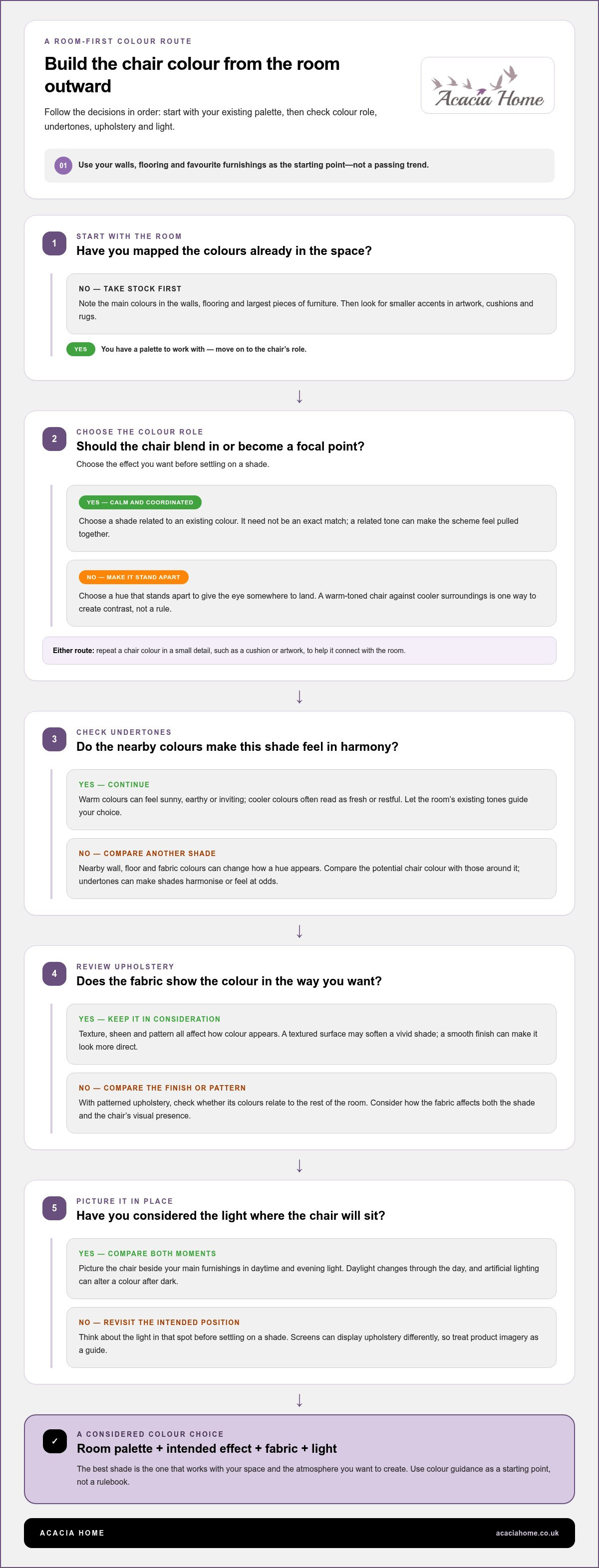
Choose the shade by looking at the room first. A simple process helps you find a chair that feels intentional, whether you want a gentle lift or a confident focal point. Treat colour guidance as a starting point, not a rulebook. The best choice is one that works with your space and the atmosphere you want to create.
Assess the room. Note the main colours in the walls, flooring and largest pieces of furniture. Then look for smaller accents in artwork, cushions and rugs to build a clear picture of the palette.
Choose the chair’s colour role. For a calm, coordinated effect, select a shade related to an existing colour. For a focal point, choose a hue that stands apart. A warm-toned chair against cooler surroundings is one way to create contrast, not a formula you have to follow.
Compare undertones. Warm colours can feel sunny, earthy or inviting, while cooler colours often read as fresh or restful. Compare a potential shade with nearby colours, as undertones can make two shades either harmonise or feel at odds.
Review the upholstery. Texture, sheen and pattern all affect how colour appears. A textured surface may soften a vivid shade, while a smooth finish can make it look more direct. With patterned upholstery, check whether its colours relate to the rest of the room.
Should your chair match or contrast with the room?
Matching does not mean finding an exact duplicate. A chair in a related tone can create a calm, pulled-together look, while a contrasting colour gives the eye a clear place to land. To link the two, repeat one of the chair’s colours in a smaller accessory, such as a cushion or a detail in a piece of artwork. This small echo can help colourful accent chairs uk feel considered rather than disconnected from the scheme.
How do undertones and lighting influence colour choice?
Nearby wall, floor and fabric colours can change the way a hue appears. A green that seems muted beside a pale wall may look richer near dark wood; a warm shade can seem more subdued against a cool-toned floor. Daylight changes through the day, and artificial lighting can alter a colour’s appearance after dark. Screens can also display upholstery differently, so treat product imagery as a guide and think about the light in the chair’s intended position.
The same chair colour can feel brighter, softer or deeper depending on the room around it. Picture it beside your main furnishings in both daytime and evening light before settling on a shade. Browsing Acacia Home’s indoor furniture lets you compare chair styles as you refine the colour that feels right for your home.
Which colourful accent chair style and upholstery suit your room?
Colour is only one part of a chair’s presence. Its silhouette determines how much visual space it occupies, while upholstery affects the shade’s depth and the feel of the seat. A compact, open-looking chair can help a smaller room feel airy; a substantial, enclosed shape may carry more visual weight and make a stronger focal point. Neither is automatically better. Consider your room’s proportions and the furniture around it.
How does chair shape change the effect of colour?
A sculptural silhouette makes a chair noticeable from across the room, so a strong colour can feel especially expressive. A simpler outline offers a quieter way to introduce the same depth of colour. Scale matters too: compare the chair with nearby sofas and tables, and check that it will not crowd walkways. Decide whether it should blend into the arrangement or become its centrepiece. The right balance depends on the room, not a fixed rule.
What should you consider when choosing coloured upholstery?
Picture the fabric in the place where the chair will sit. Smooth upholstery can make a colour look clear and direct; a tactile surface may soften its impact and add visual interest. Velvet, linen and other fabrics each create a different impression. Their suitability depends on the particular chair and your preferences, not the fabric name alone.
When considering colourful accent chairs uk shoppers should weigh appearance alongside comfort, care needs and how often the seat will be used. A chair for everyday lounging has different demands from one that completes a seating area used occasionally. Texture can catch light differently through the day, subtly changing how the colour reads. Explore indoor chairs with both practical and visual priorities in mind.
How to place and style a colourful accent chair
A thoughtful position helps a chair work as both useful seating and part of the room’s composition. Before choosing a spot, consider how you’ll use it and how people move through the space. A chair that looks inviting but blocks a doorway or interrupts the route to the sofa may soon feel impractical.
Where can a colourful chair make the most impact?
A living-room corner can become a reading nook; a bedroom chair can provide somewhere to sit or set out clothes; and an empty area beside a window may feel more purposeful with a well-placed seat. Put a reading chair near a suitable light source, such as a floor lamp or window, and consider how the light changes through the day.
Use this checklist to test the placement before you commit:
Circulation: Leave a comfortable route around the chair and keep doorways and everyday walkways clear.
Light: Consider whether the spot works for reading, conversation or a quiet pause.
Existing seating: Check that the chair feels connected to the sofa or other seats, rather than stranded across the room.
Intended role: Decide whether it should define a corner, soften a bare area or complete a seating arrangement.
How can you style the chair without cluttering the room?
Give the chair breathing space. A vivid seat can hold its own against calmer walls, flooring or nearby furniture, while one or two carefully chosen accessories can help it feel at home. Repeat a colour from the upholstery in a cushion, artwork or small decorative detail, or use a nearby neutral to create a visual pause. Avoid surrounding the chair with several competing focal points.
For a reading corner, a lamp and small table may be all the chair needs. In a seating arrangement, angle it towards the other seats to encourage conversation, leaving enough room to sit down and move comfortably. These choices help colourful accent chairs uk interiors feel inviting and considered, rather than arranged only for appearance.
For broader chair-selection advice, see The Ultimate Guide to Choosing Occasional Chairs for Your Home in 2026. When you’re ready to explore seating for your own layout, browse Acacia Home’s indoor furniture collection.
Choose a colourful accent chair you will love living with
A chair should feel right in the room and in your everyday routine. Before deciding, picture where it will sit, how you’ll use it and how it relates to nearby furniture. This final check helps turn an appealing colour into a comfortable, considered choice you can enjoy over time.
What should you check before choosing your chair?
Use this checklist to bring your priorities together:
Colour role: Decide whether the chair should blend with the palette, introduce a gentle contrast or become a focal point.
Room palette: Consider the walls, flooring, larger furnishings and existing accents, rather than judging the chair colour on its own.
Scale and placement: Confirm the intended location and available floor space. Check that the chair will not crowd a walkway or compete with another strong feature.
Comfort: Think about how you’ll sit in it. A seat for regular reading or relaxing needs to suit those habits, not just look beautiful.
Upholstery and care: Consider the fabric’s appearance and feel alongside the care it may need, particularly if the chair will be used often.
Look at the chair beside nearby furniture and decide whether its silhouette and colour support the room’s existing focal points or create a new one. If you’re torn between two options, return to the chair’s intended purpose. A seat for a quiet bedroom corner may call for a different balance of comfort and visual impact from one completing a living-room arrangement.
Where can you browse occasional chairs in the UK?
Acacia Home is a UK-based online retailer with occasional chairs and a wider range of indoor seating. Occasional chairs can bring added character to a room, while the broader selection includes seating styles for different spaces and uses. For more general buying guidance, explore The Ultimate Guide to Choosing Occasional Chairs for Your Home in 2026.
Keep your priorities in mind as you browse: the right shade, a suitable scale, everyday comfort and a place where the chair can be used with ease. There’s no need to choose the boldest option. A colour that feels natural in your room can make just as lasting an impression. Browse Acacia Home’s indoor furniture collection and see which occasional chairs feel at home in your space.
Make room for a chair that feels like you
The right colourful accent chairs uk choice begins with your room, not a passing trend. Consider the colour’s role in your palette, then weigh the chair’s silhouette and upholstery against its scale, comfort and intended place. A thoughtful position and a small colour echo elsewhere can help a striking seat feel naturally connected to its surroundings.
Acacia Home is a UK-based retailer with occasional chairs at the heart of its furniture range, alongside indoor seating such as tub chairs, dining chairs and Louis style chairs. Explore the different shapes and styles with your room and everyday habits in mind.
Explore Acacia Home’s indoor furniture and find a chair that brings colour, character and comfort to your home. Browse the collection, consider how you’ll use the seat, and choose a piece that feels at home in your space.
Frequently Asked Questions
How do I choose a colourful accent chair for my living room?
Start with the room’s existing colours, then decide whether the chair should blend into the scheme or stand out as a focal point. Compare its undertones with nearby walls, flooring and furnishings, and consider how its shape and upholstery texture affect its presence. Check the chair’s scale against the available space too. Most importantly, choose a seat that suits how you’ll use the living room, whether for reading, conversation or occasional extra seating.
Should an accent chair match the sofa?
No, an accent chair does not need to match your sofa exactly. It can feel connected through a related undertone, a colour repeated in a cushion or artwork, or a deliberate contrast. Consider the sofa alongside the walls, flooring and accessories rather than judging the two seats in isolation. The aim is for the pieces to sit comfortably together without looking like a matching set.
Can a colourful accent chair work in a small room?
Yes, a colourful accent chair can work in a small room if its scale and position suit the space. Consider how much visual weight its silhouette carries, and leave comfortable routes around it so the room remains easy to move through. A confident colour can bring personality without needing lots of extra accessories. Keeping nearby furnishings and surfaces relatively calm can give the chair room to stand out without making the space feel crowded.
Which accent chair colours are easiest to style?
There’s no single easiest shade for colourful accent chairs uk homes, because the right choice depends on the room’s palette and the mood you want. A colour already present in a cushion, rug or artwork can make the chair feel naturally connected. If you prefer contrast, choose a shade that stands apart from the dominant scheme, then repeat it sparingly elsewhere. This gives the colour a link to the room without requiring an exact match.
How can I tell whether a chair colour will suit my room?
Compare the chair’s colour with the room’s main surfaces and existing accents, and consider how it may look in daylight and artificial light. Product images are useful for assessing style, but screens can display colours differently, so treat them as a guide rather than a perfect representation. Pay attention to undertones and upholstery texture, then picture the chair in its intended position beside the furnishings around it.
Is velvet a good choice for a colourful accent chair?
Velvet can give an accent chair a rich, tactile appearance, and the direction of its surface may affect how the colour looks as light falls across it. Whether it suits your home depends on the feel you enjoy, the room’s style and your care preferences. Consider how often the chair will be used too. Comparing upholstery for appearance, comfort and everyday care can help you choose beyond colour alone.
Where should I place an accent chair?
Place the chair where it has a clear purpose, such as beside a light source for reading or near a sofa as extra seating. Check that it does not obstruct movement and that its size feels balanced beside nearby furniture. An underused corner can become more inviting with a chair, suitable lighting and perhaps a small table. Leave enough room to approach and use the seat comfortably, rather than squeezing it into a gap.


Comments