
Corner Chair for a Small Bedroom: How to Choose the Right One
What if the chair that looks smallest is the one that makes your bedroom feel more crowded? Choosing a corner chair for small bedroom layouts isn’t just about finding a compact shape. It needs to feel comfortable, suit the room and leave everyday routes clear. It’s easy to focus on appearance, then discover there’s little space to walk past or the seat doesn’t suit how you want to use it.
The right choice earns its footprint. This guide will help you compare curved, armless and structured shapes, judge proportions against your available corner and allow space to move around the chair. We’ll also cover visual weight, practical details and purpose, whether you want a place to read, relax or set out clothes. Acacia Home’s range of occasional chairs, including tub chairs, offers styles to consider as you weigh comfort, appearance and scale.
Table of Contents
Why a corner chair for a small bedroom needs to earn its place
A bedroom chair should bring comfort without taking away the room’s sense of ease. In a compact space, look beyond whether it fits in the corner. Check that you can still move around the bed, open drawers and reach the wardrobe. A well-chosen seat can give an unused nook a purpose, whilst one that interrupts daily routines may quickly become an obstacle.
“The right chair fits the room’s rhythm as well as its corner. A chair chosen on appearance alone may do neither.”
A “corner chair” isn’t one fixed design. The term describes a chair placed in a corner and the role it plays there. Depending on its shape and the room around it, an occasional chair could create a reading spot, offer a place to sit whilst dressing or provide a temporary perch for clothes. Browsing different types of chairs can help you see how varied their shapes and uses are, but start with what your own bedroom needs.
What should a bedroom corner chair do?
Choose one main purpose before comparing styles. A reading chair needs a supportive back and a seat you’ll enjoy settling into. For a brief sit whilst getting dressed, easy access and a comfortable seat may matter more than deep cushioning. Arms can feel reassuring, but they also affect how easily you can sit down and get up in a tight corner. Occasional seating is for sitting when you want a quiet pause, rather than replacing a bedside table, storage or a dedicated dressing seat.
Be honest about how you’ll use the chair most days. If it’s mainly intended to hold clothes, consider whether a chair is the most useful choice, rather than letting it become a catch-all for laundry. If you want a proper place to pause, prioritise comfort and back support over a purely decorative silhouette. Acacia Home’s indoor occasional chairs include a range of seating styles to consider as you match function with appearance.
When can a chair make a small bedroom feel crowded?
A chair can feel imposing even when it sits within the corner, particularly if its shape looks heavy beside nearby furniture. It may narrow the route between the bed and wardrobe, obstruct a drawer or compete with a bedside table. Assess the whole room: picture the chair alongside the furniture you already use, and consider how you approach the corner, not just how it looks from the doorway.
There’s no need to rule out a seat simply because the bedroom is small. A carefully scaled chair can give an overlooked area a clear purpose and create an inviting nook. Balance its presence with the room’s movement and mood, so the added comfort feels like part of the bedroom rather than one more thing to navigate.
Measure your bedroom corner before choosing a compact chair
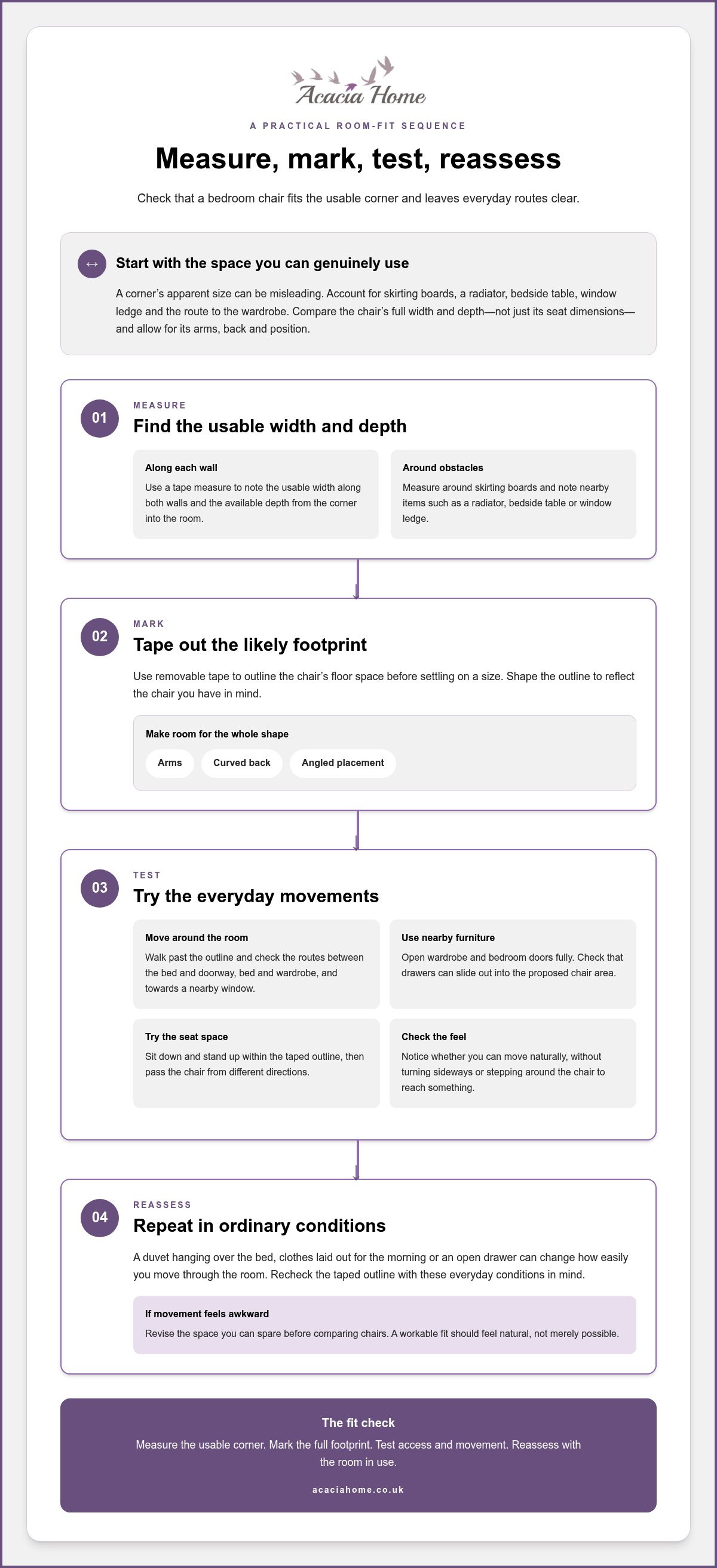
A corner can look spacious until you account for skirting boards, a radiator, a bedside table or the route to the wardrobe. Before browsing for a corner chair for small bedroom layouts, measure the floor area you can genuinely use, then test a likely footprint in the room. This gives you a clearer sense of fit than relying on the chair’s appearance or a single width measurement.
A chair’s overall footprint matters as much as its seat dimensions, because its arms, back and position all take up room. When comparing measurements, look for the full width and depth, then consider how the chair will sit in the corner. A curved back or angled position may occupy space differently from a straight-edged outline.
How do you measure a bedroom corner for a chair?
Use a tape measure to note the usable width along each wall and the available depth from the corner into the room. Measure around skirting boards and nearby obstacles rather than assuming the full wall-to-wall span is clear. Note anything that could affect placement, such as a radiator, bedside table or window ledge.
Next, mark a possible footprint on the floor with removable tape. Shape the outline to reflect the chair you have in mind, including any arms or a curved back. While it’s marked out, open drawers and doors, approach the wardrobe and walk around the bed. If any movement feels awkward, adjust the outline before you shop.
Which clearances matter around a bedroom chair?
Check the routes you use every day: between the bed and doorway, from the bed to the wardrobe, and towards a nearby window. A chair shouldn’t make you turn sideways or step around it to reach something. Open wardrobe and bedroom doors fully, and account for drawers that slide out into the proposed chair area.
Then reassess the layout in ordinary conditions. A duvet hanging over the bed, clothes laid out for the morning or an open drawer can change how easily you move through the room. Try sitting down and standing up within the taped outline, as well as passing the chair from different directions. A workable fit should feel natural, not merely possible.
Use this simple sequence before settling on a shortlist:
Measure: Record usable width and depth, including skirting and obstacles.
Mark: Tape out the likely floor footprint, allowing for the chair’s shape.
Test: Sit, stand, walk past and open nearby doors and drawers.
Reassess: Repeat with the bed in use and revise the space you can spare.
Once you know what the corner can comfortably accommodate, browse indoor seating options and compare each chair’s overall dimensions with your taped outline.
Compare corner-chair shapes for a small bedroom
Once you know the space available, compare chair shapes by how they’ll feel and function in that particular corner. A rounded outline may sit comfortably beside two walls, whilst a squared profile can create a more defined edge. An open-sided silhouette may let more of the room show through, but that doesn’t automatically make it smaller. The chair’s full width, depth and position still determine whether it fits.
Use this table to narrow your options. These are general tendencies, not guarantees. Proportions vary between chairs, and your room layout matters just as much as the shape.
Tub chair or open-sided occasional chair: what changes?
A tub chair’s curved sides create an enveloping profile, which can feel welcoming for sitting and reading. That same shape may look visually prominent beside lighter or more open bedroom furniture. An open-sided occasional chair can feel less enclosing, but it isn’t necessarily narrower or shallower. Compare each option with your measured footprint, then consider whether you prefer a supported, tucked-in seat or a more open feel.
How do legs, arms and upholstery affect visual scale?
Visible floor beneath a chair can make its outline feel less solid, whilst a lower, enclosed base may look more substantial. Arms affect both appearance and ease of access. Look at the furniture nearby: an open profile may sit lightly amongst pieces with slim lines, while a more enclosed chair can complement a room with fuller shapes.
Colour and upholstery help the chair belong in the bedroom. Echo a colour already present in the bedding or curtains, or choose a contrasting shade as a considered accent. Think about the overall effect from the doorway as well as up close. In a small room, the chair’s visual presence matters alongside its practical fit.
The best corner chair for small bedroom spaces isn’t defined by one supposedly space-saving shape. Match the chair’s proportions to the corner, then choose a silhouette that supports its intended use and feels at home with the rest of the room.
Build a practical shortlist for your small-bedroom corner chair
You’ve considered the corner, tested how a chair might sit in it and compared different silhouettes. Now bring those decisions together in a shortlist, so an appealing shape doesn’t distract from the practical details that will make it work in your bedroom. Keep your measurements and intended use close by as you browse.
For each chair you consider, note:
Usable footprint: The maximum width and depth your corner can take without crowding routes or interfering with doors, drawers or nearby furniture.
Primary use: The activity the seat needs to support, such as reading, sitting whilst dressing or taking a quiet pause.
Comfort needs: Whether you prefer arms, back support and a seat that feels comfortable for the length of time you’ll use it.
Preferred silhouette: A rounded, open-sided or more defined shape, and how much visual presence you want it to have.
Room relationship: How its shape, colour and upholstery might sit alongside your existing furniture and soft furnishings.
Compare each option with the room as it is, rather than imagining the chair in an empty corner. Does it leave the route to the wardrobe clear? Can you still open the bedside drawer fully? If a bench, window seat or other piece already gives you somewhere to sit or put clothes, consider whether another chair adds a genuinely useful option or simply repeats the same role.
Comfort deserves its own check. A chair may look right on paper, yet feel less inviting if its arms make it awkward to use or its back doesn’t suit your planned activity. Think about the difference between a short dressing pause and a longer reading session, then favour options that support the way you’ll actually sit.
A cohesive corner doesn’t need to match every detail in the room. Pick up a colour or texture from the bedding, curtains or existing furnishings to help the chair feel connected, or let it provide a gentle point of contrast. Keep nearby surfaces and accessories restrained, so the corner feels restful rather than cluttered. For more general selection advice, an occasional chair buying guide can help you weigh comfort and style alongside fit.
With your shortlist in hand, explore indoor furniture and seating to see how different occasional-chair styles might complement your bedroom. Let your measurements, intended use and preferred atmosphere guide the final choice, rather than choosing by appearance alone.
Choose a corner chair for a small bedroom that fits right in
The final choice is a balance between the room, the chair’s purpose, its shape and the atmosphere you want to create. A seat should feel comfortable for its intended use, sit naturally within the space and leave the bedroom easy to move around. Your measurements and comparisons can help you choose with confidence, rather than relying on appearance alone.
Which chair priorities suit different small bedrooms?
Let your main activity guide the final decision. For a reading nook, look for a supportive shape and a position that feels inviting without interrupting access around the bed. If you’ll sit down to get dressed, consider how the chair fits near the wardrobe and whether doors can open freely. For a decorative corner, think about the chair’s visual presence alongside the room’s other focal points, such as the bed or a window.
Acacia Home’s occasional-chair range offers seating to consider in light of those priorities, including tub chairs with a more enveloping profile. No one category or shape will suit every bedroom, so compare the chair’s overall form with your available space and how you plan to use it. Consider whether its back and arms suit a brief pause or a longer sit.
How can occasional chairs complete a bedroom scheme?
A chair can feel connected to the room without matching every other piece. Look at the colours and textures already present in your bedding, curtains and furnishings, then decide whether you’d like the seat to echo them or bring in a gentle contrast. The aim is a considered relationship, not a perfectly coordinated set. Keeping nearby surfaces and accessories simple can also help the corner feel calm and purposeful.
If a chair doesn’t quite fit the way you want to use the space, consider whether another kind of seating would work better. Acacia Home’s wider indoor range includes footstools, ottomans, chaise longues and window seats, offering different ways to create a place to pause. A small chaise longue may suit you if you want a more relaxed lounging option, provided its footprint and position work in the room.
Before deciding, return to your shortlist and ask: does the chair fit the corner, support its intended use, feel comfortable and sit well with the bedroom’s existing furnishings? If so, it can bring more comfort and personality to the room without feeling like an afterthought. Explore Acacia Home and browse seating to compare occasional chairs and tub chairs for your bedroom.
Make a corner chair for small bedroom layouts work beautifully
A thoughtfully chosen seat can turn a forgotten corner into a part of the bedroom that feels distinctly yours. Picture the moment you want it to create: a pause with a book, a comfortable place to get ready or simply a softer, more inviting atmosphere. Let that everyday purpose guide your choice, and the chair is more likely to feel at home long after the room is styled.
The right corner chair for small bedroom living isn’t necessarily the most striking one. It’s the chair that feels comfortable to use and belongs naturally in the space. Acacia Home’s occasional chairs and tub chairs offer different silhouettes to consider, alongside wider indoor seating and occasional furniture for other ways to make a room feel welcoming.
Ready to find a seat that suits your bedroom and your style? Explore Acacia Home’s indoor seating and browse the range. A carefully chosen chair can make even a modest corner feel like a lovely place to pause.
Frequently Asked Questions
Can a chair sit beside a bedroom radiator?
A chair can often sit near a radiator, provided it doesn’t obstruct airflow or rest directly against a heat source. The suitable gap depends on the radiator and chair, so follow the manufacturers’ guidance rather than relying on a universal clearance. After positioning the chair, check whether the room still heats comfortably and whether the fabric or other chair surfaces feel unusually warm. If they do, move it further away.
Is a swivel chair a good choice for a small bedroom?
A swivel chair can suit a small bedroom if it has enough room to turn without knocking into the bed, wall or wardrobe. Test the full turning movement, not just the space the chair occupies when facing forwards. Consider whether you’ll use the rotation regularly, perhaps to switch between a bedside lamp and a window view. If turning feels awkward or disruptive, a fixed occasional chair may better suit the room.
Can a bedroom chair be placed at the end of a bed?
Yes, if the chair doesn’t make it difficult to get in and out of bed or reach the doorway. Try the arrangement with the bed made and the duvet falling naturally over the end, since bedding can change how much floor feels available. Also check whether you can sit down without pulling the chair into a route you use often. A chair that’s easy to approach is more likely to be used.
Should a bedroom chair match the bed?
No, a chair doesn’t need to match the bed or belong to a coordinated set. It can feel at home through a shared colour, a similar shape or a texture that complements the bedding. For instance, a chair in a contrasting shade can add character, whilst repeating a detail from the curtains can create a quieter connection. Consider the whole room before deciding whether the chair should blend in or stand out.
What happens if the chair makes a small bedroom feel crowded?
If a corner chair for small bedroom use makes the room feel cramped, try changing its angle or position before ruling it out. Notice what feels difficult: opening a wardrobe, reaching a bedside table or moving past the bed. Clearing an unnecessary item from the corner may also help. If the layout still feels uncomfortable, revisit your shortlist and compare a lighter-looking silhouette or a different seating option.
Can a small bedroom chair help protect clothes from clutter?
A chair can be a handy place to lay out tomorrow’s outfit, but it won’t replace proper clothes storage. Keep the seat available for sitting by limiting it to a planned outfit, rather than letting worn garments build up. If clothes regularly collect there, a simple routine of putting them away at the end of the day may help the chair retain its purpose as comfortable bedroom seating.


Comments