
Modern chaise longues for UK homes, with styles and fabrics to choose
A contemporary chaise longue doesn’t have to make a room feel strictly modern. Choosing a modern chaise longue in the UK is about finding a style, upholstery and shape that complement your home, whether your rooms feel classic, pared-back or full of character. Its extended seat gives you a place to recline, while the design can work as a standalone piece or as part of a sofa.
It’s easy to focus on colour or silhouette first, but a modern chaise longue in the UK should also suit the space you have. An upholstered design can bring softness and presence to a room, while a more restrained shape may sit comfortably alongside existing furniture. Fabric, from velvet to textured options, helps set the mood, and the chaise’s orientation and position affect how naturally it fits your layout.
This guide explores traditional, Hollywood-inspired and contemporary styles, upholstery choices and practical room-planning considerations. You’ll learn how to choose a chaise longue that feels at home with your interior, rather than simply following a trend, and how different designs can create a comfortable place to pause, read or stretch out.
Table of Contents
Definition and design features of a chaise longue
A chaise longue is a long chair designed for reclining, combining a chair’s seat with the support of a footstool. Its extended section should support your legs comfortably when you stretch out. A headrest is part of the design, while the back, footrest and armrests can vary. These details shape how the furniture feels and looks, from a gently curved silhouette to a more upright, structured form.
Some chaise longues stand alone; others join a sofa as an extended seat. In a sectional arrangement, that extension can create a relaxed corner for reading or conversation. Modular furniture takes a related approach, with separate elements arranged to suit a room. Before choosing a layout, consider which side the chaise should extend towards and how its length relates to the rest of the seating.
The distinction matters in daily use. A standalone chaise can become a focal point beside a window, while a sofa with a chaise extension brings lounging space into the main seating area. In a compact sitting room, a separate piece may be easier to position, whereas a sectional design can make the sofa itself more inviting. The right form depends on your room and how you want to relax.
Upholstery and finish make a chaise feel personal. Options found across the category include satin, velvet, leather and textured fabrics, each bringing a different surface and visual weight. Bespoke designs may also let buyers specify fabrics and finishes. Wood, lacquer, gold or silver leaf, and hand-painted details can change the character of a frame, from understated to decorative. These are broad design possibilities, not a single standard specification.
Look beyond the covering to the frame and smaller details. Some chaise longue designs include concealed storage beneath the seat, providing a place to tuck away belongings. Contemporary chaise sofas can be built on solid hardwood frames, while carved legs or sweeping arms suggest a more traditional influence. Compare the outline, upholstery and finish together, as each contributes to the piece’s presence in a room.
Design history offers another useful reference. The phrase “the ultimate relaxing machine” is attributed to Le Corbusier, whose modernist approach favoured functional forms. That idea still helps explain the chaise longue’s appeal: it combines a distinctive profile with a clear purpose. When assessing a design, first picture how you’ll use it, then consider whether its shape, fabric and finish complement your existing furniture.
Traditional, Hollywood-inspired and contemporary styles
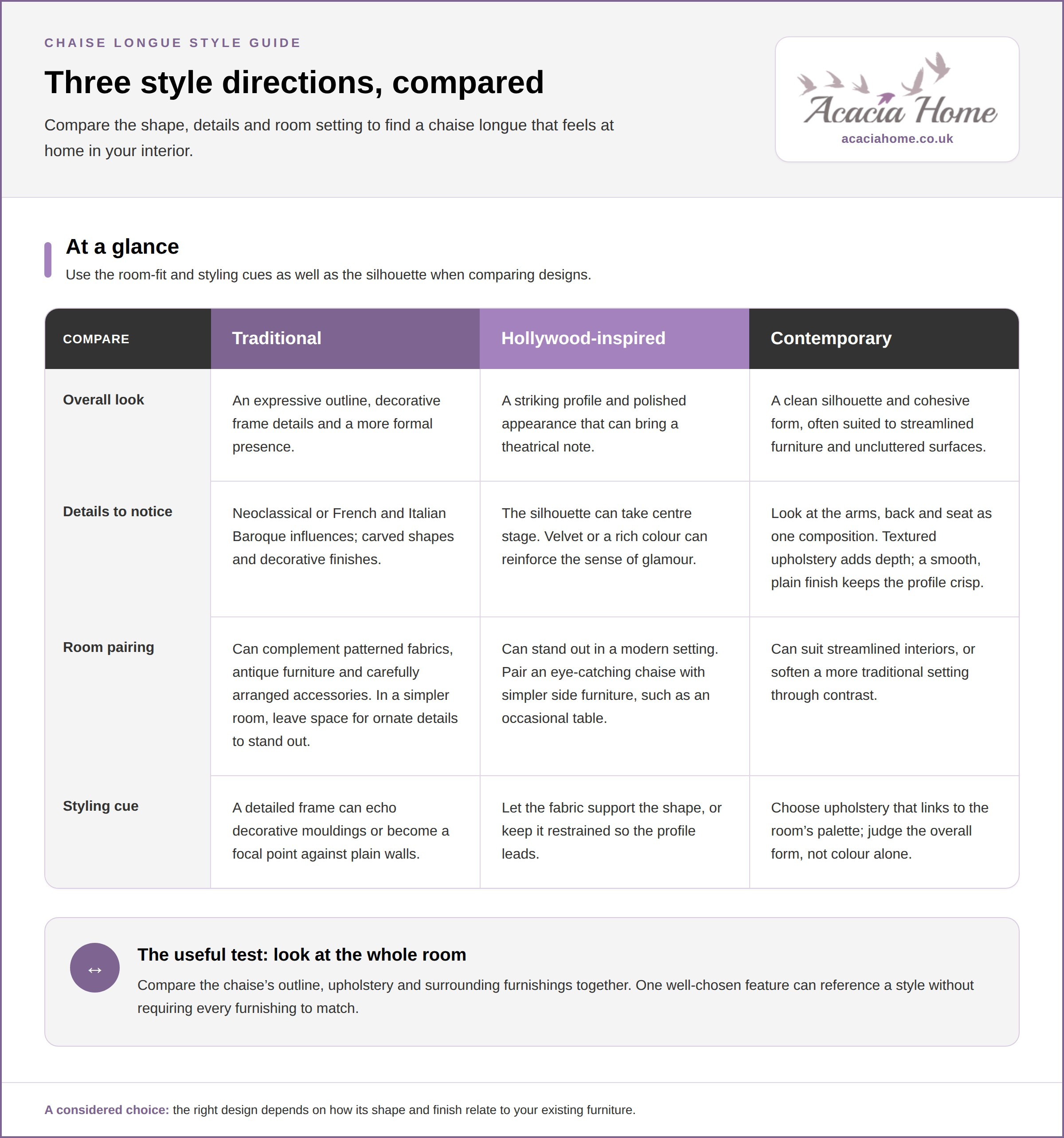
Chaise longue styles range from neoclassical and Baroque influences to Hollywood-inspired glamour and contemporary silhouettes. Comparing their shapes, details and finishes helps you choose a design that feels at home in your interior.
Traditional and Hollywood-inspired styles
Traditional designs often draw on neoclassical, French Baroque or Italian Baroque influences. Look for an expressive outline, decorative frame details and a more formal presence. These features can complement rooms with patterned fabrics, antique furniture or carefully arranged accessories. A traditional chaise longue can also create contrast in a simpler room, provided its ornate details have space to stand out.
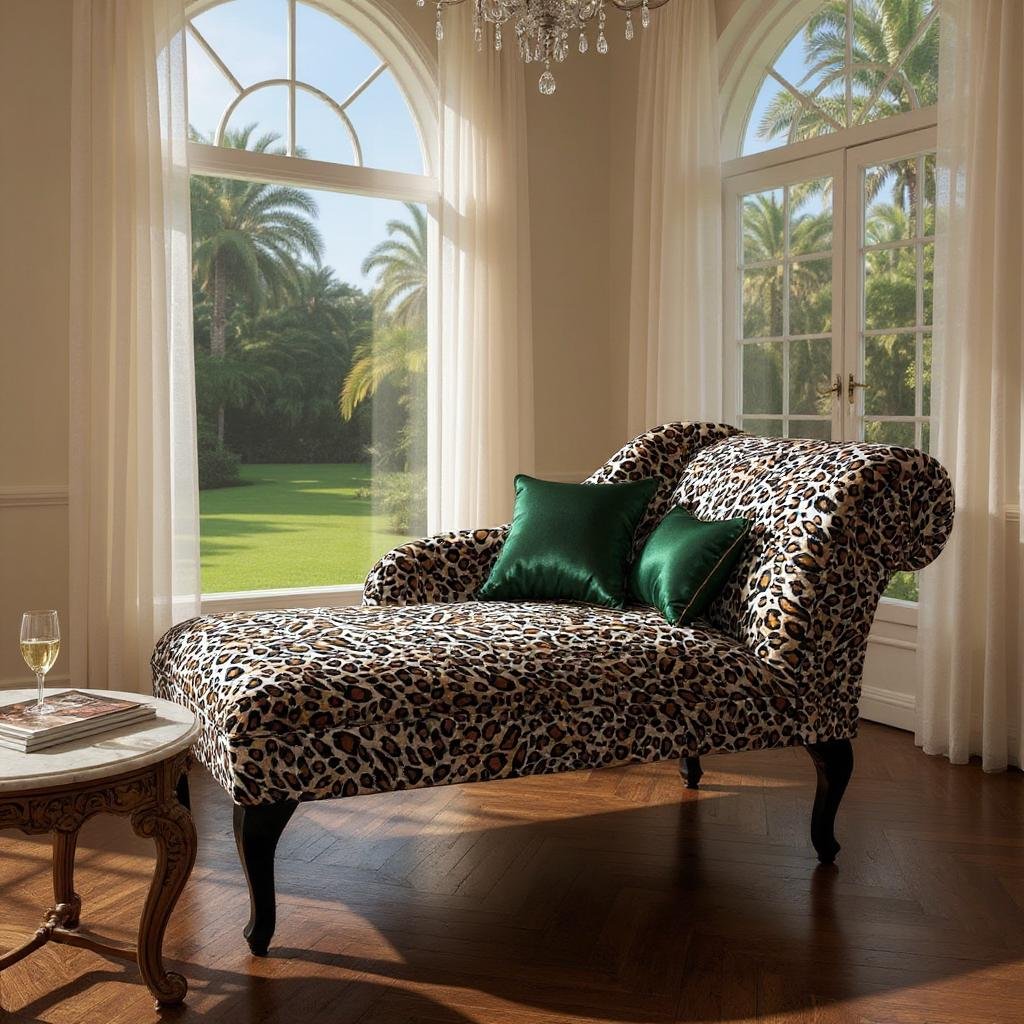
Hollywood-inspired styles offer another decorative direction. Think of a piece chosen for its striking profile and polished appearance, rather than as background seating. Velvet or a rich colour can reinforce the sense of glamour, while a restrained fabric lets the shape take centre stage. For balance, pair an eye-catching chaise with simpler side furniture, such as an occasional table, rather than repeating elaborate details throughout the room.
Compare the frame, upholstery and surrounding furnishings together. A carved silhouette may suit a room with traditional features, while a sleek, dramatic shape can bring a theatrical note to a modern setting. The aim isn’t to recreate a period room exactly; one well-chosen feature can reference a style without making every furnishing match.
Contemporary and classic chaise longue styles
Classic designs show their decorative character through their outline and finish. Neoclassical forms can feel composed and symmetrical, while French or Italian Baroque references may look more elaborate. Consider how these details relate to your existing furniture: a detailed frame can echo decorative mouldings or become a deliberate focal point against plain walls.
Contemporary designs usually emphasise a clean silhouette and a cohesive overall form. They can suit interiors where streamlined furniture and uncluttered surfaces already set the tone. Fabric changes the impression: textured upholstery adds visual depth, while a smooth, plain finish can keep the profile crisp. Look at the arms, back and seat as a complete composition, rather than judging the piece by colour alone.
A design classic can bring continuity to a room, while a contemporary piece may feel more in step with current furnishings. Neither needs to dictate the whole scheme. A classic chaise, for example, can sit comfortably alongside simpler furniture when its upholstery links to the room’s palette. A contemporary shape can soften a more traditional setting through contrast.
Contemporary chaise sofa styles
A contemporary chaise sofa combines shared seating with an extended section for reclining. Its appeal lies in how the longer seat integrates with the main form, creating a unified look rather than placing a separate chair beside the sofa. Assess the proportions and outline, then consider whether the chaise extension feels visually balanced with the seats and arms.
Fabric also influences the impression of a chaise sofa. A textured covering can give a streamlined shape more warmth, whilst a plain fabric can emphasise its clean lines. Choose a finish that relates to other seating or soft furnishings, without requiring every item to match. Exploring indoor furniture styles can help you consider how a chaise sofa might sit within a broader room scheme.
Finally, decide whether you want the sofa to blend in or anchor the space. A quieter shade can connect existing pieces, while a strong colour makes the extended seat more prominent. The best style suits how you furnish the room, rather than simply reflecting a passing trend.
Choosing a chaise longue for room size and layout
Room size matters, but so does the route through it. A beautiful chaise longue can interrupt movement if its extended end blocks a doorway or the path between a sofa and a window. Start by identifying the room’s main entrances, windows and existing furniture. Then decide where people need to walk before settling on a position.
Use a floor plan or temporarily mark the intended footprint on the floor. Include the full length of the reclining section, not just the seat. This makes it easier to see whether the chaise will crowd a coffee table, radiator or access to a bookcase. In a narrow sitting room, placing the chaise along a wall may preserve a clearer central route.
Orientation matters as much as overall size. A left-hand or right-hand extension changes which side of the sofa projects into the room. Imagine sitting on the sofa and looking towards the chaise: note which side the extension needs to occupy, then compare that direction with the room’s layout. This helps the piece sit naturally beside an existing sofa or face a focal point.
Think about how the chaise will relate to the room’s other functions. In a living room that also serves as a reading spot, position it where you can comfortably reach a lamp and side table. In a bedroom, keep the route between the bed and the door in mind. In an open-plan space, the back of a chaise sofa can distinguish the lounge area from dining furniture without adding a divider.
Use these practical checks before choosing a style:
Measure the available floor area and mark the chaise’s full footprint, including its extension.
Check the left- or right-hand orientation against doorways, windows and the main walking route.
Place existing items, such as a coffee table or reading lamp, on your plan to see how they relate.
Consider whether the chaise will sit against a wall, beside a sofa or as a feature in an open room.
In a compact room, a standalone chaise may be easier to position than a sofa with an extended section. A generous living room can accommodate a larger arrangement, but the furniture should still leave a clear route between the seating and entrances. Base your choice on the actual footprint and how you use the room, rather than its label as small or spacious.
Finally, picture the room in use. If people regularly gather around a television, angle the chaise towards it. If the window is the room’s quietest corner, orient the seat towards natural light without obstructing access. These simple layout decisions help the chaise feel integrated, rather than placed wherever spare floor space happens to remain.
Chaise longue suitability for different home styles
A chaise longue can complement your home’s existing character or provide deliberate contrast. The strongest choice reflects your preferences and interior, rather than following a trend. Consider the room’s palette, furniture shapes and decorative details together. A sculptural chaise, for example, can bring focus to a quiet scheme, while a restrained design can sit easily alongside expressive furnishings.
In a period-inspired home, look for a form that relates to the room’s existing features. A neoclassical silhouette can echo symmetry and decorative mouldings, while a more ornate chaise may suit a room with patterned curtains or carved furniture. You don’t need to recreate a complete historical scheme. Choose one or two details that connect the chaise to the room, such as a complementary fabric colour or a similar curve.
A pared-back, contemporary interior often benefits from a chaise with clean lines and a quiet profile. If the room already has simple furniture and uncluttered surfaces, a bold frame may compete for attention. Instead, consider texture or colour as the point of difference. Soft, tactile upholstery, for instance, can add warmth to a neutral setting without changing its streamlined character.
Cottage-inspired rooms have a softer, more collected mood. A gently curved chaise can sit comfortably beside floral patterns, painted furniture or layered textiles. To keep the arrangement harmonious, choose a colour already present in the room, perhaps in a cushion or rug. That small connection helps a larger upholstered piece feel considered, rather than like an unrelated addition.
Eclectic interiors invite contrast, but a clear visual link still helps. Pair a Hollywood-inspired chaise with contemporary side furniture, for example, then repeat one colour elsewhere in the room. This creates a sense of intention without making every item match. If several pieces already have striking shapes, choose a chaise with a simpler outline to give the eye room to rest.
In a minimalist home, the chaise’s shape and finish become especially visible. A pared-back design can preserve the calm atmosphere, while rich upholstery introduces a single focal point. In a traditional room with modern accents, take the opposite approach: a contemporary silhouette can refresh the setting while existing furnishings provide continuity. Think about the whole composition, not one object in isolation.
Before deciding, name the qualities you want the chaise to bring: softness, contrast, elegance or a relaxed feel. Then compare its outline and upholstery with the room’s most noticeable features. A consistent colour can make a bold shape feel connected; a contrasting finish can turn a quieter design into a focal point. The right match expresses your taste, rather than simply copying a fashionable look.
Indoor and outdoor uses
Inside the home, a chaise longue can serve as a chair, sofa, daybed or window seat. Its extended form offers a place to recline, while its role changes with the room. In a sitting room, it can add relaxed seating; beside a bedroom window, it can create a quiet spot for reading. Choose its purpose first, then consider where it will be most useful.
As a chair, a chaise works well when you want one generous seat with room to stretch out. Set it near a lamp or side table to complete a reading corner. In a shared living area, it can serve as a sofa or complement other seating, giving one person space to recline without changing the room’s main arrangement.
A daybed-style arrangement suits a calm corner where you can approach the chaise from the side and leave its length unobstructed. A window seat arrangement brings the piece closer to natural light and the view, while still allowing clear access around it. These uses depend on positioning and the room’s routine, not simply the chaise’s style.
Outdoors, a chaise longue can serve as a sun lounger. Its reclining shape suits relaxing in a garden or on a terrace, where the setting differs from an indoor reading nook. Treat outdoor placement as a distinct use: choose a piece intended for its environment, and position it to suit the available space and how you plan to use it.
Think through the setting before settling on a role:
For a reading corner, place the chaise where a light source and side table are within reach.
For a daybed, keep the extended section accessible rather than tight against other furniture.
For a window seat, consider the view and preserve an easy route past the piece.
For outdoor lounging, plan its position around the garden or terrace layout.
One chaise may be the room’s main feature, while another complements a sofa or existing garden arrangement. In either case, let its use guide its placement. An indoor piece fits the rhythm of the home; an outdoor lounger helps shape a place to pause outside. Keep those roles distinct when planning a coordinated setting.
To furnish the space around an outdoor lounging area, explore outdoor furniture options that help bring the setting together.
Acacia Home: Chaise Longues and Window Seats
Acacia Home offers chaise longues and window seats for readers looking for a distinctive place to recline or relax. Once you’ve settled on the style and layout that suit your room, explore the range for seating that brings those decisions together.
For a coordinated interior, occasional chairs, dining chairs and footstools provide further seating options. A footstool, for example, can complement a favourite chair, while an occasional chair can add another place to sit without changing the room’s overall purpose.
If you’re ready to explore seating for your home, contact Acacia Home.
Choose a chaise that feels at home
Picture the small moments you want this piece to make room for: a quiet pause with a book, a comfortable place to unwind, or an expressive focal point. Let that picture guide your final choice, so a modern chaise longue in the UK feels connected to the way you live, not simply to the look of your room.
Acacia Home also offers occasional chairs, dining chairs and footstools, so you can consider complementary seating as part of your home’s overall feel. Whether you’re refining one corner or bringing a room together, begin with the piece that feels most like you.
Contact Acacia Home to take the next step towards a home that reflects your style.
Frequently Asked Questions
What styles of modern chaise longues are popular in the UK?
Contemporary, Hollywood-inspired and traditional designs can all suit UK homes, depending on the room’s character. For a clean-lined interior, a streamlined silhouette can feel cohesive; a Hollywood-inspired shape can add drama to a quieter scheme. Neoclassical or Baroque influences bring a more decorative note. Rather than choosing by trend alone, consider which design fits with the furniture and details you already enjoy living with.
Which materials and upholstery options are best for a chaise longue?
The best upholstery depends on the look and feel you want in your room. Velvet creates a soft, richly coloured impression, while satin has a smoother, more lustrous appearance. Leather gives a different visual character, and textured fabrics add surface interest. Compare each option with nearby curtains, cushions or rugs, and consider how its colour and finish sit alongside them. The fabric should suit your taste as well as the room’s existing palette.
Which UK retailers sell modern chaise longues?
Acacia Home offers chaise longues and window seats.
What are the best modern chaise longues available in the UK?
The article highlights traditional, Hollywood-inspired and contemporary designs rather than naming a single best option. The Abbey Chaise Lounge Sofa is available in five sizes, and the contemporary collection offers over 150 fabric and leather options.
How do chaise longue sizes and dimensions compare?
The Abbey Chaise Lounge Sofa is available in five sizes. Compare the full footprint, including the reclining extension, and choose a length that supports your legs without obstructing access around the room.
Comments