
Elegant Chairs for Living Room: How to Choose the Right Style
The most striking chair isn’t always the one that feels most elegant at home. Choosing elegant chairs for living room schemes means looking beyond appearance: a chair should sit comfortably alongside your existing furniture, suit the room’s proportions and feel inviting to use. Online images can make scale and comfort difficult to judge, so it helps to compare each option against the space and purpose you have in mind.
Elegance doesn’t have to mean choosing ornament over comfort. A sculptural shape can make a quiet statement, while a classic design may bring warmth and character. The right choice depends on the atmosphere you want, how much space you have and how the chair will fit into everyday life.
In this guide, we compare chair silhouettes, explain how to judge proportion and room harmony, and cover practical details to consider beyond the photograph. Acacia Home’s selection includes occasional chairs, tub chairs and Louis style chairs, as well as chaise longues and window seats, giving you different styles to consider for your home.
Table of Contents
What makes an elegant chair work in a living room?
An attractive chair can still feel out of place. Its outline might overwhelm a compact sofa, or its finish might introduce a detail that has no connection to the rest of the room. You don’t need to match every feature. A chair feels considered when its shape, scale and finish relate to the surrounding furniture while adding its own character.
An elegant living-room chair balances a pleasing silhouette, room-appropriate proportions and a thoughtful finish with the comfort and character the space needs. This is a more useful guide than ornament alone. Refinement can come from a graceful outline or visual simplicity, not just elaborate carving, deep buttoning or decorative trim.
Consider how the chair will look from different points in the room. A curved back can soften a sofa’s straight lines, while exposed legs leave more floor visible and make a chair feel lighter. A substantial chair with a defined frame can bring structure to an open corner. Wood tones, fabric textures and the distance between furniture also affect how well a chair fits the scheme. For a broader sense of how classic seating forms have evolved, explore the history and styles of chaise longues.
Can an elegant chair feel relaxed and inviting?
Absolutely. Visual polish and everyday comfort can work together. Soft-looking upholstery, a gently rounded shape and a relaxed position beside a sofa can make a chair feel welcoming. A more upright form, crisp outline or decorative finish may create a more formal impression. Neither approach is inherently better. Decide whether the chair is mainly for unwinding, conversation or occasional use, then choose a shape that suits that role.
What role does an accent chair play in the room?
A single chair can provide another place to sit and give the room a distinct point of interest. It doesn’t need to match the sofa exactly. Look for a connection through colour, shape, material or period character instead. For example, a contrasting but complementary finish can add depth, while a related silhouette can help separate pieces feel cohesive. Aim for a thoughtful relationship, not a matching set.
When comparing elegant chairs for living room schemes, judge the chair in context rather than by its product image alone. Consider whether its visual weight suits the sofa, whether its details echo something already in the room and whether it looks like a seat you’ll enjoy using. Acacia Home’s indoor chair selection includes occasional, tub and Louis style chairs. Let the overall feeling guide you: elegance should make the room feel more complete, not more formal than you’d like.
Which elegant living-room chair style suits your interior?
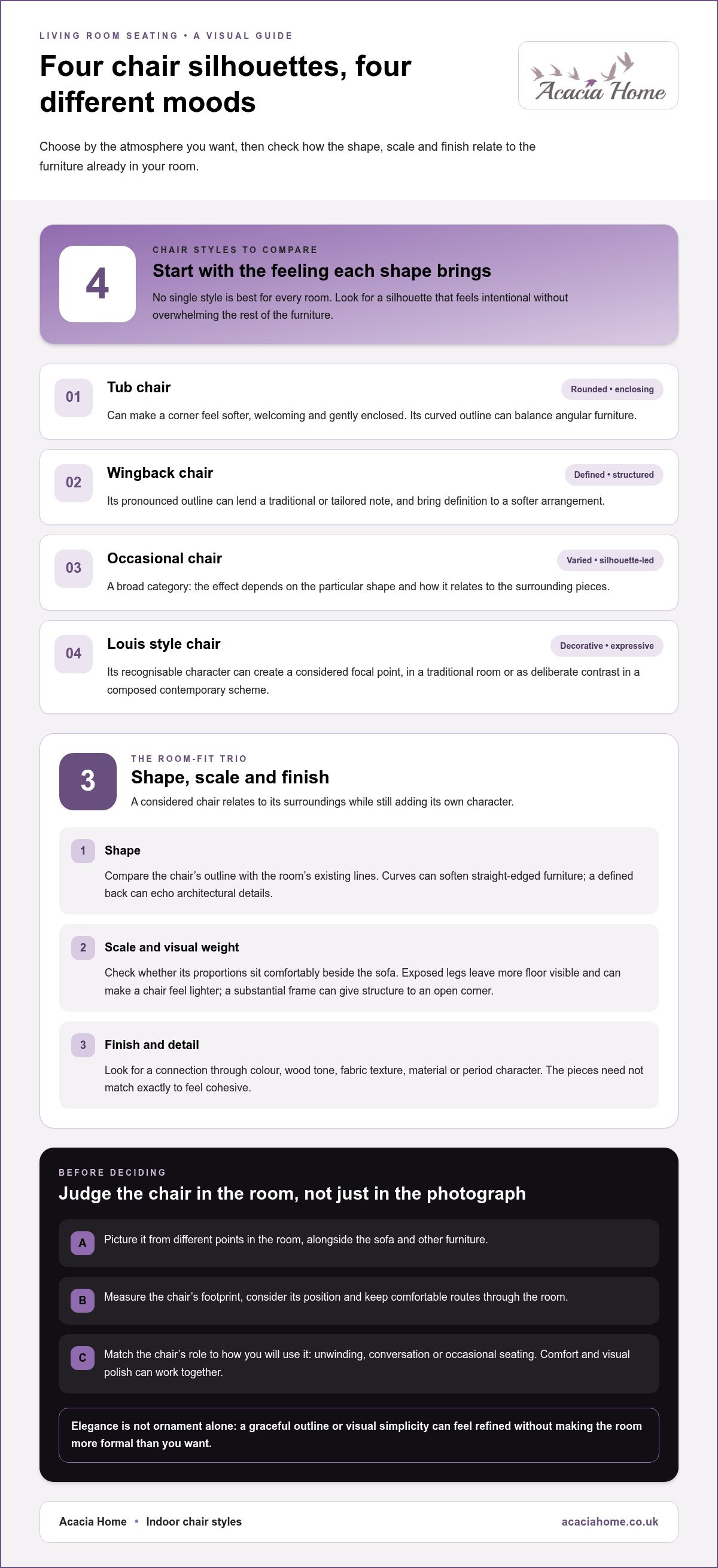
Start with the mood you want, then consider which outline belongs naturally with your room’s existing furniture. A rounded chair can soften a scheme of straight-edged pieces; a structured shape may bring definition to a softer arrangement. There’s no single best option. Choose a chair whose character feels intentional without overwhelming the rest of the room.
Colour isn’t the only way to make a chair distinctive. In a restrained palette, an expressive outline can add interest without introducing a strong contrast. Shape can give elegant chairs for living room schemes personality while allowing the wider room to feel calm. For a historical perspective on how seating forms have changed, see this evolution of elegant seating furniture design.
Tub chairs have a rounded, enclosing outline that can give a room a softer, more intimate feel.
Wingback chairs create a more defined profile, often lending a traditional or tailored note.
Occasional chairs cover a broad range of forms, so their effect depends on the particular silhouette and how it relates to the surrounding pieces.
Louis style chairs bring a more decorative, recognisable character that can make a considered focal point.
How do tub and wingback chairs change the feel of a room?
A tub chair’s curved shape can make a corner feel welcoming and gently enclosed. A wingback has a more pronounced outline and can introduce structure, whether the room is traditional or needs a tailored accent. Compare each shape with the lines already in your space: rounded forms can soften angular furniture, while a defined back can echo architectural details.
Look at the chair alongside the other furniture, not on its own. A compact, curved outline may sit comfortably beside a sofa with softened edges, while a taller, more structured back can hold its presence alongside substantial furniture. These are useful points of comparison, not strict rules. The balance of the whole room matters more than following a style formula.
When does a Louis style chair suit a living room?
A Louis style chair suits a room where you want decorative character and a more expressive silhouette. It can complement a traditional scheme or bring deliberate contrast to a contemporary room when the rest of the furnishings remain visually composed. If you’re drawn to this look, explore the Louis style chair buying guide for a closer look at choosing one.
To compare styles in context, notice which shapes repeat or contrast with your room’s existing lines, then consider the atmosphere each creates. You can also explore Acacia Home’s chair selection for different silhouettes, including tub, occasional and Louis style chairs.
How should you compare elegant chairs for your living room?
A chair can look appealing on its own yet feel too heavy, too pale or disconnected once it sits beside the sofa. Compare each option in the context of the room rather than judging its colour or decorative details in isolation. Its outline, visual weight, palette and intended use together help you decide whether it is likely to feel at home.
Compare a chair’s silhouette, visual presence, palette and everyday purpose with the sofa and the room around it. Use the guide below to assess elegant chairs for living room schemes consistently:
Leg visibility can change how substantial a chair appears. A chair raised on exposed legs lets more of the floor show through, which can help its outline feel open beside a sofa. A deeper, more enclosed base creates a stronger block of shape. Neither is automatically better. Compare the chair’s visual weight with the sofa’s to avoid having one piece dominate by accident.
Should your chair match the sofa or provide contrast?
Matching every finish isn’t necessary for a cohesive room. A contrasting chair can still feel connected if it shares a detail with the sofa or wider scheme, such as a similar colour, curved line or material. To make a standout choice feel deliberate, repeat one of its details elsewhere, perhaps in a cushion or another furnishing. The link can be subtle rather than exact.
Tonal coordination is a quieter approach. Choose shades that sit comfortably alongside one another, then let the chair’s outline provide definition. Contrast offers more emphasis, but it works best when the difference feels intentional rather than isolated. Consider the whole palette, including nearby furnishings, before deciding whether you want the chair to blend in or draw the eye.
Which details help a chair look refined over time?
Look at how the frame, legs, upholstery and decorative details work together. A restrained chair can feel polished when its lines and finishes are coherent; a more embellished design can also work when its details suit the surrounding furniture. Prioritise a combination you’ll enjoy living with instead of choosing a feature only because it feels fashionable now. Consider fabric performance separately from visual style, and read the product information with the chair’s intended use in mind.
How can you place an elegant chair so it feels at home?
A beautiful chair earns its place when it suits how you use the room as well as how you want it to look. Before deciding where it belongs, picture when you’ll use it: joining a conversation, reading beside a window or adding another seat near the sofa. Its purpose gives you a practical starting point for placement.
Identify its purpose. Decide whether the chair is for regular lounging, conversation or occasional seating.
Assess its position. Consider sightlines, access and how it relates to the sofa and other furnishings.
Review scale and balance. Measure the footprint and consider whether the chair’s visual presence feels in proportion nearby.
Where can a living-room chair create a natural focal point?
Beside the sofa, a chair can extend the seating arrangement and make conversation easier. Near a window, it can create a place to pause and enjoy the view; a quieter corner may suit a reading chair. Wherever you place it, check that it feels connected to the room rather than tucked away. Make sure people can approach and sit down without disrupting the natural route through the space.
Small additions can help the spot feel settled. A side table gives the chair a useful companion, while nearby lighting can make it ready for reading or relaxing. Consider the direction of the light and whether a table or lamp interrupts an important sightline. These details should support the chair’s purpose, not crowd its outline.
How do you judge chair scale before buying?
Photographs can flatter a chair or make it seem smaller than it is, so check the listed dimensions rather than relying on the image alone. Measure the floor area where you plan to place it, including space to move around and sit comfortably. Compare its height and visual weight with nearby seating and tables. A substantial chair may balance a generous sofa, while a lighter-looking form can keep the arrangement feeling open.
Use masking tape or a simple paper outline on the floor to mark the proposed footprint. This shows how much room the chair occupies and whether it narrows a route between the sofa, doorway or other regularly used areas. Keep comfortable routes through the room, and think about how the chair will look from the main entrance as well as from the sofa.
For more ideas on weighing up chair styles and their role around the home, explore the occasional chair guide for the home. Careful placement helps elegant chairs for living room settings feel considered and welcoming. Explore Acacia Home’s indoor furniture to browse chair styles for your space.
Where can you explore elegant chairs for your living room?
You’ve considered which silhouette appeals to you, how it might fit into your room and what you want the chair to do. Bring those decisions together before browsing. A clear sense of style and purpose makes it easier to compare options thoughtfully instead of getting distracted by a detail that looks striking on its own.
Acacia Home’s indoor range offers different chair styles to consider as part of a wider living-room scheme. Browse the indoor furniture selection to compare chairs and picture how a chosen shape might relate to your room’s existing character.
What should you shortlist before choosing a chair?
A short list of practical priorities can help you compare designs in the context of your room. Keep these points in mind as you browse:
Silhouette: Which outline best suits the mood you want, from softly rounded to more decorative or structured?
Room palette: Should the chair sit quietly amongst existing colours, or bring a considered contrast?
Everyday role: Is it intended for regular relaxation, conversation or occasional extra seating?
Room fit: Does its scale and visual presence feel right beside the sofa and other furnishings?
Then compare relevant chair styles, looking beyond a single image or feature to consider how each option could work in the room. A tub chair may appeal for its rounded form, while an occasional or Louis style chair may offer a different kind of character. The aim is to find a chair that suits your taste and feels at ease in your home, not to follow a fixed formula.
How can a chair bring a room scheme together?
A well-chosen chair can add personality without competing with the pieces you already love. Its shape might soften the lines of a sofa, or its finish could pick up a colour or material found elsewhere in the room. These small points of connection help the chair feel considered, even if it doesn’t match the rest of the furniture exactly.
Explore occasional, tub and Louis style chairs as starting points, then judge each against your preferred palette, available space and intended use. If you’re weighing up the options, return to those priorities and let them guide your comparison. The right chair should feel like a natural part of your living room while bringing a little of its own charm.
Browse at your own pace, and choose the style that feels right for your home. Explore Acacia Home to discover elegant chairs for living room schemes and find a considered addition to your space.
Find the chair that feels like yours
The right choice isn’t simply the most striking chair; it’s the one that makes your living room feel more like home. Let your instincts guide you alongside practical considerations: notice which shape draws you in, imagine using it in your daily routine and decide whether it brings the room a welcome sense of character. A piece should look appealing and feel right for your space.
Acacia Home is a family-owned UK retailer with established trade links to manufacturers in Asia, India and the Far East. Its selection includes occasional, tub and Louis style chairs, each offering a different silhouette to consider as you shape your living-room scheme. Browse the range and compare styles with your room, your taste and the way you plan to use the chair.
Ready to find a style for your home? Explore Acacia Home’s elegant chairs and choose a welcoming addition that feels distinctly yours.
Frequently Asked Questions
Can an elegant chair work in a modern living room?
Yes, an elegant chair can work beautifully in a modern living room. A sculptural shape can add interest amongst clean-lined furnishings, while a simpler outline can bring softness to a scheme with strong geometric forms. For elegant chairs for living room settings, look for a connection to something already present, such as the curve of a coffee table or a colour repeated in a rug. A small echo helps the chair feel considered.
How many accent chairs should a living room have?
Let the room’s layout and how you use it guide the number. One chair may be enough to create a reading spot or provide an extra seat near the sofa. A pair can suit a larger arrangement, particularly when placed opposite each other to encourage conversation. Before adding another, consider whether it fills a genuine seating need or makes the room feel crowded. Each chair should contribute to how the space works.
Can an elegant living-room chair be used every day?
Yes, a chair can be decorative and useful for everyday seating. Think about who’ll use it and what they’ll do there: settling in with a book calls for a different feel from taking a seat during conversation. Read the product description and dimensions with that role in mind, and picture how the chair works alongside the sofa. A design you’re drawn to should also suit the way your household spends time.
Should an accent chair be the same height as a sofa?
No, an accent chair doesn’t have to match the sofa’s height. Some variation can make a seating arrangement feel relaxed, while a pronounced difference may draw attention to the contrast. Compare the seat levels and back outlines from the viewpoints you use most, such as sitting on the sofa or entering the room. A shared colour or finish can help the pieces feel related, even when their proportions differ.
What is the difference between an occasional chair and an armchair?
The terms can overlap, so check the individual chair rather than relying on its label. “Occasional chair” commonly describes a standalone seat that brings flexible seating or character to a room. “Armchair” usually refers to a chair with arms and a more defined seating form. Compare the shape, dimensions and intended use to decide which one suits the spot you have in mind.
How can I make a statement chair feel coordinated with my living room?
Connect a statement chair to the room through one or two details instead of trying to match every piece. A cushion, lamp or nearby table might echo its colour, material or shape. For example, a distinctive curved chair can feel at home alongside a rounded accessory elsewhere in the scheme. Keep surrounding accents relatively simple, so the chair can stand out without competing for attention.


Comments