
Comfortable Kitchen Chairs UK: A Practical Guide to Choosing the Right Fit
What if the best kitchen chair isn’t the softest one, but the one that feels right at your table, day after day? Finding comfortable kitchen chairs UK households can enjoy means looking beyond appearance: the seat should support you through everyday meals, fit neatly around the table and suit the way your kitchen is used.
If you’ve ever worried that a chair might look lovely but feel awkward, take up too much room or prove difficult to keep clean, you’re not alone. Comfort depends on more than cushioning. Proportions, back support, materials and the space around each chair all play a part.
This guide helps you compare styles and comfort features, check the fit against your table and weigh easy-care materials against the look you love. From relaxed family meals to a quick morning coffee, the aim is to find kitchen seating that feels welcoming, works in your space and brings your home’s style together.
Table of Contents
What makes comfortable kitchen chairs worth choosing carefully?
Which kitchen chair styles balance comfort and everyday practicality?
How do you compare kitchen chair comfort, dimensions and materials?
How can you choose kitchen chairs for your space and household?
Find comfortable kitchen chairs that feel at home in your space
What makes comfortable kitchen chairs worth choosing carefully?
A beautifully styled kitchen can still feel less inviting if the chairs are awkward to sit on or difficult to move around. Kitchen seating needs to work as part of the room and feel pleasant in everyday use, whether you’re settling in for a family meal or taking a brief break between tasks.
Comfort is a combination of support, space and suitability. A chair should let you sit in a relaxed position, with a supportive seat and a backrest that suits how you naturally sit. It also needs enough clearance to pull out and tuck in without obstructing the table or nearby walkways. The Wikipedia article on chairs provides a broader overview of chair forms and materials as you compare designs for your home.
Consider how long people usually sit at the table. A perch for a quick breakfast has different demands from a chair used for working lunches, homework or long family meals. Comfort is personal, so compare dimensions and design details rather than assuming one shape or level of firmness will suit everyone. For shoppers looking for comfortable kitchen chairs uk, everyday routines are a useful starting point.
What should a comfortable kitchen chair feel like?
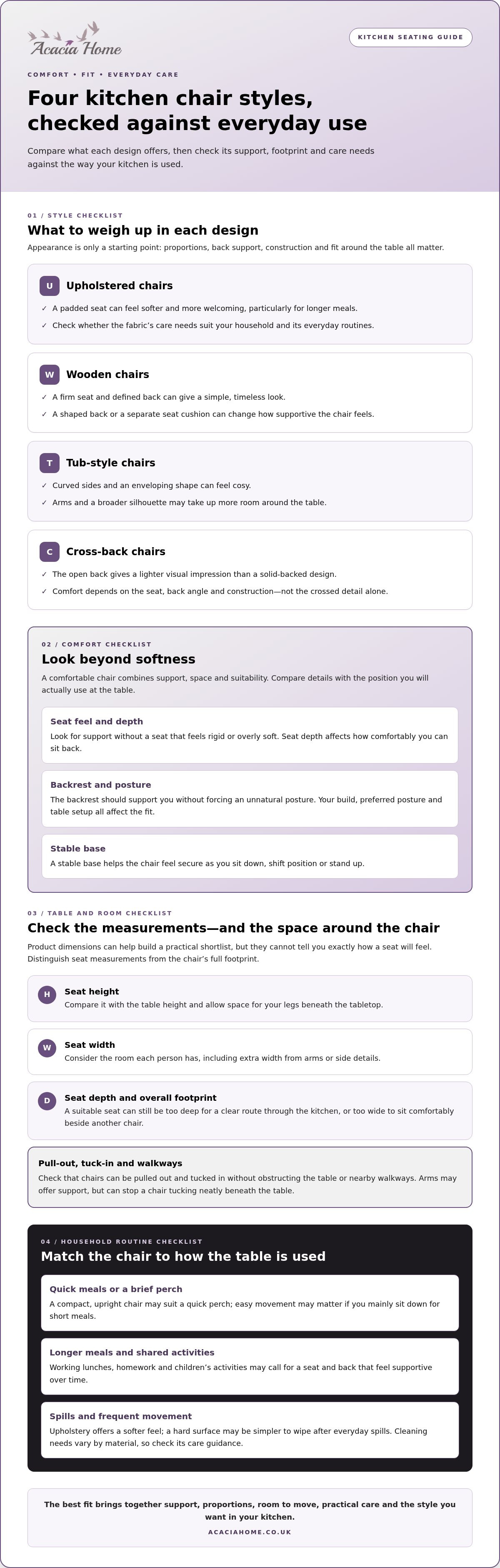
Look for a seat that supports you without feeling either rigid or overly soft. Seat depth affects how comfortably you can sit back, while a backrest should offer support without forcing you into an unnatural posture. A stable base also helps the chair feel secure as you sit down, shift position or stand up.
A compact, upright chair may suit a quick perch, while longer meals often call for a seat and back that feel supportive over time. Neither style is automatically more comfortable: your build, preferred posture and table setup all affect the fit. Consider how the chair will feel in the position you’ll actually use it.
How kitchen routines shape your chair choice
Think about who uses the table and what happens there. A couple who mainly sit down for quick meals may value chairs that are easy to move. A household sharing meals, laptop time and children’s activities may need seating that remains comfortable for longer and is straightforward to clean.
Room to move matters as much as softness. Chairs that are cumbersome to pull out can make a busy kitchen feel cramped, even if they look inviting. Consider spills, frequent movement and changing needs, then weigh practical care against the finish and style you want. A considered choice should suit both the room and the way you live.
Which kitchen chair styles balance comfort and everyday practicality?
Different chair styles bring different qualities to a kitchen, but appearance alone can’t tell you how comfortable a seat will be. Proportions, back support, construction and the fit around your table all matter. Use this comparison as a starting point, then consider how each design suits your routine.
Upholstered chairs: A padded seat can feel softer and more welcoming, particularly for longer meals. Consider whether the fabric’s care needs suit your household.
Wooden chairs: A firm seat and defined back can create a simple, timeless look. A shaped back or separate seat cushion can change how supportive it feels.
Tub-style chairs: Their curved sides and enveloping shape can feel cosy, though arms and a broader silhouette may take up more room around the table.
Cross-back chairs: The open back gives a lighter visual impression than a solid-backed design. Comfort depends on the seat, back angle and construction, not the crossed detail alone.
For broader guidance on comparing chair designs and practical details, explore this dining chair buying guide. The British Furniture Association is another source of information about the UK furniture industry.
Upholstered or hard-surface chairs: which suits your routine?
Upholstery offers a softer feel, while a hard surface may be simpler to wipe after everyday spills. Neither is automatically the more practical choice. Consider who uses the chair, how often it needs cleaning and the look you want in the room. Read the care guidance for the particular material, as cleaning needs vary.
How chair shape changes support and visual space
A supportive back can make a chair more inviting for a longer meal, while an open design may feel visually lighter in a compact kitchen. Arms can offer another point of support, but they may stop a chair tucking neatly beneath the table. Check the chair’s overall width and shape against your available space, rather than judging its appearance in isolation.
As you compare comfortable kitchen chairs uk, weigh softness, support, ease of movement and care alongside style. Acacia Home’s indoor furniture selection includes dining chairs and other seating to explore as you refine your shortlist.
How do you compare kitchen chair comfort, dimensions and materials?
Product measurements help you rule out chairs that won’t work with your table or room, but they can’t tell you exactly how a seat will feel. Use them to build a practical shortlist, then weigh the details against your posture, household routines and material preferences. For anyone comparing comfortable kitchen chairs uk, both fit and feel matter.
Which measurements matter when matching chairs to a kitchen table?
Check the listed measurements carefully, distinguishing the seat dimensions from the chair’s full footprint. A chair may have a suitable seat but still be too wide to fit comfortably beside another, or too deep to leave a clear route through the kitchen.
Seat height: Compare it with the table height, allowing space for your legs beneath the tabletop.
Seat width: Consider how much room each person has, including any arms or side details that add width.
Seat depth: Check that you can sit back comfortably without the front edge pressing against your legs.
Overall footprint: Measure the full width and depth, then picture the chair both pulled out and tucked in.
As a general reference, Furniture in Fashion gives standard dining-chair seat dimensions of 45 to 47cm in height and 45 to 50cm in width, and recommends allowing 60cm of table space per person. Treat these as comparison points, not guarantees of fit: table design, chair shape and household preferences all affect what feels comfortable. The Furniture Makers' Company also offers insight into the UK furnishing industry and its focus on excellence and education.
Before choosing, measure your table and the surrounding floor area. Leave room for people to sit down, stand up and move past one another. The space needed depends on your layout and how the kitchen is used.
Which chair materials suit busy kitchens?
Upholstery can add a softer feel and tactile interest, while wood and other hard surfaces offer a firmer seat and may be simpler to wipe. Cleaning needs vary by finish and fabric, so read the care information for the specific chair rather than assuming all materials behave alike.
Think about the marks your household notices most. A textured or patterned finish may make everyday signs of use less prominent, while a smooth surface can be easier to wipe after a spill. Choose a colour that feels at home in your kitchen and suits the way you use it.
Measurements are a confident starting point, not a verdict on personal comfort. Compare dimensions and care details, then explore indoor furniture to consider dining chairs and other home seating that could suit your table and style.
How can you choose kitchen chairs for your space and household?
A clear shortlist makes it easier to choose chairs that feel considered rather than simply attractive online. Start with the way your kitchen works, then check the fit and practical details before settling on a style.
Assess your routines. Note who uses the table and whether it’s mainly for quick meals, family dinners, homework or laptop time. For a family household, easy cleaning and simple movement may matter as much as a welcoming seat.
Measure the room and table. Check the table height and the space around it. Include the chair’s full footprint, and picture it pulled out to judge access and walkways.
Shortlist styles. Consider shapes and finishes that suit your existing furniture. A lighter-looking design can help a compact kitchen feel more open; in an open-plan room, a chair with more visual presence can help define the dining area.
Compare care and comfort. Review the material, care guidance and support details against your household’s needs. Keep your priorities at the centre of the decision.
Review the product information. Before ordering, revisit the dimensions, material descriptions and delivery information. Compare each option with your measurements and intended use.
How to shortlist chairs for different kitchen layouts
In a compact kitchen, consider how chair legs, arms and overall width affect access to the table and nearby cupboards. A visually open silhouette may feel less imposing, but it still needs to work for the people using it. In an open-plan room, coordinate shape and colour with surrounding furniture so the dining area feels connected without becoming crowded.
Matching every chair isn’t essential. A consistent finish or shared design detail can create a harmonious look, while choosing a chair with the right support for each regular user keeps comfort practical.
What to check before ordering kitchen chairs online
Use product descriptions as a final comparison tool, not just a source of inspiration. Check seat and overall measurements, material details, care guidance and delivery information. For shoppers comparing comfortable kitchen chairs uk, a written shortlist can stop a striking colour or shape from distracting from fit and everyday use.
Once you’ve narrowed down the details that matter, explore indoor seating and find dining chairs to consider for your home.
Find comfortable kitchen chairs that feel at home in your space
The right kitchen chair should feel good to sit on, fit naturally around your table and make sense for the way your household uses the room. Once you’ve compared proportions, support and care needs, bring personal style into the decision too. A chair is part of the room’s character, not simply a place to sit.
How to make comfort and style work together
Look at the colours and textures already in your kitchen, including the table, flooring and nearby furniture. A chair can complement these through a related tone or material, or add a subtle contrast that gives the dining area more presence. Pay attention to proportions: a visually substantial chair may suit a generous open-plan setting, while a lighter-looking shape can feel more at ease in a smaller room.
Style should support the practical checks, not replace them. A beautiful finish won’t make a chair comfortable if its seat dimensions, back support or position at the table don’t suit the people using it. Think about everyday habits too: the kitchen may be where children gather, friends linger over a meal or someone sits with a laptop between tasks. Choose seating that helps the room feel welcoming for those real moments.
A final checklist before choosing your kitchen chairs
Before making your decision, revisit the details that matter most to your home:
Fit: Do the chair dimensions work with your table and leave practical room to move around?
Comfort: Does the seat and back suit the people who’ll use it and the time they’re likely to spend sitting?
Care: Do the material and its care guidance match your household’s routines?
Style: Does the shape and finish sit comfortably alongside your existing furniture?
Use this checklist as a final sense-check, not a formula. Comfort is personal, and the best choice balances everyday use with a look you’ll enjoy living with. Acacia Home is a UK-based online furniture retailer with dining chairs and a considered selection of home furnishings. If you’re comparing comfortable kitchen chairs uk, browse the indoor furniture selection to explore seating for your home, then explore Acacia Home for more inspiration.
Choose kitchen seating that works beautifully every day
The right chair brings together comfort, table fit and a style that feels at home in your kitchen. Compare seat support and dimensions with your space, then consider how the material will suit everyday care and the time your household spends around the table. These details make it easier to choose comfortable kitchen chairs uk that look inviting and suit your routines.
Acacia Home is a UK-based online furniture retailer, with dining chairs and tub chairs among its home seating range. As a family-owned business with established international trade links, Acacia Home brings a considered approach to furnishing the home.
Ready to explore seating that could complement your table and personal style? Browse Acacia Home’s indoor furniture and take the next step towards a kitchen that feels welcoming, comfortable and unmistakably yours.
Frequently Asked Questions
What makes a kitchen chair comfortable for everyday use?
A comfortable kitchen chair supports your posture, feels stable and gives you enough room to sit naturally. Seat depth, backrest shape and firmness all affect how it feels, and preferences vary from person to person. Think about whether you’ll use it for quick breakfasts or longer meals, then compare the chair’s dimensions and design with your comfort needs and table setup.
Are upholstered kitchen chairs practical for a busy household?
Upholstered kitchen chairs can be practical if their care requirements suit your household. Fabric adds softness and texture, which some people enjoy for longer meals, but spills and everyday marks may need more attention than on a wipeable surface. Check the care guidance for the specific material, and consider who uses the table, how often and how likely the chair is to need cleaning.
How do I choose kitchen chairs that fit my table?
Compare each chair’s seat height, width and depth with your table and the available floor space. Furniture in Fashion gives standard dining-chair seat heights of 45 to 47cm and widths of 45 to 50cm, with 60cm of table space per person as a guide. These are reference points, not a guarantee of fit. Check legroom, arms and space to pull chairs out and move around.
Which kitchen chairs are easiest to keep clean?
Chairs with smooth, hard surfaces are often straightforward to wipe after spills, while upholstered seats may need care suited to their particular fabric. Cleaning methods vary by material and finish, so follow the product’s care instructions rather than assuming all surfaces can be treated alike. If children or frequent meals mean regular cleaning, consider how visible marks may be on your chosen colour and texture.
Can kitchen chairs be stylish and comfortable at the same time?
Yes. Choose a design that complements your kitchen’s colours, textures and furniture proportions, then check that the seat, back support and dimensions work for everyday use. A striking shape or finish can bring character to the room, but it shouldn’t be the only deciding factor. The comfortable kitchen chairs uk households choose best bring together personal style, table compatibility and the way people actually sit.
Are tub chairs suitable for a kitchen or dining table?
Tub chairs can work around a kitchen or dining table if their height and overall shape suit the setup. Their curved sides and arms may feel enclosing, but can also make the chair wider or prevent it from tucking fully beneath the table. Compare the chair’s dimensions with your available space, and consider whether its arms and seat position feel comfortable for the people who’ll use it.
How many kitchen chairs should I buy?
Choose enough chairs for the people who regularly sit at the table, then consider how often you host extra guests and how much room you have to store or position additional seating. As a planning guide, Furniture in Fashion recommends allowing 60cm of table space per person to reduce crowding. Check your table length and chair widths together, as the number that fits comfortably depends on both.


Comments