
Chaise Longue Comparison: A Guide to Choosing Your Perfect Statement Piece
- info642352
- 4 days ago
- 12 min read
A chaise longue is far more than a mere extension of your seating; it is a profound architectural statement that bridges the gap between heritage elegance and modern comfort. We understand that selecting the perfect piece for your sanctuary often brings a touch of hesitation. You might find yourself puzzled by the distinction between left and right-hand orientations, or perhaps you're wondering which sumptuous fabric can truly withstand the rhythm of a busy British home. It's a journey of finding that one item that reflects your identity whilst providing a dedicated space for quiet reflection.
This chaise longue comparison is designed to be your expert guide through the delightful nuances of style and structure. We'll demystify the terminology that often clouds the selection process, ensuring you feel entirely confident in your choice of placement and silhouette. By exploring the essential differences in craftsmanship and materials, you'll soon be ready to create a reading nook or relaxation corner that feels both timeless and deeply personal. We'll look at how to balance a luxury feel with practical durability, helping you transform a simple corner into a curated masterpiece of comfort.
Table of Contents
Defining the Chaise Longue: More Than Just a "Long Chair"
The term chaise longue translates literally from French as "long chair," a simple name for a piece of furniture that carries such profound historical weight. It's quite common to see it misspelt as "chaise lounge," a linguistic drift that likely happened as the piece became synonymous with modern relaxation. For those of us who appreciate the heritage of fine furniture, the original name evokes a sense of 18th-century Parisian elegance that a mere "lounge" cannot capture. It's a piece designed for the art of reclining, acting as a sophisticated bridge between the upright posture of an armchair and the communal sprawl of a full-sized sofa.
Historical designs, particularly the iconic "fainting couch," continue to influence the silhouettes we see in contemporary homes. These pieces were originally crafted with a raised back on one side, allowing Victorian ladies to rest whilst keeping their heads elevated. Today, that same structural logic provides the perfect support for reading or enjoying a quiet moment of reflection. This heritage ensures that every piece feels like a personal sanctuary, rooted in a tradition of comfort and grace.
Chaise Longue vs. Dormeuse
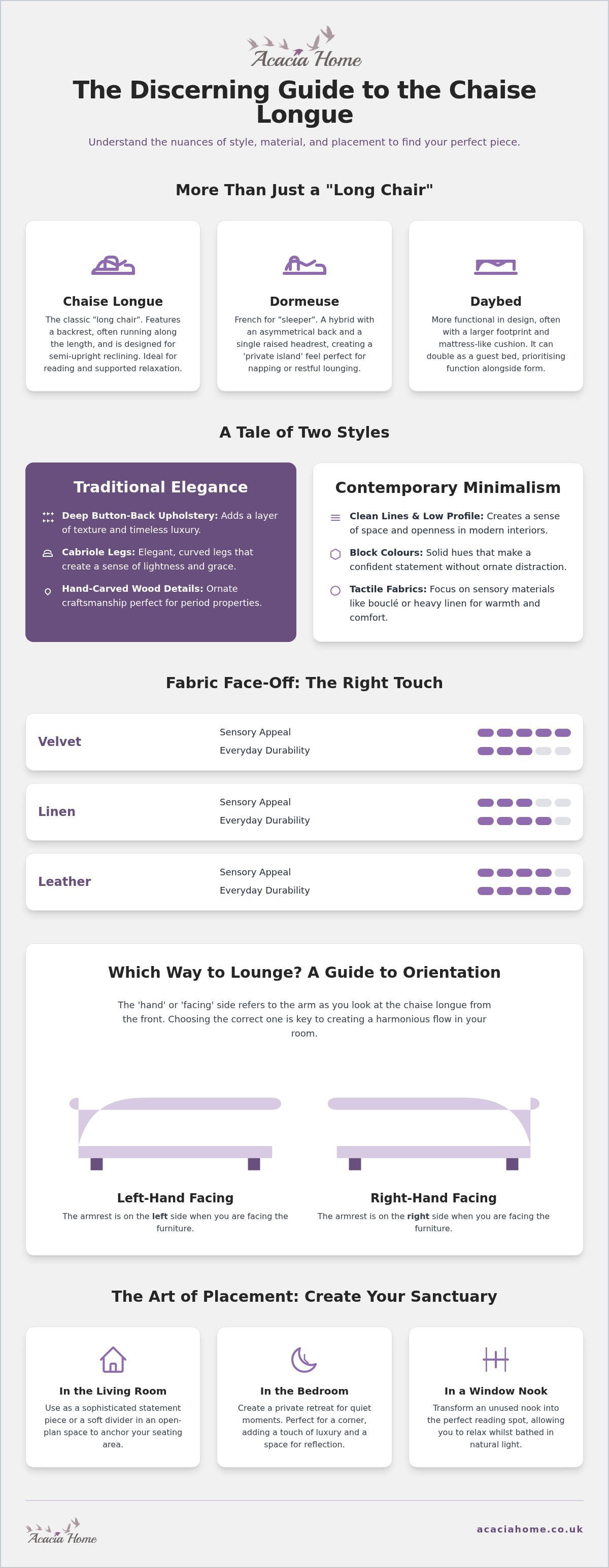
In any detailed chaise longue comparison, the distinction between a standard chaise and a dormeuse is essential for the discerning eye. While a traditional chaise often features a backrest that runs the length of the seat, a dormeuse is a hybrid seat with an asymmetrical backrest, popularised in the 18th century. The dormeuse feels more like a private island, with its single raised headrest inviting a quick nap, whereas a chaise longue often encourages a more supported, semi-upright reclining position perfect for afternoon tea or a long novel.
The Classic Daybed Comparison
Choosing between a daybed and a chaise longue often comes down to the intended "sanctuary" feel of your room. Daybeds typically have a larger footprint and are designed with a flat surface that can double as a guest bed, often featuring a mattress-like cushion. In contrast, the chaise longue is strictly dedicated to the luxury of lounging. It carries less visual weight, making it an ideal choice for creating a dedicated relaxation nook without overwhelming the space. If you're seeking a piece that feels like a personal retreat rather than a functional spare bed, the refined curves of a chaise are usually the superior choice.
Comparing Styles: Traditional Elegance vs. Contemporary Minimalism
Selecting the right aesthetic for your home requires a thoughtful chaise longue comparison of how different silhouettes interact with your room's unique soul. Traditional pieces bring a sense of history and gravitas, whilst modern designs offer a breezy, architectural lightness. It's about finding a balance that feels intentional and reflects your personal journey in home styling. Your choice will often serve as the anchor for other elements, such as your existing occasional chairs, creating a dialogue between the different seating areas in your sanctuary.
The French Provincial Look
This timeless aesthetic is defined by intricate details like cabriole legs, hand-carved wood, and deep button-back upholstery. These elements resonate beautifully within period British properties, where high ceilings and ornate cornicing call for furniture with a matching sense of presence. The refined craftsmanship found in Louis style chairs provides a sensory richness that transforms a simple corner into a curated retreat. To complete this look, you might consider pairing your chaise with a luxury ottoman, which adds an extra layer of comfort and heritage charm to your living space.
The Modern Minimalist Approach
Contemporary designs often favour block colours and tactile, sensory fabrics like bouclé or heavy linen. These low-profile silhouettes are masters of creating a sense of space; by keeping the visual weight close to the floor, they allow a room to feel more open and airy. There's been a noticeable shift towards "chaise sofas" in open-plan living, where the furniture acts as a subtle, soft divider that doesn't block the natural light. These pieces often feature sleek metal feet or hidden bases, providing a clean-lined alternative to more decorative traditional frames.
When you're deciding between these styles, think carefully about the "flow" of your room. Exposed wooden legs create a sense of lightness by allowing the eye to see the floor beneath the furniture, making them a perfect choice for smaller nooks. In contrast, upholstered bases feel grounded and substantial, which can help define a specific zone in a larger, cavernous room. If you're looking for inspiration to start your own collection, you might enjoy browsing the refined selection at Acacia Home to see how these styles can be harmonised. Ultimately, the piece should feel like an extension of your identity, whether that's through the ornate curves of the past or the crisp lines of the present.
Fabric and Material Comparison: Velvet, Linen, and Leather
Once you've settled on a silhouette that speaks to your aesthetic, the next vital step in your chaise longue comparison involves the tactile journey of choosing the right material. This choice dictates how the piece interacts with the light in your room and, more importantly, how it feels against your skin during those stolen moments of rest. It's a decision that balances the desire for a luxury "statement" with the practical needs of your daily life. To ensure your piece remains a sanctuary for years to come, pay close attention to the Martindale rub count; for occasional seating that sees regular use, a count of 20,000 or higher is a reliable benchmark for durability.
The Velvet Chaise Longue
Velvet remains the ultimate choice for those seeking depth of colour and an irresistible sensory appeal. It catches the light in a way few other fabrics can, shifting from deep, moody shadows to brilliant highlights as you move around the room. Whilst it serves as a stunning focal point, velvet does require a little more care to maintain its opulent sheen; a soft-bristled brush is your best friend for keeping the pile looking fresh and even. Synthetic velvets offer the same luxurious look with much higher stain resistance, providing a practical yet beautiful solution for busy family homes where spills might be a concern.
Linen and Natural Blends
Linen is a perennial favourite for window seats and sun-drenched corners because of its wonderful light-reflecting properties. It helps create a breathable, relaxed atmosphere that leans into the popular "Hamptons" or "Scandi" aesthetics. When comparing natural fibres, consider the "lived-in" charm of linen against the more structured, crisp finish of a cotton blend. Linen has a unique way of aging; it develops a soft character and a gentle patina over time, making the piece feel like a cherished part of your home's history rather than a mere showroom acquisition.
Leather offers a different kind of heritage, bringing a sense of timelessness and unmatched durability to a study or library. While it might lack the initial "hug" of a soft velvet, high-quality leather breathes and adapts to your body temperature, becoming more supple and comfortable with every passing year. It's a robust choice that stands up to the rigours of a high-traffic household whilst maintaining a sophisticated, polished appearance. Whether you choose the sensory warmth of fabric or the enduring strength of leather, your choice should always reflect the unique rhythm of your home.
Comparing Placement: Living Rooms, Bedrooms, and Window Nooks
Finding the right home for your new piece is just as critical as the style you select. It's about more than just filling a gap; it's about defining the emotional purpose of a space. In a spacious living room, a chaise serves as an elegant room divider, separating the social seating area from a walkway without the visual weight of a heavy sofa. This is where a careful chaise longue comparison becomes essential. You'll need to decide between a left-hand or right-hand facing model to ensure the piece sits naturally within your layout. As a general rule, stand in front of where the piece will go; if the arm needs to be on your left to keep the view open, you're looking for a left-facing model. Choosing the correct orientation ensures the piece "hugs" the corner or opens up to the rest of the room, creating a natural flow that feels intentional rather than accidental.
Mastering the Window Nook
Awkward bay windows often feel like wasted space, but they're the perfect home for a small chaise longue. These compact designs offer elegance without overwhelming the natural light. When measuring your space, ensure the backrest height sits comfortably below the window sill so you don't block your garden view. Adding a slender side table for your morning coffee or a favourite book transforms this nook into a dedicated sanctuary for quiet starts to the day. It's a way to reclaim a corner of your home that might otherwise go unused, turning it into a focal point of sensory appeal that invites you to linger just a little longer.
The Bedroom Retreat
In the bedroom, a chaise longue adds that sought-after "boutique hotel" feel, turning a sleeping space into a multi-functional suite. Placing it at the foot of the bed offers a practical spot for dressing, while a corner placement creates a private island for evening reflection. It's a gentle invitation to slow down before sleep, away from the distractions of the rest of the house. This placement reinforces the idea of the home as a sanctuary, providing a dedicated area for quiet moments that belong only to you. You'll find that having a dedicated spot for reading or reflection makes the entire room feel more curated and personal. Whether you're looking for a bold living room statement or a quiet bedroom retreat, you can browse our curated selection of chaise longues to find your perfect match.
Finding Your Perfect Match: The Acacia Home Curation
At Acacia Home, we believe your furniture should be a mirror to your soul. Our curation process is a labour of love, where we hand-pick every piece based on its unique character and the story it tells. We act as a bridge, bringing global craftsmanship to the local British home. When you perform a chaise longue comparison, you'll find that our selection prioritises the emotional impact of a piece just as much as its physical dimensions. We source heritage-inspired silhouettes that feel at home in a modern terrace or a country cottage, ensuring that every item we offer is a true statement of identity. Our passion for styling means we don't just sell furniture; we help you find the missing piece of your home's narrative.
Quality and Craftsmanship
Our commitment to beauty is matched only by our dedication to longevity. We intentionally avoid the "disposable furniture" trend, choosing instead to focus on solid frames and high-quality upholstery techniques that stand the test of time. There is a deep sensory appeal to the fabrics we select, from the heavy weight of our linens to the opulent touch of our velvets. Every stitch and carved detail is a testament to the artisans we work with, providing you with a piece that doesn't just look exquisite but feels substantial and reliable. It's about creating a sanctuary where you can truly relax, knowing your furniture was built with care and passion.
Personalised Service
As a family-owned business, we treat every customer as a partner in the creative process. We see ourselves as your visionary guide, helping you find that one perfect item that completes your room's narrative. Buying from a UK-based specialist with established global trade links means you receive the benefits of a worldly perspective combined with the intimacy of personal service. We understand the nuances of British living, and we're here to help you make a choice that brings joy every time you walk into the room. We invite you to explore our latest collection online and discover how a carefully chosen seat can transform your daily life.
Your sense of style shouldn't stop at the patio doors. Many of our clients find that the elegant, relaxed lines of our indoor seating can be beautifully echoed in their outdoor spaces. By integrating our interior pieces with our teak garden furniture, you can create a cohesive flow that extends your home's sanctuary into the garden. This holistic approach to styling ensures that whether you're reclining in a velvet chaise or lounging on a sun-drenched terrace, your surroundings remain a consistent reflection of your refined taste.
Transform Your Space with an Elegant Sanctuary
Choosing a piece of furniture that defines your home is a deeply personal journey. You've now explored how the right orientation can open up a room and why the tactile choice between sumptuous velvet and breathable linen matters for your daily rhythm. Whether you're reclaiming an awkward window nook or creating a boutique hotel feel in your bedroom, your selection acts as a vital focal point for both comfort and individual style. It's about finding that perfect balance between heritage aesthetics and modern lounging needs.
By using this chaise longue comparison as your guide, you can move forward with total confidence in your interior vision. As a family-owned British business, we take immense pride in our expertly curated selection and offer national UK delivery to help you bring these refined designs into your own sanctuary. We invite you to explore our hand-picked collection of elegant chaise longues and find the statement piece that truly reflects your identity. Your perfect corner of relaxation is waiting to be discovered.
Frequently Asked Questions
What is the difference between a left-hand and right-hand chaise longue?
The orientation is determined by the position of the armrest when you are standing directly in front of the piece. A left-hand model has the arm on your left side, meaning your head rests there whilst your legs stretch out to the right. Choosing the correct orientation is a vital part of any chaise longue comparison because it dictates how the piece integrates with your room's traffic flow and ensures you don't block any natural light sources.
Is a chaise longue more comfortable than a standard armchair?
A chaise longue offers a unique reclining experience that a standard armchair simply cannot replicate. Whilst an armchair supports an upright posture, a chaise allows you to fully elevate your legs and stretch out in a semi-reclined position. This makes it a superior choice for long periods of reading or quiet reflection. It acts as a dedicated sanctuary for relaxation, providing more versatile support than a typical occasional chair.
Can a chaise longue be used as a bed for guests?
A chaise longue is primarily designed for lounging and is not intended to replace a standard guest bed. Most models are narrower than a twin mattress and feature a curved backrest that isn't suitable for a full night's sleep. However, they are perfect for a short afternoon nap. If you require a piece for overnight guests, you might find that a dedicated daybed or a larger window seat offers the flat surface they need.
How do I measure my room to ensure a chaise longue will fit?
Start by measuring the total floor area and use masking tape to outline the footprint of the piece to visualise the flow. Ensure there is at least 30cm of clearance around the edges to allow for easy movement through the room. You should also measure the height of your window sills if you plan to place it in a nook. This careful preparation ensures your new statement piece feels perfectly proportioned within your sanctuary.
Which fabric is best for a chaise longue if I have pets or children?
Synthetic velvets and tightly woven linen blends are the most practical choices for busy households. These fabrics offer high Martindale rub counts, which indicate they can withstand the daily rhythm of children and pets without losing their luxury feel. Synthetic fibres are generally more stain-resistant and easier to spot-clean than pure natural materials. They allow you to enjoy a sophisticated aesthetic whilst maintaining a durable surface that stands up to frequent use.
What is the standard length of a luxury chaise longue?
Luxury models typically range between 140cm and 180cm in length, though compact versions are available for smaller nooks. When performing your chaise longue comparison, consider whether you want enough space for full leg extension or a shorter seat for occasional use. The ideal length should allow the primary user to recline comfortably without their feet hanging over the edge. Shorter models work beautifully as decorative accents at the foot of a bed.
Should a chaise longue match my existing sofa or can it be a different colour?
Your chaise longue doesn't need to match your sofa; choosing a contrasting colour often creates a more intentional, curated look. Using a bold jewel tone or a unique texture allows the piece to stand out as a personal statement rather than blending into the background. You can maintain a sense of harmony by echoing the colour of your chaise in smaller accents like cushions or artwork. This approach makes your living space feel like an extension of your identity.
What is a "recamier" and how does it compare to a chaise longue?
A recamier is a specific silhouette that features two raised ends and no backrest along the long side. Named after the French socialite Juliette Récamier, it offers a symmetrical, architectural look that is quite different from a standard chaise. Whilst a traditional chaise longue is designed for leaning back against a side rail, a recamier is more versatile for seating from either side. This makes it an exquisite choice for hallways or as a divider in open-plan rooms.


Comments