
Chairs for Small Spaces: 2026 Guide to Compact Seating
Updated: Sep 9
Have you ever wondered why a room filled with "compact" furniture can still feel cluttered and claustrophobic? It’s a common frustration to feel like you're forced to choose between a truly comfortable seat and the ability to move freely through your living area. You shouldn't have to settle for flimsy, uninspiring designs just because your floor plan is modest, yet many of us find ourselves sacrificing style for the sake of a few extra centimetres. Finding the right chairs for small spaces is about more than just tape measurements; it's about how a piece breathes within your home.
We believe that every home should be a sanctuary and a personal statement, regardless of its square footage. This 2026 guide will help you discover how to choose and style the perfect seating to maximise comfort without compromising on British elegance. We will explore the vital difference between physical size and visual weight, the versatility of multi-functional ottomans, and how curated silhouettes can elevate a tiny nook into a sophisticated retreat. You'll learn to create a curated home that feels airy, intentional, and perfectly tailored to your unique aesthetic.
Table of Contents
Understanding the Art of Choosing Chairs for Small Spaces
Designing for a compact home is an exercise in mindfulness. It’s easy to feel restricted by four walls, yet the most beautiful interiors often emerge from these very constraints. Finding the right chairs for small spaces involves looking beyond the tape measure; it requires an understanding of how an object occupies the mind as much as the floor. A brief look at the history of chair design reveals that elegance has always been found in proportion rather than sheer scale. By focusing on "curated compact living", you can transform a tight corner into a personal sanctuary that feels intentional and airy.
Your home is an extension of your identity, a place where you should feel entirely at ease. Sacrificing quality for a "small-scale" label often leads to furniture that lacks the ergonomic support required for true relaxation. By selecting pieces that bridge the gap between global trends and local heritage, you ensure your seating is as durable as it is beautiful. A curated home isn't about how much you can fit in; it's about how well each piece serves your daily life and supports your well-being.
Visual Weight vs. Physical Footprint
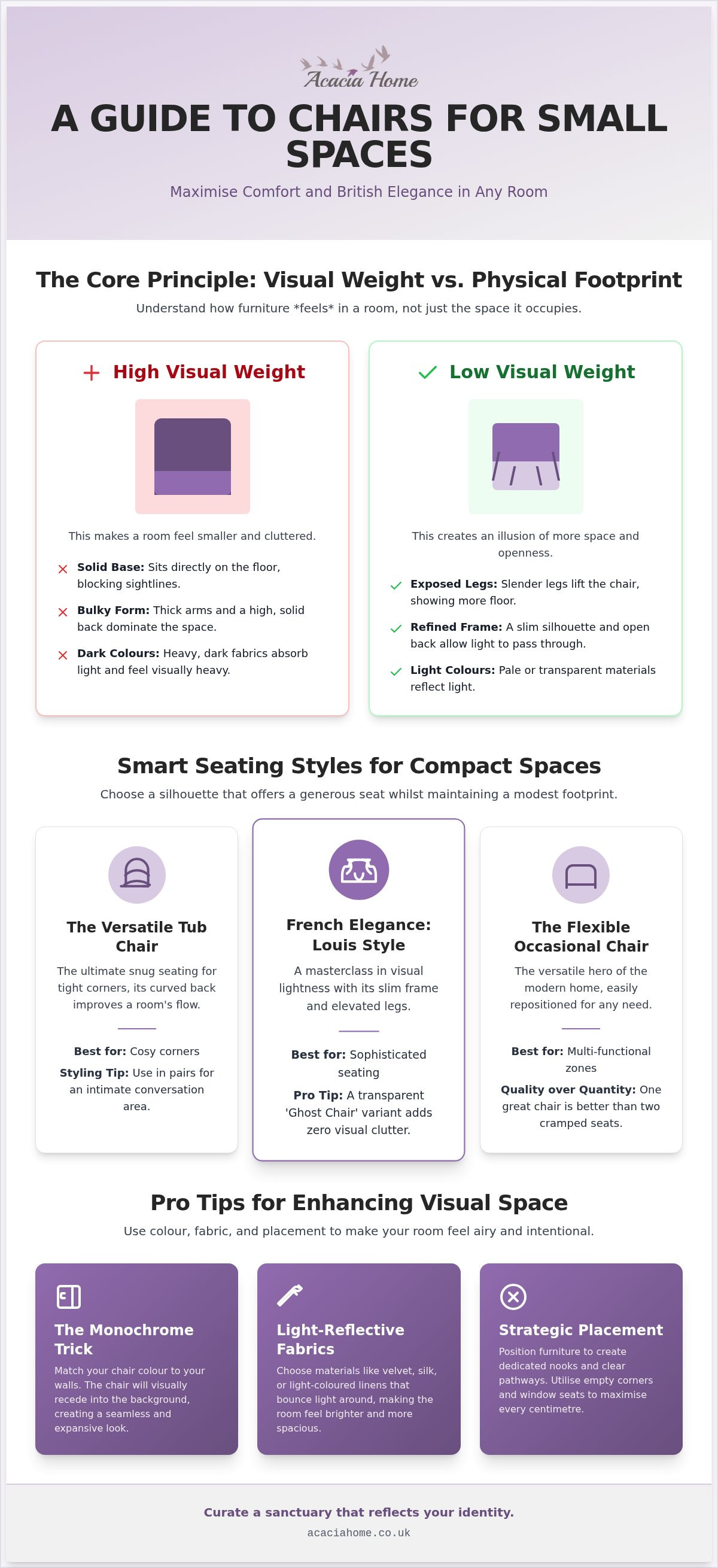
Visual weight refers to how "heavy" a piece of furniture looks, regardless of its actual size in centimetres. In a limited layout, your goal is to maintain sightlines and floor continuity. Choosing chairs with exposed, slender legs allows the eye to travel underneath the seat, creating an illusion of more floor space. This is why a louis style chair is a masterclass in visual lightness. Its delicate frame and often open-back design provide a sophisticated seat without blocking the view of the room, keeping the atmosphere feeling open and unburdened.
The Role of Occasional Chairs in Compact Layouts
Whilst bulky sofas often dominate a room’s layout, occasional chairs offer the gift of flexible movement. These pieces are the versatile heroes of the modern UK home, easily repositioned to accommodate guests or to catch the afternoon sun. A single, high-quality occasional chair with a compact silhouette often serves a space better than two cramped, lower-quality seats. It creates a dedicated nook for reading or reflection, proving that you don't need vast square footage to find comfort. When you prioritise craftsmanship over quantity, you avoid the "cluttered" look that so often plagues smaller rooms, ensuring every item has the space it needs to breathe.
Compact Seating Styles: From Tubs to Louis Classics
Selecting the right silhouette is the next step once you've understood the principles of visual weight. In many UK homes, rooms are often long and narrow or tucked into historic eaves, making standard furniture feel like an intrusion rather than an addition. The secret lies in choosing pieces that offer a generous seat whilst maintaining a modest footprint. Four styles stand out as particularly effective for these environments: the protective tub chair, the refined Louis style chair, the space-saving chaise longue, and the versatile occasional chair. These designs prove that chairs for small spaces can be both grand in character and compact in scale. To complete the look, sourcing a complementary centrepiece is vital; The Mid Century Design Co. offers expert tips on finding authentic vintage tables that enhance a smaller living area without dominating it.
The Versatile Tub Chair
The tub chair is the ultimate snug seating option for tight corners. Its distinctive curved back isn't just an aesthetic choice; it allows the piece to nestle amongst other furniture without the sharp angles that often interrupt a room's flow. If you find yourself with a living area too small for a traditional bulky loveseat, consider styling tub chairs in pairs. This creates an intimate conversation area that feels curated and intentional rather than cramped. For those living in multi-purpose apartments, choosing dining chairs with a tub-style frame provides a comfortable seat that works just as well for a long dinner as it does for a morning coffee in the lounge.
French Elegance: Louis Style in Small Rooms
Whilst some might assume that traditional styles are too ornate for compact living, the Louis style chair proves quite the opposite. Its slim, carved frame and elevated legs provide a sense of formal elegance that doesn’t block light or floor space. For the most restricted areas, the "Ghost Chair" variant is a revelation. Made from transparent materials, it virtually disappears in a room, providing a sturdy seat without adding any visual clutter. A single Louis accent chair can beautifully define a dressing table or a small writing desk, adding a touch of heritage to a modern layout. It’s a sophisticated way to introduce personality without overwhelming your floor plan.
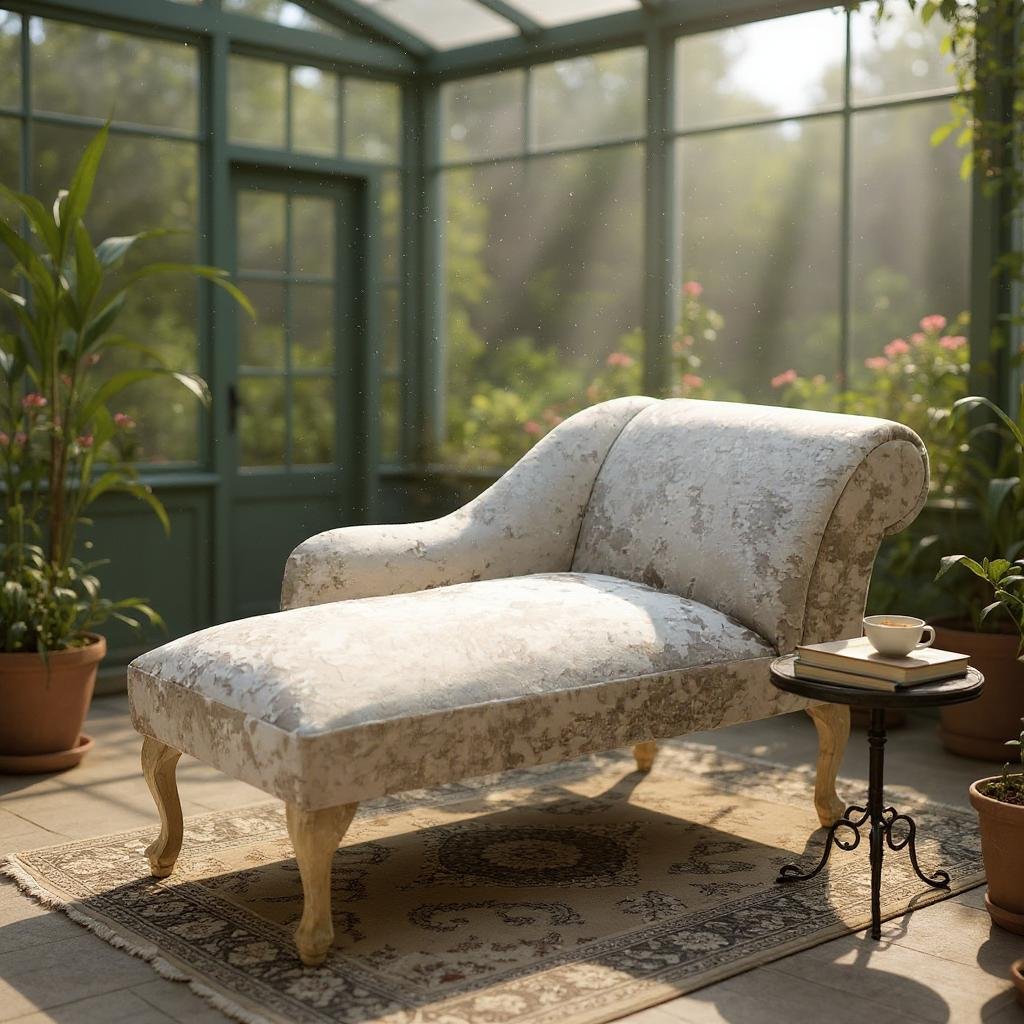
The chaise longue is another often-overlooked hero for narrow rooms. Where a full sofa might be too deep and dominate the walkway, a chaise provides a place to recline without encroaching on the centre of the room. This makes it an ideal choice for hallways or window alcoves where every centimetre counts. If you're looking to bring this sense of global-to-local craftsmanship into your own home, you might explore our carefully curated collection of seating designed to balance beauty with practicality.
Selecting Fabrics and Colours to Enhance Visual Space
The choice of fabric and colour is often the final flourish in a room's design, yet it holds the power to completely alter our perception of space. Whilst physical dimensions are fixed, the way light interacts with a surface can make an object feel either heavy and intrusive or light and ethereal. Choosing the right palette for your chairs for small spaces can turn a cramped corner into an inviting retreat. Many high-street options focus solely on durability, but a sophisticated home requires materials that breathe and colours that recede, allowing the room's architecture to shine.
One of the most effective techniques used by interior stylists is the "monochrome trick". By selecting a chair colour that closely matches your wall paint, you reduce visual breaks in the room. This seamless transition prevents the eye from snagging on a dark or contrasting object, making the boundaries of the room feel further away. It’s a simple yet transformative way to ensure your favourite seating doesn't dominate the floorplan, but rather becomes a natural extension of the sanctuary you've created.
The Magic of Light Neutrals and Pastels
Soft greys, creams, and duck-egg blues are more than just safe choices; they're strategic tools for spatial organisation. These colours recede from the viewer, creating a sense of calm and order that prevents a small room from feeling chaotic. When you pair these light fabrics with natural wood legs, you maintain a cohesive, airy look that draws the eye across the floor rather than stopping it at the base of the chair. This continuity is essential for keeping a modest layout feeling fresh and unburdened by heavy furniture.
Texture and Depth: Velvet vs. Linen
Whilst linen offers a crisp, flat look that feels inherently modern and "breathable", velvet adds a sophisticated sheen that can actually help brighten a room. Some believe that velvet is too heavy for compact living, but a high-quality, short-pile velvet catches and reflects light in a way that flat fabrics cannot. This subtle shimmer can make a shadowed corner feel more vibrant and spacious. When selecting your fabric, consider the durability required for high-traffic spots. A tightly woven linen or a performance velvet provides the resilience needed for daily life whilst maintaining the sensory appeal that makes a house feel like a home. Bold patterns should be used sparingly, perhaps on a small footstool or a single cushion, to create a focal point that doesn't overwhelm the delicate balance of your curated space.
Strategic Placement: Creating Nooks and Multi-Functional Zones
The layout of a room is just as vital as the furniture you select. Even the most beautiful chairs for small spaces can feel like obstacles if they aren't positioned with intention. Whilst many feel the urge to push furniture against walls to "open up" the floor, this can often make a room feel static. Paradoxically, the "Floating Chair" technique, where you pull a seat just a few centimetres away from the boundary, creates a shadow line that adds depth. It makes the room feel larger because the furniture isn't clinging to the edges. By following a few simple steps, you can ensure your seating enhances the flow of your home.
To achieve a balanced layout, consider these five steps for placement:
Map the movement: Ensure a clear path of at least 60 centimetres between pieces to allow for easy passage.
Angle your chairs: A slight 45-degree tilt towards the centre of the room feels more inviting than a flat arrangement.
Pull away from walls: Use the floating technique mentioned above to create a sense of breathability.
Respect sightlines: Keep the area between the seat and the room’s main focal point clear of tall obstructions.
Anchor the zone: A small rug or a slim floor lamp can define a chair as a distinct "nook" rather than a stray object.
Utilising Bay Windows and Alcoves
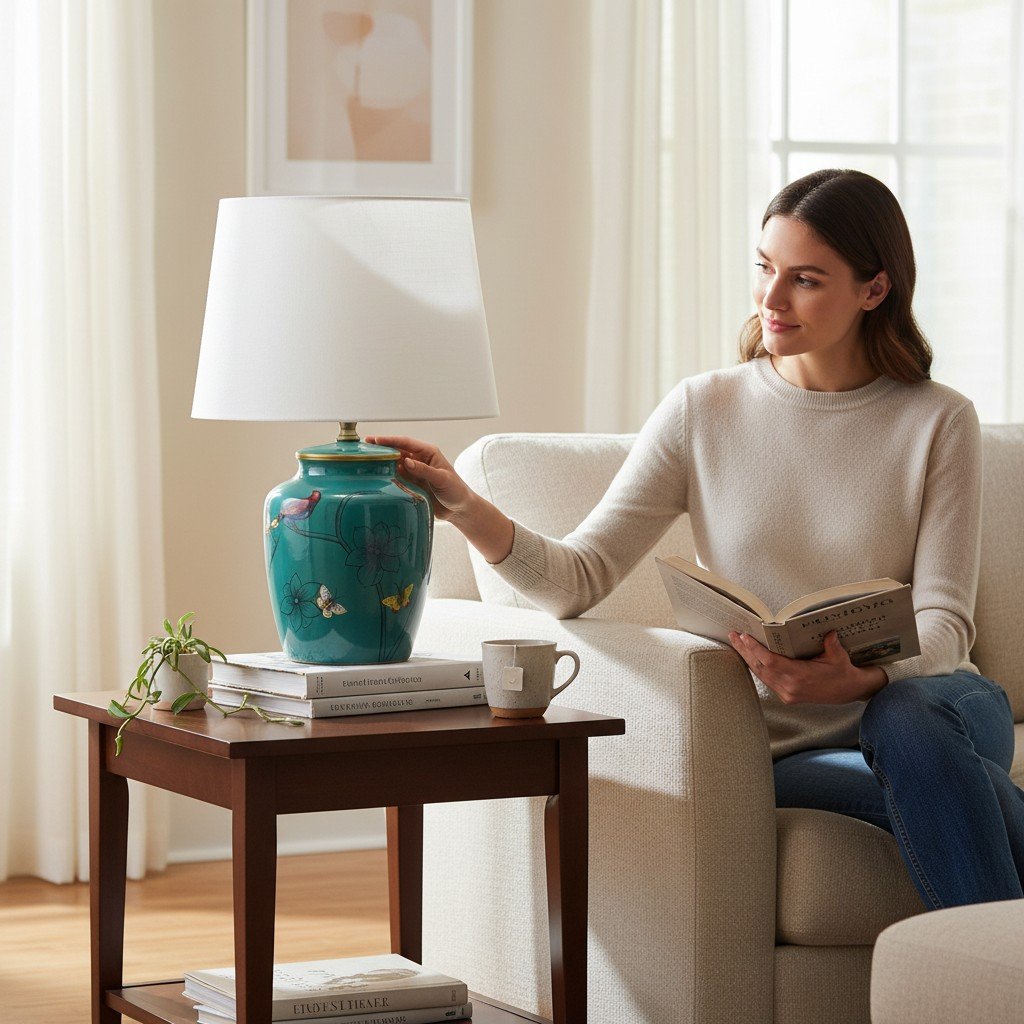
Architectural features like bay windows or chimney breast alcoves are often wasted space in UK homes. A small chaise longue or a window seat can turn these awkward gaps into a stunning focal point. Measuring your alcove carefully is vital. You want a fit that feels integrated rather than squeezed. Creating a reading nook with a single occasional chair and a minimal side table allows you to capture every square inch of your sanctuary. It transforms a transition area into a destination for relaxation.
Ottomans and Footstools as Secondary Seating
The versatile ottoman is a secret weapon for compact layouts. These pieces serve as a footrest, a coffee table, and most importantly, secondary seating that can be tucked away when not in use. Choosing an ottoman that can slide under a console table or nest amongst your primary seating provides incredible flexibility for guests. Storage ottomans are particularly effective for decluttering small spaces, hiding away blankets or magazines whilst maintaining a polished look. They bridge the gap between utility and style, ensuring your home remains a peaceful, organised retreat.
Ready to transform your own living space? Explore our curated collection of occasional chairs and ottomans to find the perfect piece for your home.
Curating Your Sanctuary with Acacia Home’s Collection
Choosing the right chairs for small spaces is a journey of discovery that ends in a more intentional, beautiful way of living. It’s about finding that perfect balance between form and function, ensuring your home feels like an extension of your identity rather than a series of compromises. At Acacia Home, we act as a passionate bridge between the world’s finest manufacturers and your own living room. We believe that a limited floor plan shouldn't limit your personal expression or your comfort. Our curation process is deeply personal, rooted in traditional values of quality and service. As a family-owned business, we take pride in selecting pieces that don't just fill a gap but actually enhance the atmosphere of your sanctuary.
Quality That Fits Your Lifestyle
Every item in our collection is chosen with a visionary guide’s eye, looking for pieces that tell a story of heritage whilst remaining contemporary enough for modern UK interiors. Our chairs are designed to be a personal statement. We focus on the "feel" and "impact" of a piece, ensuring the fabrics have a sensory appeal that invites you to sit and stay. This commitment to quality means your furniture won't just look good on the day it arrives; it will remain a cherished part of your home for years to come. We listen to our community, using your feedback to refine our selection and ensure we’re meeting the real-world needs of compact living. Whether it's the slender frame of an occasional chair or a bespoke design selv sofa for your living area, we prioritise craftsmanship that stands the test of time.
Are you ready to transform your home into a sophisticated retreat? Creating an airy, stylish sanctuary is entirely within your reach when you choose pieces with the right visual weight and silhouette. Whether you’re looking for a slender Louis style chair to grace an alcove or a versatile ottoman to provide extra seating, our 2026 collections are designed to inspire. We invite you to explore our full range and see how curated design can breathe new life into your space. You don't have to sacrifice elegance for size; you simply need the right partner to help you find the perfect fit.
If you’re unsure which piece will best suit your specific layout, our friendly team is always here to help. We love relationship-building and acting as a helpful partner in your creative process. You can contact us for styling advice or simply browse our latest arrivals to find your new favourite seat. Visit our homepage to start your journey toward a more beautiful, intentional home today.
Transform Your Home into a Curated Sanctuary
Creating a home that feels both intimate and spacious is an art form that begins with understanding how furniture interacts with your environment. By prioritising visual weight over mere dimensions and embracing the versatility of multi-functional pieces, you can reclaim your living space without losing an ounce of style. We've explored how light-reflective fabrics and strategic placement can turn architectural challenges into design opportunities, ensuring every corner of your home serves as a peaceful retreat instead of a cluttered corridor.
Finding the perfect chairs for small spaces shouldn't feel like a series of compromises. At Acacia Home, we bring our family-owned expertise and a refined selection of luxury seating directly to your door with national UK delivery on all our 2026 styles. We're here to help you bridge the gap between global craftsmanship and your personal aesthetic goals. Explore our curated collection of chairs for small spaces at Acacia Home and discover how the right silhouette can truly open up your world. Your journey toward a more beautiful, intentional home starts with a single, perfectly chosen seat.
Frequently Asked Questions
What is the best chair for a very narrow living room?
A chaise longue or a window seat is often the most effective choice for a narrow living room. These pieces celebrate the length of a space whilst maintaining a slender profile that doesn't block the central walkway. By positioning a chaise against a long wall or tucked into a window alcove, you create a generous area for reclining without the bulk of a traditional sofa. It’s a sophisticated way to utilise every centimetre.
Can I use a Louis style chair in a modern, small apartment?
You can certainly use a Louis style chair in a modern apartment to create a sophisticated focal point. Their ornate but slim frames provide a beautiful contrast to minimalist architecture without overwhelming the floor plan. Because they feature high, slender legs and often open-back designs, they maintain sightlines across the room. This makes them one of the most elegant chairs for small spaces in a contemporary setting.
Are tub chairs comfortable for sitting in for long periods?
Tub chairs are exceptionally comfortable for long periods due to their supportive, wrap-around backrests. The curved silhouette provides a sense of security and ergonomic support that many flatter designs lack. When you choose a tub chair with high-quality upholstery and a well-cushioned seat, it becomes the perfect spot for an afternoon of reading or intimate conversation. Their snug design is specifically crafted to cradle the sitter whilst saving space.
How do I stop a small room from looking cluttered with too many chairs?
To prevent a small room from looking cluttered, focus on the visual weight of your seating. Choose pieces with exposed legs and open silhouettes that allow light to pass through. It's also helpful to limit the number of individual items by selecting multi-functional furniture like ottomans. A few high-quality, expertly curated pieces will always look more intentional and airy than a collection of smaller, mismatched items squeezed into tight corners.
Should I choose a chair with or without arms for a small space?
Choosing armless chairs is generally better for the tightest spots as they can be tucked closer to other furniture or walls. However, if comfort is your priority, look for chairs with slim, recessed arms that don't add significant width to the frame. Armless designs, often called slipper chairs, offer a cleaner look that keeps the room feeling open whilst still providing a sturdy and stylish place to sit in your sanctuary.
What colour chair makes a small room look bigger?
Selecting chairs in light neutrals like cream, soft grey, or duck-egg blue will help a small room feel much larger. These shades recede from the eye and reflect more natural light, creating an airy atmosphere. For a truly seamless look, try matching your chair’s fabric to your wall colour. This monochrome trick reduces visual breaks, making the boundaries of your home feel further away than they actually are.
Can an ottoman really replace a traditional armchair in a small space?
An ottoman can effectively replace a traditional armchair when you need flexible, secondary seating that doesn't dominate the room. Whilst it lacks a backrest for long-term lounging, its low profile keeps sightlines clear and provides a multi-functional surface for trays or feet. It's a brilliant secret weapon for compact layouts because it can be tucked under a table or moved easily when guests arrive, offering comfort without the permanent physical footprint.
Comments