
The Louis Chair: A Comprehensive Guide to French Elegance and Timeless Style
- info642352
- Aug 15
- 13 min read
Can a piece of furniture designed for 18th-century royalty truly survive the joyful chaos of a modern British home without feeling like a dusty museum relic? It's a question many of us ask when we fall in love with the graceful curves of French design. You likely appreciate the undeniable elegance of a well-placed louis chair, yet you might worry that such a sophisticated silhouette will feel too stuffy for a relaxed family space. Perhaps you've even felt a little lost trying to tell the difference between the ornate carvings of the XIV period and the refined, straight lines of the XVI.
We're here to show you that these chairs are far more than just historical artefacts; they are versatile, living icons that bring a sense of sanctuary to any room. In this guide, you'll learn how to distinguish between the three main Louis styles and discover practical ways to blend them into your contemporary decor. We'll also provide the confidence you need to select high-quality materials, ensuring your choice feels just as comfortable as it looks beautiful. From the dining room to a quiet reading nook, let's explore how to elevate your home with a touch of timeless French flair.
Table of Contents
What is a Louis Chair? Defining the Essence of French Elegance
The louis chair isn't merely a piece of furniture; it's a storied masterpiece that has gracefully journeyed from the gilded halls of Versailles into the heart of the modern British home. Originating during the illustrious reigns of Kings Louis XIV, XV, and XVI, this style represents the pinnacle of French craftsmanship and royal luxury. Each piece is defined by its exposed wooden frame, often intricately hand-carved, and paired with plush upholstery that invites you to linger. In 2026, these chairs remain a firm favourite for those looking to create a sophisticated focal point, offering a sense of heritage that mass-produced alternatives simply can't match. This transition from the rigid formality of royal courts to the curated warmth of a personal sanctuary allows the chair to act as a bridge between history and your personal identity.
The Silhouette: Recognising the Louis Profile
Identifying a Louis profile is about appreciating the harmony between wood and fabric. You'll often find specific features that define these historical periods:
The Cabriole Leg: A curved leg that mimics the organic lines of nature, typical of the Louis XV style.
The Exposed Frame: A hallmark that highlights the craftsmanship and intricate carvings of the wood, often left in a natural or distressed finish.
The Fluted Leg: A straight, tapered leg with vertical grooves, reflecting the neoclassical influence of later periods.
The iconic medallion back, featuring an oval or circular upholstered section within a delicate wooden frame, serves as the definitive hallmark of Louis XVI style furniture. Because the wooden frame remains exposed, often crafted from high-quality beech or oak, the chair maintains an 'open' aesthetic. This transparency is a clever trick for smaller rooms; it allows light to pass through and around the piece, preventing the space from feeling cluttered or heavy whilst still providing a sense of grandeur.
Beyond the Dining Room: A Versatile Occasional Piece
Whilst many first encounter these designs at a formal dinner table, the modern home has found new ways to celebrate their elegance. The louis chair stands out because its light silhouette makes it far more adaptable than a bulky modern armchair, allowing you to move it easily as your needs change. A single Louis piece makes for a perfect occasional chair, providing a quiet sanctuary in a bedroom corner or a welcoming seat in a narrow hallway. This adaptability has cemented its status as the ultimate 'statement seating.' It's a way to tell your home's story through a curated blend of old and new, turning a functional item into a conversation starter that feels both timeless and contemporary. By choosing a piece with a unique finish or a bold fabric, you can transform a classic silhouette into a modern expression of your personal style.
The Evolution of Style: Louis XIV, XV, and XVI Differences
Understanding the nuances between French historical periods can feel like learning a new language, yet each monarch left a distinct fingerprint on the louis chair. These designs didn't just change for the sake of fashion; they reflected the shifting moods of the French court, moving from the theatrical power of the 17th century to the refined, quiet elegance of the late 18th. When you're selecting a piece for your home, recognising these differences helps you match the furniture's 'visual weight' to your existing decor. A heavy, ornate piece might command a grand hallway, whilst a more slender silhouette could be the perfect partner for a modern, light-filled bedroom.
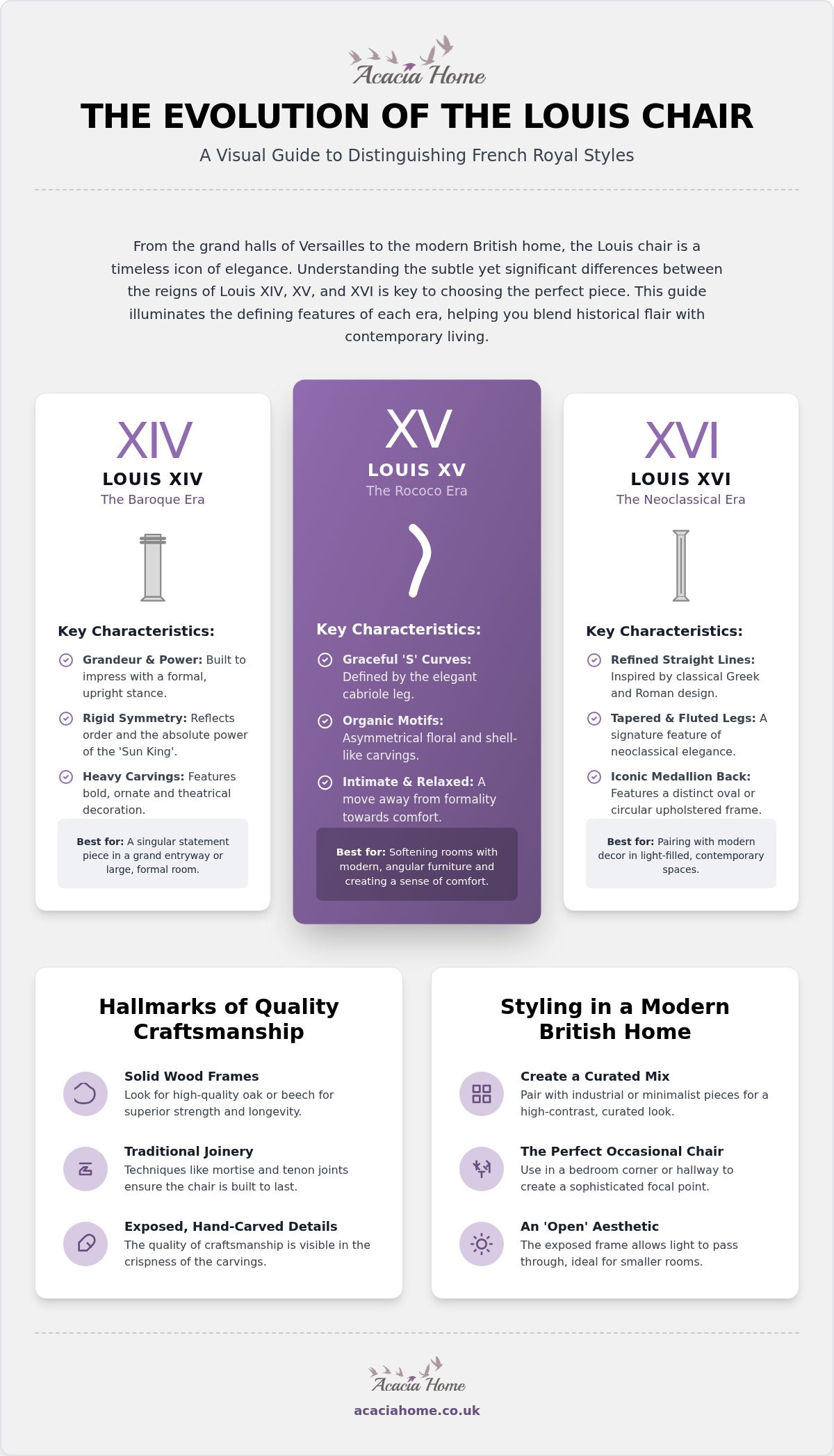
The Louis XIV era, known as the Baroque period, was defined by grandeur. These chairs were built to impress, featuring rigid symmetry and heavy carvings that reflected the absolute power of the 'Sun King'. They're the 'heavyweights' of the Louis family, often possessing a more formal, upright presence that works beautifully as a singular statement in a large space.
Louis XV: The Grace of the Curve
As the French court moved toward a more intimate and relaxed lifestyle, the Rococo era was born. This period abandoned the stiff formality of the past in favour of the 'cabriole' leg—an elegant, 'S' shaped curve that remains one of the most recognisable features of French design. You'll notice asymmetrical floral motifs and flowing lines that seem to grow organically from the wood. These pieces are wonderful for softening a room that feels too 'boxy' or angular. For those seeking the ultimate in comfort, the bergère chair emerged during this time as a deeper, upholstered variation designed for lounging. It's an inviting choice that turns any corner into a cosy sanctuary.
Louis XVI: Neoclassical Restraint
By the time Louis XVI took the throne, the discovery of ancient ruins in Pompeii sparked a renewed love for Greco-Roman order. The 'frivolous' curves of the Rococo era were replaced by Neoclassical restraint. Legs became straight and fluted, designed to resemble the columns of a Greek temple, whilst chair backs took on geometric medallion or shield shapes. This 'cleaner' look often appeals to those who love modern or Scandinavian design, as it offers a sense of structured beauty without feeling overly fussy. It's a style that feels organised and calm, making it easy to integrate into a contemporary British home. If you're looking to start your own collection, exploring a variety of Louis style chairs can help you identify which era's personality truly resonates with your personal style.
Anatomy and Materials: The Hallmarks of a Quality Louis Chair
When you're investing in a louis chair, it's the invisible details that determine if your piece will become a family heirloom or a fleeting trend. The beauty of these designs isn't just skin deep; it starts with a sturdy skeleton. A high-quality frame is the foundation of comfort and longevity, ensuring that your chair remains a reliable sanctuary for years to come. Whilst modern replicas often use resin or lightweight plastics, a true statement piece is always built from solid timber. You'll find that traditional joinery is the secret to a chair's strength; look for tight, seamless connections where the legs meet the seat frame, as this indicates a level of craftsmanship that mass-produced alternatives simply can't replicate.
Wooden Frames and Finishes
The choice of wood is vital for both durability and aesthetic appeal. Beech wood is often the preferred choice amongst master carvers because its dense, fine grain allows for the incredibly intricate details that define the Louis style. Oak and walnut are also popular for their rich, natural patterns and legendary strength. Once the frame is carved, the finish, or 'patina', gives the chair its final character. A distressed, limewashed finish offers a soft, lived-in feel that hides the occasional scuff, whereas a high-gloss lacquer creates a more formal, polished look. When choosing your piece, consider how the wood colour harmonises with your existing floorboards or skirting to create a cohesive, unhurried flow throughout the room.
Upholstery and Comfort
The fabric you choose has the power to completely transform the 'personality' of your chair. Natural linen is a wonderful option for those dreaming of a rustic French farmhouse aesthetic; its breathable texture feels relaxed and inviting. If you're aiming for a more sophisticated, boutique hotel vibe, luxurious velvet offers a deep, sensory appeal that catches the light beautifully. Beyond the fabric itself, look for the small markers of quality that define the best french style chairs uk retailers offer. One such detail is 'double-piping'—a twin row of fabric trim that neatly conceals the staples where the upholstery meets the wood. It's a small touch, but it's a clear sign of a piece that has been finished with care and pride.
Comfort shouldn't be sacrificed for style. A well-made louis chair should provide firm yet yielding support, often achieved through high-quality foam or traditional webbing. Whether you're using it for a quick morning coffee or a long evening of reading, the internal padding should feel substantial. By paying attention to these anatomical details, you'll find a piece that doesn't just look like a work of art but feels like a truly supportive part of your home.
Styling Louis Chairs in Contemporary British Interiors
Forget the idea that French elegance requires a palace or a formal drawing room. The most inspiring British homes today thrive on a 'mix and match' philosophy, where the ornate, hand-carved curves of a louis chair provide a soulful and unexpected counterpoint to the sharp, cold lines of a modern glass table or a rugged, industrial oak bench. This contrast creates a space that feels gathered over time rather than bought from a single catalogue, allowing your home to reflect a truly personal identity.
For those who love the classic silhouette but crave a minimalist edge, the 'Ghost Chair' phenomenon has shown how transparent polycarbonate can pay homage to Louis XVI shapes whilst keeping a room feeling airy and light. It's a clever way to introduce heritage shapes into a high-traffic, modern kitchen without sacrificing a sense of space.
In 2026, we're seeing a move toward bold, painted frames to bring these pieces into the present. Think deep charcoal or navy blue wood paired with neutral linens; it’s a simple way to update a classic for a contemporary palette. These darker finishes highlight the intricate carvings whilst making the chair feel grounded and sophisticated amongst modern art and sleek architecture.
The Louis Dining Experience
Dinner parties are about more than just the menu; they're about the lingering conversations and the comfort that encourages guests to stay for just one more glass. A louis chair is the secret to these long evenings, providing a supportive seat that feels far more substantial than a standard dining chair. Using 'carver' chairs with arms at the head and foot of the table creates a gentle sense of hierarchy whilst offering extra comfort for the hosts. You can maintain a beautifully cohesive look by mixing different fabrics across your set of dining chairs; consider using a bold, patterned velvet on the carver chairs and a muted, plain linen on the side chairs to add depth and visual interest to your dining room.
Bedroom and Hallway Accents
In the more private areas of your home, these pieces act as quiet anchors for your daily routine. A single louis accent chair can elevate a plain, forgotten corner into a curated space, acting as a functional work of art that catches the light. In a bedroom, it serves as a graceful companion for your morning ritual at a dressing table, offering a moment of calm before the day begins. Alternatively, placing a pair of these chairs in a wide hallway creates an immediate sense of welcome and sophistication for your guests. The light, open frame ensures that even in a narrow entry, the furniture adds character without overwhelming the physical space.
If you're ready to find the perfect piece to act as a sanctuary within your home, explore our curated collection of Louis style chairs and discover the impact of true French craftsmanship.
Selecting Your Perfect Piece: Practical Considerations
Choosing a louis chair is a deeply personal decision that moves beyond mere aesthetics; it's about finding a piece that fits the rhythm of your daily life. As a family-owned business, our approach at Acacia Home is to act as a bridge between world-class manufacturers and your living space, ensuring that every item we curate serves as a lasting sanctuary. Before you make your final selection, it's vital to consider how the chair interacts with your physical environment, from the height of your skirting boards to the clearance of your dining table. This thoughtful planning ensures your new addition feels like it has always belonged.
Size and Scale in the Home
One of the most common oversights when selecting a louis chair is the 'arm height' of a carver-style piece. If you intend to use it for dining, you'll need to ensure the arms slide comfortably beneath the table apron so guests can sit close to their meal without obstruction. Seat height is equally important for ergonomic comfort; a standard height of around 46 to 50cm usually provides the best support for most adults during long, unhurried dinner parties. To avoid a room feeling overpowered, consider the 'visual weight' we discussed earlier. A chair with an open medallion back often works best in smaller rooms as it allows the eye to travel through the piece. Finally, don't forget the practical journey of the furniture itself; always measure your narrowest doorways and hallway corners to ensure a stress-free delivery day.
Care and Longevity
A high-quality louis chair is an investment in your home's future, designed to be cherished rather than replaced. Whilst you might worry about the hustle and bustle of family life, choosing the right upholstery can make all the difference. Performance linens or treated velvets offer the beauty you crave with the durability needed to withstand the occasional spill. To maintain the wood's patina, keep your chair away from direct heat sources like radiators, which can cause the timber to shrink or crack over time. Because these chairs are built with solid frames and traditional joinery, they can be reupholstered decades from now, allowing the piece to evolve alongside your changing tastes. Before you commit, use this final checklist to ensure quality:
Weight: A solid wood frame should feel substantial and grounded, never flimsy.
Finish: The wood should feel smooth to the touch, with a patina that looks integrated rather than painted on.
Comfort: The seat should offer firm yet yielding support that doesn't 'bottom out'.
The 'Feel': Run your hand along the carvings; they should feel crisp and intentional, showing the mark of a careful eye.
For a deeper dive into making the right choice for your space, explore our Louis style chairs collection and buying guide to find your perfect match.
Bringing French Heritage into Your Modern Sanctuary
Embracing the elegance of a louis chair is about more than just adding a seat; it's about inviting a story of craftsmanship and heritage into your home. We've explored how to distinguish the grand symmetry of the Baroque era from the graceful curves of the Rococo and the neoclassical restraint that followed. You now have the tools to identify the hallmarks of quality, from solid timber frames to the intricate finish that signifies true expertise. As a family-owned UK business, we take immense pride in acting as your visionary guide, sourcing pieces that bridge global artistry with the unique character of your living space.
Whether you're creating a quiet reading nook or a grand dining experience, these chairs offer a timeless sanctuary that evolves with your lifestyle. Each piece is an investment in beauty and comfort, designed to be cherished for generations. Discover our hand-picked collection of elegant Louis Chairs and find the perfect statement piece to elevate your home today. We're here to help you turn your personal aesthetic goals into a beautiful, enduring reality.
Frequently Asked Questions
What is the difference between a Louis XV and a Louis XVI chair?
The main difference lies in the leg design and overall silhouette. Louis XV chairs embrace the Rococo style with curved 'cabriole' legs and fluid, asymmetrical carvings that mimic organic nature. In contrast, Louis XVI chairs reflect Neoclassical restraint, featuring straight, fluted legs that resemble Greek columns and geometric backs. Whilst the XV is organic and feminine, the XVI is structured and symmetrical; this makes it much easier to pair with modern furniture.
Are Louis chairs comfortable for everyday dining?
Yes, a well-made louis chair is exceptionally comfortable for everyday use. Unlike hard wooden benches, these chairs feature upholstered seats and supportive backs that provide firm cushioning during long meals. The ergonomic design ensures you sit at a natural height for most standard dining tables. By choosing high-quality foam and durable fabrics like linen or treated velvet, you can enjoy a perfect balance of sophisticated style and daily practicality.
How can I tell if a Louis chair is made of high-quality materials?
Look for a solid wood frame, typically crafted from beech, oak, or walnut, which gives the chair a substantial, grounded weight. You should examine the joints; high-quality pieces use traditional joinery rather than staples or glue alone. Check the carvings for crisp, intentional details rather than blurred edges. Finally, superior craftsmanship is often revealed in the finishing touches, such as double-piping along the upholstery edges to neatly conceal the fixings.
Can I use a Louis style chair in a modern, minimalist home?
Absolutely, a Louis style chair acts as a stunning focal point in a minimalist setting. The intricate carvings and soft textures provide a warm counterpoint to the clean lines and neutral palettes of modern architecture. To keep the look cohesive, you might choose a chair with a natural or limewashed wood finish and simple, monochromatic upholstery. This blend of old and new creates a curated, unhurried atmosphere that feels deeply personal.
What is a 'Ghost Chair' and is it related to the Louis style?
A 'Ghost Chair' is a modern, transparent seating design created by Philippe Starck that pays direct homage to the Louis XVI silhouette. Made from single-mould polycarbonate, it features the iconic medallion back and straight legs but in a completely clear finish. It is a playful, contemporary interpretation of the classic louis chair, allowing the heritage shape to exist in a space without adding any visual weight or clutter to the room.
What kind of fabric is best for a Louis accent chair?
The best fabric depends on the 'personality' you want to project within your room. Luxurious velvet is an excellent choice for a sophisticated 'boutique hotel' aesthetic, offering a deep, sensory appeal that catches the light beautifully. If you prefer a rustic, French farmhouse feel, natural linen is a durable and breathable option. Both fabrics are robust enough for occasional use whilst providing the high-value texture that makes a statement chair truly stand out.
How do I clean the wooden frame of a Louis style chair?
To clean the wooden frame, simply use a soft, lint-free cloth to remove dust regularly. If the wood requires more attention, a slightly damp cloth followed by immediate drying is sufficient. Avoid harsh chemical sprays or silicone-based polishes, as these can damage the natural patina over time. For long-term maintenance, applying a high-quality furniture wax once or twice a year will help preserve the timber and keep the hand-carved details looking vibrant.
Is the Louis chair suitable for a small bedroom corner?
Yes, the Louis chair is ideally suited for small bedroom corners due to its relatively compact footprint and open wooden frame. Because you can see through the back and beneath the seat, the chair adds character without making a small room feel cramped. It serves as a perfect sanctuary for morning rituals or as a place to drape a favourite throw, proving that you don't need a grand space to enjoy timeless French elegance.


Comments