
The Ultimate Guide to the Living Room Ottoman: Style, Comfort, and Versatility
- info642352
- 13 minutes ago
- 12 min read
What if the most hardworking piece of furniture in your home isn't the grand sofa or the central coffee table, but the humble footstool? Many homeowners find themselves caught between the desire for a sophisticated, curated space and the messy reality of daily life. You might worry that adding a living room ottoman will only lead to a cluttered floor plan or, worse, a favourite fabric ruined by a single spill. It's perfectly natural to feel uncertain about getting the height just right or choosing a material that stands up to the rigours of a busy household whilst maintaining its elegance.
In this guide, you'll discover how to select and style the ideal piece to transform your living space into a versatile sanctuary that feels both high-end and lived-in. We'll explore the secrets to professional styling, from balancing dimensions with your existing furniture to selecting durable, luxurious textures that bring a sense of heritage and warmth to your home. By the end, you'll have the confidence to choose a piece that serves as a seat, a table, and a beautiful statement of your personal style.
Table of Contents
Why the Living Room Ottoman is the Ultimate Multi-Functional Essential
Often overlooked in favour of the grand sofa, the living room ottoman has quietly become the most adaptable member of the furniture family. It isn't just a place to rest tired feet after a long day; it's a social hub and a stylistic anchor. In the modern British home, where space is often at a premium, the ability of one piece to serve as a coffee table, a spare seat, and a plush footrest is invaluable. It bridges the gap between high-end aesthetic appeal and the practical needs of a busy household, encouraging a natural flow of conversation and relaxation.
The Evolution of the Ottoman: From Footstool to Centrepiece
To understand its current status, we must look at the History of the Ottoman, which traces its roots back to the lavish, low-slung seating of the Ottoman Empire. Whilst originally designed as a backless seat piled with cushions, it has transitioned from a global design staple to a local favourite. Today, it has shed its image as a simple, dusty footstool tucked in a corner. Modern designs serve as sophisticated centrepieces that can hold a tray of tea or provide extra seating during a family gathering. Whether you prefer a sleek look or the refined elegance of a Louis style silhouette, the ottoman is a versatile, upholstered furniture piece used for comfort and utility.
Emotional Comfort: Turning Your Living Room into a Sanctuary
There's a profound psychological benefit to introducing soft, tactile surfaces into your living space. There's a specific, quiet joy in the ritual of putting your feet up at the end of a demanding afternoon. This simple act signals to the brain that the day's work is done and the sanctuary of home has begun. Unlike the sharp, unforgiving edges of a traditional wooden or glass coffee table, the living room ottoman offers a gentle silhouette. These upholstered textures invite touch and create a warmer, more encouraging atmosphere for everyone amongst the household.
By choosing a piece that reflects your personal aesthetic, you aren't just buying furniture; you're making a statement about how you value comfort and connection within your own four walls. It's this blend of heritage and sensory appeal that makes it an essential part of a curated home. When your living space feels soft and inviting, it becomes more than just a room; it becomes a personal retreat from the outside world.
Selecting the Perfect Shape, Size, and Material for Your Sanctuary
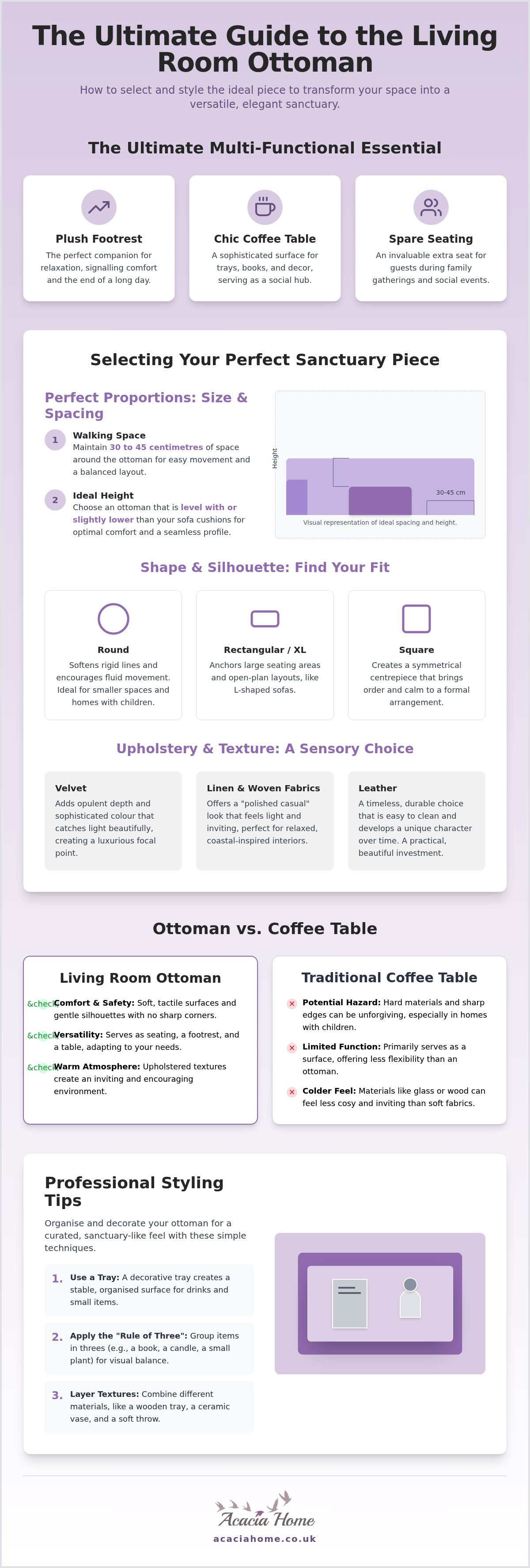
Selecting a living room ottoman is an exercise in both spatial awareness and sensory delight. It's about finding that sweet spot where a piece feels like it has always belonged in your home. To ensure your new addition complements rather than crowds the room, start with a tape measure. You'll want to maintain about 30 to 45 centimetres of walking space around the piece to allow for easy movement. Matching the height is equally vital; aiming for a surface that's level with or slightly lower than your sofa cushions creates a seamless, comfortable profile for relaxation.
Shape and Scale: Which Silhouette Suits Your Layout?
Round ottomans are a wonderful choice for smaller spaces or homes with young children. Their lack of sharp corners encourages a safer, more fluid flow of movement whilst softening the rigid lines of a room. If you're furnishing a large open-plan area or an L-shaped sofa, a rectangular or XL design provides the scale needed to anchor the seating. For those who enjoy a more formal, traditional arrangement, a square ottoman acts as a symmetrical centrepiece that brings a sense of order and calm to the room's layout.
Upholstery and Texture: A Sensory Approach to Selection
The fabric you choose dictates the emotional impact of the item. A velvet living room ottoman adds opulent depth and a splash of sophisticated colour that catches the light beautifully. If you're aiming for a relaxed, coastal vibe, linen and woven fabrics offer a "polished casual" look that feels light and inviting. For a home that values heritage and longevity, leather is a timeless choice. It's durable, easy to wipe clean, and develops a unique character over time, making it a practical yet beautiful investment for a busy household.
The Importance of Leg Style and Finish
The legs of your ottoman are the final touch in creating a curated look. Hidden feet offer a grounded, contemporary appearance that feels sturdy and modern. In contrast, elegant wooden legs lift the piece off the floor, creating a sense of airiness that makes a room feel larger and more open. These details allow you to subtly echo the design of your occasional chairs, ensuring every element of your sanctuary feels intentional and professionally styled. Taking the time to consider these finer points will help you find a piece that truly completes your vision for a comfortable, beautiful home.
Ottoman vs. Coffee Table: Which is Right for Your Living Room?
The decision between a traditional coffee table and a living room ottoman often marks the final step in creating a cohesive sanctuary. Whilst the coffee table has long been the default centrepiece, a significant shift in British interior design is favouring the upholstered alternative. This isn't just about following a trend; it's a move towards a softer, more forgiving environment that prioritises human comfort. For families with young children, the lack of sharp corners provides genuine peace of mind, replacing hard timber or glass with plush, cushioned surfaces that invite relaxation rather than caution.
The Case for the Upholstered Ottoman Table
An ottoman brings a unique layer of versatility that a wooden table simply cannot match. When you host a gathering, it instantly transforms into extra seating, allowing guests to gather closely around the hearth. It also solves the "wood-on-wood" dilemma often found in rooms with timber flooring and traditional furniture. By introducing a fabric centrepiece, you break up these hard textures, adding visual warmth and a sense of "polished casual" luxury. This layering of materials makes the room feel curated and intentional rather than just furnished.
Practical Limitations and How to Overcome Them
The most common concern regarding the living room ottoman is the perceived lack of stability for drinks. This is easily solved with the addition of a beautiful, oversized tray. A sturdy tray provides a flat surface for tea and snacks whilst allowing the rest of the ottoman to remain soft for tired feet. To keep your sanctuary looking pristine, it's wise to choose fabrics with a stain-resistant finish or consider a hybrid design that features a built-in wooden shelf or tray. This approach gives you the best of both worlds: the tactile comfort of upholstery and the practical utility of a hard surface.
A traditional coffee table might still be the right choice if your daily life involves heavy-duty crafts or frequent, formal dinner service where a completely rigid surface is non-negotiable. However, for those who view the living room as a place to truly unwind, the ottoman offers a level of multi-functional comfort that is hard to ignore. It adapts to your needs, whether you're working from the sofa or hosting a celebratory evening with friends. It's this ability to pivot between roles that makes it such a valuable investment for the modern home.
Practical Styling Tips: How to Organise and Decorate Your Ottoman
Once you've selected your living room ottoman, the true joy lies in the curation. This piece is more than a functional footrest; it's a central stage for your personal aesthetic. Thoughtful styling turns a simple upholstered stool into a curated masterpiece that anchors the entire room. By following a few professional design principles, you can ensure your furniture remains a beautiful focal point that encourages relaxation whilst maintaining a sense of sophisticated order.
Creating the Perfect Tray Vignette
The most effective way to style a living room ottoman is with a decorative tray. This provides the necessary stability for drinks whilst grouping smaller items into a cohesive display. To make a statement, choose a tray that contrasts with your upholstery. A dark, moody velvet ottoman looks stunning when paired with a light marble or pale oak tray. Once the tray is in place, apply the "Rule of Three." This classic design technique involves grouping three items of varying heights to create visual interest:
Foundation: A stack of linen-bound art books to provide a sturdy base and subtle height.
Scent: A handcrafted candle or a small diffuser to create an inviting, sensory atmosphere.
Life: A small vase of fresh seasonal flowers or a bowl of greenery to bring a touch of nature indoors.
Adding Texture and Warmth
Layering is the secret to achieving that coveted "sanctuary" feel. A favourite wool or cashmere throw draped casually over one corner adds immediate softness and a lived-in charm. This simple addition breaks up the solid block of colour and invites guests to settle in and get comfortable. It's also an excellent opportunity to tie the room together. You can select a throw or cushion that echoes the textures or hues found in your dining chairs or occasional seating. This creates a rhythmic flow of colour amongst your living spaces, making the entire home feel like a single, professionally designed collection.
If your home life is busy, a storage ottoman is a clever way to maintain a sophisticated exterior. Use the hidden compartment to tuck away remote controls, tablets, or children's toys at the end of the day. This keeps the surface clear for your decorative vignette and ensures the room always feels like a peaceful retreat. As the seasons change, update your tray with small, meaningful touches. Swap a bright summer candle for a spicy autumnal scent, or replace fresh flowers with a bowl of winter pinecones. These small shifts keep your sanctuary feeling fresh and seasonally inspired throughout the year.
Ready to find the perfect centrepiece for your home? Explore our curated collection of footstools and ottomans to discover a piece that blends effortless style with daily comfort.
Elevate Your Home with the Acacia Home Ottoman Collection
What sets Acacia Home apart is our deeply personal approach to curation. As a family-run business, we don't just see furniture as items in a catalogue; we view each living room ottoman as a potential anchor for your home's unique identity. Our commitment to craftsmanship ensures that every piece we source meets a standard of quality that we'd be proud to have in our own homes. From the initial browse to the final national delivery, we act as your visionary guide, bridging the gap between global design trends and the local British sanctuary.
A Curated Selection for Every Aesthetic
Whether your heart is set on the timeless elegance of traditional buttoned designs or the clean, minimalist lines of contemporary silhouettes, our collection is built on a foundation of sensory appeal. We believe that a piece should feel as exquisite as it looks. This is why we focus on fabrics that offer both durability and a luxurious touch. Our ottomans are designed to harmonise with our wider range of seating, working beautifully alongside our Louis style chairs to create a room that feels layered and rich with heritage. By selecting pieces that speak to one another through texture and form, you can achieve a professionally styled look that remains intimately warm and welcoming.
Your Journey to a More Beautiful Living Space
Choosing the right furniture is a journey, and we're here to support you at every turn. Our unhurried, methodical approach to service means you can browse our boutique-style selection with the confidence that each item has been hand-picked for its impact and feel. We understand that your home is an extension of who you are. By selecting a living room ottoman that offers both multi-functional utility and high-end beauty, you're investing in a space that truly supports your lifestyle and encourages those quiet moments of connection.
Our goal is to make the process of transforming your home as seamless as possible, providing the expertise you need without the elitism often found in the world of interior design. We take pride in being a helpful partner in your creative process, ensuring that the pieces you choose today will become the heritage items of tomorrow. If you're looking for even more ways to integrate these pieces into your home, we invite you to explore our versatile ottoman guide for further inspiration on creating a sanctuary that feels both professional and intimately yours.
Create Your Perfect Living Room Sanctuary
Choosing the right living room ottoman is an investment in how you and your family experience the home. You've discovered how these versatile pieces bridge the gap between practical utility and high-end aesthetic, serving as everything from a spare seat to a sophisticated coffee table alternative. By mastering the art of the tray vignette and choosing textures that invite touch, you now have the professional knowledge to transform any space into a curated retreat.
At Acacia Home, we're a family-owned British business dedicated to helping you find pieces that resonate with your personal style. Our collection is expertly selected for quality and comfort, ensuring that each footstool or ottoman feels like a natural extension of your sanctuary. With national UK delivery available, you can begin the process of refining your interior today. We invite you to browse the curated Acacia Home Ottoman & Footstool collection to find the final piece of your design puzzle. We're here to support you in creating a home that feels both timeless and intimately yours.
Frequently Asked Questions
Is a living room ottoman better than a coffee table?
Whether a living room ottoman is better than a coffee table depends on your priority for comfort versus a rigid surface. For many British households, the ottoman wins because it offers a softer silhouette that is safer for young children and more inviting for lounging. You can easily add a tray for stability, giving you the best of both worlds whilst softening the overall aesthetic of your sanctuary.
What is the best height for a living room ottoman?
The ideal height for your footstool should be level with or slightly lower than your sofa's seat cushions. Most standard designs sit between 40 and 45 centimetres high. If the piece is too tall, it can feel awkward for your legs and disrupt the visual line of the room. Aim for a height that allows your feet to rest naturally without putting pressure on your lower back.
Can you sit on a living room ottoman?
Yes, almost all high-quality ottomans are designed to provide sturdy occasional seating. They are perfect for when you have extra guests and need a versatile stool that can be moved easily around the room. Just ensure the frame is robust and the padding is firm enough to support a person's weight without losing its elegant shape over time.
How do I stop my ottoman from sliding on a wooden floor?
To prevent your furniture from sliding on polished timber or laminate, you can apply small rubberised non-slip pads to the base of the legs. Alternatively, placing the piece on a textured area rug adds a layer of friction and extra warmth to the room. This simple fix protects your floors from scratches whilst ensuring your seating stays exactly where you intended it to be.
What fabric is most durable for an ottoman used as a table?
For an ottoman that doubles as a table, leather or high-performance synthetic blends are the most durable choices. These materials are famously resilient against spills and heavy use. If you prefer the look of natural fibres, choose a tightly woven linen or polyester blend that has been treated with a stain-resistant finish. This ensures the fabric remains beautiful even amongst the daily demands of tea and snacks.
How do I clean a velvet living room ottoman?
Cleaning a velvet living room ottoman requires a gentle touch to preserve its luxurious pile. Regularly use a soft-bristled clothes brush or a vacuum with a fabric attachment to remove dust. If a spill occurs, blot it immediately with a dry, lint-free cloth rather than rubbing. Avoid using harsh chemicals or excessive water, as these can flatten the delicate fibres and ruin the sophisticated sheen.
Should my ottoman match my sofa colour exactly?
Your ottoman doesn't need to match your sofa colour exactly; in fact, choosing a contrasting shade often creates a more curated, professional look. You might select a patterned fabric that incorporates the sofa's colour or choose a completely different texture like velvet to sit alongside a linen couch. This approach adds depth and character to your home, making the space feel like a personal statement.
Can I use a storage ottoman in a small living room?
A storage ottoman is actually one of the most effective pieces of furniture for a small living room. It serves as a footrest, a table, and a seat whilst providing a hidden compartment to tuck away clutter. By choosing a design with elegant legs that lift the piece off the floor, you can maintain a sense of airiness that makes a compact room feel much larger.


Comments