
Styling an Ottoman: The Art of Curating a Versatile Centrepiece
- info642352
- 18 hours ago
- 12 min read
What if your favourite footstool was actually the most underutilised canvas in your home? Most of us view this piece as a purely practical addition, a soft spot to rest our feet after a long day, yet we often find that styling an ottoman feels more like a chore than a creative outlet. It's a common struggle to find that elusive balance between a lived-in feel and a polished aesthetic, especially when items seem to topple over on tufted surfaces or disappear amongst the fabric folds. You likely want a space that feels intentional, where every book and candle has its place without sacrificing the room's inherent warmth.
In this guide, we'll delve into the techniques required to transform your ottoman from a humble accessory into a sophisticated, multi-functional focal point. You'll discover how to blend designer flair with tactile comfort, ensuring your centrepiece remains both beautiful and usable for the whole family. We will walk through the essentials of scale, the practical magic of stable trays, and the rhythmic layering of textures that bridge the gap between furniture and art. By the end, your ottoman won't just be a place for your feet; it will be the curated heart of your sanctuary.
Table of Contents
Understanding the Ottoman’s Role: More Than Just a Footstool
The ottoman is often the unsung hero of the British living room. Whilst it might begin its life in your home as a simple place to rest tired feet, its potential stretches far beyond the utilitarian. To truly master styling an ottoman, you first need to appreciate its unique position as a multi-functional anchor. Looking back at the history of the ottoman, we see a piece that evolved from a sprawling, wall-to-wall communal seat in the 18th century into the compact, sophisticated centrepiece we cherish today. It's the hardest working item in your lounge because it must seamlessly pivot between being a coffee table, an extra perch for guests, and a sanctuary for relaxation.
In a well-designed room, the ottoman acts as a visual bridge. It connects the soft lines of your sofa to the more structured silhouette of your occasional chairs, creating a conversational circle that feels grounded and intentional. By serving as the central point where different seating styles meet, it helps define the flow of the entire space.
The Psychology of a Styled Surface
There's a profound difference between decorating a space and curating it. Decorating often feels like filling gaps, but curation is an act of storytelling. When you approach styling an ottoman with a curated eye, you're choosing objects that reflect your personal heritage or travel memories. This intentionality creates a sense of calm. A cluttered surface breeds mental noise; whereas a structured arrangement of a few meaningful items brings a sense of order to a busy family room. It's about creating a sanctuary that feels both high-end and deeply personal.
Assessing Your Ottoman’s Canvas
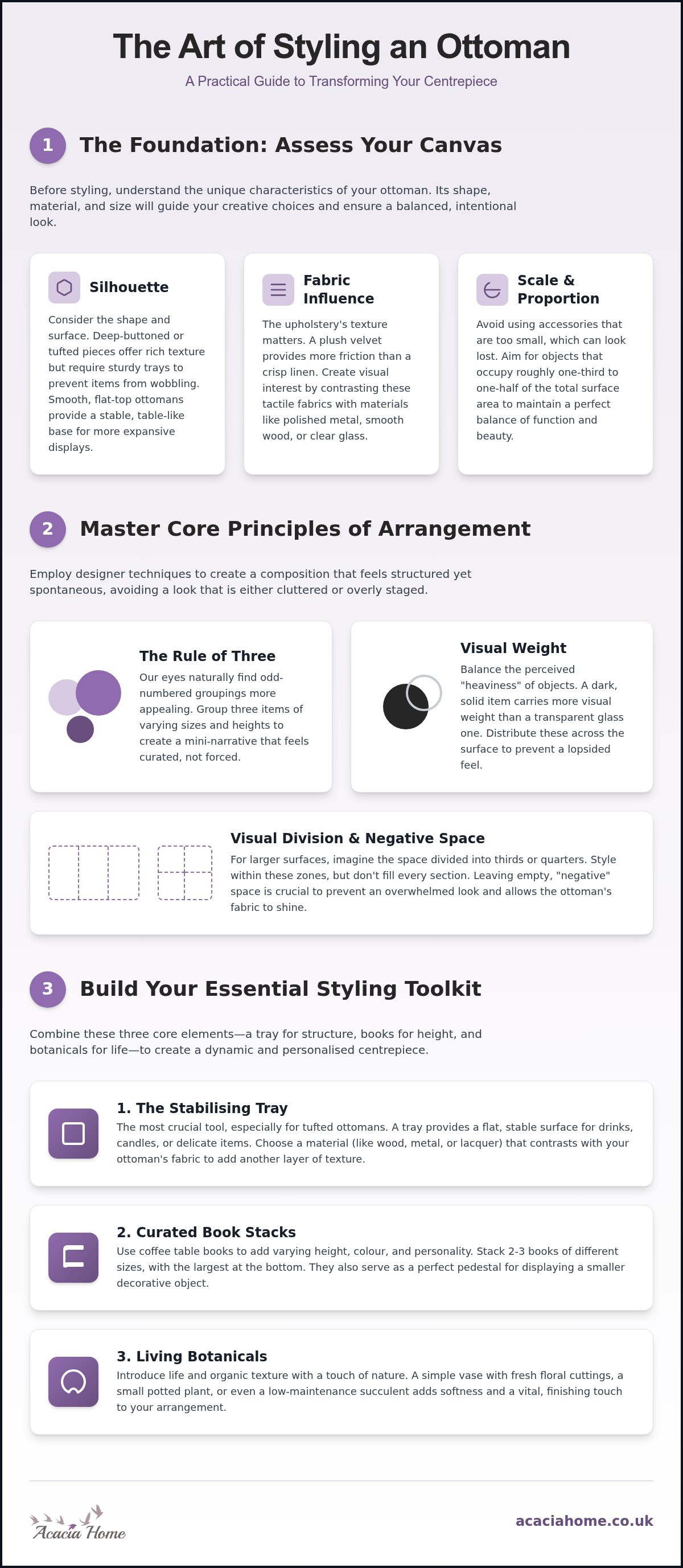
Before you reach for your favourite coffee table books, take a moment to study the "canvas" you're working with. The physical attributes of your piece will dictate your styling strategy. Consider these three factors:
The Silhouette: Deep-buttoned or tufted pieces offer incredible texture but present an uneven surface. These require sturdy trays to prevent items from wobbling. In contrast, smooth-top cocktail ottomans provide a more stable, table-like base for larger displays.
Fabric Influence: The "grip" of your upholstery matters. A plush velvet offers a different tactile experience and more friction than a smooth, crisp linen. Tactile fabrics often call for contrasting materials like polished metal or smooth wood to create visual interest.
Scale and Proportion: Measure your surface area carefully. A common mistake is using accessories that are too small, which can make the ottoman look dwarfed rather than designed. Aim for pieces that occupy roughly one-third to one-half of the total surface to maintain a balance of function and beauty.
By understanding these foundational elements, you can move from seeing a simple footrest to seeing a versatile stage for your personal style.
Fundamental Principles: How to Organise and Layer Your Ottoman
Once you've assessed your canvas, the real magic begins with the arrangement. Styling an ottoman requires a blend of structure and spontaneity to avoid a result that looks either cluttered or too stiff. The most effective starting point is the "Rule of Three". Our eyes naturally find odd-numbered groupings more appealing and less formal than pairs. By grouping three items of varying sizes, you create a mini-narrative that feels curated rather than staged.
When styling an ottoman, you must also consider visual weight. Visual weight is the perceived heaviness of an object based on its colour and texture. For instance, a dark, cast-iron candle holder carries more visual weight than a clear glass vase of the same size. Balancing these "weights" across the surface ensures the piece doesn't feel lopsided. To manage larger surfaces, use visual division. For a rectangular piece, imagine it divided into thirds; for a square, think in quarters. You don't need to fill every section. Negative space is your best friend, as leaving part of the upholstery visible prevents the ottoman from feeling overwhelmed and allows the fabric's texture to shine.
The Geometry of Placement
Your choice between a centred or offset arrangement depends on the room's energy. A centred display offers a formal, symmetrical feel that works beautifully in traditional settings. However, an offset arrangement often feels more modern and relaxed, leaving room for a tray of drinks or a resting book. If you're working with a round piece, try a triangular arrangement of items to break up the circular lines. Always consider the room’s main sightlines; you want the display to look inviting from the doorway as well as from the sofa.
Layering for Depth and Texture
Depth comes from building upwards. Start with a solid base, such as a large tray or a stack of oversized coffee table books. These provide a "ground" for smaller objects. Next, add the "soul" of the display. This is where you incorporate personal heirlooms, a unique shell from a favourite holiday, or a hand-crafted bowl. For more ottoman styling ideas, look to incorporate varying heights to create a miniature "skyline" across the surface. Tall candles, flat books, and medium-sized bowls work together to guide the eye. The final touch should always be organic. A small vase of fresh greenery or a single bloom adds life and movement that static objects simply can't provide. If you're looking for the perfect foundation for these layers, exploring a range of expertly crafted ottomans can help you find a piece that truly resonates with your home's identity.
Styling for Structure: Matching Your Aesthetic to Your Ottoman Type
Every ottoman offers a unique landscape, and your approach to styling an ottoman should respect its physical form. A plush, tufted piece demands a different logic than a sleek, smooth-topped cocktail table. The goal is to enhance the existing architecture of the furniture rather than fighting against it. By matching your decorative items to the specific structure of your piece, you ensure that the final look feels effortless and intentional.
The Deep-Buttoned Dilemma
Deep-buttoned or tufted ottomans are masterclasses in texture, but their uneven surfaces present a practical challenge. This is where the "Feet vs. Tray" dilemma often arises. Do you leave the surface clear for comfort, or do you commit to a display? The solution lies in a heavy, flat-bottomed tray. Unlike lightweight versions, a substantial tray will "sink" slightly into the upholstery, providing a level base for your items. If you find your favourite candle still leans, use a slim book as a leveller inside the tray. Remember to leave some of the tufting exposed; the rhythm of the buttons is a beautiful design feature that shouldn't be entirely hidden.
Large Scale Cocktail Ottomans
A large cocktail ottoman is essentially a soft-sided gallery. Because the surface area is so generous, a single small object can look lost and insignificant. Instead, try grouping multiple "zones" using different book stacks or a combination of trays. This prevents the surface from feeling sparse whilst maintaining a sense of order. To make a large piece feel truly integrated, ensure it is anchored by a rug that extends well beyond its edges. This creates a cohesive "island" of comfort in your living room, making the large surface feel cosy rather than overwhelming. When decorating an ottoman of this size, balance is achieved by mixing heights, perhaps a tall vase of lilies paired with a flat, decorative bowl.
Small footstools and storage-focused designs require a minimalist touch. For a small stool, a single well-chosen accessory is often more impactful than a crowded tray. If your piece features a hidden compartment, your styling must remain functional. Opt for a single, lightweight tray that can be moved in one swift motion, allowing you to access blankets or magazines without a complicated dismantling process. This thoughtful approach to styling an ottoman ensures your centrepiece remains as practical as it is beautiful.
The Essential Styling Toolkit: Trays, Books, and Botanicals
Styling an ottoman is an exercise in layering textures and tones to create a narrative within your room. To do this effectively, you need a curated toolkit of items that serve both aesthetic and practical purposes. Think of these elements as the supporting cast that allows your centrepiece to shine. Whether you're aiming for a polished city look or a relaxed country house feel, the materials you choose will set the emotional temperature of the space. High-value materials like polished metal bring a touch of glamour, whilst warm woods or woven rattan offer a more grounded, rustic British appeal.
Selecting the Perfect Tray
The tray is the most vital tool in your collection because it provides the structural "ground" for your display. When you're styling an ottoman, scale is everything. Your tray should ideally occupy no more than one-third of the total surface area to avoid looking cramped. For a touch of designer contrast, try placing a round tray on a square ottoman, or a structured rectangular tray on a circular piece. This juxtaposition of shapes creates immediate visual interest. Beyond aesthetics, trays are practical organisers; they corral smaller items like coasters, match strikes, or remote control boxes into a single, intentional unit that's easy to move when needed.
British Seasonal Botanicals
Nothing breathes life into a room quite like organic elements that change with the seasons. In spring, delicate bud vases filled with daffodils or tulips offer a fresh, hopeful energy. As we move into summer, bold peonies or hydrangeas can be used to pull out the vibrant hues of your occasional chairs, creating a cohesive colour story across the room. During the colder months, look to the hardy beauty of the British landscape. Incorporating dried seed pods, pinecones, or sprigs of evergreen adds a tactile, seasonal layer that feels deeply rooted in tradition.
The "Feet-Up" Compromise
A common worry is that styling an ottoman makes it "off-limits" for actual lounging. The secret is to zone the surface. On a long rectangular ottoman, style one half with your books and trays whilst keeping the other half clear for resting your feet. You can use a beautiful throw blanket to protect the fabric on the active side, adding another layer of texture in the process. Choose lightweight trays that can be swiftly relocated to a side table or the floor when guests arrive. This flexible approach ensures your home remains a sanctuary of comfort without sacrificing its sophisticated flair. If you're ready to find the perfect foundation for your styling, you can explore our collection of hand-picked ottomans to discover a piece that speaks to your unique aesthetic.
Books are the final essential in your toolkit. When stacking them, sort by colour for a harmonious look or by subject matter to share your passions with guests. Place the largest, heaviest book at the bottom to act as a plinth for a smaller decorative object or a botanical accent. This vertical layering ensures your display has the "skyline" effect we discussed earlier, making the entire arrangement feel intentional and expertly curated.
Elevating Your Space with Acacia Home: A Curated Finish
The true power of a well-styled ottoman lies in its ability to unite a room. It serves as the central anchor, the point around which your life and your furniture orbit. When you're styling an ottoman, you aren't just decorating a single surface; you're creating a cohesive conversation circle that bridges various seating types. A plush, fabric-covered piece acts as the perfect tactile counterpoint to more structured furniture. For instance, pairing your ottoman with Louis style chairs creates a sophisticated French-inspired interior where the soft upholstery balances the elegant, carved wood frames of the seating. This interplay of materials is what transforms a house into a sanctuary.
A versatile ottoman also performs a vital role alongside a chaise longue or a window seat. Whilst a chaise longue offers a linear, relaxed luxury, the ottoman provides a grounding centre that keeps the layout from feeling too open or drifted. By carefully selecting textures that either match or intentionally contrast with your chaise, you create a layered look that feels professionally designed yet deeply comfortable. This commitment to quality and craftsmanship is at the heart of the Acacia Home philosophy, where every piece is chosen to act as a canvas for your personal expression.
Coordinating Colours and Fabrics
To achieve a truly polished finish, look for subtle ways to connect your ottoman accessories to the wider room. You might choose a tray that matches the wood finish of your dining chairs in an open-plan space, or select a candle holder that echoes the metallic piping on a nearby armchair. If your ottoman features a bold pattern, use a "bridge colour" in your styling items—a solid hue found within the pattern—to connect it to solid-coloured seating nearby. Lighting also plays a crucial role. A well-placed floor lamp can cast a warm glow over your display, highlighting the textures of your books and botanicals whilst making the ottoman the undeniable heart of the home during evening hours.
The Final Flourish
The most beautiful homes are those that feel lived-in and loved. Your approach to styling an ottoman should be fluid rather than static. Don't be afraid to change your display as you use the room, perhaps swapping a large floral arrangement for a stack of new magazines or a seasonal bowl of fruit. This "living" display ensures the space remains fresh and inviting. We invite you to explore the full range of footstools and ottomans at Acacia Home to find the perfect piece for your next creative project. By maintaining this balance of structure and spontaneity, you can enjoy a home that feels like a masterpiece whilst remaining a true place of rest.
Crafting Your Personal Sanctuary
The transition from a simple footrest to a curated masterpiece is an act of personal storytelling. By treating the ottoman as a visual anchor, you've discovered how to bridge the lines between your occasional chairs and sofas, creating a conversational heart that feels both grounded and inviting. The secret to styling an ottoman lies in that delicate balance of textures and the rhythmic layering of your most cherished treasures. Whether you're using a sturdy tray to navigate a tufted surface or stacking books to build a miniature skyline, your centrepiece should always reflect your unique identity.
As a family-run business with a deep-seated passion for timeless style, we're proud to offer expertly selected seating for the discerning British home. We believe every piece should be a sanctuary of comfort and a statement of craftsmanship. Now that you've mastered the principles of curation, it's time to find the perfect canvas for your creative vision. Explore our curated collection of footstools and ottomans to find your perfect centrepiece. We're excited to help you transform your living space into a sophisticated haven of beauty and order.
Frequently Asked Questions
How do I style a round ottoman coffee table?
Use a triangular arrangement to break up the circular lines of the furniture. Placing a rectangular or square tray provides a sharp visual contrast that feels intentional and designed. Group three items of varying heights within that space to create a miniature skyline. Avoid placing everything in the exact centre; slightly offsetting the display allows for a more relaxed, modern feel whilst leaving room for a resting glass or favourite book.
Can I use an ottoman as a coffee table if it is soft?
You absolutely can use a soft ottoman as a coffee table by introducing a stable, flat surface. A large, sturdy tray is the most effective way to provide the necessary rigidity for drinks or vases. Alternatively, a stack of heavy, oversized coffee table books can act as a firm plinth for smaller decorative objects. This approach allows you to enjoy the tactile comfort of upholstery whilst maintaining the functionality of a traditional table.
What items should I put on a tray on an ottoman?
Follow the Rule of Three by selecting a botanical element, a stack of books, and a unique personal trinket. When styling an ottoman, aim for a mix of textures and heights. A small vase of seasonal flowers provides life, whilst a scented candle or a brass match strike adds a touch of luxury. These items should feel like a curated collection that reflects your personal style, making the tray a focal point of interest.
How many books should be in an ottoman stack?
A stack of two to three books is generally the ideal number for a balanced display. Start with the largest, heaviest volume at the bottom to create a solid base. Place a slightly smaller book on top to create a tiered effect. This provides a perfect platform for a small bowl or a decorative object. Too many books can look cluttered, whilst a single book might feel lost on a larger surface area.
Should my ottoman match my sofa or my occasional chairs?
Your ottoman doesn't need to match either perfectly; it often works best as a bridge between different pieces. If your sofa is a solid neutral, an ottoman in a patterned fabric can add a splash of personality. Conversely, matching the ottoman fabric to your occasional chairs creates a cohesive conversational zone. The goal is to harmonise the room through shared colour palettes or complementary textures, rather than striving for an exact, identical set.
How do I keep things from sliding off a tufted ottoman?
The most effective solution for tufted surfaces is using a heavy, flat-bottomed tray that sinks slightly into the fabric. Lightweight trays tend to wobble on deep-buttoned upholstery, but a substantial wooden or metal version provides a level foundation. If a specific item still feels unstable, place a slim, hardback book underneath it inside the tray to act as a leveller. This ensures your display remains secure without hiding the beautiful craftsmanship of the buttons.
Is a storage ottoman harder to style than a regular one?
Styling a storage ottoman is no more difficult than a standard version, provided you prioritise portability. Since you'll need to access the hidden compartment for blankets or magazines, use a single, lightweight tray to corral your decor. This allows you to move the entire arrangement in one swift motion when you need to open the lid. Avoid complex, multi-layered displays that require a lengthy dismantling process, ensuring the piece remains as functional as it is beautiful.


Comments