
Ottoman vs Footstool: Which Elegant Accent Piece Does Your Home Need?
- info642352
- Aug 26
- 12 min read
Why do we often find ourselves staring at a beautiful piece of furniture, unsure whether to call it an ottoman or a footstool? It’s a common dilemma when comparing an ottoman vs footstool, often leaving homeowners feeling a touch overwhelmed when trying to finish a room. You might worry that a large, plush ottoman will swallow your floor space; perhaps you fear a dainty footstool won't provide the storage your family needs. Most of us have felt that slight hesitation, wanting our home to feel perfectly curated yet functional.
The truth is that whilst these terms are frequently swapped, the choice is actually between a central, room-defining statement and a versatile comfort accessory. In this guide, you'll discover the distinct differences in design, history, and function to help you choose the perfect finishing touch for your interior. We'll explore everything from the heritage of these pieces to practical advice on styling luxury fabrics and rich colours like velvet or linen, ensuring you feel confident in selecting a piece that reflects your personal identity and turns your house into a sanctuary.
Table of Contents
The Great Debate: Defining the Ottoman and the Footstool
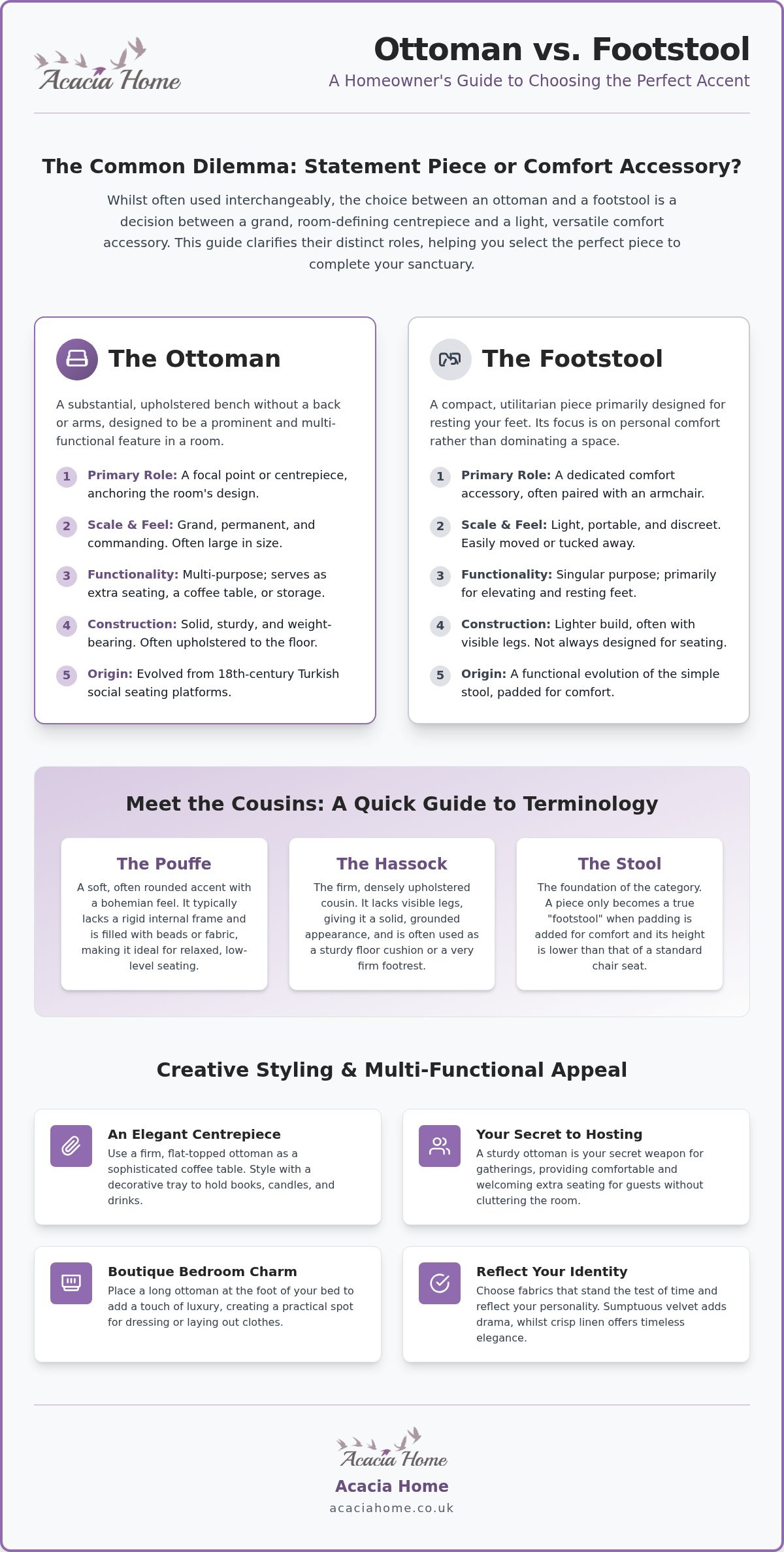
Walking into a well-curated showroom, it’s easy to see why the ottoman vs footstool debate remains so persistent. The terms are often used interchangeably by designers and retailers alike, yet they serve distinct roles in the architecture of a room. Traditionally, an ottoman is a low, upholstered bench or seat that lacks both a back and arms. It’s designed to be substantial, often acting as a room's focal point or even a secondary seating area. In contrast, a footstool is a more modest, utilitarian piece. Its primary purpose is right there in the name: it’s a dedicated, compact spot for resting your feet whilst you sink into a larger armchair.
The confusion usually stems from the way modern interiors have embraced multi-functional living. We’ve started asking our furniture to do more, leading to a hybridisation of styles. However, understanding the "feel" of each piece is key to choosing correctly. An ottoman brings a sense of grandeur and permanence, whilst a footstool offers a lighter, more portable touch of comfort that can be tucked away when the evening ends.
The Origins of the Ottoman
The journey of this piece is quite remarkable. We can trace the history of the ottoman back to the late 18th century, specifically within the namesake Ottoman Empire. In their original Turkish social hubs, these weren't the standalone cubes we recognise today. They were long, upholstered platforms that wrapped around the walls of a room, serving as the communal heart of the home. When these designs reached European luxury salons, they were refined and scaled down to fit the intimate layouts of Western drawing rooms. This evolution saw the original "sectional" design transform into the elegant, standalone pieces we adore today. They’ve shifted from being a primary seating platform to a versatile accent that adds depth and heritage to a sanctuary.
Terminology: Pouffes, Hassocks, and Stools
To truly master your space, you'll want to distinguish between the various cousins of these accent pieces. The terminology can be a bit of a maze, but each has a unique personality:
The Hassock: Think of this as the firm, densely upholstered cousin of the footstool. It’s often used as a sturdy floor cushion and lacks visible legs, giving it a grounded, solid appearance.
The Pouffe: Often called a pouf, this offers a softer, more bohemian approach. It’s usually stuffed with beads or fabric rather than having a rigid internal frame, making it perfect for relaxed, low-level seating.
The Footstool: A piece only truly becomes a "footstool" when the height is intentionally lower than a chair and padding is added for comfort. Without that soft upholstery, it remains a standard stool.
Choosing between these isn't just about labels; it’s about how you intend to live amongst your furniture. Whether you're seeking a structured ottoman to anchor your lounge or a soft pouffe for a reading nook, each choice is a personal statement of style.
Form and Function: Key Differences in Design and Scale
When you compare an ottoman vs footstool, the most immediate difference is the physical footprint they leave in a room. An ottoman is designed to command attention, often serving as a substantial anchor in your lounge or at the foot of a bed. Its larger surface area is a deliberate design choice, allowing it to double as a coffee table or a firm seat for guests. In contrast, the humble footstool is much more discreet. It’s a nimble piece, designed to be tucked away or moved easily to wherever comfort is needed most. This distinction in scale is one of the primary functional and design differences that will dictate which piece best suits your home's layout.
Craftsmanship also plays a vital role in how these pieces feel. You might find a footstool with delicate, tapered wooden legs that give it a sense of airy lightness. An ottoman, however, often features a more solid construction. Many are sumptuously upholstered in buttoned velvet or crisp linen, extending right down to the floor or resting on short, sturdy feet. This brings us to a crucial point: weight-bearing. whilst most ottomans are built to support the weight of an adult, many footstools are strictly for feet. If you need a piece that acts as an extra chair during a busy dinner party, a sturdy ottoman is your best ally.
Size and Scale Considerations
Before you commit to a new accent piece, it’s vital to measure your space carefully. You don't want a grand ottoman to overwhelm your favourite occasional chairs. A helpful tip is the "Rule of Thirds" in furniture placement. Ideally, your ottoman should be approximately two-thirds the length of your sofa to maintain a balanced, harmonious look. If your room is smaller, a footstool is often the wiser choice. Because they are compact, they are much easier to organise and move between rooms, offering a flexible touch of luxury that doesn't crowd your sanctuary.
The Hidden Benefits of Storage Ottomans
For those of us who value a tidy, calm environment, a storage ottoman is a genuine game-changer. These pieces maximise a small space by providing a hidden home for linens, magazines, or seasonal throws. You’ll usually choose between two mechanisms: a hinged lid that stays open for easy access, or a simple lift-off top. Both allow you to maintain a polished, minimalist aesthetic whilst keeping your daily essentials within arm’s reach. If you're looking to bring this blend of beauty and utility into your home, you might explore our curated collection to find a piece that truly resonates with your style.
Styling Your Space: Where Each Piece Truly Shines
Choosing between an ottoman vs footstool isn't just a matter of measurements; it’s about the atmosphere you wish to cultivate within each room. In the living room, a grand, central ottoman creates a natural centre for conversation, inviting guests to gather around and linger. It’s a piece that suggests your home is a place for connection. Moving into the bedroom, placing an ottoman at the foot of the bed instantly evokes that sought-after boutique hotel elegance, providing a sophisticated spot to lay out your clothes or rest whilst you prepare for the day. For narrower spaces like hallways, a slim, elongated ottoman acts as a welcoming window seat or a practical bench for donning shoes, proving that luxury can exist in even the most transitional corners of your sanctuary.
Whilst the larger pieces anchor the room, the footstool excels in the intimate nooks where comfort is the only priority. It’s the quiet hero of the home office or the library, offering a place to rest without demanding the spotlight. By understanding how these pieces interact with your existing layout, you can turn a simple furniture choice into a personal statement of how you move through and enjoy your space.
The Ottoman as a Focal Point
To truly anchor a space, don't be afraid to use bold colours or intricate patterns that draw the eye directly to the centre of the room. A deep emerald or rich navy can transform a neutral lounge into a curated masterpiece. Pairing your choice with occasional chairs ensures a cohesive look that feels intentional rather than accidental. The impact of texture is equally vital. A buttoned velvet finish suggests a timeless, opulent luxury, whilst a crisp linen wrap offers a more relaxed, coastal feel that breathes life into a sun-drenched snug.
The Practicality of the Fireside Footstool
Whilst the ottoman commands the centre, the footstool is the undisputed master of the quiet corner. In a snug or library, a fireside footstool becomes the ultimate companion for a long reading afternoon. Positioning is key here; you'll want it at a distance that allows your legs to stretch fully without straining, usually about 30cm from your favourite armchair. You don't need to perfectly match your fabrics to create a sense of harmony. Instead, coordinate through shared tones or contrasting textures to add depth. These smaller stools work beautifully in cosy, high-traffic corners because they provide that essential touch of comfort without ever becoming an obstacle in your daily flow.
Beyond Seating: The Multi-Functional Appeal of Modern Accents
The modern home is a living, breathing entity that often needs to adapt at a moment's notice. Whilst we’ve explored the stylistic differences of an ottoman vs footstool, their true value often lies in their multi-functional nature. A well-chosen piece doesn't just sit there; it works for you. Whether you're hosting a spontaneous gathering or seeking a more ergonomic setup for your home office, these accents are the secret weapons of a well-organised sanctuary. With the multifunctional furniture market projected to reach US$11.21 billion by 2030, it’s clear that homeowners are increasingly looking for pieces that offer more than just a single purpose.
Beyond the lounge, a long, elegant ottoman can serve as a sophisticated window seat alternative, framing a garden view whilst providing a quiet spot for reflection. In a home office, a compact footstool becomes an essential tool for ergonomics. Propping up your feet can improve posture and circulation during long hours at a desk, proving that even the most modest accessory can have a significant impact on your daily well-being.
Transforming Your Ottoman into a Table
The "Ottoman-as-Coffee-Table" trend has gained immense popularity because it softens the hard lines of a room whilst remaining incredibly practical. To make this work, selecting the right tray is vital. A rustic wicker tray brings a relaxed, organic feel to a linen ottoman, whilst a polished metal or dark wood tray adds a touch of formal structure to velvet. When styling, aim for a balanced group of candles, coffee table books, and a small vase of florals. If your ottoman has a tufted or buttoned surface, a tray with a solid, flat base is a non-negotiable requirement to ensure your tea cup stays perfectly level and secure.
The Ottoman as a Versatile Guest Seat
A firm ottoman is a host’s best friend. When your sofa is at capacity, a sturdy ottoman provides comfortable, high-density foam seating that keeps guests at the same eye level as those on the main lounge. This maintains the flow of conversation and ensures no one feels like they’re perched on the "spare" chair. For a truly cohesive hosting environment, you might consider how these accents complement your primary seating by reading our dining chairs guide. Whether you need a temporary perch or a permanent fixture, choosing a piece with a solid internal frame is the key to longevity. Browse our full range of ottomans and footstools to find the multi-functional hero your home deserves.
Finding Your Perfect Match at Acacia Home
At Acacia Home, we see our role as more than just a furniture retailer; we act as a passionate bridge between global craftsmanship and the local sanctuary you call home. We understand that choosing between an ottoman vs footstool is about more than just filling a gap in your floor plan. It’s about selecting a personal statement that reflects your identity and supports the way you live. Our curation philosophy focuses on pieces that carry a sense of heritage whilst feeling entirely relevant for a contemporary British lounge, ensuring that every item we offer has been selected with a careful, expert eye.
The emotional impact of a well-chosen finishing touch cannot be overstated. A room only truly feels complete when it contains pieces that invite you to linger. Whether you're drawn to the quiet utility of a footstool or the grand, multi-functional presence of an ottoman, our goal is to help you find an accent that resonates with your personal aesthetic goals. With our focus on national UK delivery, we ensure that these curated treasures can find their way into homes across the country, backed by the personal service of a family-owned business.
Craftsmanship and Selection
We prioritise timeless designs over fleeting trends because we believe your furniture should grow with you. Every piece in our collection is chosen for its sensory appeal, from the tactile warmth of premium linen to the opulent depth of hand-buttoned velvet. These fabrics aren't just chosen for their beauty; they are selected to invite you to relax and unwind. As a family-run business, we take immense pride in the details that often go unnoticed—the sturdiness of an internal frame, the precision of a stitch, and the richness of a fabric’s colour. These hand-finished elements ensure that when you rest your feet or offer a seat to a guest, you feel the quality and craftsmanship that defines our brand.
Ready to Choose?
When you finally weigh up the ottoman vs footstool for your own home, take a moment to run through a final checklist. Consider the primary role of the piece: do you need the discreet charm of a classic footstool for your reading nook, or the commanding presence of a grand storage ottoman to help organise your living room? Think about the flow of your space and the textures that invite you to truly relax. If you're looking for deeper inspiration on how to integrate these pieces into your daily routine, our versatile ottoman guide offers a wealth of styling tips to help you master the art of multi-functional living. We invite you to explore our curated range and discover the piece that turns your house into a true sanctuary.
Bringing Your Vision to Life
Finding the right balance in your living space is a journey of personal expression. We've explored how a grand, sumptuous ottoman can anchor a room with its multi-functional storage, whilst a nimble footstool offers a timeless touch of fireside comfort. The decision in the ottoman vs footstool debate ultimately rests on your unique lifestyle and how you wish to feel within your sanctuary. Whether you're seeking a sculptural centrepiece for hosting or a quiet companion for your reading nook, the right choice will harmonise your decor and elevate your daily routine.
As a family-owned British business, we take immense pride in our expertly curated global-to-local designs. We invite you to discover our curated collection of luxury ottomans and footstools to find that perfect finishing touch. Each piece in our range is selected to help you create a home that feels both sophisticated and deeply personal. We're here to help you turn your interior dreams into a beautiful, tactile reality that you'll cherish for years to come.
Frequently Asked Questions
Can I use an ottoman as a coffee table?
Yes, you can certainly use an ottoman as a coffee table by placing a sturdy tray on its surface for stability. This approach softens the aesthetic of a room whilst providing a versatile platform for drinks or decor. It's best to choose a firm, flat-topped design to ensure your tray remains level. This trend is particularly popular in family homes where soft edges are preferred over sharp wooden or glass corners.
Is an ottoman or a footstool better for a small living room?
A footstool is generally better for very tight spaces because its smaller footprint and portability allow you to move it easily. However, if you need to maximise utility, a storage ottoman might be the superior choice for a small room. It serves as a seat, table, and decluttering tool all in one. When weighing up an ottoman vs footstool for compact living, consider whether you value floor space or multi-functional storage more.
What is the difference between an ottoman and a pouffe?
The primary difference lies in the internal structure and overall firmness of the piece. An ottoman typically features a solid wooden frame and legs, providing a stable surface for seating or serving. A pouffe is much softer and often lacks a rigid frame, being filled with beads or fabric instead. This gives the pouffe a more relaxed, bohemian feel that's perfect for low-level lounging rather than providing formal, structured support.
Can you sit on a footstool?
Most traditional footstools are designed specifically to support the weight of your feet and legs rather than a full-grown adult. Sitting on one could potentially damage the delicate legs or internal padding over time. If you frequently require extra seating for guests, it’s much safer to opt for a sturdy ottoman. These are built with weight-bearing frames that can comfortably accommodate a person without compromising the piece's long-term structural integrity.
Why is a footstool sometimes called a hassock?
A hassock is a specific type of thick, firm footstool that traditionally lacks legs and sits directly on the floor. The term has roots in ecclesiastical history, where they were used as kneeling cushions in churches. Today, the name is often used interchangeably with a footstool or a floor cushion. It represents a more grounded, solid alternative to the legged designs commonly found in modern British drawing rooms and snugs.
How do I clean a velvet ottoman or footstool?
To maintain the sumptuous feel of velvet, you should vacuum the fabric regularly using a soft brush attachment to remove dust. If a spill occurs, blot the area immediately with a clean, dry cloth rather than rubbing the pile. For deeper cleaning, it's often best to use a specialised velvet cleaner or consult a professional. Keeping your ottoman vs footstool away from direct sunlight will also prevent the rich colours from fading.
What height should a footstool be relative to my chair?
Your footstool should ideally be slightly lower than or equal to the height of your chair's seat cushion. This ensures your legs are supported in a natural, ergonomic position that promotes healthy circulation. Most designers recommend a height of around 30cm to 45cm, depending on the scale of your armchair. A height mismatch can lead to discomfort, so it's worth measuring your existing seating before choosing your new accent piece.
Are storage ottomans sturdy enough to use as a bench?
Yes, most high-quality storage ottomans are constructed with reinforced frames that allow them to function perfectly as a bench. This makes them an excellent addition to a hallway or the foot of a bed. You should check that the piece is rated for seating and features high-density foam for long-term comfort. A well-made storage ottoman provides a firm, reliable perch whilst keeping your seasonal linens or magazines neatly tucked away inside.


Comments