
Modern lighting for homes and commercial spaces
The ceiling shouldn’t have the final say in how a room feels. Modern lighting combines contemporary fittings with thoughtfully placed light to shape a space around the people who use it. A considered scheme can make a room feel more inviting, while wall lights add a softer layer that a single central fitting can’t provide.
A pendant may catch the eye, but a well-planned scheme is about more than one statement piece. It balances atmosphere with practical light, chosen to suit the room, home or commercial space.
In this guide, you’ll learn what modern lighting means and how wall, floor and table lamps can serve different rooms and purposes. We’ll explore why wall lights are useful, where each lamp type works best, and how to combine them for a welcoming, considered result.
Table of Contents
What Is Modern Lighting?
Modern lighting combines contemporary fittings with a considered plan for brightness, atmosphere and practical use. Ceiling lights provide a starting point, while pendants, chandeliers and lamps add layers suited to each room.
Ceiling lights, styles and ceiling heights
For a low ceiling, a flush or semi-flush fitting sits close to the ceiling and preserves headroom. In a room with high ceilings, a pendant or chandelier can bring light down and create a focal point. Check the fitting’s dimensions and suspension length against the room and furniture.
For example, the NYSA 2 Light Flush Ceiling Light has a listed diameter of 40 cm. Compare the fitting’s size with the ceiling area, then consider how its light will spread. Pendant and ceiling lighting choices also affect the room’s character, from a discreet surface fitting to a sculptural centrepiece.
Materials, finishes and durability
Compare materials by considering the room, the fitting’s finish and the care it needs. Ceramic, glass and concrete each bring a distinct surface and visual weight. Glass can feel airy, while concrete makes a more substantial statement. Look closely at joints, shade edges and the finish around the fittings.
For durability, choose a material and finish suited to the fitting’s location and your cleaning routine. One surface may need only a dry cloth, while another requires more careful handling. Read the care guidance and compare bulb access, replacement parts and resistance to everyday marks before deciding.
Lighting trends, layers and controls
For a 2026 scheme, consider sculptural forms, warm-looking materials and restrained finishes, then make sure the fitting serves the room. Combine ambient light for general visibility, task light for reading or work, and accent light to draw attention to artwork or architectural details. A wall light can soften a hallway; a desk lamp can focus light on a work surface.
Choose colour temperature to suit the atmosphere and task: warmer-looking light can feel relaxing, while clearer white light can support focused activities. Set brightness for the room’s use and avoid glare. LEDs are much more energy-efficient than older incandescent bulbs, and the UK Government notes that retail options usually show lumen output rather than wattage.
Running costs depend on a light’s power, hours of use and electricity tariff. Compare its energy information and expected use rather than judging brightness by watts alone. Smart features can include app control, scheduling or dimming, but compatibility depends on the bulb, fitting, control system and home network. Check the stated requirements before choosing.
For safe installation, switch off the relevant circuit before basic bulb replacement and follow the fitting instructions. Fixed-wiring changes or unfamiliar connections are work for a qualified electrician. Don’t improvise with damaged cables or fittings. Keep shades and bulbs clean, replace damaged components promptly, and follow the manufacturer’s maintenance guidance.
When comparing ceiling-light prices, assess the fitting’s materials, size, light source and included components; delivery terms can vary by seller and item. A 40 cm flush fitting and a suspended chandelier have different packaging and installation needs, so compare the full purchase details and delivery arrangements together.
Wall, floor and table lamps
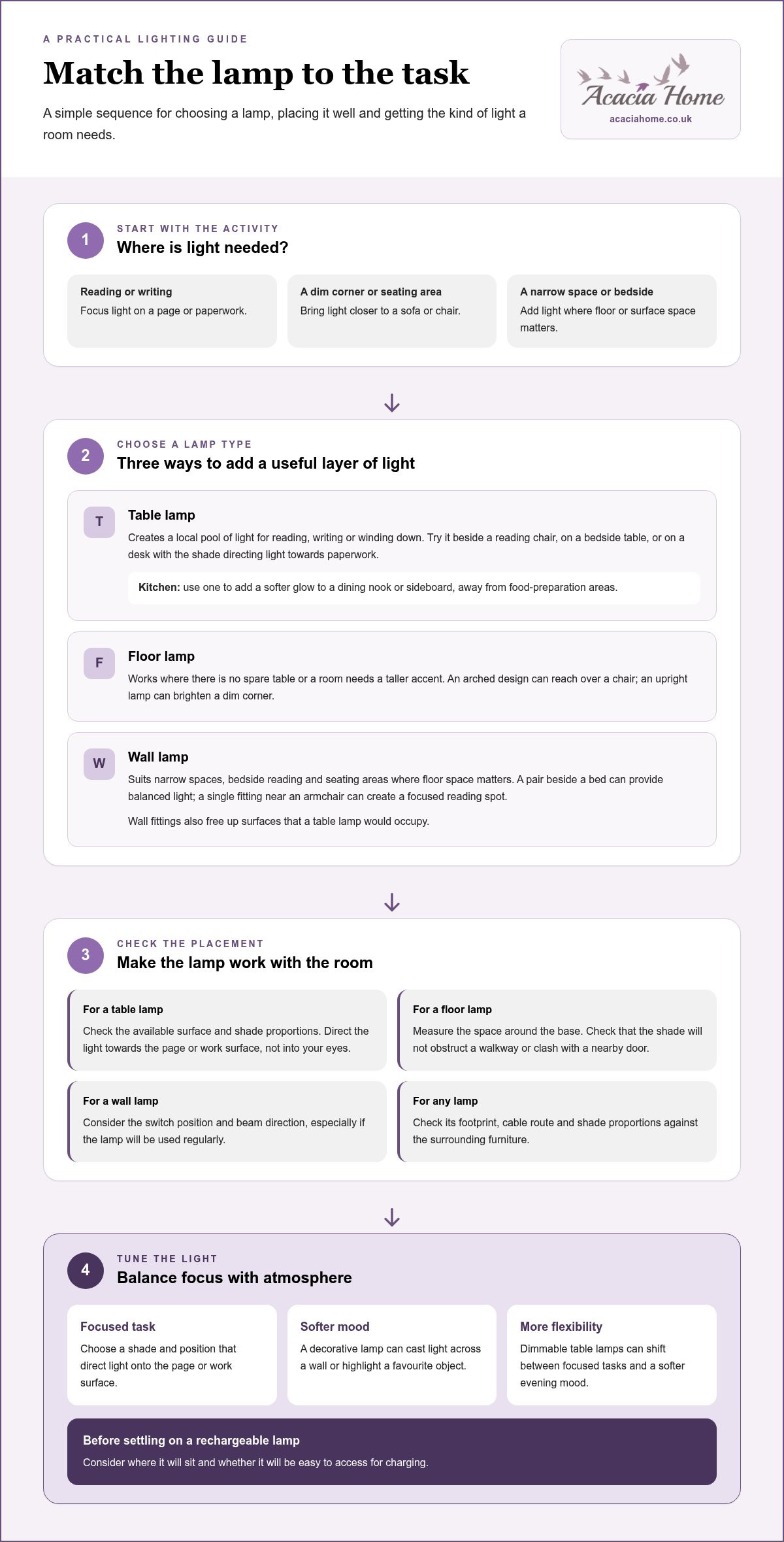
Wall, floor and table lamps bring light closer to activities and corners that ceiling fittings can leave in shade. Use them as practical layers: a table lamp beside a reading chair, a floor lamp by a sofa, or wall lights along a hallway. The right choice depends on the task, available surface space and the atmosphere you want.
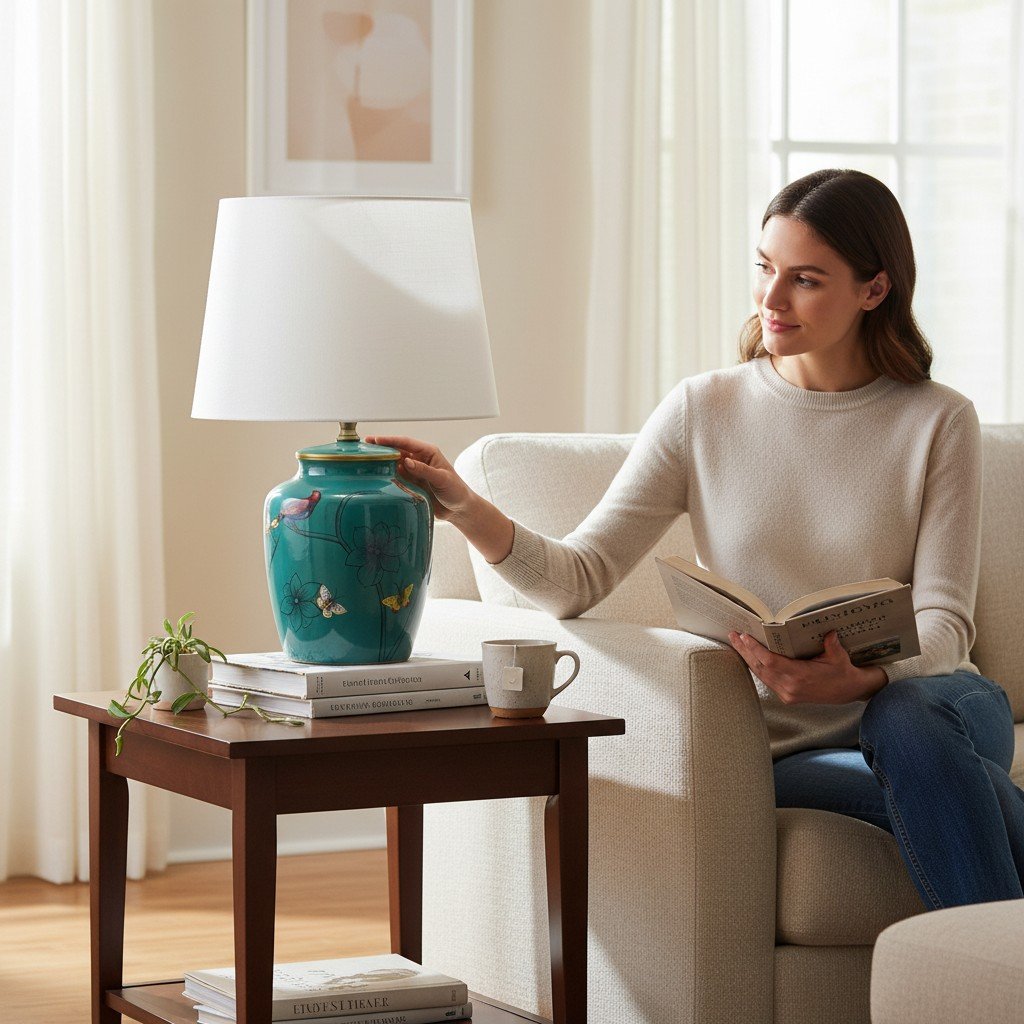
A table lamp creates a local pool of light for reading, writing or winding down. Place one on a bedside table for evening reading, or on a desk with its shade directing light towards paperwork without shining into your eyes. In a kitchen, a table lamp can add a softer glow to a dining nook or sideboard, away from food-preparation areas.
Floor lamps work well where there’s no spare table or a room needs a taller accent. An arched design can reach over a chair, while an upright lamp can brighten a dim corner. Before choosing, measure the space around the base and check that the shade won’t obstruct a walkway or clash with a nearby door. A modern brass curved floor lamp with a shade is one example of a sculptural form that can sit beside a sofa.
Wall lamps suit narrow spaces, bedside reading and seating areas where floor space matters. A pair beside a bed can provide balanced light, while a single fitting near an armchair creates a focused reading spot. Consider the switch position and beam direction, especially for a lamp used regularly. Wall fittings also free up surfaces that a table lamp would occupy.
Match the lamp’s light to its purpose. A reading lamp needs a shade and position that direct light onto a page; a decorative lamp can cast light across a wall or highlight a favourite object. Dimmable table lamps offer flexibility between focused tasks and a softer evening mood. With a rechargeable model, consider where you’ll place it and how easy it is to access for charging.
Finally, check the lamp’s footprint, cable route and shade proportions against the furniture around it. A compact table lamp works on a small bedside surface, whilst a taller floor lamp can balance a larger sofa. For a tactile accent, concrete lighting can introduce a contrasting material alongside a fabric shade or wooden table. Explore the lighting selection for more material-led inspiration.
These options can be weighed against the furniture they’ll sit beside, as well as the kind of light needed for reading or a softer evening setting.
Consider how often you’ll move the lamp and whether its charging needs suit the room’s routine.
Contemporary lighting for different rooms
Let a room’s purpose guide its lighting. Note where people read, cook, eat or move through the space. In a compact flat, one room may serve as both lounge and dining area, so separate pools of light can define each zone. Choose fitting styles after considering furniture placement, available surfaces and natural light.
In a living room, combine a central ceiling fitting with lamps near seating. A floor lamp beside an armchair defines a reading corner, while a table lamp on a sideboard adds a softer glow. For artwork, aim a discreet accent light at one feature rather than washing every wall equally. Ceramic, glass or concrete fittings can add contrasting textures to the room’s palette.
In a kitchen, plan lighting around food preparation and shared meals. A pendant above a dining table can distinguish that area from the worktops, while focused lighting helps keep chopping and cooking areas clear. Keep decorative fittings away from task areas if they cast shadows across the surface. In a kitchen-diner, separate switches or controls can shift the mood between cooking and eating.
Bedrooms benefit from lighting for both getting ready and winding down. A ceiling fitting provides general illumination, while bedside lamps offer useful reading light. If bedside surfaces are narrow, wall-mounted fittings leave room for books and personal items. A dimmable source also lets you lower the brightness before sleep without relying on the main ceiling light.
Hallways and staircases need a clear route through the home and a welcoming first impression. A row of ceiling fittings can distribute light along a long corridor; wall lights add gentle illumination without taking up floor space. In a small entrance, choose a compact fitting that doesn’t dominate the view or obstruct a door. Mirrors can help reflect light into darker corners.
Choose dining-room lighting to suit the table’s shape and everyday use. Centre a pendant over the table to create a natural focal point, then add a lamp on a nearby console for a softer surrounding glow. In an open-plan layout, repeat a finish or material across separate fittings to connect the kitchen and dining areas. A glass shade, for instance, can echo another clear decorative detail.
In a home office, place a task lamp beside the work area and use general lighting to reduce stark contrast. Position the lamp so your hand doesn’t cast a shadow across the page or keyboard. In a guest room, flexible lighting, such as a bedside lamp and ceiling fitting, supports reading, unpacking and resting.
Lighting for home and commercial spaces
Homes and workplaces have different lighting needs. A kitchen table may need gentle light for supper, while a reception desk needs clear visibility throughout the working day. Start with the activity, then consider the room’s layout, fittings, surfaces and controls. A dining area used for meetings as well as meals benefits from lighting that shifts between focused work and a softer atmosphere.
In a home, aim for flexibility across everyday routines. A pendant above a dining table can define the space, while a separate lamp supports reading nearby. In an open-plan kitchen and living area, plan distinct lighting zones so cooking, dining and relaxing don’t depend on one setting. A slimline under-cabinet LED light with a depth of 5 mm is one option for adding light beneath kitchen cupboards without a bulky profile.
Commercial lighting should suit each space’s use and visual character. A reception area may call for a noticeable centrepiece, while a corridor benefits from consistent illumination along its length. A one-metre-wide black linear suspended pendant offers a streamlined form for a long counter or shared table. For a more sculptural feature, a spiral LED pendant with eight CREE chips brings a stronger shape to a high-ceilinged setting.
In offices, studios and shared work areas, place task lighting where reading, writing or detailed work happens. Balance it with general room lighting so a bright desk doesn’t sit against a dark background. Light also affects how finishes, furnishings and displayed products appear. Bright white LED light with a cool, bluish tone can worsen glare, according to the NHS, so consider its effect on people using screens or viewing reflective surfaces.
In hospitality settings, match each fitting to the mood and practical demands of the space. A dining room can use a pendant as a visual anchor, while service spaces need unobstructed light for tasks. A four-ring LED pendant creates a different visual emphasis from a linear module, which is available in four options. Compare the fitting’s form, light spread and position before choosing for a specific setting.
Check how the scheme works from different viewpoints. In a shop, lighting should support clear product displays without distracting from them; in a home office, it should suit focused work and screen use. Plan switching and dimming needs from the start, rather than treating controls as an afterthought. Separate controls, for example, can shift a meeting area from presentation lighting to discussion lighting without changing the whole space.
Modern wall lights
A wall light can do more than fill a dark patch. Its position, beam direction and finish shape how a wall, mirror or reading corner feels. The key is to choose the desired effect first, then select a fitting that creates it. A downlight can define a hallway route, while an adjustable reading light can direct illumination towards a chair.
Start by deciding what the fitting needs to do. For ambient light, an uplighter washes a wall or ceiling, softening contrast in a living room. A downlighter creates a more defined pool, which can suit a bedside area or entrance. To highlight a picture, position the beam to illuminate the artwork without shining into someone’s eyes.
Wall lights are especially useful where a floor lamp could obstruct movement or a table lamp would take up a surface. In a narrow hallway, repeated fittings create a visual rhythm along the wall. Beside a bed, position a reading light within easy reach and consider whether its switch is accessible from the pillow. On a stairway, think about the light across each step, not just the fitting’s appearance.
Compare a fitting’s material and finish with nearby surfaces. Glass can create a lighter visual presence, while concrete brings a more substantial texture. Polished metal may echo door furniture or taps; a darker finish can stand out against pale paint. Check the shade’s shape and opening, as these affect how much light escapes and where it falls.
For outdoor or exposed locations, the fitting’s protection rating matters. A modern galvanised steel and glass wall bracket with an IP54 rating is one example listed for exterior use. Match any rating to the fitting’s intended location and follow its installation instructions. The rating alone doesn’t explain every condition a light can withstand, so use the maker’s stated guidance for the setting.
Before choosing, mark the intended position and view it from standing and seated eye levels. Check for nearby doors, shelves and mirrors that could block or reflect the beam. Then compare the fitting’s dimensions, bulb requirements and maintenance instructions. A small shade may suit a compact alcove, while a larger wall can carry a more prominent form without overwhelming the space.
For a material-led scheme, concrete lighting can bring a tactile contrast to smooth painted walls or glass details. Explore the lighting selection to consider how different materials might complement your room.
Acacia Home: Occasional Chairs
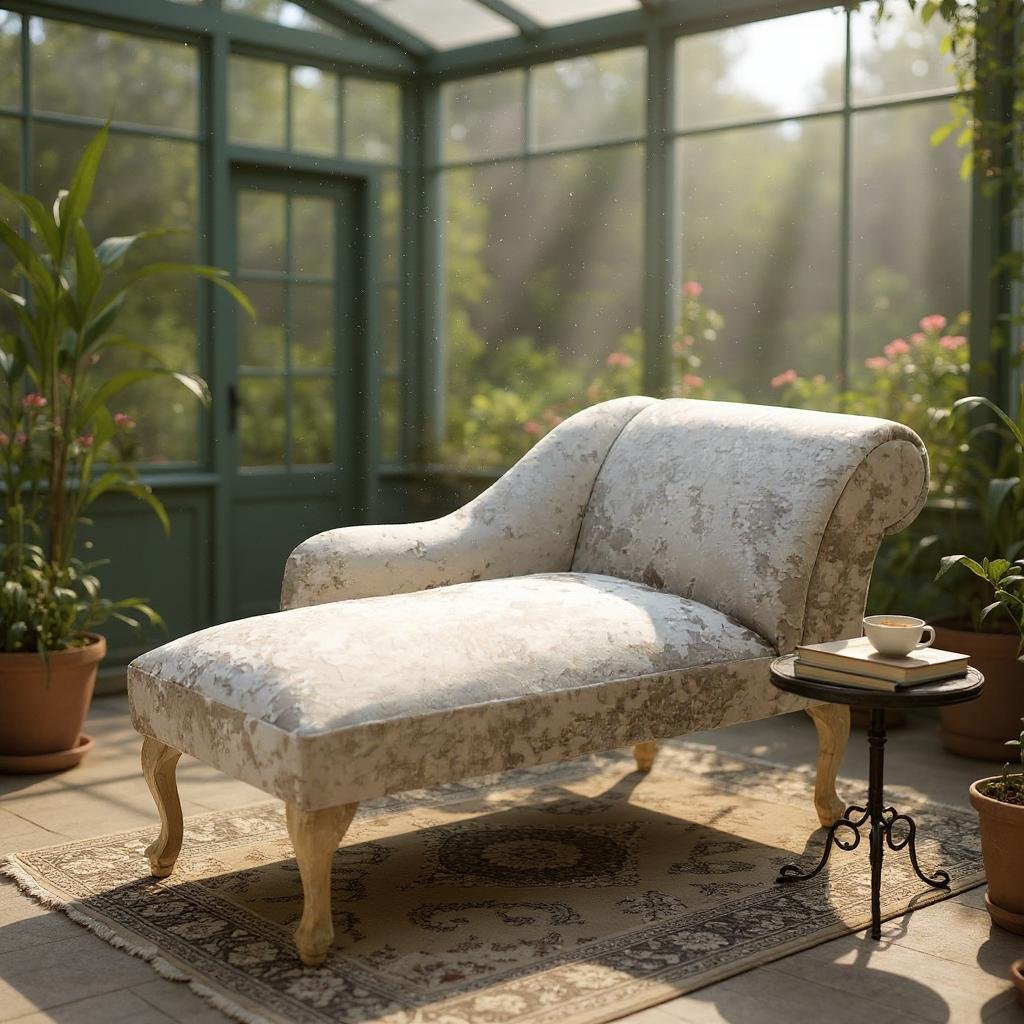
Acacia Home brings thoughtful seating and accents into the room alongside your lighting scheme. Once you’ve considered how light falls around a space, furniture helps define how you use it: an Occasional Chair can create a reading corner, while a Footstool adds a useful finishing touch. Dining Chairs support the everyday purpose of dining areas, while Chaise Longues and Window Seats create a place to pause near a window.
Turn to Acacia Home when you’re furnishing a room and want seating that complements its atmosphere, whether you’re shaping a quiet corner or a welcoming dining space. Explore the range, then visit Acacia Home to discover the furnishings.
Shape a space that feels like yours
Let the room’s atmosphere guide your next choice. A thoughtfully placed light can make a quiet corner feel inviting or give a dining area a more intimate mood, whilst the furniture around it helps the space feel complete. Consider where you’d most like to pause, gather or unwind, then let that purpose inform your finishing touches.
Acacia Home offers Occasional Chairs, Dining Chairs and Footstools to help furnish the settings that make a home personal. Pairing carefully chosen furniture with modern lighting can create a room that feels considered, comfortable and unmistakably your own.
Explore the range and contact Acacia Home to take the next step towards a home that reflects your style. Let each choice bring warmth and character to the spaces you enjoy most.
Frequently Asked Questions
What types of modern lighting are available for homes?
Homes can use fixed fittings, such as flush ceiling lights, pendants and wall lights, alongside portable floor and table lamps. The distinction is whether you want a fitting to stay in one position or move as your needs change. A portable lamp can follow a favourite chair if you rearrange the room, while a pendant keeps a dining table visually anchored.
How to choose modern lighting for each room?
Start with a simple room plan, marking furniture, doorways and places where people read, prepare food or gather. Then consider what the lighting needs to do from each viewpoint. In a room used for hobbies and hosting, choose controls that make it easy to shift between focused activity and relaxed conversation. Check that shades won’t block sightlines or interfere with doors, cupboards or frequently used surfaces.
How much do modern light fixtures cost in the UK?
There isn’t one UK price for a light fixture: the total depends on its design, material, size and light source. Installation is a separate consideration, particularly if fitting the light involves changes to existing wiring or ceiling access. For a useful comparison, consider the fitting and installation separately, then factor in any bulbs or controls required. Choose based on the room’s needs and the overall finish you want.

Comments