
Louis XV Chairs: French Elegance for British Interiors
- info642352
- Aug 28
- 12 min read
The most inviting seat in a modern home might just be a design that first flourished in the 1730s. Whilst many people worry that historical French furniture feels too formal or stuffy for a contemporary British lounge, the Louis XV chair is actually the ultimate antidote to the rigid lines of modern minimalism. It was designed for comfort and intimate conversation; it trades the heavy, imposing shapes of the previous era for soft curves and a more human scale.
You might feel overwhelmed by the subtle differences between the various Louis periods, or perhaps you're searching for that designer look without the eye-watering price tag of a rare antique. We understand that your home is a personal sanctuary, and choosing the right piece is about finding a balance between heritage and livability. In this guide, we'll help you identify the signature cabriole legs and ornate carvings that define this style, ensuring you can identify authentic features with confidence. You'll discover how to mix these elegant frames with your favourite modern fabrics to create a curated, "new traditionalist" aesthetic that feels both timeless and fresh.
Table of Contents
What is a Louis XV Chair? Defining the Rocaille Aesthetic
To understand the allure of the louis xv chair, one must first appreciate the artistic rebellion of the Rocaille movement. During the mid-18th century, French design underwent a radical transformation, shedding the stiff, imposing grandeur of the "Sun King" Louis XIV in favour of something far more delicate. This era, often called the Rococo period, replaced massive oak thrones with lighter, more feminine forms that celebrated the beauty of the natural world. The style emerged in the 1730s as a deliberate reaction against the rigid formality of the previous century, prioritising personal ease over royal protocol.
The Philosophy of Intimate Living
The reign of Louis XV, spanning from 1715 to 1774, marked a profound shift in how people inhabited their homes. Grand palace halls designed for public spectacle were replaced by smaller, more private salons. These rooms required furniture that encouraged social connection and leisure rather than just posture. Consequently, the louis xv chair became wider and lower, allowing for relaxed conversation and accommodating the voluminous silk dresses of the time. It was a period where the home became a sanctuary for pleasure and comfort; it's a philosophy that still resonates with us today when we curate our own living spaces to reflect our personal identities.
Key Visual Signatures to Look For
Identifying this style requires a keen eye for organic movement and soft silhouettes. The most distinctive feature is the cabriole leg, a graceful S-curve inspired by the hind legs of a leaping animal. Unlike earlier designs, these legs often lack stretchers, which are the horizontal bars that once connected chair legs for stability. By removing these, craftsmen achieved a lighter, floating appearance that was revolutionary for the time. This lack of visible bracing gives the piece a sense of effortless weightlessness amongst your other furniture.
Ornamentation also took a turn toward the playful and asymmetrical. You'll often find intricate carvings of scallop shells, acanthus leaves, and delicate floral bouquets across the crest rail and apron. This Louis XV furniture style is defined by its fluid continuity; the carvings seem to grow naturally from the wood rather than being applied as an afterthought. It's this sense of "living" design that makes the furniture feel so welcoming in a modern setting, breaking up the harsh lines of contemporary architecture with a touch of heritage charm.
The Anatomy of Elegance: Design Details and Craftsmanship
The beauty of a louis xv chair lies in the tactile harmony of its construction. During the 18th century, master craftsmen favoured timbers like walnut, oak, and beech, not just for their strength, but for their ability to hold the intricate carvings that define the era. Walnut was especially prized for its fine grain, allowing for the creation of delicate, flowing details that seem to ripple across the frame. These woods were chosen because they allowed for the deep, expressive work that transformed a simple seat into a piece of sculpture.
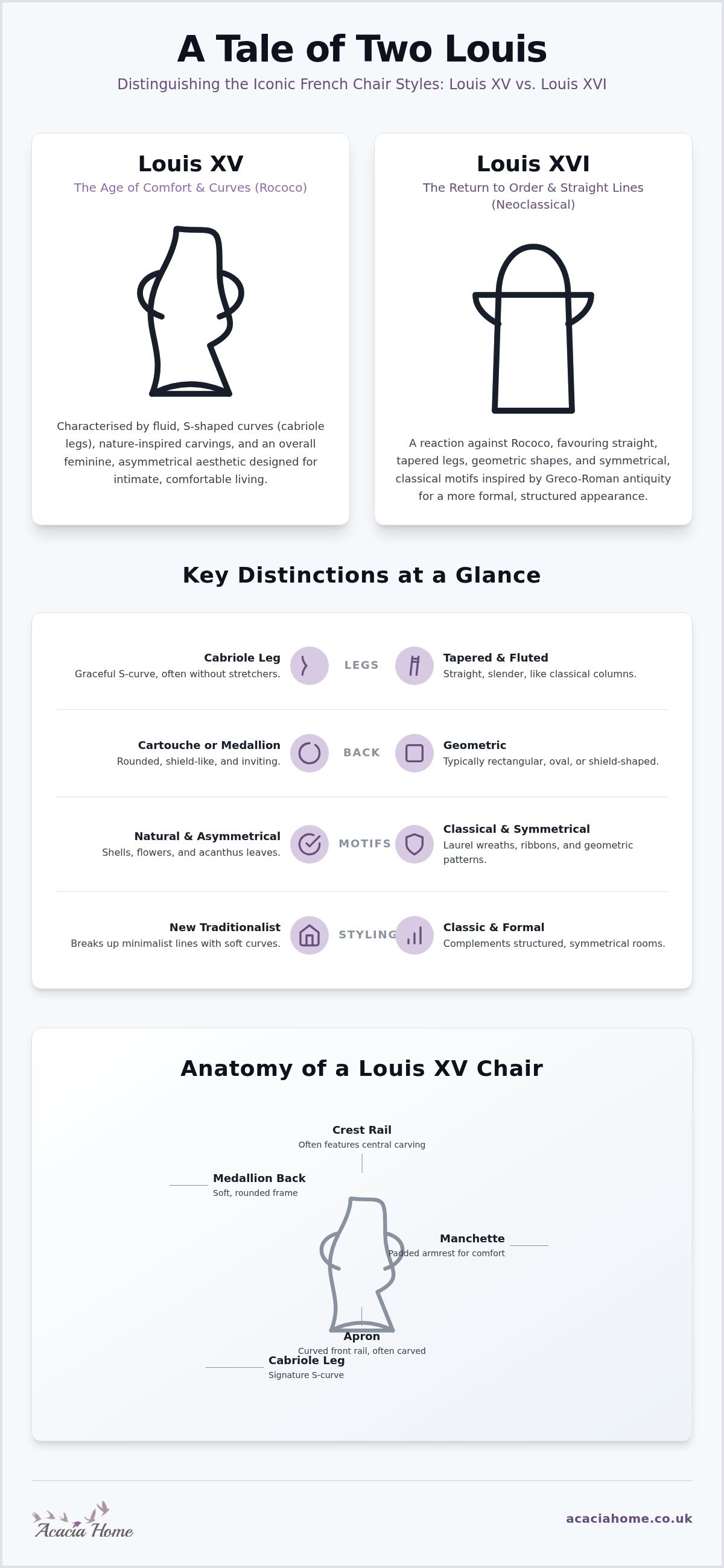
The silhouette is often anchored by a 'medallion' or 'cartouche' backrest. These rounded or shield-like shapes provide a soft, inviting frame for the upholstery, moving away from the square, rigid backs of previous generations. Another hallmark of this thoughtful design is the 'manchette'. These are small, padded sections on the armrests that offer a gentle resting place for the elbows. It's a tiny detail that perfectly captures the period’s obsession with personal ease and luxury within the home.
Mastering the Cabriole Leg
The cabriole leg is perhaps the most recognisable element of this furniture period. It's a marvel of engineering that uses a double curve to distribute weight effectively, allowing the chair to appear light and graceful whilst remaining perfectly stable. You'll often find variations in how these legs meet the floor. Some feature a delicate 'scroll' foot, whilst others utilise the 'pied-de-biche' or deer’s hoof, a charming nod to the natural world that inspired the craftsmen. This leg design is what gives the louis xv chair its sense of movement, as if it's poised to dance across the room.
Ornate Carvings and Gilding
Every frame is a unique work of art, typically featuring hand-carved motifs that celebrate nature. Acanthus leaves, floral sprays, and shells are usually centred on the crest rail and the apron, creating a sense of balance despite the often asymmetrical Rococo style. These carvings aren't just decorative; they're integrated into the very structure of the chair, flowing seamlessly from the legs into the frame.
When it comes to finishes, the impact on your interior can be transformative. Traditional gold leaf gilding offers a sense of palatial opulence, whilst 'distressed' or whitewashed painted finishes provide a more relaxed, rustic aesthetic that feels right at home in a country cottage or a modern townhouse. If you're looking to introduce this sense of curated heritage into your own space, exploring a range of Louis style chairs can help you find the perfect balance between historical charm and modern durability. Each piece serves as a personal statement, bridging the gap between global artistry and your local living room.
Louis XV vs Louis XVI Chairs: Which Style Suits Your Home?
Choosing between the two most iconic eras of French seating often feels like deciding between two distinct personalities for your room. Whilst both styles offer an undeniable sense of heritage, they represent very different philosophies of design. The louis xv chair is the champion of the curve, celebrating the organic and the asymmetrical. In contrast, the Louis XVI style, which emerged as a reaction against the perceived excesses of the Rococo, looks back to the ancient world for inspiration. It's a choice between the playful warmth of the 1730s and the structured, formal restraint of the late 18th century.
The Silhouette Showdown
The visual differences between these two periods are striking once you know where to look. A louis xv chair is defined by its fluid movement; the backrest, seat, and legs flow into one another without a single straight line in sight. This Louis XV furniture style relies on the cabriole leg to create a sense of weightless grace. When the reign of Louis XVI began in 1774, the silhouette shifted dramatically toward Neo-classicism. Suddenly, curves were replaced by geometric symmetry. Legs became straight and tapered, often featuring fluting that mimics the columns of a Greek temple. The medallion backrest, whilst still popular, became more rigid and was frequently framed by carved ribbons or beads rather than wild floral sprays.
Matching the Style to Your Room
Understanding your existing architecture is the best way to decide which style will feel most at home in your space. If you live in a Victorian terrace with high ceilings and large bay windows, the sensuous, rounded forms of the Louis XV period can help to soften the room's vertical lines. These chairs are particularly successful in "New Traditionalist" interiors where the goal is to create a space that feels lived-in and comfortable. They make wonderful additions to a bedroom reading nook or a relaxed lounge where the goal is to break up the "stiffness" of modern furniture.
On the other hand, the Louis XVI style is often the better choice for formal, symmetrical spaces like a grand dining room. Its architectural precision aligns beautifully with the clean lines of contemporary British homes. However, don't feel restricted to just one era. Many of the most successful interior designs today embrace an eclectic mix. You might pair a set of straight-lined dining chairs with a single, highly ornate Louis XV occasional chair at the head of the table. This creates a curated, designer look that feels like a personal collection gathered over time rather than a showroom set. It's this blend of history and modern life that turns a house into a sanctuary.
Styling French Antique Style in a Modern British Home
The "statement" approach is perhaps the most effective way to introduce this heritage look into a contemporary space. Placing a single louis xv chair in a minimalist hallway creates an immediate focal point that signals a home of character and history. To avoid the "stuffy" feel that many people fear, try pairing these ornate frames with a neutral, stripped-back backdrop. Whilst traditional gold and cream remain timeless, the current trend for 2026 leans toward deeper, moodier tones. Upholstering a carved frame in navy, charcoal, or sage green instantly grounds the piece, making it feel contemporary rather than purely antique. For more inspiration on where these pieces work best, our occasional chairs guide offers a wealth of placement ideas for every room.
The Bedroom Sanctuary
In the bedroom, a Louis chair creates a private sanctuary for quiet reflection. Tucked into a corner with a small side table and a reading lamp, it provides a sense of luxury that a standard armchair often lacks. Many people use the chair as a stylish valet for clothing; it adds a touch of French glamour to the daily routine whilst keeping the space organised. Choosing linen upholstery is a clever way to bridge the gap between formal design and cosy comfort. The natural texture of linen softens the elaborate woodwork, making the chair feel approachable and inviting.
Dining Room Drama
You can also bring a sense of drama to your dining room by using louis xv chair designs as "carvers" at either end of a modern oak table. This "mismatching" trend is particularly popular amongst those embracing "New Traditionalism", as it breaks up the uniformity of a standard dining set. In an airy, sun-filled conservatory, a full set of these chairs creates a romantic, garden-inspired atmosphere. The sensuous curves of the frame are perfect for breaking up the long, rectangular lines often found in modern open-plan extensions, adding a necessary layer of "soft" architecture to the room.
If you're ready to transform your home with a piece of curated history, you can view our curated selection of Louis style chairs to find your perfect match.
Choosing Your Perfect Louis Style Chair from Acacia Home
At Acacia Home, we see ourselves as more than just a retailer; we're passionate curators who act as a visionary bridge between global craftsmanship and the British home. We believe that a louis xv chair shouldn't just be a museum piece. It should be a functional, loved part of your family's daily life. By focusing on high-quality reproductions, we offer the heritage look you desire with the durability required for modern living. Before you make your selection, take a moment to evaluate the visual impact the piece will have in your space. Consider whether you need a bold focal point or a subtle layer of texture to complete your room's story. For a deeper look at specific designs, our Louis style chairs buying guide provides expert advice to help you choose with confidence.
Fabric and Finish Options
The upholstery you choose will define how the chair interacts with your lifestyle. Velvet offers a rich, sensory appeal that's perfect for a luxurious statement in a master bedroom or a formal lounge. If you're looking for something more relaxed, linen provides a breathable, organic feel that's ideal for a sun-drenched conservatory or a "shabby chic" guest room. For those with pets, tight-weave linens are often a more resilient choice against curious claws. The frame finish is equally important for setting the tone. A natural, weathered oak frame creates a rustic, country cottage vibe, whilst a painted whitewash finish can lean toward a more polished, stately home aesthetic. We prioritise the use of high-density foam in our seating; this ensures the chair maintains its iconic silhouette and comfort for many years to come.
Caring for Your Investment
A well-chosen louis xv chair is a timeless favourite that transcends seasonal trends. Keeping it in pristine condition is simpler than you might think. Regular dusting of the intricate wood carvings with a soft, dry brush will keep the details sharp and prevent debris from settling in the deep crevices. If you've positioned your chair as a window seat, be mindful of direct sunlight. Whilst a little natural ageing can add character, rotating the piece occasionally or using sheer curtains helps to protect the fabric from premature fading. These chairs are designed to be personal statements that grow with your home. They're versatile enough to move from a hallway to a bedroom as your needs evolve, always providing that dependable touch of French sophistication and warmth.
Bringing Heritage Home: Your Journey into French Sophistication
Embracing the history of the louis xv chair is about more than just adding a seat to a room; it's about inviting a sense of storied elegance into your daily life. You've discovered how the "Rocaille" aesthetic prioritises comfort and human scale, breaking the rigid lines of contemporary design with its sensuous, organic curves. Whether you choose the ornate warmth of the XV era or the neoclassical precision of Louis XVI, these pieces serve as a personal statement of your unique aesthetic.
As a family-run business and specialist UK seating retailer, we take immense pride in our expert sourcing process. We act as your visionary guide, bridging the gap between global craftsmanship and your local sanctuary. With national delivery available on all our furniture, bringing this curated heritage into your home has never been more accessible. We invite you to explore our curated collection of Louis Style Chairs today. Let's work together to create a space that feels both timeless and beautifully yours.
Frequently Asked Questions
What is the difference between a Louis XV and a Louis XVI chair?
The main difference lies in the silhouette; a Louis XV chair is defined by sensuous, organic curves and cabriole legs, whilst Louis XVI pieces embrace the straight lines and geometric symmetry of Neoclassicism. You'll notice that Louis XV designs avoid straight edges entirely, favouring asymmetrical floral carvings. In contrast, Louis XVI chairs feature tapered, fluted legs resembling Greek columns, offering a more formal and restrained aesthetic for your home.
Are Louis XV chairs comfortable enough for everyday use?
Yes, these chairs were specifically designed for leisure and intimate socialising rather than stiff formality. The wider seat and curved backrest of a classic louis xv chair provide excellent support for relaxed reading or dining. High-quality modern reproductions use high-density foam and durable springs, ensuring the seat remains supportive over the years. This makes them a practical choice for a busy British household that values both style and daily comfort.
How can I tell if a Louis XV chair is a high-quality reproduction?
Look closely at the joinery and the depth of the carvings. A premium reproduction will feature hand-finished details where the floral motifs seem to grow naturally from the frame rather than looking like separate, glued-on pieces. Check for the use of solid hardwoods like oak or beech, which provide the necessary weight and stability. The finish should feel smooth to the touch, with any "distressed" effects looking intentional and artistic rather than accidental.
What kind of fabric is best for a French style occasional chair?
Choosing the right fabric depends on the "impact" you want to create within your room. Natural linen is a favourite for achieving a relaxed, French country look, as its breathable texture softens the ornate woodwork. For a more opulent, stately home feel, velvet is unsurpassed for its deep colour and sensory appeal. If you have pets or young children, consider a tight-weave synthetic blend that offers the look of natural fibres with added stain resistance.
Can I use a Louis XV chair in a modern, minimalist living room?
Absolutely; using a single louis xv chair as a statement piece is a brilliant way to break up the rigid lines of a minimalist space. The organic, flowing curves of the chair act as a "soft" architectural element, providing a necessary visual counterpoint to flat surfaces and sharp angles. By choosing a frame in a contemporary charcoal or navy finish, you can ensure the piece feels like a deliberate design choice rather than an out-of-place antique.
What does 'cabriole leg' mean in furniture design?
A cabriole leg is a specific furniture shape that features two curves; the upper section bows outwards whilst the lower part curves inwards, forming a graceful S-shape. This design was inspired by the natural movement of animal legs and was revolutionary in the 18th century. It allows the chair to support significant weight without the need for horizontal stretchers, creating a lighter, more elegant appearance that remains the hallmark of the Louis XV period.
How do I clean the intricate wood carvings on my French chair?
To keep the delicate carvings on your chair looking their best, use a soft-bristled brush or a clean makeup brush to gently remove dust from the crevices. Avoid using heavy wax polishes or aerosol sprays, as these can build up over time and dull the intricate details of the woodwork. A simple wipe with a slightly damp, lint-free cloth is usually enough to maintain the wood's natural lustre and preserve the hand-finished quality of the frame.
Why are Louis style chairs so popular in British interior design?
Their enduring popularity stems from a unique blend of heritage and versatility. British homeowners often appreciate the "inherited aesthetic" these chairs provide, adding a sense of history and warmth to even the newest builds. They fit perfectly into the "New Traditionalist" trend, which moves away from stark minimalism toward more layered, personal spaces. Their ability to serve as either a functional dining seat or a decorative bedroom accent makes them a timeless investment.


Comments