
Large Ottoman vs Coffee Table: Choosing the Perfect Centrepiece for Your Home
Updated: Sep 14
What if the most important piece of furniture in your living room isn't actually a table at all? Many of us grew up believing that a hard glass or wooden surface was the only way to anchor a seating area, yet modern homes can often feel a little too formal or un-cosy with these rigid structures. If you've ever fretted over a toddler's safety around sharp corners or felt your space lacked a certain tactile warmth, you aren't alone. Choosing a large ottoman instead of a traditional coffee table might just be the most liberating design decision you make this year.
It's a common struggle to find furniture that works as hard as you do, especially when space is limited and every item needs to perform multiple roles. We're going to show you how a beautifully crafted ottoman can transform your living room into a versatile sanctuary of comfort and style, effortlessly outperforming the standard table. In this guide, we'll explore the practical benefits of soft-edged design and share expert styling secrets to help you create a sophisticated, multi-functional centrepiece that feels truly personal.
Table of Contents
The Evolution of the Living Room: Why the Large Ottoman is Taking Centre Stage
The British living room has undergone a quiet but profound revolution. We've moved away from the era of the untouchable "best room" or formal parlour, where furniture was chosen for its ability to impress guests rather than its capacity to hold a family. Today, our homes serve as multifunctional sanctuaries. They're offices, cinemas, and social hubs all at once. This shift in behaviour has led many to reconsider the traditional coffee table. While a wooden or glass table offers a flat surface, its hard edges can feel cold and unyielding. This is why the large ottoman is increasingly taking centre stage. It provides a "soft centrepiece" that bridges the gap between high-end design and lived-in comfort.
From Footrest to Focal Point: A Design History
The History of the ottoman reveals a piece of furniture that was always intended for communal relaxation. Originally introduced to Europe from the Ottoman Empire in the late 18th century, it began as a backless, upholstered seat. In the sophisticated UK home, it has evolved from a simple footrest tucked in a corner to a bold focal point. Modern designers are now reimagining these heritage shapes, using rich velvets and intricate tufting to turn what was once a functional item into an aspirational statement piece. A large ottoman isn't just a place to rest your feet; it's a curated anchor for your entire interior scheme that reflects a deeper appreciation for craftsmanship.
The Social Dynamics of Soft Furniture
There's a specific psychology behind choosing soft furniture for the centre of a room. A hard table often acts as a physical barrier, dictating a rigid, linear layout that can feel impersonal. In contrast, an ottoman encourages what we like to call a "conversation circle". Its tactile nature invites people to lean in, sit on the edge, or share a tray of tea without the fear of bruised shins. As we look ahead, comfort is becoming the ultimate luxury. The "feet up" culture isn't about being untidy. It's about creating a space where guests feel instantly at home. By replacing a sharp-edged table with a soft, upholstered alternative, you're signalling that your home is a place for genuine connection and unhurried relaxation.
Large Ottoman vs Coffee Table: Which is Right for Your Lifestyle?
Deciding between a hard-surfaced table and a large ottoman often comes down to how you actually inhabit your home. While a traditional table offers a predictable, flat plane for decor, it can feel static and unyielding. An upholstered centrepiece, however, invites a more tactile interaction. If you have young children or pets, the safety benefits are immediate. There are no sharp corners to worry about during a game of tag in the lounge, and the soft finish absorbs impact rather than causing injury. To ensure your animal companions are as comfortable and well-catered for as your guests, you can visit Pets & Friends for specialist food and supplies. Visually, an ottoman adds a sense of grounded luxury, filling the room with texture rather than the leggy, sometimes sparse look of a wooden or glass frame.
One of the most compelling reasons to choose a large ottoman is its sheer adaptability. It's a piece that evolves with your day. In the evening, it acts as a temporary chaise longue extension for your sofa, allowing you to stretch out fully. When hosting, it instantly provides extra seating for guests, a feat most coffee tables simply can't manage. For those managing smaller British living rooms, storage models are a revelation, hiding away blankets and board games whilst keeping the surface clear. You might even use it as a makeshift buffet server by adding a large, sturdy tray to one side. This flexibility is a far cry from the rigid history of the ottoman, which began as a much simpler, stationary seat in the imperial courts.
Addressing the Practicalities: Stability and Spills
Many homeowners worry about the stability of drinks on a soft surface. This is easily solved with the "Tray Strategy". By placing a high-quality wooden or metallic tray on top, you create a firm, level area for tea and coffee whilst retaining the comfort of the surrounding upholstery. Regarding maintenance, modern fabric protection makes dealing with spills far less daunting than it once was. Whilst wood requires regular polishing to avoid permanent water rings, a well-chosen fabric can be remarkably resilient with minimal care. Longevity often depends on the quality of the internal frame and the density of the foam. A piece chosen from a curated range of footstools and ottomans is built to endure the rigours of family life whilst maintaining its elegant silhouette for years to come.
Selecting Your Ideal Large Ottoman: Scale, Shape, and Substance
Choosing a centrepiece requires a keen eye for balance. A large ottoman can either ground a room or overwhelm it, depending on how it relates to your existing furniture. It's about finding that sweet spot where the piece feels intentional and curated. The silhouette you choose, whether it's the crisp lines of a square, the expansive feel of a rectangle, or the softening effect of a circular piece, will dictate the energy of the space. A square silhouette often feels modern and structured, whilst a round version can break up the harsh angles of a modular sofa, creating a gentler flow for your guests to navigate.
Finding the Perfect Proportions
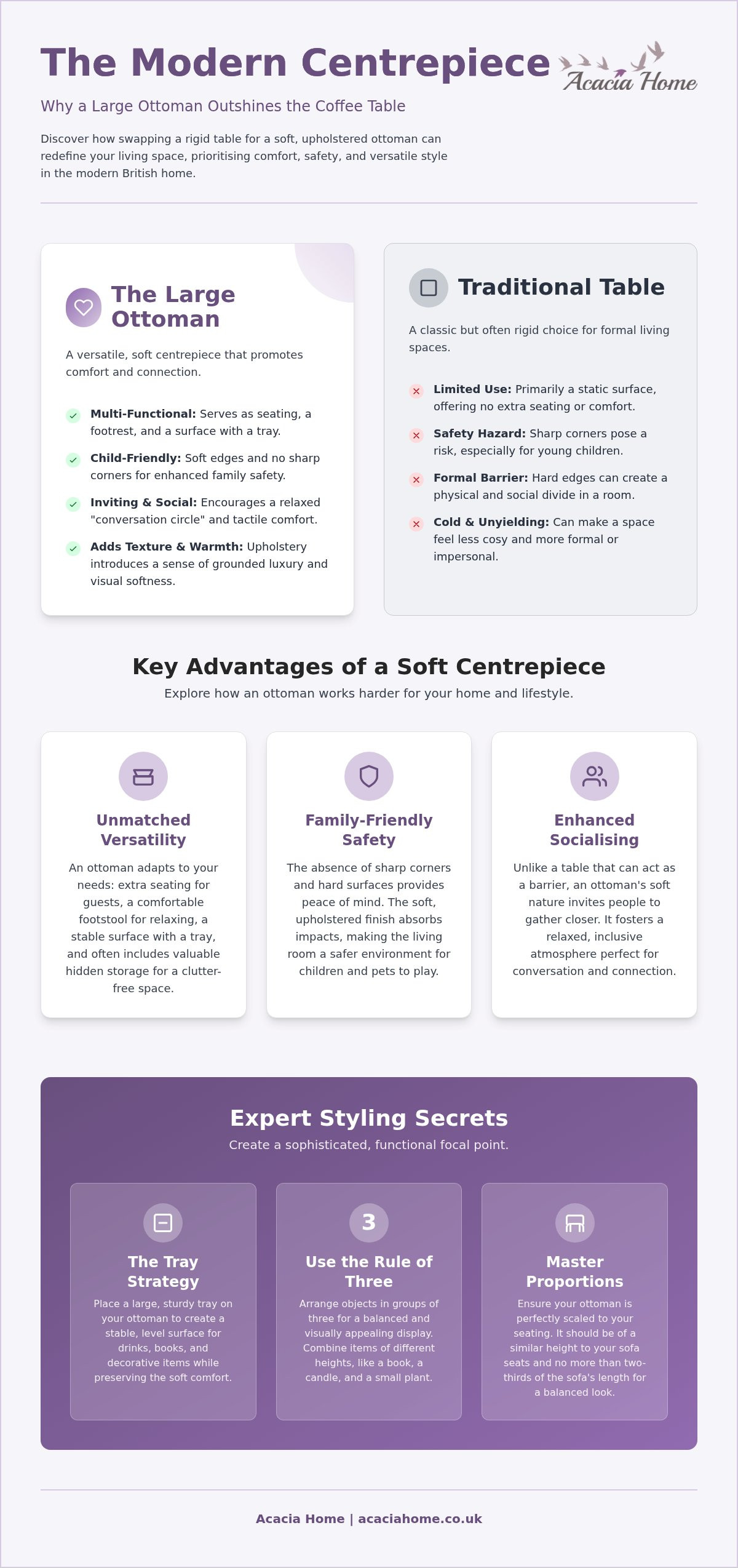
Proportion is the silent language of design. A common mistake is selecting a piece that's too small, which can make it look like an afterthought. Ideally, your ottoman should be approximately half to two-thirds the length of your sofa. This ensures it feels substantial enough to anchor the area without crowding it. The height is equally vital. Following the "Golden Rule" of interior design, your ottoman should sit at the same height as your sofa cushions, or slightly lower. This creates a seamless visual line and ensures it's comfortable for resting your legs. Don't forget to leave enough "walk-around" space on all sides to maintain a fluid, airy atmosphere.
The Tactile Experience: Choosing the Right Fabric
Texture is where the personality of your home truly shines. A velvet finish offers a sophisticated glamour, catching the light and adding a sense of depth to your colour palette. If you prefer a more relaxed, organic aesthetic, textured weaves and linens provide a rustic charm that feels effortlessly lived-in. When selecting your large ottoman, look beyond the initial beauty and consider the "rub count", which is a measure of how well the material stands up to daily wear. For high-traffic family rooms, a high rub count is essential to keep your piece looking pristine. As you consider these tips for styling your ottoman, remember that the material is the foundation of the entire look. Whether you choose a bold jewel tone to act as a statement accent or a neutral shade that blends into your sanctuary, the substance of the piece is what makes it a lasting investment.
Styling Your Large Ottoman: The Art of the Functional Focal Point
Once you've selected your piece, the real magic happens through curation. Styling a large ottoman is about more than just filling space; it's about layering textures and stories to create a lived-in sanctuary. Start by draping a soft wool or cashmere throw across one corner to introduce a tactile contrast against the upholstery. To avoid a cluttered look, embrace the "rule of three" by grouping decorative objects in odd numbers. This creates a natural visual balance that feels organised yet effortless. As the seasons shift, you can easily refresh the mood by swapping lightweight summer linens for rich, heavy textures in the winter months.
A well-styled centrepiece shouldn't exist in isolation. It works best when integrated with the wider room, perhaps acting as a companion to your occasional chairs or a window seat. By repeating certain colours or fabrics across these pieces, you create a harmonious narrative that leads the eye around the space. This approach ensures your living room feels like a professional gallery whilst remaining deeply personal and comfortable for daily life.
The Essential Guide to Ottoman Trays
The tray is the secret to making a soft surface perform like a table. Choose a material that offers a deliberate contrast to your ottoman’s fabric. A rustic wooden tray looks stunning against a plush velvet, whilst a sleek metallic tray adds a touch of modern glamour to a linen finish. Position the tray slightly off-centre to leave room for resting your feet on the other side. On the tray itself, keep a curated selection of essentials: a scented candle for atmosphere, a small dish for remote controls, and perhaps one or two of your favourite art books to provide a foundation for smaller trinkets.
Creating a Narrative with Decor
To keep your arrangement from looking flat, vary the height and scale of your decor. A tall vase of seasonal greenery provides a fresh, vertical element that draws the eye upward, whilst smaller objects like a decorative magnifying glass or a ceramic bowl add intricate detail. The goal is to create a dynamic centrepiece that looks like a designer's work but still functions for your family. If you're ready to find the perfect foundation for your styling journey, explore our collection of hand-picked ottomans and footstools and begin transforming your home today.
Discovering the Acacia Home Collection: A Curated Selection
At Acacia Home, we believe your living space is more than just a collection of furniture; it's a reflection of your identity and a sanctuary for your family. Our mission is to bring global craftsmanship directly to the heart of the British home, ensuring every piece we offer tells a story of quality and heritage. When we select a large ottoman for our range, we look for more than just aesthetic appeal. We seek out items that embody a visionary spirit whilst remaining rooted in traditional values of durability and comfort. This pride in curation means each item has been chosen with a specific eye for how it will impact the "feel" of your home.
Our collection is designed to be cohesive, allowing you to build a room that feels intentional and sophisticated. You might find that a velvet-upholstered large ottoman serves as the perfect companion to our Louis style chairs, blending French elegance with contemporary functionality. This synergy allows you to create a layout that feels curated by a professional, yet remains deeply personal and inviting. It's about finding those connections between pieces that turn a house into a home.
A Heritage of Quality and Personal Service
As a family-owned business, we've spent years establishing trade links with expert manufacturers who share our passion for excellence. Our global sourcing ethics ensure that we only bring the finest materials into your living room. We don't just sell furniture; we act as a bridge between world-class craftsmanship and the local UK home. Whether you're looking for a bold statement or a subtle anchor, our expert advice is always on hand to help you choose the perfect piece. We're committed to providing a personal service that makes the process of styling your home as enjoyable as the final result.
Completing the Look: Beyond the Ottoman
Styling a home is a journey that rarely ends with a single centrepiece. To achieve a truly sophisticated and multi-functional layout, consider how your primary furniture interacts with smaller accents. You might choose to pair your new centrepiece with our versatile footstools to create layered seating options for guests or extra comfort during quiet evenings. For those seeking the ultimate in refined lounging, our chaise longues and window seats offer an additional touch of luxury that complements the soft edges of an upholstered room. We invite you to browse our full collection and find your next favourite piece, knowing that each one has been selected with a passion for beauty and a commitment to lasting quality.
Transform Your Living Space into a Haven of Comfort
Reimagining the heart of your home begins with a single, thoughtful choice. By embracing the soft contours and tactile warmth of a large ottoman, you're prioritising a lifestyle of fluid comfort over rigid formality. You've discovered how the right scale, material, and styling trays can elevate your room from a simple seating area to an expertly curated sanctuary. Whether it's the added safety for a growing family or the sheer versatility of a piece that acts as both seating and a table, this centrepiece truly transforms your daily life.
At Acacia Home, our family-owned British business is dedicated to helping you find furniture that feels like a personal statement. We take immense pride in our carefully curated global designs, ensuring every item meets our exacting standards for quality and craftsmanship. Our team is always here to provide the personal service you need to create a home that reflects your unique style and heritage.
Explore our curated collection of large ottomans and footstools and find the perfect piece to anchor your home. We look forward to helping you create a space that you'll cherish for years to come.
Frequently Asked Questions
Is a large ottoman practical for everyday use as a table?
A large ottoman is remarkably practical for daily use when paired with a sturdy, flat-bottomed tray. This simple addition creates a stable surface for drinks or remote controls whilst retaining the piece's primary benefit of soft, comfortable lounging. Unlike a rigid coffee table, it offers a multi-functional area that can transition from a serving surface to extra seating in seconds, making it an ideal choice for busy, modern households.
How do I choose the right size ottoman for my corner sofa?
When measuring for a corner or L-shaped sofa, aim for a piece that sits comfortably within the "nook" without blocking walkways. Ideally, the ottoman should be roughly two-thirds the length of the shorter sofa section. This proportion ensures the room feels balanced and provides enough reach for everyone seated. Choosing a square or circular shape often works best with corner configurations to maintain a fluid, open feel in the centre of the room.
What is the best fabric for a large ottoman in a home with pets?
For homes with pets, look for fabrics with a high rub count and a tight weave to prevent claws from snagging. Synthetic velvet blends are often surprisingly resilient, as they're easier to spot-clean and don't trap hair as readily as loose linens. Choosing a textured weave can also help camouflage minor wear and tear. It's always wise to check the durability specifications to ensure your centrepiece can withstand the enthusiastic greeting of a four-legged friend.
Can I use a large ottoman in a small living room without it feeling cramped?
You can certainly incorporate a large ottoman into a smaller space by selecting a design with exposed legs. Seeing the floor underneath the furniture creates an illusion of more space, preventing the room from feeling heavy or cluttered. Opting for a circular silhouette also helps by removing sharp corners that might impede movement. This approach allows you to enjoy a substantial centrepiece without sacrificing the precious flow of a compact living area.
How do I stop things from falling over on a soft ottoman surface?
The most effective way to ensure stability is to utilise a heavy, oversized tray made from wood or metal. This provides a level foundation for glassware and decorative items, effectively mimicking the functionality of a coffee table. For items placed directly on the upholstery, choose pieces with wider bases and lower centres of gravity. Using a tray not only protects the fabric from potential spills but also allows you to quickly clear the surface when needed.
Should my ottoman match the colour of my sofa exactly?
Your ottoman doesn't need to be an exact colour match for your sofa. In fact, choosing a complementary shade or a bold, contrasting tone often creates a more sophisticated, curated look. If your sofa is a neutral grey, a rich jewel-toned velvet can act as a stunning focal point. Alternatively, choosing a similar hue in a different texture, such as a chunky weave against a smooth fabric, adds depth without overwhelming the space's existing palette.
Are storage ottomans as comfortable as non-storage versions?
High-quality storage ottomans offer the same level of comfort as their non-storage counterparts. The key lies in the density of the foam and the sturdiness of the internal frame. While the base is hollow to accommodate blankets or games, the lid is typically generously padded to ensure a soft feel underfoot or when used as extra seating. It's a brilliant way to gain organisation without compromising on the sanctuary-like atmosphere of your living room.
How do I clean a large velvet ottoman if something spills?
If a spill occurs on a velvet surface, the first rule is to blot the area immediately with a clean, dry cloth. Never rub the fabric, as this can damage the pile and push the liquid deeper into the fibres. For persistent marks, a slightly damp cloth with a tiny amount of mild upholstery cleaner can be used, followed by gently brushing the pile once dry to restore its natural sheen. Regular vacuuming helps maintain the fabric's beauty over time.


Comments