
How to Choose a Comfortable Accent Chair for Reading
The chair that looks most inviting isn’t always the one you’ll want to sit in for a whole chapter. Choosing a comfortable accent chair for reading means looking beyond first impressions: you’ll want support that suits your posture, proportions that work in your room and a shape that fits the way you like to read. Appearance matters, especially when you’re browsing online, but comfort and scale deserve just as much attention.
This guide explains how to compare the details that affect comfort over a longer reading session, from seat depth and back support to armrests and upholstery. You’ll also learn how to match a chair’s size and shape to your reading habits, available space and existing furnishings, so it feels like a natural part of your home. Whether you’re considering an occasional chair or a tub chair, a thoughtful choice can turn an unused corner into a personal place to settle in and enjoy a good book.
Table of Contents
What makes an accent chair comfortable for reading?
A quiet reading spot can make a short pause in the day feel like a pleasure. The right chair should invite you to settle in while offering a fit and level of support that work for your body and the way you read. To choose a comfortable accent chair for reading, look beyond its silhouette. Consider how it feels in use, how easily you can sit down and stand up, and whether it suits the room.
A reading chair is a seat chosen for sustained comfort and support, not simply for the way it looks. Comfort is personal: the position that works for a short story may not suit a longer session, and your preferred posture may differ from someone else’s. Think about whether you sit upright, curl up or shift position. Use those habits to guide your choice.
Which comfort qualities matter during a reading session?
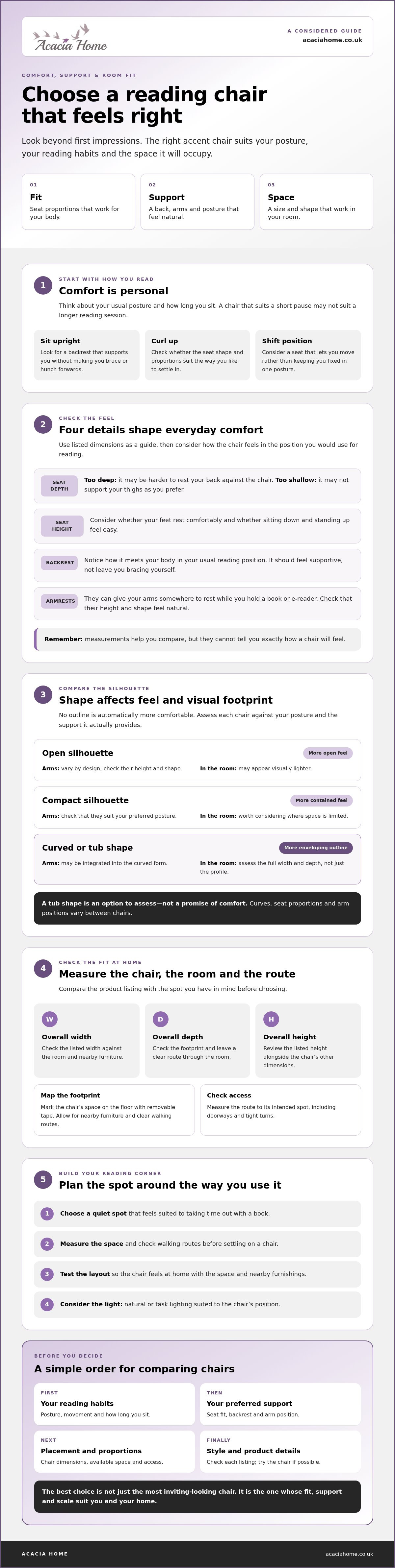
Start with the relationship between the seat and your proportions. If a seat feels too deep, you may find it harder to rest your back against the chair; if it feels too shallow, it may not support your thighs as you prefer. Seat height matters as well. Consider whether your feet rest comfortably and whether sitting down and standing up feel easy. Check the listed dimensions where available, but remember that measurements alone can’t tell you how a chair will feel.
Notice how the backrest meets your body in your usual reading position. It should feel supportive rather than leaving you bracing yourself or hunching forwards. Armrests are a matter of preference: they can give your arms somewhere to rest while you hold a book or e-reader, but their height and shape should feel natural to you. You may also prefer a seat that lets you shift position. The ergonomics of active sitting offers useful context on allowing movement instead of remaining fixed in one posture.
Is an accent chair suitable as a reading chair?
It can be, if the individual chair’s shape and proportions suit your needs. A welcoming outline or plush-looking seat can make a good first impression, but it doesn’t prove that the chair will be comfortable over a longer session. Check the confirmed details in the product listing and, if possible, try the chair in the position you’d use for reading. If you’re comparing styles, our occasional chair buying guide can help you explore the category, including tub chairs. Treat each shape as an option to assess, not a guarantee that it will suit your posture.
How to compare reading chair shapes, support and proportions
A chair’s shape affects more than the look of a reading corner. It can change how much room the seat seems to occupy, where your arms rest and whether you feel more comfortable sitting upright or settling back. Compare these features with your own reading habits rather than assuming one silhouette will suit everyone.
How do different chair shapes feel for reading?
Use the comparison below as a starting point, then check the details of each individual chair. An open shape may feel less enclosing, while a compact or curved design may create a more tucked-in impression. Neither is automatically more comfortable: the right choice depends on your preferred position and the support the chair actually provides.
A tub chair is one shape to investigate, not a guarantee of comfort. Curves, seat proportions and arm positions vary, so check the listing for the specific chair. For a useful reference on how posture and chair adjustments relate, see Cambridge University Hospitals NHS Foundation Trust’s guidance on proper seating and ergonomics.
Which measurements should you check before choosing?
Start with the listed overall width, depth and height, then compare them with the space you have in mind. Mark the chair’s footprint on the floor with removable tape, leaving room for nearby furniture and a clear route through the room. Measure the access route as well, including doorways and tight turns, to check whether the chair can reach its intended spot.
If the listing provides seat width, depth or height, compare those figures with your proportions and preferred sitting position. Overall dimensions help you judge how the chair may fit the room; seat measurements give you a closer indication of how you may fit the chair. As a next step, explore Acacia Home’s occasional chairs and compare the confirmed details on each listing with your priorities.
What should you consider before buying a comfortable reading chair?
Before you choose, picture how you’ll actually use the chair, not just how it looks in a carefully styled room. Note whether you tend to sit upright, lean back or change position, how long you usually read, and what kind of support feels comfortable to you. These priorities give you a practical way to judge whether a chair could become a comfortable accent chair for reading.
Then consider where it will go. Compare the chair’s listed dimensions with the available space, nearby furniture and routes you need to keep clear. A chair may fit on paper but feel awkward if it blocks a doorway or leaves little room to move around it.
How can you assess comfort when shopping online?
Read the full product description and examine photographs from different angles. Images can help you understand a chair’s overall shape, but they can’t confirm how it will feel to sit in. Look for listed overall and seat measurements. If possible, compare them with a chair you already find comfortable by measuring it.
Separate product details from impressions. Dimensions, listed materials and care instructions are specific details; words such as “cosy” or “supportive” describe an impression and may not match your experience. Before deciding, check the retailer’s current product page for delivery information, returns terms and care guidance, as these can vary between items and retailers.
Should you add a footstool to a reading chair?
A footstool may suit you if you enjoy raising your feet while reading, but it isn’t essential. It may feel less comfortable if it changes your preferred posture, so consider how you sit before adding one to the arrangement.
Check the footstool’s listed height alongside the chair and allow enough floor space to use it without blocking a walkway. The right height and distance depend on your chair and how you like to sit, so compare the dimensions rather than relying on appearance alone. Acacia Home’s indoor range includes footstools and ottomans. You can also look for the ottoman style and comfort guide when considering how one might suit your reading spot.
How to create a comfortable reading corner around your accent chair
A well-placed chair can make a quiet corner feel like a small retreat without disrupting the flow of the room. Plan the setting in stages: choose a position, measure the chair’s footprint, then test the arrangement before settling on it. This helps your comfortable accent chair for reading feel at home in the space as well as inviting to sit in.
Where should a reading chair sit in a room?
Look for a spot that balances light, privacy and easy access. A position near a window may provide natural light during the day, while a floor or table lamp can provide task lighting when daylight changes. Consider where the light falls and whether you’ll need to adjust the chair or lamp to read comfortably. Check the position at different times of day before deciding.
Next, measure the chair’s footprint and mark it out on the floor. Include room for nearby furniture, and make sure the arrangement doesn’t block a door or everyday route through the room. Test getting in and out of the seat, too. A corner can feel pleasantly tucked away, but it should still be easy to reach.
What finishing touches make a reading corner inviting?
Keep useful items close by. If there’s room, a small table can hold a book, glasses or a drink, so you don’t have to interrupt your reading to find somewhere to put them. A footstool may suit you if you enjoy raising your feet, but check its height and position with the chair. Make sure it doesn’t take up space you need to move around.
Finish with details that belong in your home. A cushion or throw can introduce texture, while colours that echo existing furnishings help the corner feel considered rather than separate from the rest of the room. Keep the arrangement simple if space is limited; the chair and a useful light may be all you need.
Once you’ve planned the position and footprint, explore the indoor furniture collection to compare occasional chairs with your room and reading habits in mind.
Choose a reading accent chair that feels right for your home
A chair makes a good reading spot when it works for your habits and your room, not simply because its shape catches your eye. Make your decision in order: consider how you read, identify the support you prefer, check the chair’s dimensions, plan its position, then choose a style that sits comfortably alongside your existing furnishings.
Which chair is right for your reading habits?
Think about your usual reading position and how long you tend to sit. If you like to sit upright, prioritise a shape and backrest that feel supportive in that position. If you shift or lean back, consider whether the chair’s form lets you settle comfortably. Separate these practical needs from decorative preferences such as colour or silhouette. A style label, including “tub chair”, can help you explore options, but it can’t guarantee that a particular chair will feel right for you.
What should you check on a chair listing before ordering?
Use your priorities as a checklist when reviewing the current product listing. Confirm the chair’s overall dimensions and any seat measurements provided, along with listed materials and care guidance. Compare its footprint with your intended position, nearby furniture and clear walking routes, then consider whether it can pass through your access route. Check the current delivery information and returns terms before deciding as well.
Reading habits: posture, typical session length and preferred support.
Room fit: chair dimensions, placement and access constraints.
Style: colour and shape that complement the furnishings you already have.
Listing details: confirmed measurements, materials, care and delivery information.
Once you’ve worked through the checklist, browse Acacia Home’s occasional chair range and compare each listing with what matters to you. A thoughtful choice brings comfort, personal style and room suitability together. Discover occasional chairs at Acacia Home.
Make room for a reading spot that feels like yours
The right chair brings your reading habits, comfort and room together. Before choosing, consider how you usually sit and how long you read, then compare the support and proportions of each option. Check the listed dimensions against your space and access routes, and choose a position that feels inviting without getting in the way.
A comfortable accent chair for reading doesn’t have to follow one particular shape or style. What matters is whether its confirmed details suit your needs and whether its design feels at home with your furnishings. Look beyond appealing photographs: review the product information, care guidance and delivery details before deciding.
Acacia Home is a UK-based online retailer with occasional chairs, including tub chairs, and a wider indoor range that includes footstools and ottomans. Browse with your priorities in mind, and compare the details of each chair with the space you want to make your own.
Explore Acacia Home’s occasional chairs and find a lovely starting point for creating a reading corner that feels personal, welcoming and ready for your next chapter.
Frequently Asked Questions
Is an accent chair comfortable enough for reading?
Yes, an accent chair can be comfortable enough for reading if its shape, support and proportions suit you. Check the seat and back details, along with any dimensions shown in the product listing, rather than judging by styling alone. Your preferred posture matters too: a comfortable accent chair for reading for one person may not suit another. Use confirmed product information to compare options, and try a chair in person if you can.
What type of chair is best for reading?
There’s no single chair shape that’s best for every reader. Compare seat depth, back support, armrests and overall dimensions, then think about how you usually sit and how long you read. A tub chair may appeal if you like a more enclosed shape, but the design and proportions still matter. Treat the chair’s shape as one factor in your decision, not a guarantee that it will feel comfortable.
Can you use an occasional chair as a reading chair?
Yes, an occasional chair can work well for reading if its proportions and support suit you. Look beyond its decorative appearance and check the product listing for confirmed seat details and dimensions. Consider where the chair will sit, whether it fits the available space and whether you’d like a small table or footstool nearby. The best choice is one that feels right for your reading habits as well as your room.
How do I choose the right size accent chair for a reading corner?
Measure the floor area, allowing room to approach and use the chair without blocking a doorway or walking route. Compare that space with the chair’s listed width, depth and height, and check the route into the room, including narrow doorways or tight turns. If seat dimensions are provided, consider them alongside your proportions and preferred sitting position. Measuring first helps you judge both room fit and practical access.
Do I need a footstool with a reading chair?
No, a footstool isn’t essential. It may suit you if you enjoy raising your feet, but it can take up valuable floor space or feel awkward with your preferred sitting position. Check its height and placement against the chair, and make sure there’s still room to move around comfortably. Try sitting in the chair without a footstool too; that can help you decide whether one would genuinely add to your reading comfort.
How can I tell if a chair will be comfortable when buying online?
Read the full product description and check the available measurements, photographs from different angles and care information. Give more weight to specific details than subjective words such as “cosy” or “supportive”, which may not match your experience. Compare the listing with your comfort priorities, including posture and seat proportions. Before ordering, review the retailer’s current delivery and returns terms so you understand the options if the chair isn’t right for you.


Comments