
Garden ornaments for statues, sundials and outdoor walls
Garden ornaments can bring a garden together with a statue, bird bath or sundial, or add a playful touch with fairy figures and mushroom designs. Garden wall art and mirrors offer another way to create a focal point, especially when you want to draw the eye upwards as well as across the planting. The right choice depends on the atmosphere you want and the space available.
It’s easy to think first of a statue or a feature for the centre of a lawn, but details on a wall can be just as expressive. A mirror can make a sheltered corner feel more open, while wall art adds character without taking up floor space.
Explore different styles, from classic statues, bird baths and sundials to whimsical figures, mushrooms, wall art and outdoor mirrors. The key is choosing pieces that feel in proportion, complement your planting and give each corner a thoughtful finishing touch.
Table of Contents
Garden statues, bird baths and sundials
A statue, bird bath or sundial can give an outdoor space a focal point and distinct character. Choose a scale and style that suit the garden’s layout, planting and existing materials.
There isn’t one placement rule for every UK garden. Consider boundaries, access and sightlines, along with any restrictions that apply to the property. Keep ornaments within your space and clear of paths, gates and shared access.
Statues, busts and character ornaments
Garden statues range from expressive character figures to busts that bring a formal note to a border or terrace. Before choosing, view the ornament from the angles you’ll see most often, then compare its height with nearby planting, walls and furniture. A small figure can draw attention to a tucked-away bed, while a prominent sculpture can anchor an open lawn.
Classic garden sculptures
Classic statues, such as human figures, animals or traditional forms, complement established planting and stonework. For a composed arrangement, select one main sculpture and give it breathing room rather than surrounding it with competing pieces. Cast stone ornaments typically weigh 15-80 kg and have a typical lifespan of 20-50+ years. For a heavy stone piece, the recommended base is a 75 mm-deep compacted MOT Type 1 aggregate sub-base or a level paving slab at least 450 mm x 450 mm.
Choosing ornaments for small gardens
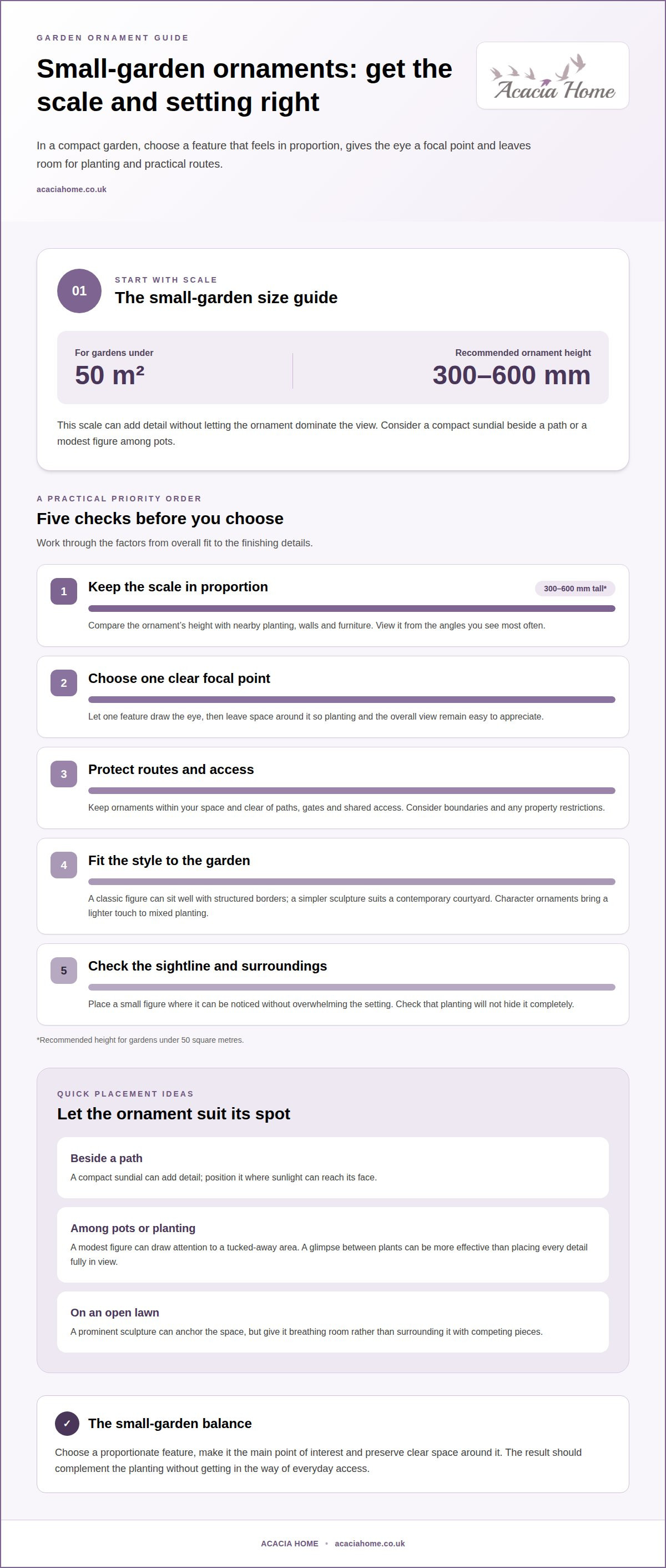
For a garden under 50 square metres, the recommendation is to choose ornaments 300-600 mm tall. A compact sundial beside a path or a modest figure among pots can add detail without dominating the view. Use one focal point, then leave space around it so planting and practical routes remain easy to appreciate.
For a traditional garden, pair a classic figure with structured borders; in a contemporary courtyard, try a simpler sculpture. A character ornament can bring a lighter touch to mixed planting. Position a sundial where sunlight can reach its face, and place a bird bath where it’s visible and easy to reach for upkeep.
To clean stone garden ornaments, use a soft-bristle brush and warm, soapy water once a year. Brush gently, paying attention to crevices where dirt collects, then rinse away the soap. Avoid harsh scrubbing that could mark the surface.
To reduce movement in wind, place ornaments on stable, level ground and use suitable fixings for lightweight pieces. To deter theft, position smaller figures where they’re visible from the house and secure them discreetly where the surface allows. Heavy stone ornaments need a firm, level base to help prevent wobbling.
Sundials and bird baths
A sundial adds a decorative focal point, while a bird bath brings movement to an outdoor space. Choose each piece for its setting as well as its appearance, considering sunlight, access and how it will sit with nearby planting.
For a sundial, start by finding a position that receives direct sunlight for much of the day. A shaded corner can hide the dial’s shadow, making it harder to read and reducing its visual impact. Set the base on firm, level ground, then arrange surrounding pots or low planting without obscuring the face. A stone pedestal gives a traditional look, while a compact dial can sit on a table or broad wall.
Bird baths work best where you can see them and reach them easily for routine care. Leave enough open space around the bowl for straightforward access. A decorative stone design can complement a formal border, while a simpler shape suits a contemporary patio. Consider the bowl’s depth and shape: it should be practical to refill and clean, not just attractive from the kitchen window.
Feeders and bird baths serve different purposes, so consider how each will fit into your garden. A feeder provides food, while a bath provides water; placing both in suitable, visible spots can create a small wildlife-watching area. Keep the arrangement clear of busy walkways and avoid crowding a single corner with too many features. One bath beside a planted border, for example, may feel more considered than several decorative pieces competing for attention. A catalogue lists 33 bird baths and feeders, showing the range of forms available across these two categories.
Seasonal care matters, particularly during cold weather. When temperatures fall below -5°C, drain water features or fit a frost guard. Before colder spells, empty the bowl and check that water hasn’t collected in vulnerable parts of the design. In warmer weather, refill the bath as needed and keep its surface clean, so it remains inviting and ready to use. A sundial also benefits from occasional checks: clear leaves from its face and keep the base stable.
To bring the area together after choosing a bath or dial, consider how nearby lighting will shape its evening atmosphere. Explore concrete lighting as another decorative element in your wider garden scheme.
Price can help narrow your shortlist when several styles suit the same position.
Compare listed prices with the available space and the look you want, then consider how each option would sit among nearby planting. A clear view of the bowl and easy access for refilling and cleaning are useful priorities, whatever design you choose. Keeping the surrounding area simple can help the bath stand out without making the garden feel crowded. Once you’ve chosen a position, make sure it remains easy to reach as plants grow and that routine care is comfortable.
Fairies and magical mushroom ornaments
Fairy figures and mushroom designs bring a storybook touch to planting, paving and sheltered corners. Their small scale makes them useful where a larger sculpture would overwhelm the setting. Choose one clear spot for the feature, such as beside a stepping-stone path or beneath a leafy shrub. From the main viewpoint, check that foliage won’t hide the figure completely. A glimpse between plants can feel more enchanting than placing every detail in full view.
For a balanced arrangement, make a fairy the main character and let one or two smaller details support it. A figure beside a miniature-looking mushroom creates a simple focal point without filling the whole border. In a pot display, position the ornament near the rim so it remains visible above the leaves. In a garden bed, place it close to a path, where visitors can notice it without stepping among the plants.
Mushroom ornaments can add colour and shape to areas that otherwise feel plain. A mosaic design catches the eye with its patterned surface, while a more natural-looking cap sits comfortably among ferns and ground cover. Repeat a colour from nearby pots or flowers to connect the piece with its surroundings. Avoid scattering unrelated motifs across a small space; a considered pair often feels more charming than a crowded collection.
Before placing a fairy or mushroom, consider its finish, base and intended position. A narrow ledge needs a stable footprint, while loose soil may call for a level spot between established plants. Keep delicate details away from places where a hose, garden tools or regular foot traffic could knock them. If the ornament has a lighting element, place it where you can enjoy the effect after dusk, rather than behind dense foliage or furniture.
Use this simple placement sequence to make the arrangement feel deliberate:
Choose a visible corner or border gap, then view it from the path.
Set the largest figure first, leaving room around its outline.
Add a mushroom or small companion only if it strengthens the scene.
Step back and move pieces that compete with flowers or one another.
A fairy with a fountain detail can combine a character figure with gentle movement, making it a natural centrepiece for a quiet nook. Give it a clear background, such as dark foliage or a plain fence, so its shape stands out. For a more understated look, choose one mushroom beside a pot of herbs. The strongest arrangement reflects the garden’s mood, whether playful, woodland-inspired or simply personal.
Finish by checking the view from more than one angle. From a kitchen window, a small figure might add a welcome detail to a border; beside a bench, it can become a closer discovery. The effect will vary from garden to garden, so adjust the arrangement to suit your sightlines, planting and everyday routes.
Garden wall art and mirrors
A wall can become a focal point without taking up valuable floor space. Garden wall art adds colour, pattern or texture, whilst an outdoor mirror can reflect a leafy border and make a sheltered corner feel more open. A catalogue lists 141 garden wall art products and 21 outdoor garden mirrors, offering different ways to give fences, brickwork and courtyard walls more personality.
Start by identifying the wall you notice most from a patio, kitchen window or garden path. Check its material, condition and exposure before choosing a piece, then consider how the design will look beside nearby planting. Rustic metal artwork, for example, can complement weathered timber, while a simple mirror frame may suit a neat, contemporary courtyard. One carefully chosen feature often feels more considered than several unrelated pieces competing for attention.
Mirrors are especially useful in a garden with a dark recess or narrow view. Position one to reflect foliage, a pot display or an attractive section of the garden rather than a blank fence. An arched frame can soften straight lines, while a tree design brings a natural motif to a wall. Before fixing a mirror, view the proposed position from different spots. The reflection should add interest to the outdoor space, not repeat an untidy corner.
Wall art tells a different story through its shape, material and finish. A tree motif, for instance, connects a metal design with surrounding branches, while a small decorative panel adds detail to a plain boundary. Make several pieces feel like a collection by repeating a colour or material. Leave space between them so each shape remains distinct, and keep the arrangement in proportion to the wall rather than filling every available section.
Use this simple sequence to plan your display:
Choose the wall and view it from the place you use most.
Measure the available area and compare it with the artwork’s outline.
Mark the intended position temporarily, then step back and assess it.
Fix the piece securely using fittings suited to the wall surface.
Secure installation matters for both mirrors and metal art. Use fixings suited to the wall material, and choose a position where the piece can sit firmly. Avoid placing fragile items where doors, garden tools or regular movement could knock them. For a mirror above a seating area, check the position from seated as well as standing height so the reflection feels intentional.
Finally, consider how your display will look through changing seasons. A mirror framed by summer leaves may reflect bare branches in winter, while metal art can remain a strong visual detail year-round. Choose a design that works with the garden’s existing textures, such as brick, timber, stone or foliage. This connection helps a wall feature feel like part of the landscape, not an afterthought.
How to choose garden ornaments for a small garden?
In a compact garden, every feature shares space with paths, planting and places to sit. Choose pieces that add character without interrupting how you use the area. A small courtyard, for example, may suit one focal point near a wall, while a narrow border benefits from details viewed along its length. Start with the garden’s main purpose, then choose ornaments to suit it.
First, map the space you actually use. Note the route from the door to a seating area, the edges of beds and any access needed for bins or garden tools. Keep these practical routes clear. A statue beside a path may catch the eye, but it shouldn’t make passing awkward. A small figure tucked into a planting gap can add a sense of discovery without taking over the centre.
Next, decide which feature deserves attention. A single sundial, bird bath or character figure can anchor a modest lawn or patio. If you already have a strong feature, such as a colourful door or mature shrub, choose a quieter ornament nearby. This creates a visual relationship instead of making every object compete. Looking out from the house can help you spot which corner needs interest.
Scale depends on more than height. Consider an ornament’s width, shape and visual weight alongside pots, furniture and foliage. A broad sculpture may feel imposing even if it isn’t tall, while a slender figure can fit neatly beside a fence. In a container display, place the ornament where leaves won’t hide it. Leave enough breathing room to see its outline against the surrounding plants.
Use repetition carefully. Matching finishes across a pot and a small figure can make a courtyard feel cohesive, while contrasting materials can define separate areas. For example, a stone ornament beside terracotta pots creates a different mood from a bright mosaic detail against dark foliage. Choose colours already present in flowers, paving or furniture, and avoid adding several unrelated styles to one small view.
Before settling on a position, try this simple layout check:
Stand at the doorway and identify the view you want to improve.
Place the ornament temporarily, then walk the usual route past it.
Check that nearby plants, seating and doors remain easy to use.
Remove any extra piece that distracts from the main focal point.
For a compact outdoor space, thoughtful editing often matters more than adding another feature. Browse garden ornaments to compare decorative ideas, then choose a piece that suits your layout, existing materials and daily routine.
Acacia Home: Occasional Chairs
Acacia Home offers occasional chairs to create a comfortable, considered seating spot indoors, complementing the care you’ve given your garden. If your outdoor space has become a place to pause and unwind, an occasional chair can bring that same welcoming feeling to a reading corner or living room. Dining chairs provide seating around the table, while footstools add a useful finishing touch beside a favourite chair.
For a quieter corner, explore chaise longues and window seats, which offer inviting places to sit and enjoy a view. These pieces suit readers looking to carry a thoughtful approach to comfort and style from the garden into their home. Visit acaciahome.co.uk to explore Acacia Home’s seating.
Make your garden feel personal
The right finishing touch feels at home in your garden, whether it reflects a favourite style, adds a playful detail or gives an overlooked corner purpose. Let your choices grow from how you use the space, and carry your home’s character outdoors. A thoughtfully chosen piece from Acacia Home’s garden ornaments range can help make your outdoor setting feel personal.
As you refine your garden ornaments, consider how their colours and shapes relate to your home’s style. Acacia Home also offers occasional chairs, dining chairs and footstools to bring considered comfort to different rooms and everyday moments. Garden ornaments can express your taste outdoors, while indoor furnishings create a complementary feeling at home.
Contact Acacia Home about your outdoor setting and take the next step towards a garden that feels distinctly yours.
Frequently Asked Questions
What materials are best for durable outdoor garden ornaments?
Stone, metal and well-finished ceramic can all suit outdoor use, but durability depends on construction, finish and exposure. Stone works well as a substantial focal point; metal allows finer shapes, such as leaves or birds; glazed ceramic brings colour to a sheltered display. For garden ornaments in exposed spots, consider their finish and how easily they can be cleaned. Match the material to the setting and the care you’re prepared to give it.
Which outdoor ornaments are weather-resistant and frost-proof?
Choose garden ornaments specifically described as suitable for outdoor use and frost conditions, rather than assuming a material is automatically frost-proof. Water held in a hollow design can freeze and cause damage, so freely draining forms are a practical choice. A sheltered position can reduce exposure to harsh weather for delicate ceramic figures or mosaic pieces. Follow the care guidance for each ornament to help it remain part of your garden through changing seasons.
How much do garden ornaments cost in the UK?
Where to buy garden ornaments in the UK?
The retailer featured offers over 500 garden ornaments, and most include free UK mainland delivery.