
Ways to protect upholstered chairs from stains and spills
A fabric protector buys you time, not immunity. If you’re wondering how to protect upholstered chairs from stains, spray the fabric from about six inches away, using separate coats on textured upholstery rather than one heavier coat. Let the protector dry overnight at about 70 degrees F and 50% humidity before exposing the chair to liquids.
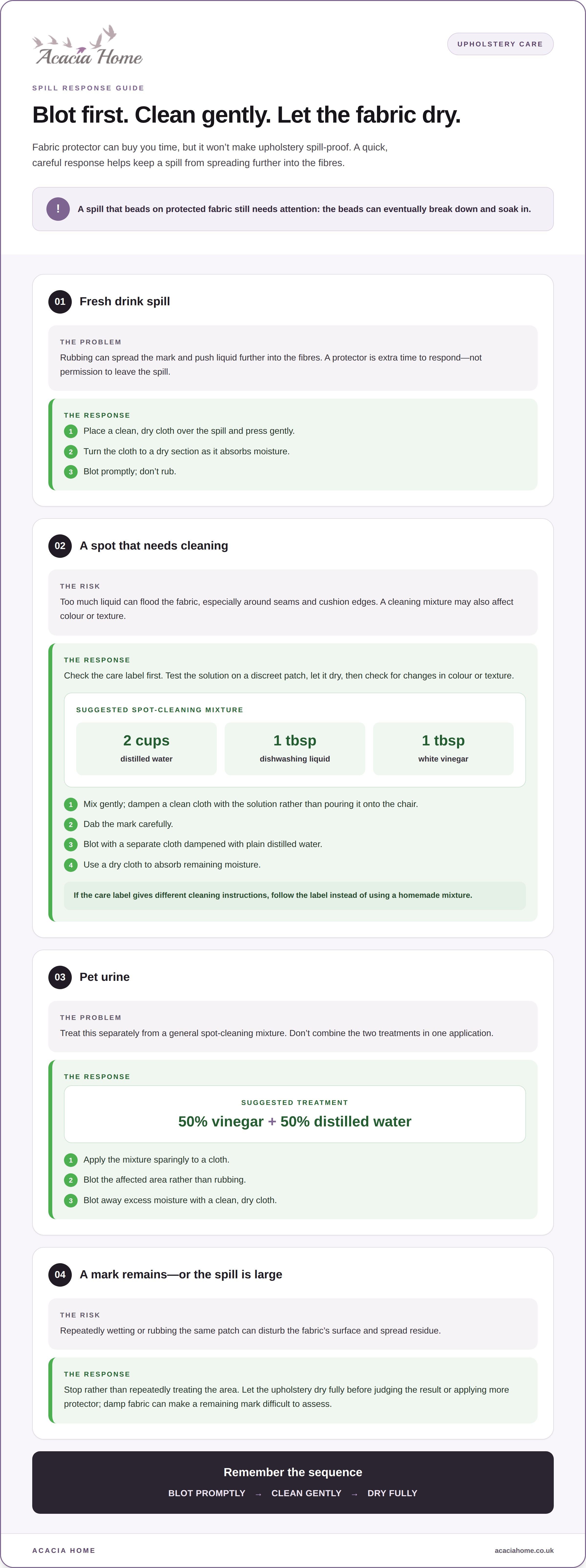
With children, pets or busy mealtimes at home, a little preparation can help you enjoy your seating without expecting it to stay pristine. Protected fabrics can still absorb spills, so blotting quickly matters, while performance fabrics may offer slightly better spill resistance. This guide explains how to apply protector, choose protection for family life, respond to spills and tell when upholstery is ready for liquids.
Table of Contents
1. Applying protector to tight weaves and heavy-pile fabrics
Before spraying, identify the fabric’s texture and check the protector label for suitability. Highly textured upholstery may absorb liquid spills faster than smoother fabric, so deep pile or a raised weave can need more careful coverage. A tight weave can still have a textured surface, so look at the fibres, not just how closely they sit together.
Prepare the chair by removing dust and loose debris, then make sure the fabric is clean and dry. Furniture Clinic advises cleaning and drying stained or dirty upholstery before applying its protector. This helps avoid sealing grime beneath the treatment. If a chair has been thoroughly cleaned, Furniture Clinic recommends applying protector again afterwards.
Apply the spray evenly from about six inches away. Keep the can moving across the fabric instead of concentrating on one patch. Work over the seat, back and sides in a steady pattern, following the product label. On a chair with deep pile, avoid soaking the surface: one heavy pass can leave coverage uneven.
Textured upholstery may need extra coats. Let each coat settle as directed on the product label, then apply another light, separate coat where coverage needs building. Don’t compensate for texture with one thick layer. On a chair with raised fibres, cover the contours and seams carefully, where a quick pass can miss areas.
Professional upholstery stain-protection costs in the UK depend on factors such as the number of chairs, fabric type, condition and preparation required. A textured, heavily soiled chair may need different preparation from a clean, smooth-weave seat, so the scope of work affects the price.
There isn’t one re-treatment interval that suits every upholstered chair. Reapply after thorough cleaning, as Furniture Clinic recommends, and consider how often the chair is used and how its fabric responds to spills. High-use areas, including seat cushions and arm or head rests, may need particular attention when applying protector.
Between treatments, use a vacuum-brush extension weekly to remove hair, dust and dirt from frequently used upholstery. Vacuum less-used areas every two weeks or once a month. These simple steps help stop debris settling into the pile while you maintain the protective treatment.
2. Blotting spills and cleaning protected upholstery
Act promptly when a drink spills on a chair. Place a clean, dry cloth over the spill and press gently to lift moisture from the fabric. Furniture Clinic advises blotting spilled coffee this way rather than rubbing the upholstery. Rubbing can spread the mark and work liquid further into the fibres. Turn the cloth to a dry section as it absorbs the spill, so you don’t press collected liquid back onto the seat.
On well-protected upholstery, a fresh liquid spill should bead quickly rather than soak straight in. Treat the beading as time to clean, not permission to leave the spill. The beads eventually break down and soak into the fabric, so keep a dry cloth close and blot promptly. A protector can give you more time to respond, but it doesn’t make upholstery impervious to spills. Coffee on a seat cushion, for example, still needs immediate attention.
One suggested spot-cleaning mixture combines two cups of distilled water, one tablespoon of dishwashing liquid and one tablespoon of white vinegar. Mix gently, then dampen a clean cloth with the solution rather than pouring it onto the chair. Dab the mark carefully. Follow by blotting with a separate cloth dampened with plain distilled water, then use a dry cloth to absorb any remaining moisture. Avoid flooding the fabric, especially around seams and cushion edges.
Before using any cleaning mixture, check the chair’s care label and test the solution on a discreet patch. Let the test area dry, then look for changes in colour or texture. This helps show how that particular fabric responds before you treat a visible mark. If the label gives different cleaning instructions, follow them instead of using a homemade mixture.
Pet urine calls for a distinct mixture: one suggested treatment uses 50 percent vinegar and 50 percent distilled water. Apply it sparingly to a cloth, then blot the affected area rather than rubbing. Avoid combining this treatment with the dish-soap mixture in one application. Once the mark has been treated, blot away excess moisture with a clean, dry cloth.
After cleaning, let the upholstery dry fully before judging the result or applying more protector. Damp fabric can make a remaining mark difficult to assess. For a large spill or a stain that persists after careful blotting, stop rather than repeatedly wetting the same patch. More rubbing and excess liquid can disturb the fabric’s surface and spread residue.
3. Choosing a fabric protector for homes with children and pets
The best fabric protector is one labelled as suitable for your chair’s upholstery and intended use. In homes with children or pets, choose a product whose directions cover the fabric type, application method and drying requirements. No single protector suits every chair, so match the product to the upholstery rather than relying on a broad “family-friendly” claim.
Start with the chair’s care label or manufacturer information, which may identify the upholstery material and cleaning guidance. If those details aren’t available, inspect the fabric’s surface: a close, smooth weave feels different from a raised texture or deep pile. Appearance alone can’t reliably identify the fibre, so use the care information alongside the product label before treating the whole chair.
A protector’s suitability depends on its stated uses. Follow any exclusions on the label, particularly for delicate fabrics, coated upholstery or specialist finishes. If the instructions allow a test, apply a small amount to a hidden area and let it dry fully. Then check for changes in colour, feel or surface appearance before treating visible sections.
Performance fabrics may be a useful choice for busy family rooms. In testing, performance fabrics showed slightly better spill resistance, and every tested sample performed better with upholstery protector spray. This supports using protection alongside the fabric’s own properties, rather than assuming a performance label makes a chair spill-proof. For dining chairs used daily around focal gathering spots—like the bespoke metal-frame tables from Chris's Custom Creations—consider both the fabric durability and the care steps you can realistically maintain.
Light-coloured upholstery shows marks more readily, so prevention and prompt attention matter particularly around a child’s snack spot or a pet’s favourite resting place. Choose a fabric protector labelled for that upholstery, and keep the chair’s cleaning instructions handy. Avoid unlabelled treatments or improvised mixtures on the whole surface, as they may affect its appearance or leave uneven patches.
Protection may affect a chair’s colour, texture or breathability, depending on the fabric and treatment. A hidden-area test can reveal a colour shift or altered feel after drying, but it doesn’t establish every performance characteristic. Follow the manufacturer’s directions, and don’t assume treated upholstery will feel or perform exactly as it did untreated.
To reduce food, drink and pet marks, apply a suitable protector as directed, then deal with spills promptly using the fabric’s care guidance. For example, protect the seat of a child’s dining chair and the cushion where a dog settles, rather than relying on treatment alone. Regular care and quick attention help keep everyday marks from becoming harder to remove.
Choose a fabric protector whose label confirms it is suitable for your chair’s upholstery and intended use, and follow its application and drying instructions. Test it on a hidden area first if the directions allow.
4. Drying time before liquid repellency
Applying upholstery protector is only part of the process: the treatment needs time to dry before liquid repellency develops. Furniture Clinic advises cleaning and drying stained or dirty fabric before applying its protector. This order matters: treating a damp patch or residue can leave the chair unevenly prepared. Start with clean upholstery, let it dry, then apply the product according to its label.
At about 70 degrees F and 50% humidity, treated upholstery should dry overnight. Furniture Clinic gives this as the drying expectation at those conditions. Keep the chair out of use during that period, so clothing, pets or a fresh spill don’t disturb the treated surface. A seat cushion needs the same care as the chair back: avoid sitting on it before the treatment has dried.
Room conditions affect how quickly fabric dries, so don’t treat “overnight” as a universal timer. The stated overnight period applies at about 70 degrees F and 50% humidity. If the room is cooler or more humid, the upholstery may take longer to dry. Follow the protector’s own instructions, and wait until the fabric feels dry before returning the chair to normal use.
Check the entire treated area, not just the centre of the seat. Seams, piping, cushion edges and deeper upholstery can dry at a different pace from an exposed, flat surface. Run a clean hand lightly over each area; if any part still feels damp, allow more drying time. This helps avoid assuming a cushion is ready just because its top looks dry.
Don’t pour water onto a newly treated chair to test it. A deliberate spill can soak into the fabric before the protector has dried fully, adding moisture that must dry again. Once the upholstery is dry, liquid should bead on well-protected fabric rather than soak in immediately. Even then, treat beading as a prompt to blot, not a reason to leave liquid sitting.
If the chair was recently spot-cleaned, let the cleaned patch dry completely before applying protector. For example, don’t spray over a damp mark on a dining-chair cushion straight away. Furniture Clinic’s advice to clean and dry stained or dirty fabric first applies to the whole area being treated. Applying protector to a dry, prepared surface gives the treatment the right starting point.
After the overnight drying period at the stated room conditions, inspect the seat, back and arms before using the chair. If the fabric still feels damp, wait longer rather than testing it with a drink or letting a pet onto the cushion. Once fully dry, return the chair to use and respond promptly if a spill occurs.
5. Slipcovers and furniture protection for homes with children or pets
A slipcover adds a removable layer between everyday mess and a chair’s upholstery. It can be one practical part of how to protect upholstered chairs from stains in a busy family home, especially on a reading seat or near the dining table. Choose a cover that fits the chair’s shape, and check its care instructions before use.
Fit matters. Smooth the cover over the seat, back and arms so folds don’t collect crumbs or pet hair. A separate dining-chair cushion may need a different cover from a tub-style chair. If a child spills juice, remove the cover carefully and follow its cleaning instructions. Don’t put it back over the upholstery while damp.
For pets, place a washable layer where your dog or cat tends to settle, such as a cushion or chair arm. Remove loose hair before cleaning the cover as directed. If you’re deciding how to protect upholstered chairs from stains, consider where your family and pets use each chair most, then focus removable protection there.
A cover can complement a chair’s colour and style, while helping shield a frequently used seat. Keep the upholstery’s care instructions in mind if treating uncovered fabric. For a seating choice that suits your home, explore upholstered chairs.
A protector spray can be used alongside removable covers, but it isn’t a substitute for them or for prompt attention to spills. Upholstery protector spray can give you more time to remove a spill, but it doesn’t make furniture impervious to spills. That distinction matters when choosing protection for a chair used around children or pets: the spray may offer a little more time to respond, but spills can still happen. Keep expectations realistic and base protection choices on how each chair is used, rather than assuming treated upholstery cannot be stained. A cover and a protector serve different roles, so consider whether one or both suit the particular seat.
If you use protector, focus on the upholstery that sees the most use. Furniture Clinic recommends applying more protector to high-use areas, including seat cushions and arm or head rests. This can help focus application where family members or pets are most likely to sit or lean, rather than treating every part of the chair as equally used. Think about where a child settles, where a pet rests and which seat is chosen most often. The aim isn’t to promise a stain-free chair, but to make a practical choice about where extra protection may help. Continue to treat spills as something to address, even after applying protector.
Acacia Home
Acacia Home offers seating for comfortable, considered living spaces, including occasional chairs, dining chairs, footstools, chaise longues and window seats. If you’re choosing a chair for a family room or dining area, these options are a starting point for finding a style that suits your home. Pair your choice with the care advice in this guide: check the upholstery instructions, use a suitable protector and respond promptly to spills. A slipcover can also help shield a frequently used seat from everyday mess, while you keep the chair’s fabric care needs in mind.
For a chair that feels at home in your setting, explore Acacia Home’s seating selection and contact Acacia Home to discuss your choice.
Make everyday care part of your home
Knowing how to protect upholstered chairs from stains can help you make practical choices without letting family life dictate every design decision. Consider how each chair is used, where children eat and where pets like to settle. Then make protection easy to maintain: keep a clean cloth nearby, decide which seats need a removable cover, and follow the care instructions for each fabric.
Small, consistent habits can help your favourite pieces remain part of the room rather than furniture you’re anxious to use. As your needs change, consider whether a different style of seating would better suit the way you live. Acacia Home offers seating options for a range of interiors, with comfort and character at the heart of the choice.
Contact Acacia Home about seating for your home, and take the next step towards a space that feels welcoming every day.
Frequently Asked Questions
How to apply fabric protector spray to an upholstered chair safely?
Follow the spray label and the chair’s care instructions, and test a hidden patch first. Work on clean, dry upholstery, applying the product evenly from about six inches away. If the fabric has a raised texture, build coverage with separate light coats rather than one heavy application. Keep children and pets away during application and until the fabric is fully dry, following any specific access or drying instructions on the product label.
How to remove fresh spills and stains from upholstered chairs?
Lift any solid residue carefully without pushing it into the fabric, then blot liquid with a clean, dry cloth. For example, if tea spills on a cushion, press and lift with a fresh part of the cloth instead of scrubbing. Check the chair’s care label before using a cleaning solution, and test it on a concealed area. If the spill reaches seams or the cushion interior, avoid saturating the upholstery.
Which upholstery fabrics should not be treated with stain protector?
Don’t treat a fabric if the protector’s label excludes it or the chair’s care instructions advise against treatment. Delicate materials, coated upholstery and specialist finishes need particular care, as spray may alter their appearance or feel. Check the chair’s care label or manufacturer information to identify its fabric and cleaning requirements. If the product permits testing, try a hidden patch and let it dry before treating visible areas.
Are fabric protector sprays safe for children, pets and indoor use?
That depends on the specific spray and its instructions, so don’t assume every fabric protector is suitable for indoor use or homes with children and pets. Read the product label for where it can be applied, how to use it and when the chair can be used again. Follow its directions throughout application and drying, and keep household members away for any period the label specifies.
What is the best stain protector for upholstered chairs in the UK?
Choose a protector labelled as suitable for your chair’s upholstery and intended use, and follow its application and drying instructions. Test it on a hidden area first if the directions allow.


Comments