
French Style Footstool: The Ultimate Guide to Timeless Elegance and Comfort
- info642352
- 5 days ago
- 13 min read
Can a single piece of furniture truly bridge the gap between a 250-year-old Parisian salon and the heart of a bustling British home? You likely appreciate the undeniable charm of a french style footstool, yet finding one that balances historic elegance with the practicalities of modern life often feels like a daunting task. It is perfectly natural to worry about whether a delicate linen fabric can survive a high-traffic living room, or if the ornate legs of a Louis-inspired piece will sit at the correct height for your favourite occasional chair.
We understand that your home is your sanctuary, a place where every item should reflect your personal story and provide genuine comfort. This guide promises to help you navigate these choices with confidence, ensuring your new addition feels like a timeless investment rather than a fleeting trend. We will explore the subtle design differences between iconic eras, offer professional advice on fabric care for your upholstery, and share styling secrets to help you create a beautifully curated space that remains inviting and lived-in. By the end, you will have the practical knowledge needed to choose a piece that brings both sophisticated heritage and lasting comfort to your favourite room.
Table of Contents
Defining the French Style Footstool: More Than Just a Footrest
A french style footstool is far more than a simple place to rest your feet; it's a sculptural element that brings the refined 'art de vivre' into the heart of the home. This philosophy, the 'art of living', suggests that even the most functional item should be a source of beauty and sensory pleasure. By blending sophisticated elegance with natural materials, these pieces create a look that feels both historic and remarkably fresh. It's a design language that speaks of quiet luxury and a deep appreciation for the finer details of domestic life.
The classic aesthetic is defined by a palette of light colours and textures that invite touch. Unlike the heavy, dark furniture of other eras, French-inspired design prioritises an airy, luminous feel. Whilst the history of the ottoman reveals its origins as a low, upholstered seat in the East, the French refined the concept to include ornate frames and sophisticated upholstery techniques. This evolution turned a simple stool into a statement of heritage and craftsmanship.
The Anatomy of a French Footstool
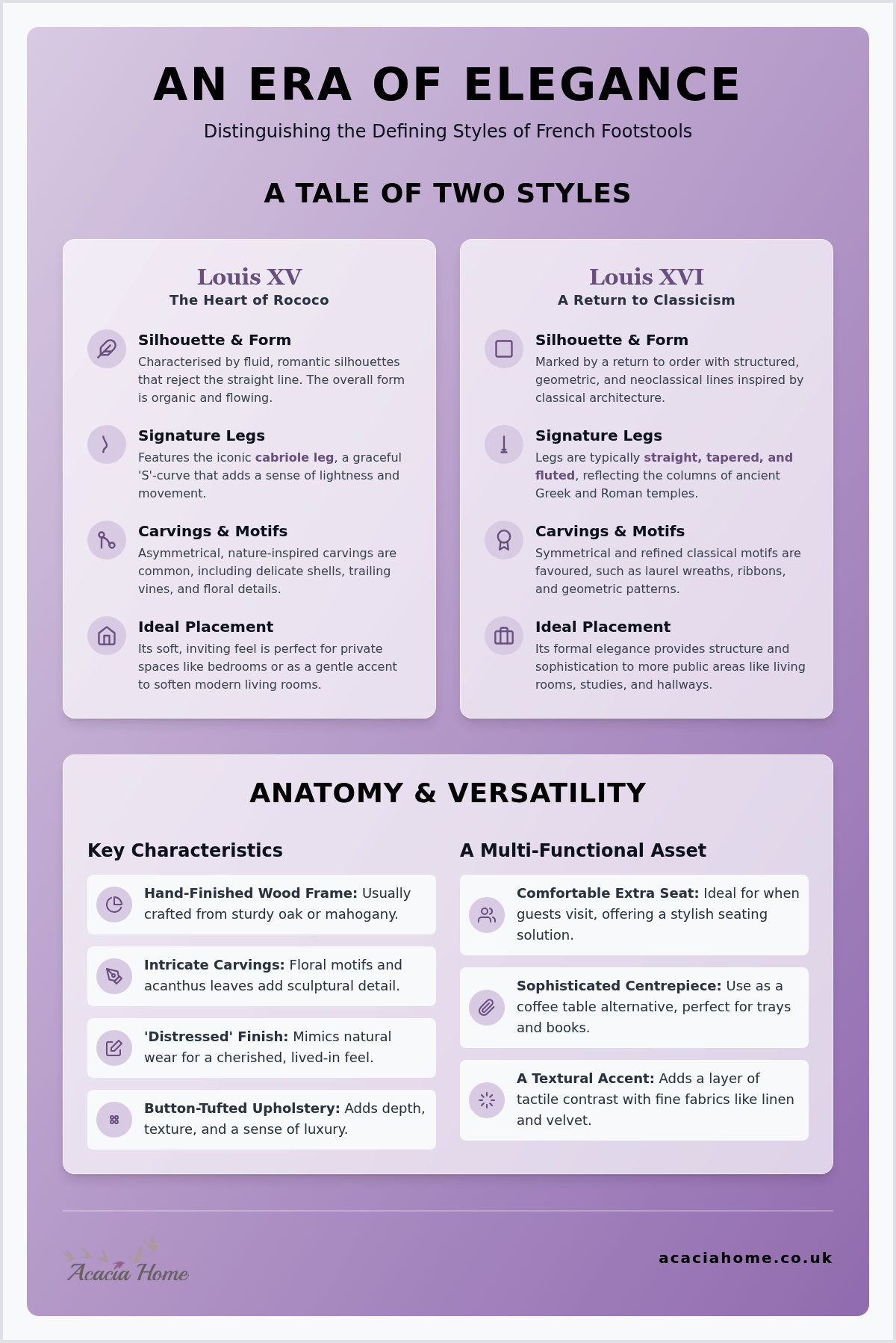
At the heart of every authentic-feeling piece is a hand-finished wood frame, usually crafted from sturdy oak or mahogany. These frames aren't just structural; they're canvases for intricate carvings of acanthus leaves or floral motifs. You'll often find a 'distressed' or 'whitewash' finish on the timber. This technique mimics the natural wear of time, suggesting a piece that has been cherished through generations. It adds a layer of lived-in warmth that brand-new furniture often lacks.
The most recognisable feature is undoubtedly the cabriole leg. This signature S-curve draws the eye downwards, ending in a delicate scroll or 'hoof' foot. When paired with deep button-tufted upholstery, the result is a piece that feels substantial yet graceful. The balance between the solid wood and the soft, cushioned top creates a visual harmony that is difficult to replicate with more modern, linear designs.
Why British Homes Embrace French Elegance
British interior design has long held a fascination with the 'shabby chic' movement, a style that celebrates the beauty of imperfection and the charm of the past. A french style footstool fits perfectly into this narrative. It provides a sense of soul and history that can sometimes be missing in contemporary new-build homes or minimalist city flats. It acts as a bridge, connecting the present with a storied past.
The versatility of the neutral palettes used in these designs is a significant draw for UK homeowners. Soft fawns, cool greys, and warm creams act as a sophisticated anchor amongst different decor styles. They help to:
Soften sharp lines: They break up the clinical feel of modern, angular sofas.
Add texture: The combination of linen and carved wood provides a tactile contrast.
Create a focal point: Even in a small room, an ornate footstool draws the eye without overwhelming the space.
Choosing such a piece isn't just about following a trend. It's about investing in a lifestyle that values craftsmanship and comfort in equal measure.
Navigating French Eras: Louis XV vs. Louis XVI Styles
When you begin your search for the perfect french style footstool, you'll quickly discover that these pieces carry two distinct "personalities" rooted in the history of the French monarchy. Choosing between them isn't just about historical accuracy; it's about finding the specific rhythm that matches your home's energy. One style celebrates the fluid beauty of nature, whilst the other finds its soul in the orderly grace of classical architecture. Understanding these subtle shifts in design allows you to curate a space that feels intentional and deeply personal.
The Romantic Curves of Louis XV
The Louis XV style is the heart of the Rococo movement, a period that famously rejected the straight line in favour of romanticism and organic flow. You'll recognise this influence through the graceful cabriole legs and a distinctive lack of symmetry in the hand-carved details. Look for frames adorned with delicate shells, trailing vines, and blooming floral motifs that appear to grow naturally from the timber itself. This whimsical approach creates a soft, inviting silhouette that works beautifully as a gentle accent in a bedroom or a private dressing room.
Because of its rounded edges and ornate carvings, this style is the ideal partner for Louis style chairs, creating a cohesive nook that feels like a private sanctuary. It's a choice that prioritises comfort and charm, adding a layer of historical romance to your favourite corner without feeling overly stiff or formal.
The Neoclassical Precision of Louis XVI
As tastes moved towards the Neoclassical era, furniture design embraced a more structured and architectural feel. The Louis XVI style is defined by its precision and symmetry, drawing inspiration from the ancient world. Instead of curves, you'll find straight, tapered legs that are often fluted to resemble classical columns. Carvings are more restrained and geometric, frequently featuring a single rosette at the joinery or a simple ribbon motif. This style feels slightly more "modern" to the contemporary eye, offering a sense of stability and poise that anchors a formal living room.
Whilst traditional pieces from this era were often finished in heavy gold leaf, today's interpretations have evolved to suit the British palette. We've seen a beautiful transition toward weathered wood and natural oak finishes, which highlight the craftsmanship of the fluted legs without the opulence of gilt. This makes the piece feel grounded and accessible, perfect for a home that values heritage but lives in the present. If you're looking for a piece that provides a sense of quiet authority, you might find your match amongst our curated selection of footstools and ottomans, where these timeless silhouettes are brought to life in premium fabrics.
Choosing the Right Fabric and Finish for Your Lifestyle
Selecting a french style footstool involves a delicate balance between sensory luxury and the practical demands of a busy household. Unlike a decorative sideboard, a footstool is a high-touch item that must withstand the daily weight of tired feet, the occasional tray of tea, and perhaps even a resting pet. Finding the right combination of textile and timber finish ensures your investment remains a source of pride for years to come. It's about creating a piece that feels like a natural extension of your home's personality whilst offering the durability you need for everyday life.
Linen vs. Velvet: The Great Footstool Debate
Linen is the quintessential choice for those seeking a relaxed, "shabby chic" aesthetic. It offers a breathable, matte finish that feels wonderfully cool to the touch. Whilst it develops a charming, lived-in patina over time, it's best suited for rooms where you want to evoke a sense of calm and effortless grace. Velvet, on the other hand, provides a luxurious high-sheen finish that adds incredible depth of colour. If your room feels a little cold, a velvet-topped stool introduces immediate warmth and tactile comfort.
For homes with pets or very frequent use, velvet is often the secret winner. The tight weave of premium velvet is less prone to snagging from claws compared to the looser weave of natural linen. However, if you prefer a finish that hides minor marks amongst its natural texture, a high-quality linen blend remains a firm favourite for its timeless, understated appeal. Both fabrics offer a beautiful sensory experience, so consider the "feel" you want to achieve when you finally sit down to relax at the end of the day.
Wood Finishes and Colour Palettes
The frame's finish is just as vital for setting the room's mood. Limed oak has become exceptionally popular in British homes because its soft, ashy tones complement the neutral carpets and light wood flooring found in many modern interiors. It offers a subtle, sophisticated look that feels grounded. If you're aiming for a coastal or farmhouse aesthetic, a distressed white or whitewashed finish provides that sun-bleached, antique charm that softens the overall atmosphere.
When choosing your palette, think of the footstool as the visual bridge in your room. It's the perfect piece to harmonise the tones between your large sofa and your occasional chairs. A neutral grey or taupe can tie disparate pieces together, creating a space that feels curated rather than cluttered. Before you commit, look closely at the upholstery details. High-quality craftsmanship is visible in deep, consistent button-tufting and crisp, straight piping along the edges. These small details are the hallmarks of a piece built to last.
Versatile Styling: How to Use a French Footstool in Every Room
The true magic of a french style footstool lies in its remarkable versatility. Whilst its name suggests a singular purpose, this piece acts as a hardworking multi-functional asset that can transform the flow and feel of any room. It's the secret weapon of interior designers, used to 'layer' a space and add a sense of curated history without the need for bulky furniture. Choosing a french style footstool allows you to experiment with these layers, bringing a touch of heritage to every floor level whilst creating a home that feels both intentional and welcoming.
One of our favourite ways to elevate a room is by pairing a footstool with a small chaise longue. This combination creates a luxurious, tiered effect that draws the eye and encourages relaxation. It's about building a sanctuary where the different heights and textures of your seating work in harmony, making even the most compact corner feel like a grand suite. By placing a stool at the end of a chaise, you extend the lounging area without cluttering the visual path of the room.
The Living Room: Beyond the Footrest
In the living room, a large, button-tufted footstool can easily step in as a sophisticated coffee table. Simply place a sturdy wooden or metallic tray on top to create a stable surface for drinks, books, or candles. This 'soft' table approach is particularly family-friendly, as it removes sharp corners whilst maintaining a polished look. For a touch of boutique hotel glamour, try placing a pair of smaller stools tucked neatly under a console table. They stay out of the way until needed, then pull out to create an instant conversation pit when you have guests.
Bedroom and Dressing Room Elegance
Moving into the private areas of your home, the footstool takes on a more intimate role. A longer, bench-style stool placed at the foot of a bed provides a practical spot for morning dressing and adds a finished, professional look to your bed linen. In the dressing room, a petite round stool with cabriole legs is the perfect companion for a vanity table, offering a sense of Parisian grace as you start your day.
You can also use a well-placed footstool to reclaim an awkward corner. By pairing it with a floor lamp and a soft throw, you create a sophisticated reading nook that invites you to slow down and enjoy a quiet moment. If you're ready to find the perfect piece to complete your vision, we invite you to browse our full collection of footstools and ottomans to discover a style that speaks to your home’s unique character.
Caring for Your French Furniture: Longevity and Maintenance
Investing in a french style footstool is a commitment to quality that transcends seasonal trends. These pieces are designed to age gracefully; they carry a sense of heritage that only deepens as they become part of your home's story. You'll find that with the right attention, the hand-carved details and premium upholstery will remain as striking in a decade as they are today. Because these items often feature natural materials, they require a gentle, considered approach to maintenance that respects the craftsmanship involved in their creation.
Natural timber frames, such as oak or mahogany, are living materials that react to their environment. To prevent the wood from drying or cracking, try to position your stool away from direct heat sources like radiators or roaring fireplaces. A simple dusting with a soft, dry cloth is usually all that's needed to keep the intricate carvings looking sharp. If your piece features a limed or distressed finish, avoid harsh chemical polishes; they can strip away the delicate layers of colour that give the piece its antique character.
Daily Care and Spillage Management
Dust has a habit of settling in the deep crevices of button-tufted upholstery. A quick pass with a soft brush attachment on your vacuum cleaner once a week keeps the fabric looking fresh and vibrant. When a spill occurs, remember the golden rule: blot, don't rub. Rubbing a liquid into linen or velvet can damage the fibres and push the stain deeper into the padding. Use a clean, absorbent cloth to lift the moisture away gently. For velvet specifically, a soft-bristled brush can be used once the area is dry to restore the pile's natural direction and sheen.
It's also worth checking the structural elements occasionally. Since a french style footstool often takes the weight of tired legs or even acts as an extra seat, ensure the joints remain tight. If your stool features castors, a tiny drop of clear oil once a year will keep them gliding smoothly across your floors without a sound. These small acts of stewardship ensure your furniture remains a reliable sanctuary of comfort.
Why Acacia Home is the Destination for French Accents
At Acacia Home, we take immense pride in our role as curators. We bridge the gap between skilled global manufacturers and the unique needs of the British home. Our selection process focuses on pieces that balance that sought-after antique charm with the structural integrity required for modern life. We understand that furniture is an emotional investment, which is why we offer national UK delivery on all our indoor seating collections, ensuring your chosen piece arrives safely at your door.
We are more than just a retailer; we're a family-owned partner in your design journey. Whether you're looking for a statement piece to anchor a room or a subtle accent to complete a set, we're here to help you organise your home with style and purpose. Our commitment to personal service and hand-finished quality means you can shop with the confidence that your new footstool will be a cherished part of your home for years to come.
Bring Timeless French Elegance into Your Home
Choosing the perfect french style footstool is about more than just finding a place to rest your feet; it's about inviting a piece of storied craftsmanship into your daily life. Whether you've fallen for the romantic, asymmetrical curves of the Louis XV period or the structured, neoclassical poise of Louis XVI, you now have the knowledge to select a piece that resonates with your home's unique rhythm. By balancing the sensory delight of premium linen or velvet with practical care, you ensure that your investment remains a source of beauty and comfort for years to come.
As a family-owned business, we take great pride in being your bridge to these sophisticated designs. We specialise in expertly curated Louis style seating that brings a touch of Parisian heritage to the modern British home. With our commitment to hand-finished quality and the convenience of national UK delivery on all indoor furniture, your journey towards a more curated space is simpler than ever. Explore our curated collection of French style footstools and ottomans and discover how a single, well-placed accent can transform your sanctuary. We look forward to helping you find a piece you'll cherish forever.
Frequently Asked Questions
What is the difference between a footstool and an ottoman?
A footstool is typically a compact piece dedicated to leg support. An ottoman is more substantial, often doubling as a coffee table or additional seating. Whilst many modern ottomans are fully upholstered to the floor, a french style footstool usually features elegant, exposed legs. This distinction is important when planning your floor space, as the visible legs of a French piece create a sense of light and openness in smaller British rooms.
How high should a French style footstool be compared to my chair?
For the best comfort, your footstool should sit at the same height as your chair's seat or approximately one to two inches lower. This prevents your legs from resting at an awkward upward angle, which can hinder circulation. When you're pairing a new stool with an existing armchair, measure from the floor to the top of the seat cushion to ensure a seamless and ergonomic fit that encourages true relaxation.
Is linen a durable enough fabric for a footstool used daily?
High-quality linen is surprisingly resilient for daily life. Whilst it offers a relaxed, matte finish, modern linen blends are specifically engineered to withstand the friction of frequent use. It's a fantastic choice for a high-traffic lounge because it's naturally breathable and tends to hide minor wear within its textured weave. If you choose a neutral shade, it becomes a durable foundation that complements almost any changing decor style over the years.
Can I use a French style footstool as a coffee table?
Using a larger footstool as a soft coffee table is a brilliant way to add multi-functional charm to your living space. By placing a decorative tray on the upholstered surface, you create a stable area for books or a tea set. This approach is particularly popular in homes with children or pets, as it removes the sharp edges of traditional timber tables whilst maintaining a sophisticated, curated feel in the centre of the room.
What wood is typically used for French style furniture legs?
Traditionally, craftsmen use hardwoods like oak or mahogany for the ornate legs. These woods are chosen for their exceptional durability and their ability to hold the fine, intricate carvings that define the style. You'll often see these legs finished with a limed or weathered effect. This process highlights the natural beauty of the timber grain, ensuring the piece feels like a genuine heirloom rather than a mass-produced item.
How do I clean a button-tufted velvet footstool?
The best way to maintain a button-tufted velvet piece is with regular, gentle vacuuming using a soft brush attachment. This prevents dust from settling into the deep folds of the tufting. If you encounter a spill, blot it immediately with a clean, white cloth without applying heavy pressure. Never rub the fabric, as this can permanently distort the velvet's pile and ruin the luxurious sheen that makes the material so appealing.
Does French style furniture suit a modern, minimalist home?
French style furniture acts as a perfect sculptural anchor in a modern, minimalist home. Its organic curves and hand-finished textures provide a warm contrast to the sharp, linear elements of contemporary architecture. A single french style footstool in a soft grey or cream can break up the visual coldness of a minimalist room, adding a sense of soul and heritage without compromising the clean, uncluttered aesthetic you've worked hard to achieve.
What is the best way to style a footstool in a small bedroom?
In a small bedroom, placement is key to maintaining a sense of flow. A petite stool works wonderfully at the foot of the bed or as a graceful seat for a compact vanity table. Because French designs often feature slender, curved legs, they allow you to see more of the floor. This visual trick prevents the furniture from feeling heavy, helping even the most modest British bedroom feel more airy and sophisticated.


Comments