
French Chair Styling: Parisian Elegance for Modern Homes
- info642352
- Aug 27
- 12 min read
Your home shouldn't feel like a museum, yet many of us hesitate to introduce ornate silhouettes for fear they'll look out of place amongst our modern comforts. It's a common worry that a Louis-style frame might feel too formal or that its delicate carvings will clash with the clean lines of a contemporary British lounge. You're certainly not alone if you've ever felt uncertain about mixing different wood finishes or wondered which fabrics can actually withstand the rigours of everyday family life. Mastering french chair styling is actually the secret to softening those sharp edges, providing a textural anchor that makes a room feel curated rather than just decorated.
In this guide, we'll show you how to blend heritage charm with the practicalities of a modern sanctuary. You'll discover how to create an inviting reading nook that beckons you to slow down, and gain the confidence to mix old-world elegance with current trends. We'll explore the popular "80/20 rule" of vintage and modern design, helping you choose fabrics like linen or velvet that feel as good as they look. By the end, you'll see how these timeless pieces can transform your space into a sophisticated, welcoming retreat that truly reflects your personal identity.
Table of Contents
Understanding the Silhouettes: The Foundation of French Chair Styling
The foundation of successful french chair styling begins with a deep appreciation for the silhouettes that have defined Parisian interiors for centuries. These designs aren't merely furniture; they're sculptural elements that bring a sense of history and grace into our personal sanctuaries. Characterised by their iconic oval backs and elegant cabriole legs, these pieces offer a unique balance of feminine curves and sturdy craftsmanship that has allowed them to endure through changing fashions. Whilst the history is rich, modern french chair styling is less about historical accuracy and more about how these shapes interact with your current decor to create a home that feels both curated and comfortable.
The Louis Style Chair: A Versatile Icon
The formal structure of louis style chairs provides a sophisticated focal point that anchors a room without overwhelming it. These pieces have transitioned from being strictly "antique" to becoming essential "accent" items, favoured for their ability to stand alone as a statement of taste. When you're looking for quality, pay close attention to the hand-carved details and the weight of the solid wood frames; these are the hallmarks of a piece built with pride. Many of these designs draw inspiration from Louis XVI style chairs, which favoured straight lines and classical symmetry over the flamboyant flourishes of previous eras. The Louis XVI chair is the quintessential French accent piece for modern homes.
Bergère vs. Fauteuil: Choosing Your Vibe
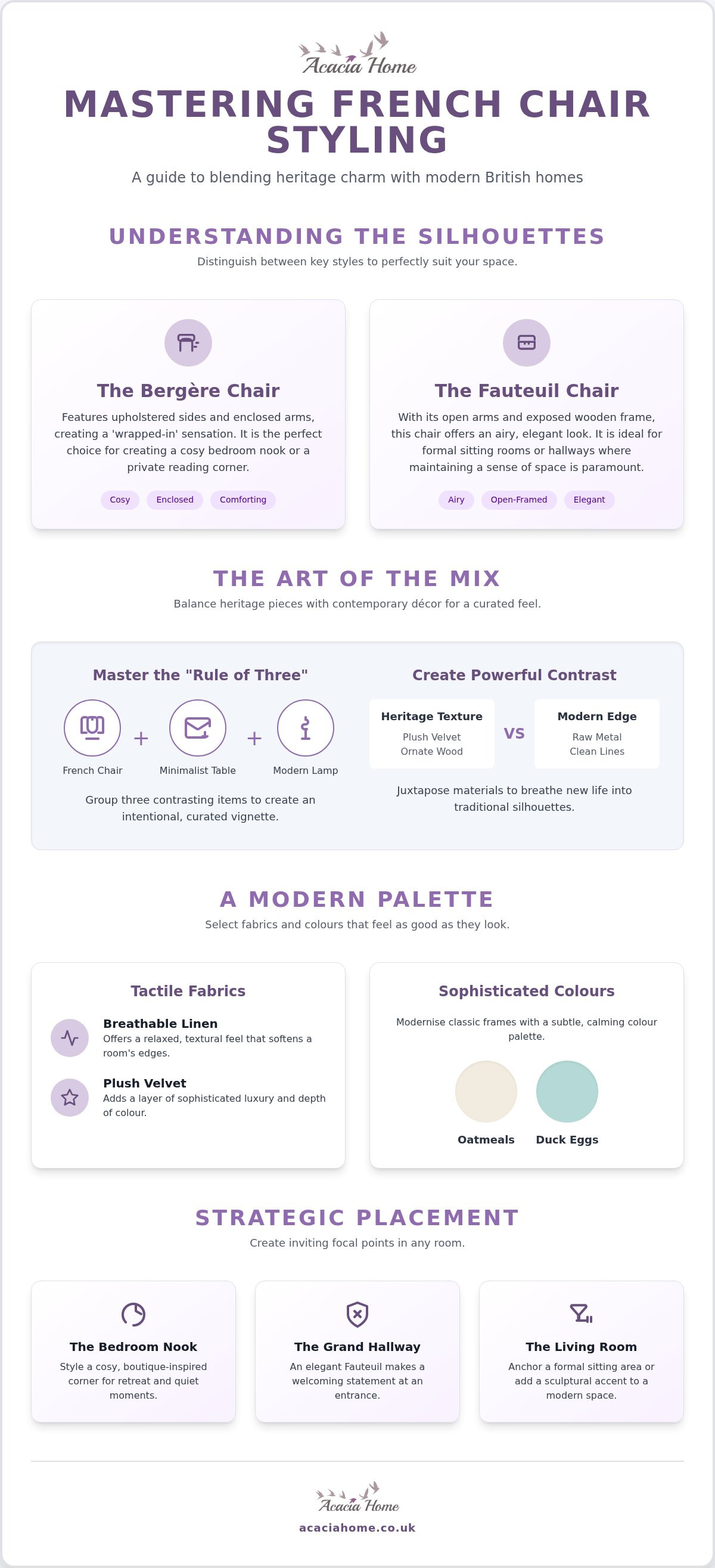
Choosing between a Bergère and a Fauteuil is about more than just aesthetics; it's about how you want to feel within your space. Each silhouette offers a different emotional impact:
Bergère Chairs: These feature upholstered sides and enclosed arms, designed to create a "wrapped-in" sensation. They're the perfect choice for creating a cosy bedroom nook where you can retreat from the world.
Fauteuil Chairs: With their open arms and exposed frames, these chairs offer an airy, elegant look. They allow light to pass through the silhouette, making them ideal for a formal sitting room or a hallway where space might feel at a premium.
Mixing these silhouettes amongst other occasional chairs creates a curated feel that suggests your home has been thoughtfully put together over time. This blend of styles prevents your living space from looking like a museum, ensuring it remains a welcoming environment for your family and guests alike.
Mastering the Mix: Balancing French Elegance with Contemporary Decor
The secret to successful french chair styling lies in the art of the unexpected. To avoid the dreaded "museum look," every piece in your room must serve a functional purpose whilst contributing to a cohesive story. One of the most effective ways to achieve this is through the "Rule of Three." By grouping a classic French chair with a minimalist side table and a contemporary floor lamp, you create a curated vignette that feels intentional rather than accidental. This arrangement allows the ornate details of the chair to act as a textural anchor against the cleaner lines of modern furniture.
Contrast serves as your most powerful design tool. Imagine pairing the plush, tactile surface of a velvet Louis chair with the raw, cold edge of an industrial metal floor lamp. This juxtaposition breathes new life into traditional silhouettes. When we look back at the history of French armchairs, we see a legacy of evolution where style and comfort were constantly refined to suit the era. Today, that evolution continues by placing these heritage pieces alongside sleek, modern sofas or bold, abstract artwork.
Creating Contrast with Texture and Tone
Textural variety prevents a neutral room from feeling flat. A weathered oak frame, for instance, gains a beautiful depth when placed against a smooth, matte-painted wall. It’s vital to organise your space so the chair’s silhouette has room to "breathe." Clutter is the enemy of elegance. By allowing a small gap between your occasional seating and other large furniture, you highlight the craftsmanship of the cabriole legs and hand-carved motifs. This breathing room ensures the piece remains a focal point rather than getting lost in the background.
The Power of Neutral Palettes
Modernising ornate wood carvings is often as simple as choosing the right colour story. Soft greys, warm oatmeals, and delicate duck eggs transform a formal piece into something understated and chic. Using a "tone-on-tone" approach creates a sanctuary-like atmosphere where the focus remains on the play of natural light across the wood grain. This same philosophy applies to the dining room. Selecting a dining chair that shares a similar wood tone with a modern oak table creates a sense of harmony without needing to be a perfect match. If you are looking to start your own collection, you might enjoy browsing the curated Louis style chairs at Acacia Home to find your perfect match.
Room-by-Room Guide: Where to Place Your French Accent Chairs
Finding the perfect spot for a heritage piece is about more than just filling a gap; it's about creating a moment of beauty in your daily routine. Whilst we often think of these silhouettes as lounge-only items, effective french chair styling works beautifully across the entire home. By placing an elegant chair in a non-traditional space, you instantly elevate the room from a functional area to a curated sanctuary that feels deeply personal and considered.
Elevating the Living Room Layout
In the living room, positioning a pair of French chairs opposite a contemporary sofa creates an intimate zone that encourages conversation and connection. These chairs are particularly effective for filling awkward alcoves or "dead" corners that would otherwise feel neglected. Unlike bulky modern seating, the "floating" chair approach works perfectly here. Because French silhouettes are designed to look beautiful from the back and side, you don't need to push them against a wall. Let them sit at an angle to showcase the intricate carvings and the elegant curve of the cabriole legs.
For those seeking a boutique hotel feel in the bedroom, pairing a Louis chair with a small ottoman creates a dedicated nook for morning coffee or evening reading. This combination adds a layer of soft luxury that transforms the bedroom into a private retreat. Similarly, a petite chair or stool in the dressing room brings a touch of glamour to your morning routine, making the simple act of getting ready feel like a pampered, unhurried experience.
Transitional Spaces and Hallways
Hallways and corridors are often overlooked, yet they offer the perfect canvas for a "landing strip" of style. A single Louis chair in a wide hallway provides a practical perch for putting on shoes whilst making a stunning first impression on guests. To double the visual impact, try styling a large mirror directly above the chair. This reflects the delicate carvings of the frame and makes the transitional space feel significantly larger and more intentional. It turns a thoroughfare into a destination.
Even the home office benefits from this touch of Parisian elegance. An occasional chair makes the perfect "thinking seat" away from the desk, providing a comfortable spot to review documents or simply pause for a moment. This separation of "working" and "thinking" zones is a hallmark of sophisticated french chair styling, ensuring your office remains a place of inspiration rather than just a room for tasks. It's about creating a home that supports both your productivity and your peace of mind.
Textural Harmony: Selecting Fabrics and Finishes for Impact
The tactile nature of your furniture is what truly transforms a house into a home. When considering french chair styling, the choice of fabric and finish isn't just a decorative decision; it's a lifestyle one. Your seating should invite touch and provide comfort whilst standing up to the beautiful chaos of daily life. By selecting materials that resonate with your personal aesthetic, you ensure that your French-inspired pieces feel like a natural extension of your identity rather than a formal addition that's just for show. It's about finding that perfect "British French" balance where heritage silhouettes meet the textures we love to live with.
The Luxury of Velvet and the Ease of Linen
Velvet and linen offer two distinct emotional experiences within a room. Velvet provides a rich depth of colour and a sense of evening glamour that makes it a favourite for living room occasional chairs. It catches the light in a way that highlights the intricate carvings of a frame, adding a layer of sophisticated drama to your sanctuary. On the other hand, linen creates a "Scandi-French" or coastal look that feels relaxed and airy. It’s a breathable, honest choice that grounds the ornate nature of the chair, making it feel approachable. For high-traffic dining areas, we recommend opting for performance linens that maintain a classic French aesthetic whilst offering the durability and stain resistance required for modern family life.
Beyond traditional upholstery, natural textures like cane and rattan are experiencing a significant revival in 2026. These materials add a lighter, "garden-to-home" feel to your french chair styling, effectively softening the formality of a traditional frame. They bring a sense of the outdoors in, making a room feel fresher and more connected to the natural world. This textural variety prevents a space from feeling overly "decorated" and instead makes it feel collected and calm.
Wood Finishes and Their Style Cues
The finish of the wood frame often dictates the overall formality and "vibe" of the piece. Distressed or weathered finishes are perfect for those who love a rustic, farmhouse-inspired French look. These finishes embrace imperfections, suggesting a piece that has been loved for generations. If you prefer a classic, feminine "Chateau" feel, antique white or cream paint remains the gold standard for creating a bright, elegant atmosphere. For a more contemporary take, natural oak highlights the raw beauty of the grain, making the chair feel grounded and timeless.
Choosing the right combination of fabric and wood is the final step in creating your personal sanctuary. If you're ready to find a piece that perfectly balances heritage craftsmanship with modern comfort, you can browse our curated collection of French-style seating at Acacia Home to find your perfect match.
The Final Flourish: Accessories and Styling Touches
Once you've selected your perfect silhouette and fabric, the true magic of french chair styling happens in the smaller, sensory details. These final flourishes are what transform a beautiful piece of furniture into a cherished corner where you'll actually want to spend your time. By adding layers of texture and light, you create a space that feels deeply personal and lived-in, bridging the gap between historical elegance and the warmth of a modern British home. It’s these thoughtful touches that ensure your room feels curated over time rather than simply "bought."
Layering with Throws and Cushions
A simple bolster or a textured throw adds the final layer of comfort that invites you to sit down and stay a while. When selecting a cushion, look for a material that contrasts with your chair's primary fabric to create visual interest. For instance, a smooth silk cushion looks stunning against the honest, rustic weave of a linen seat. This play of light and shadow highlights the craftsmanship of both the upholstery and the frame. Draping a soft wool throw over the arm of a small chaise longue makes the piece look immediately more inviting and less formal.
Don't forget the power of seasonal updates. In the height of summer, light cottons and breezy linens keep your styling feeling fresh and airy. As the nights draw in, switching these for heavier wools or faux furs provides a sense of enclosure and warmth. This simple rotation allows your french chair styling to evolve with the seasons, keeping your sanctuary feeling relevant and cosy all year round. It’s an easy way to refresh your identity within the space without needing to change the furniture itself.
Creating a Styled Corner
To create a complete vignette, follow the "trio" rule by grouping your chair with a small side table and a source of light or greenery. A petite surface provides a practical spot for your favourite book and a cup of tea, making the corner feel functional rather than just decorative. Lighting is equally vital; a slender floor lamp not only creates a dedicated "zone" for lounging but also casts a warm glow that highlights the wood’s patina in the evening. You can also use a small rug to "ground" the chair, defining its place within a larger room and adding another layer of tactile comfort underfoot.
Finally, reinforce the heritage theme by incorporating natural elements that evoke the French countryside. A potted olive tree or a simple bunch of dried lavender adds a subtle organic touch that complements the wood grain of your furniture. These living details bring a sense of calm and vitality to your home. We invite you to explore our collection at Acacia Home, where you can find your own favourite piece to act as the foundation for your next creative styling project.
Transforming Your Sanctuary with Timeless Elegance
Creating a home that feels both curated and comfortable is a journey of personal expression. By understanding the balance between heritage silhouettes and contemporary textures, you've unlocked the secret to french chair styling that avoids the rigid feel of a museum. Whether you're placing a single Louis chair in a wide hallway or layering a velvet seat with a wool throw in your bedroom, these pieces act as the soulful anchors of your modern sanctuary. They bring a sense of history that softens the sharp edges of current trends, proving that true elegance never goes out of fashion.
As a family-run business, we take immense pride in our expertly curated range of heritage-inspired seating. We select only high-quality materials designed for both lasting beauty and longevity, ensuring your favourite pieces can be enjoyed for years to come. We invite you to Explore our curated collection of Louis style chairs and find your home’s next statement piece. Start your styling journey today and discover how a touch of Parisian grace can elevate your daily life.
Frequently Asked Questions
How do I make a French chair look modern in a new-build home?
To modernise these pieces in a new-build, focus on high-contrast pairings. The clean, white walls and straight lines of a modern property provide a perfect gallery-like backdrop for ornate carvings. Use french chair styling to your advantage by choosing neutral fabrics like oatmeal or grey and pairing the seat with a sleek, industrial floor lamp. This juxtaposition prevents the space from feeling dated and instead makes the chair a deliberate architectural statement.
Are Louis style chairs actually comfortable for everyday use?
Louis style chairs are designed with ergonomic comfort in mind, offering a surprisingly supportive seat for everyday use. Whilst they look delicate, the solid wood frames and high-quality padding provide a firm yet comfortable experience. For maximum comfort, look for Bergère styles with their deeper seats and upholstered arms. These pieces are intended for lounging and reading, making them a practical addition to any living room or bedroom sanctuary.
Can I mix different types of French chairs in the same room?
You can absolutely mix different types of French chairs to create a sophisticated, collected-over-time aesthetic. The key is to find a common thread, such as a shared wood finish or a consistent colour palette in the upholstery. Mixing a pair of Fauteuils with a single Bergère adds character and visual depth to your lounge. This approach avoids the "showroom" look and makes your french chair styling feel more authentic and personal.
What is the best fabric for a French chair if I have pets or children?
The best choice for homes with pets or children is a high-quality performance linen or a short-pile synthetic velvet. These fabrics are specifically designed to be durable and easier to clean whilst maintaining a luxurious feel. Performance linens offer a natural, relaxed look that hides minor marks well, whereas modern velvets are often surprisingly resilient against snagging. Choosing a fabric with a slight texture or weave can also help camouflage everyday wear and tear.
How do I clean the wooden carvings on a French style chair?
Cleaning the intricate wooden carvings on a French style chair is best done with a soft-bristled brush or a dry microfibre cloth. Dust tends to settle in the deeper grooves of the motifs, so a gentle, regular sweep prevents buildup. Avoid using harsh chemical sprays or excessive water, as these can damage the delicate patina or finish over time. For a deeper clean, a slightly damp cloth with a very mild wood soap is sufficient.
Should the wood finish on my chair match my other furniture?
Your wood finishes don't need to match perfectly; in fact, a slight variation often looks more curated and professional. Instead of looking for an exact replica of your coffee table, aim for complementary tones that share a similar warmth or grain. A weathered oak chair can sit beautifully alongside a darker walnut chest if they are linked by other elements in the room, such as a neutral rug or consistent soft furnishings.
Can French chairs be used as dining chairs?
French chairs make exceptional dining chairs, particularly the Fauteuil or side chair silhouettes which offer a formal yet comfortable upright position. Using them at the heads of a modern oak table creates a stunning focal point that bridges the gap between heritage and contemporary life. Ensure you choose a seat height that aligns with your table and consider performance fabrics to protect against the inevitable spills of a busy family dining room.
What is the difference between a Bergère and a Fauteuil chair?
The primary difference lies in the design of the arms and the overall "weight" of the piece. A Bergère chair features upholstered sides and enclosed arms, creating a cosy, enclosed feeling that's perfect for lounging. In contrast, a Fauteuil has open arms with exposed wooden frames, offering a lighter and more airy silhouette. This makes the Fauteuil ideal for smaller spaces or formal rooms where you want to maintain a sense of openness.


Comments