
Contemporary lighting for rooms and interior design
Wall lights can give a room as much character as a statement pendant. The best contemporary lighting balances practical needs with the room’s proportions, layering floor, pendant, ceiling and wall lights instead of relying on a single fitting. Choose finishes that sit comfortably with the furniture and materials already in your home.
A light’s placement matters as much as its shape: a wall fitting can add a gentle glow, while a pendant draws the eye above a dining table. The right combination makes a space feel considered and welcoming while supporting the way you use it.
Learn how to choose floor lamps, pendants, ceiling lights and wall lights for different rooms, and bring their finishes into harmony with your interior. We’ll focus especially on wall lighting, with practical guidance on placement, atmosphere and pairing each fitting with the rest of your scheme.
Table of Contents
Floor lamps
A floor lamp provides useful light without taking up table space. Place one beside an armchair for reading, or use an uplighter to brighten a dim corner. For a layered scheme, combine floor, table and wall lights with a pendant or chandelier, giving each fitting a distinct role.
First, decide what the lamp needs to do. For reading, position its light near your seat and direct it towards the page. For a softer evening atmosphere, choose a shade that diffuses light around the room. An adjustable arm adds flexibility beside a sofa or favourite chair.
Then consider the room’s layout. A lamp with a broad base may suit an open corner, while a narrower design can fit beside a bookcase. Make sure it won’t obstruct a walkway or door, and place it where light reaches the seating without shining directly into anyone’s eyes.
Treat a floor lamp as one part of a lighting plan, not a replacement for ceiling lights. A pendant can create a focal point above the dining table, while a table lamp adds a closer pool of light to a sideboard. Wall lights soften darker edges. Together, these varied heights help balance the room.
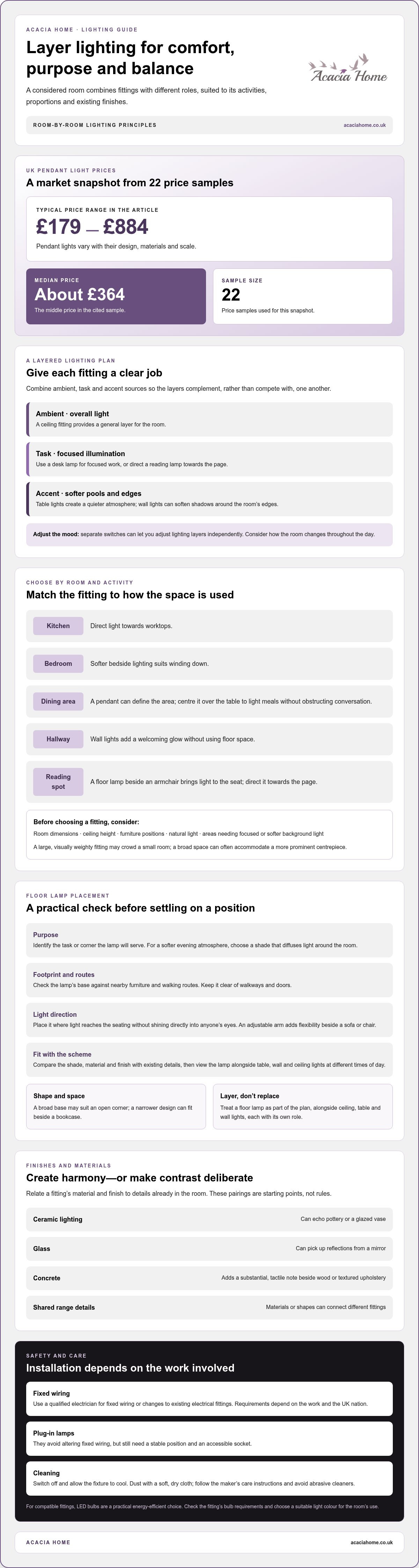
For a cohesive scheme, relate the lamp’s material and finish to another detail in the room. Ceramic lighting can echo pottery or a glazed vase; glass can pick up reflections from a mirror. Concrete adds a substantial, tactile note beside wood or textured upholstery. These are starting points, not rules: contrast can make a deliberate statement.
Before settling on a position, try these steps:
Identify the task or corner the lamp will serve.
Check its footprint against nearby furniture and walking routes.
Compare its shade, material and finish with the room’s existing details.
View the lamp alongside table, wall and ceiling lights at different times of day.
In the UK, lighting work must meet applicable electrical safety requirements and, for some fixed work, building requirements. The precise requirements depend on the work and the UK nation. A portable plug-in lamp is different from altered fixed wiring.
A well-chosen floor lamp can balance the visual weight of a pendant or chandelier. In a reading nook, for example, a slim lamp beside an occasional chair creates a purposeful arrangement. In a larger sitting room, a lamp near the edge of a seating group can draw attention to the conversation area.
Lighting projects and interior design
Plan lighting around the room’s purpose, existing finishes and the atmosphere you want. A well-chosen fitting should look beautiful and make everyday tasks easier.
Designer lighting ranges
Designer ranges can bring pendants, wall fittings, floor lamps and table lights together through shared materials or shapes. Compare how each fitting looks on its own and alongside other pieces, rather than judging it in isolation. Relate a glass shade to reflective details or use ceramic as a tactile accent. Consider British design and manufacturing separately: a British-designed light isn’t necessarily made in Britain.
For energy efficiency, LED bulbs are a practical choice for compatible fittings. Check the fitting’s bulb requirements and choose a suitable light colour for the room’s use.
Choosing lighting for each room
Match fittings to the room’s activities. In a kitchen, direct light towards worktops; in a bedroom, softer bedside lighting suits winding down. A pendant can define a dining area, while a floor lamp beside an armchair creates a reading spot. In a hallway, wall lights add a welcoming glow without using floor space.
Before choosing, note the room’s dimensions, ceiling height, furniture positions and natural light. Decide which areas need focused illumination and which would benefit from softer background light. A large, visually weighty fitting may crowd a small room, while a broad space can often accommodate a more prominent centrepiece.
Layering light for tasks and moods
Layer lighting by combining ambient, task and accent sources. For example, pair a ceiling fitting with a desk lamp for focused work, then add a table light for a quieter evening atmosphere. Wall lights can soften shadows around the edges, while a floor lamp illuminates the seating area. Give each fitting a clear purpose so the layers complement, rather than compete with, one another.
Consider how the room changes throughout the day. A reading corner needs directed light, while a lounge area may feel more restful with several softer pools of light. Where controls allow, use separate switches to adjust the layers independently.
Installation, care and costs
For safe installation in a UK home, use a qualified electrician for fixed wiring or changes to existing electrical fittings. Follow the fitting’s instructions, and don’t attempt wiring work unless you’re competent to do it safely. Plug-in lamps avoid altering fixed wiring, but still need a stable position and an accessible socket.
Clean a fixture only when it’s switched off and cool. Dust it with a soft, dry cloth; follow the maker’s care instructions for glass, ceramic or metal finishes, and avoid abrasive cleaners that could mark the surface.
How much does lighting cost? On the UK market, pendant lights typically range from £179 to £884, with a median of about £364, based on 22 price samples collected on 26 October 2026. The design, materials and scale all shape the final choice.
Compare the form and finish of different lighting designs as you refine your room scheme.
Pendant lights, chandeliers and flush ceiling lights
A ceiling fitting shapes both a room’s first impression and its everyday light. A pendant can define the dining table, a chandelier can become a living-room centrepiece, and a flush fitting suits a lower ceiling. Choose according to the room’s proportions, purpose and existing furnishings.
Start with placement. Centre a pendant over a dining table so it lights meals without obstructing conversation. In a kitchen, position fittings to illuminate work areas rather than cast shadows behind the person preparing food. In an open-plan room, a pendant can distinguish the dining zone from the lounge.
Match the fitting’s visual scale to the space. A broad chandelier can hold attention in a generous room, while a compact pendant may feel more at ease above a smaller table. Consider ceiling height, the furniture below and sightlines through doorways. A striking shape should complement the room, not overwhelm it.
Flush ceiling lights sit close to the ceiling, making them useful where a hanging fitting might feel intrusive. A hallway, for example, may suit a neat ceiling light paired with wall fittings for softer illumination. In a bedroom, a flush fitting provides general light, while bedside lamps support reading.
The wrong fitting can cause glare, leave work areas dim or disrupt a room’s balance. An incompatible bulb may not fit the holder or produce the intended light. Check the fitting’s instructions and bulb requirements, then consider how the light will fall across the table, worktop or seating area.
Material and finish shape the mood as much as the fitting itself. A glass pendant can feel light and reflective above a dining table, while concrete brings a grounded, tactile presence. For a chandelier, compare its finish with nearby metal details, such as cabinet handles or picture frames, to create a considered connection.
Before choosing, take these practical steps:
Mark the table, kitchen worktop or hallway area needing light.
Check ceiling height, sightlines and furniture beneath the fitting.
Choose between a pendant, chandelier or flush ceiling light by room scale.
Match the bulb to the fitting’s requirements and the task.
A layered ceiling scheme can combine a pendant with table or wall lights. For example, a dining pendant provides focused light, while a nearby floor lamp softens the lounge. This combination gives each fitting a clear purpose and helps the room feel more composed.
The Helena pendant by Katie Kilanowski surrounds a frosted glass bulb, with light passing through translucent material connecting its wooden pieces to create a soft ambient glow.
Black chrome, gold and champagne glass trends
Black chrome, gold and champagne glass each bring a distinct character to a room. Treat them as finish choices, not strict rules: black chrome sharpens a scheme, gold adds warmth, and champagne glass softens the light. Start with the colours and materials already present, such as dark metal handles, brass details or pale timber.
Black chrome makes a clear statement against lighter surroundings. A fitting in this finish can echo dark window frames, a black dining table or a charcoal picture frame. In a smaller room, use it as a focused accent rather than repeating it across every light. The contrast creates a distinct detail without making the scheme feel too heavy.
Gold brings warmth to contemporary interiors. Pair a gold-finished light with warm wood, cream upholstery or a framed mirror for a composed look. If your room already has gold-toned hardware, a nearby table or wall light can create a subtle connection. For contrast, set a gold fitting against deep green or blue, keeping other metallic finishes restrained.
Champagne glass offers a softer alternative to clear glass. Its gentle tint can warm a pendant or table light while retaining a sense of visual openness. Try it beside neutral walls, pale oak or linen curtains, where its colour sits naturally among muted textures. Glass lighting can also complement reflective details, such as a mirror or glazed ceramic vase.
Consider how each finish looks beside its surroundings. Concrete adds a tactile, grounded quality that can balance delicate champagne glass. Black chrome makes the pairing more graphic, while gold introduces a warmer contrast. Choose one leading finish, then repeat it in a small detail, such as a frame, handle or lamp base.
Use these practical steps to compare finishes before deciding:
List the metal finishes already visible in the room.
Choose whether the light should blend in or stand out.
Compare a sample or fitting against the wall and nearby furniture.
View the finish in daylight and with the room’s lights switched on.
In a dining area, a champagne-glass pendant can soften the table setting, while black chrome may suit a sharper, more graphic scheme. In a living room, gold can link a light fitting with warm wood and soft furnishings. Use these examples to narrow your options, then let the room’s existing palette guide the final combination.
Repeat finishes with intention to keep the overall arrangement considered. A gold pendant above a table might relate to one picture frame, rather than every accessory. Similarly, black chrome on a wall light can echo a single dark furniture detail. This measured approach lets each fitting contribute without competing for attention.
Wall lights
A wall light can do more than brighten a dark patch. It can frame a mirror, bring a reading corner into focus or add a gentle glow along a hallway. Its position shapes both the light and the room’s visual rhythm, making wall fittings useful as well as decorative.
First decide what the fitting should illuminate. Beside an armchair, a directed wall light can support reading without taking up table space. In a hallway, a diffused shade creates a welcoming wash across the wall. Above a console, a decorative fitting can draw attention to a mirror or artwork without competing with it.
Height and direction matter. An upward-facing light can emphasise wall texture and brighten the ceiling; a downward beam can highlight a console or architectural detail. Before choosing a position, consider furniture, doorways and sightlines. A fitting that shines directly into someone’s eyes can feel uncomfortable, especially beside a sofa or bed.
Wall lights also help balance different parts of a room. A pendant may define a dining area, while wall fittings soften the surrounding space. In a living room, position them to complement the seating instead of lining a wall without purpose. In a bedroom, decide whether the light needs to support reading, provide gentle background illumination, or do both.
The shade and material influence the atmosphere. Glass can look light and reflective, while a concrete finish adds a solid, tactile note. A closed shade tends to direct light through its openings; a more open design makes the light source part of the fitting’s appearance. Match the finish to nearby details, such as a mirror frame, picture rail or furniture hardware.
For a considered wall-light scheme, follow these steps:
Choose the wall or feature that needs attention.
Decide whether the light should point upwards, downwards or outwards.
Check how the beam will meet nearby seating, artwork or a mirror.
Compare the fitting’s material and finish with details already in view.
Wall fittings are especially useful where floor space is limited, such as in a narrow hallway or compact reading nook. They can also give a long wall a more deliberate rhythm when positioned in relation to furniture or framed pieces. Place each light with purpose: it should support a task, highlight a feature or shape the mood.
Explore wall-lighting and other lighting designs to consider how material and form could complement your room.
Acacia Home: Occasional Chairs
Acacia Home offers occasional chairs to complement a room shaped by thoughtful lighting. Once you’ve chosen where the light should fall and the atmosphere you want, consider how seating fits into the arrangement. An occasional chair beside a floor or wall light can create a reading corner, while a footstool adds a useful finishing touch.
For a dining space, explore dining chairs; for a quieter corner, consider a chaise longue or window seat. These pieces can connect your lighting choices to the way you use each room without competing with a favourite fitting.
Visit acaciahome.co.uk to explore Acacia Home’s furniture.
Shape a room that feels like yours
Let your lighting choices reflect how you want to live in each room. A fitting can be a quiet finishing touch or a defining feature, but its place in your home should feel personal. As you refine your contemporary lighting scheme, consider how seating, texture and light work together to create a welcoming atmosphere.
Acacia Home offers Occasional Chairs, Dining Chairs and Footstools to furnish the spaces around your chosen lights. Explore these pieces as you shape a reading corner, dining area or relaxed place to unwind, bringing function and style together at home.
For a next step, browse the lighting selection and consider which materials and forms feel right for your rooms. Contact Acacia Home about lighting and take the next step towards a home that reflects your taste.
Frequently Asked Questions
What is contemporary lighting?
Contemporary lighting suits current interiors, combining useful illumination with considered forms and materials. It isn’t one fixed look: a sculptural pendant can suit a minimal room, while a ceramic table lamp can add texture to a layered scheme. Consider how a fitting relates to your furniture and finishes, then choose a shape that feels at home rather than following a style label alone.
What are the latest contemporary lighting trends in 2026?
For 2026, explore black chrome, gold and champagne glass as ways to shape a room’s character. These finishes can create contrast, warmth or a softer glow, depending on the surrounding colours and materials. Try one as the main accent, then connect it with a small detail, such as a frame or handle. Treat trends as inspiration, adapting them to your home rather than changing a whole room around them.
What types of contemporary lighting fixtures are available?
Common fixture types include floor lamps, table lights, wall lights, pendants, chandeliers and flush ceiling lights. Each distributes light differently: a table lamp can sit on a console, while a flush fitting stays close to the ceiling. In a compact study, combine a desk lamp with a ceiling fixture; in a dining space, a pendant can create a clear focal point above the table.
What are the best energy-efficient bulbs for contemporary lighting?
LED bulbs are a practical, energy-efficient choice for compatible fittings. Check the fitting’s bulb requirements and choose a light colour suited to the room’s use.
Which UK retailers sell contemporary lighting, and how do their prices compare?
UK pendant lights typically range from £179 to £884, with a median price of about £364. The material does not identify retailers.