
Chaise Longue vs Occasional Chair: Choosing the Perfect Statement Piece for Your Home
- info642352
- 4 days ago
- 12 min read
What if the most captivating piece of furniture in your lounge wasn't actually designed for sitting? It's a question that strikes at the heart of the chaise longue vs occasional chair debate, where we often find ourselves caught between the desire for a sculptural statement and the need for practical versatility. You likely already know the feeling of falling in love with a velvet silhouette, only to hesitate because you're worried it might overwhelm a smaller room or prove too upright for a long afternoon with a favourite book.
We understand that choosing a statement piece is a deeply personal investment in your home's identity as a sanctuary. In this guide, you'll discover the functional and aesthetic differences between these two iconic styles to find the ideal match for your specific lifestyle. We will explore everything from footprint requirements for awkward bay windows to the timeless charm of Louis-inspired frames. By the end, you'll have the confidence to organise a seating plan that complements your existing decor whilst providing the perfect destination for rest in 2026.
Table of Contents
Defining the Classics: What Sets a Chaise Longue Apart from an Occasional Chair?
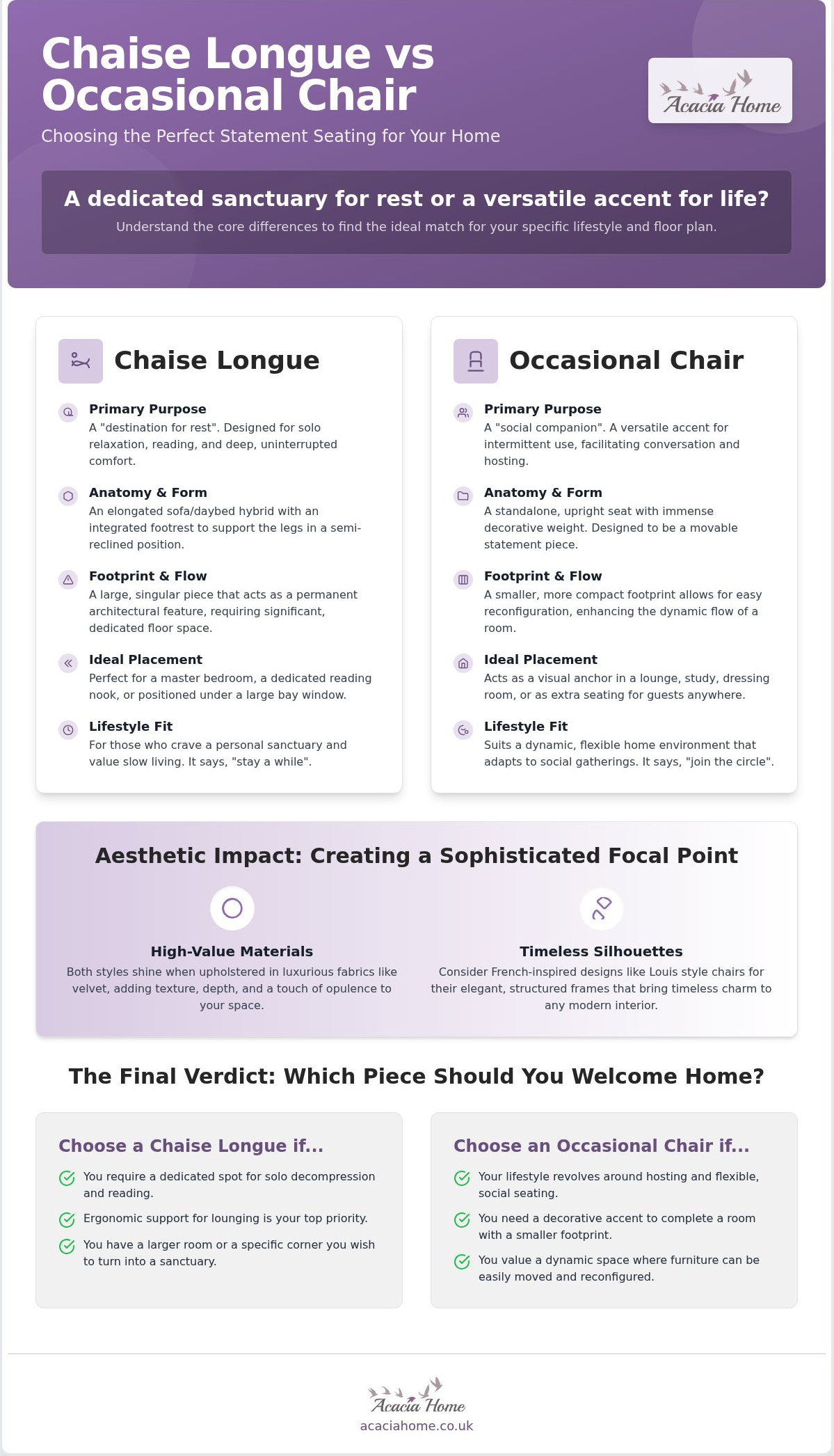
In 2026, the British home has transformed into a sanctuary of "slow living," where every furniture choice is an intentional nod to comfort and personal expression. This shift has revitalised interest in traditional silhouettes, leading many to weigh up the merits of a chaise longue vs occasional chair. Whilst both pieces serve as striking focal points, they cater to very different rhythms of daily life. It's about finding that delicate balance between a dedicated "destination for rest" and a "versatile accent for life." One invites you to pause and recline for hours; the other offers a flexible, stylish perch for guests or a morning coffee.
The Anatomy of a Chaise Longue
The chaise longue, or "long chair," is an elegant hybrid that bridges the gap between a standard sofa and a daybed. Its defining feature is the integrated footrest, designed specifically to support the legs whilst the sitter remains in a semi-reclined position. This anatomical length is its greatest strength, offering a level of relaxation that a standard chair simply cannot match. You'll typically find two main variations in modern interiors:
Single-ended: These feature a backrest and a single arm at one end, creating a graceful, asymmetrical look that fits perfectly into a corner or under a window.
Double-ended: Often referred to as a "récamier," these have two ends of equal or differing heights, allowing for more versatile positioning within a room layout.
Because the chaise is a singular, elongated piece, it serves as a permanent architectural feature. It's the ultimate choice for a private sanctuary, such as a master bedroom or a dedicated reading nook, where the goal is deep, uninterrupted comfort.
The Role of the Occasional Chair
In contrast, the occasional chair is the ultimate versatile companion for the modern lounge or bedroom. It's a standalone seat intended for intermittent use, yet it carries immense decorative weight as a statement piece. Because these chairs have a smaller footprint, they're much easier to reconfigure when you're hosting friends or simply fancy a change of scenery. They act as the perfect visual anchor for a dressing room or a study, providing that final touch of personality that completes a room's aesthetic.
From the structured elegance of louis style chairs to the encompassing comfort of a tub chair, these pieces are designed to be moved amongst different rooms as your needs evolve. They often sit beautifully alongside an existing ottoman or footstool, providing a sophisticated seat that doesn't demand the dedicated floor space of a full-length chaise. This "moveability" factor makes them an ideal choice for those who value a dynamic home environment that can adapt to social gatherings or quiet evenings alike.
Form vs Function: Which Seating Style Suits Your Lifestyle?
Deciding between a chaise longue vs occasional chair is an exercise in identifying your home's emotional needs. It's about more than just filling a floor plan; it's about defining the behaviour of a room. A chaise is a dedicated "destination" piece that signals a departure from the rush of the day. In contrast, an occasional chair acts as a "social companion" that facilitates movement and conversation. One says "stay a while," whilst the other says "join the circle." Understanding how you inhabit your space will lead you to the piece that feels like a natural extension of your daily rituals.
The Chaise as a Personal Retreat
The chaise thrives as a personal retreat. By positioning it near a large window, you create a dedicated spot for reading or meditation that feels separate from the rest of the house. There is a profound psychological benefit to owning a piece of furniture that explicitly invites rest. The chaise longue history highlights its evolution as a symbol of luxury and repose, a tradition that continues to offer a sense of sanctuary in modern British homes. If you find yourself craving a solo escape, the elongated support of a chaise is unmatched for physical and mental decompression.
Occasional Chairs for Flexible Living
If your lifestyle revolves around hosting and flexible living, occasional chairs are your most valuable asset. These pieces are masters of adaptation. They can fill an awkward corner one day and be pulled into the centre of the room the next to accommodate an extra guest. Using a pair of chairs allows you to build a symmetrical, inviting seating area that feels balanced and polished. They are also ideal for "perch" seating in dressing rooms or hallways, providing a sophisticated spot to pause without the commitment of a full-body recline.
When weighing up the comfort level, it's vital to look at the construction. Fully upholstered loungers are designed for deep, immersive relaxation. However, decorative frames, such as those found in our elegant seating range, offer a firmer, more structured support that is often preferred for socialising. These frames ensure that whilst the chair is beautiful to look at, it remains functional for conversation, keeping you upright and engaged rather than tucked away in a nap. Assessing these ergonomic differences ensures your choice supports both your aesthetic goals and your physical wellbeing.
Space Planning: Footprints and Flow in the Modern British Home
Successful interior design isn't just about the furniture you choose; it's about the space you leave behind. When considering a chaise longue vs occasional chair, the physical footprint is often the most practical deciding factor. A chaise typically requires a length of 160cm to 200cm, but it also needs a "clearance zone" around it to ensure the room doesn't feel suffocated. In contrast, an occasional chair preserves a sense of openness, making it a favourite for those navigating the tighter corners of a modern terrace or apartment. Finding the "Golden Ratio" in your layout means balancing these pieces so they feel intentional rather than squeezed in.
Small Space Strategies
If you're working with a compact lounge, a leggy occasional chair is your best friend. By allowing the eye to see the floor beneath the seat, it creates an illusion of more space. You don't have to sacrifice your dream of a reclining sanctuary just because square footage is at a premium; a small chaise longue offers a refined, "mini" alternative that fits beautifully at the foot of a bed or tucked into a quiet corner. To avoid a cluttered look, keep walkways clear and ensure there's at least 45cm of space between your statement piece and any surrounding coffee tables or sideboards.
Large Room Layouts
In expansive, open-plan homes, a chaise longue serves as a sophisticated "anchor" that can divide a room without the need for heavy walls. It defines a zone for rest whilst maintaining the visual flow of the house. For a truly harmonious feel, you might even combine both styles. Styling an occasional chair alongside a chaise works perfectly if you maintain a common thread, such as a shared fabric or a Louis-style influence. Matching the scale of your seating to the height of your ceiling is also crucial; high ceilings can handle the dramatic profile of a double-ended chaise, whilst lower ceilings benefit from the understated height of a tub chair.
The "bay window" dilemma often provides the perfect opportunity to test these theories. A pair of occasional chairs creates a symmetrical, social spot for morning tea, whilst a single chaise transforms that same window into a private reading nook. Both options capitalise on natural light, but the choice depends on whether you value a shared conversation or a solitary escape. By prioritising the flow of your room, you ensure your statement piece feels like a natural part of your home's architecture.
Aesthetic Impact: Statement Styles, Fabrics, and Louis Influence
The visual impact of a chaise longue vs occasional chair often dictates the entire mood of a room. In 2026, we're seeing a vibrant shift away from the "safe" neutrals of previous years, moving instead towards rich jewel tones like emerald, sapphire, and rust. These colours breathe life into high-value materials, highlighting the intricate details of button-back upholstery and hand-carved wooden legs. Whether you're drawn to the sweeping curves of a lounger or the structured poise of an accent seat, the choice of fabric and finish turns a functional item into a work of art. It's the difference between a piece that merely fills a space and one that defines it.
The French Connection: Louis XVI and Beyond
The enduring charm of louis style chairs remains a cornerstone of British interior design, offering a bridge between heritage and modern living. Characterised by their classic oval backs and elegant fluted legs, these pieces bring a sense of historical weight to even the most minimalist contemporary homes. A chaise longue with Louis-inspired detailing acts as a sculptural masterpiece in an entryway, offering a grand first impression that feels both timeless and sophisticated. Blending these antique silhouettes with modern, clean-lined rooms allows you to create a space that feels curated over time. It's about finding harmony between the ornate craftsmanship of the past and the functional simplicity of the present.
Sensory Appeal: Choosing Your Fabric
Your choice of material defines the sensory experience of your home sanctuary. When debating the sensory merits of a chaise longue vs occasional chair, consider how the light interacts with the surface. Velvet is a magnificent choice for high-traffic occasional chairs, as modern weaves offer surprising durability whilst adding a sophisticated depth to the room. In contrast, linen and cotton blends provide a breathable, relaxed feel for a "window seat" chaise, evoking a calm, coastal atmosphere that is perfect for long afternoons in the sun. To keep your favourite fabrics looking fresh amongst daily use, we recommend a few simple habits:
Gently vacuum upholstery once a week to prevent dust build-up.
Rotate cushions regularly to ensure even wear on the fabric.
Address spills immediately with a clean, damp cloth to prevent staining.
Keep wooden legs polished to maintain the lustre of the carved details.
Selecting the right texture ensures your furniture doesn't just look beautiful but feels inviting every single day. If you're ready to transform your living space with a piece that balances heritage with modern comfort, explore our full range of elegant seating today.
The Final Verdict: Which Piece Should You Welcome Home?
Choosing between a chaise longue vs occasional chair ultimately comes down to the rhythm you want to set for your room. If you envision your space as a private retreat for long afternoons lost in a book or a quick Sunday nap, the chaise is your perfect match. It is a piece that prioritises your personal comfort above all else. However, if your home is a dynamic hub for hosting where you need to fill an awkward corner or provide an elegant perch for guests, the occasional chair offers the versatility you require. At Acacia Home, we believe every piece should reflect your identity as a curator of your own sanctuary.
A Decision Matrix for Homeowners
Before you make your final selection, it helps to run through a quick mental checklist to ensure your new arrival fits your life as well as it fits your floor plan. Ask yourself if this piece is primarily for your own relaxation or to accommodate others. Consider the floor space you can realistically sacrifice without interrupting the flow of the room. You should also apply the "multi-functional test" by imagining if the piece could work in a bedroom or hallway if you decide to re-organise your lounge next year.
If you find yourself torn between the two, there is a clever middle ground. You can achieve a "DIY" chaise effect by pairing a structured occasional chair with a matching footstool or ottoman. This combination provides the leg support of a lounger whilst maintaining the flexibility to move the pieces apart when you need extra seating for guests. It's a wonderful way to enjoy the best of both worlds without committing to a permanent, large-scale footprint.
Choose a Chaise Longue if: You have a dedicated reading nook, value solo napping, and want a dramatic, sculptural focal point.
Choose an Occasional Chair if: You host frequently, have limited floor space, or want a piece that can easily move amongst different rooms.
Next Steps for Your Interior Journey
As a family-owned business, we take immense pride in helping you find furniture that tells a story. Our curated trade links allow us to bring you the finest Louis-inspired silhouettes and high-value velvet finishes that are defining the trends of 2026. We encourage you to browse our latest arrivals to see how these styles have evolved to meet the needs of the modern British home. Always remember to double-check your dimensions and clearance zones before you commit; a few centimetres can make all the difference in maintaining a harmonious atmosphere. Whether you choose the indulgent length of a chaise or the nimble charm of an occasional chair, your home will be all the more beautiful for your thoughtful choice.
Transform Your Home into a Personal Sanctuary
Finding the right balance between the chaise longue vs occasional chair is an exciting step in defining your home's unique character. Whether you've decided on the indulgent, reclining comfort of a chaise for your reading nook or the nimble, social versatility of an occasional chair, your choice will become a cherished focal point. It's important to prioritise the flow of your room whilst embracing the sensory appeal of rich velvets and hand-carved details that reflect your personal style. By considering both the physical footprint and your daily rituals, you ensure your new seating is as functional as it is beautiful.
At Acacia Home, we bring family-owned expertise and a passion for curated design to every piece we select. As specialists in timeless French and Louis style silhouettes, we're dedicated to helping you find furniture that feels like a true extension of your identity. With nationwide UK delivery on all our luxury furniture, your ideal statement piece is closer than you think. Explore our exquisite collection of seating to find your perfect match and take the final step in creating a space that truly inspires you. We look forward to being a part of your interior journey.
Frequently Asked Questions
Is a chaise longue comfortable for daily use?
A chaise longue is exceptionally comfortable for daily use, specifically for activities like reading, napping, or watching television. Its elongated design provides full-body support that a standard chair simply cannot offer. Because it encourages a semi-reclined posture, it helps reduce pressure on your lower back. When choosing between a chaise longue vs occasional chair for your primary relaxation spot, the chaise wins for its ergonomic focus on solo rest and long-term comfort.
Can I use an occasional chair in a dining room?
You can certainly use an occasional chair in a dining room, particularly as a statement "carver" chair at either end of the table. It's important to check the seat height first, as some occasional pieces sit lower than standard dining chairs. Using a more decorative chair adds a layer of sophistication to your hosting space. It also provides a comfortable spot for guests to linger over coffee once the meal has finished.
What is the standard length of a chaise longue?
The standard length of a chaise longue usually ranges from 160cm to 200cm, though compact versions are available for smaller alcoves. This length is essential to ensure that an adult can recline fully with their feet supported. When planning your layout, remember to account for a clearance zone of at least 45cm around the piece. This prevents the room from feeling cramped whilst allowing you to move freely around your new statement furniture.
Is a chaise longue considered a sofa?
Whilst they share some similarities, a chaise longue is not strictly considered a sofa. A sofa is designed to accommodate multiple people sitting upright, whereas a chaise is a "long chair" intended for one person to recline. It acts as a hybrid between a traditional chair and a daybed. This distinction is vital when deciding on a chaise longue vs occasional chair, as it helps you identify whether you need social seating or a personal retreat.
How do I style a chaise longue in a master bedroom?
Styling a chaise longue in a master bedroom is a wonderful way to create a private sanctuary. Positioning it at the foot of your bed adds a boutique hotel feel, whilst placing it near a window capitalises on natural light for a reading nook. You can soften the silhouette by adding a single textured cushion or a draped wool throw. This simple addition transforms the room from a place just for sleeping into a multi-functional space for relaxation.
Are Louis style chairs actually comfortable for sitting?
Louis style chairs are surprisingly comfortable for daily sitting despite their structured, formal appearance. They typically feature generous padding on the seat and backrest, providing firm support that encourages good posture. The classic oval back is designed to cradle the sitter, making them an excellent choice for a dressing room or a study. Their combination of heritage craftsmanship and ergonomic design ensures they feel as good as they look in a modern home.
What is the best fabric for a high-traffic occasional chair?
The best fabric for a high-traffic occasional chair is a high-quality modern velvet or a durable polyester-linen blend. Velvet is particularly resilient amongst families because its dense pile can withstand frequent use whilst maintaining its rich colour. If you prefer a more relaxed, breathable feel, a heavy-weight linen blend offers a sophisticated look that handles daily wear well. Regular vacuuming and immediate spot cleaning will help keep these fabrics looking fresh and inviting for years.
Can I place a chaise longue in the middle of a room?
You can absolutely place a chaise longue in the middle of a room to act as a stylish "anchor" in an open-plan layout. Because many designs have a low profile or are open-ended, they don't block the visual flow of the space like a high-backed sofa might. This placement works particularly well for double-ended chaises, which can be accessed from either side. It creates a sophisticated zone for rest without the need for additional walls or heavy partitions.


Comments