
Upholstered Chair Care: How to Keep Fabric Chairs Looking Their Best
Before reaching for a cloth or cleaning spray, pause to check what your upholstered chair can tolerate. A quick scrub or splash of water can make a mark harder to manage, and the right approach depends on the fabric. Good upholstered chair care starts with the chair’s own instructions, not a cleaning recipe applied to every seat.
It’s natural to worry about making a spill worse, especially when dust, crumbs and everyday use are already taking their toll. A fabric-first approach makes the task more manageable and helps you care for the look and comfort that make a favourite chair part of your home.
In this guide, you’ll learn how to check care instructions, respond to everyday marks and build a simple routine to keep dust and debris under control. You’ll also learn when to stop rather than risk damaging the fabric.
Table of Contents
Upholstered Chair Care Starts with Knowing What Needs Attention
Regular, light attention can help keep a chair looking cared for without turning upkeep into a major task. First work out what you’re dealing with: loose dust and crumbs call for a different response from a fresh spill, a dried mark or fabric that looks dull from everyday use. Identifying the problem helps you choose a measured next step instead of using a treatment you may not need.
Inspect the chair in good light. Check the seat, back and arms, then look along seams and into crevices where dust and crumbs gather. Notice whether a mark is sitting on the surface or appears to have dried into the fabric. If the whole chair looks dull, treating one small area may leave it looking uneven.
How do you assess an upholstered chair before cleaning?
Look over each section before you act, including beneath removable cushions and around joins in the frame. If a cushion or cover comes off, check its care instructions rather than assuming it can go in the washing machine. Note any existing colour changes, flattened or raised pile, loose threads or delicate trim. This gives you a clear picture of the chair’s condition before you try a cleaning method.
Why does upholstered chair care need a fabric-first approach?
Upholstery combines a covering fabric with the padding and structure beneath it. You can read more about what upholstery is. Fibres, weaves and finishes can react differently to moisture and cleaning products. Even two chairs that look alike may have different materials or care instructions, so a method suitable for one may not suit the other. Household ingredients and steam are not universal fixes. Without guidance for the fabric, either could affect its appearance or feel.
Use the chair’s instructions to guide your choice, then match your response to what you’ve found. Routine dust and crumbs usually need gentle upkeep. A spill or dried mark needs more care, while widespread dullness calls for a broader assessment rather than repeated spot treatment.
Quick guide: Identify the fabric, check its instructions, then choose the gentlest suitable method. Small, regular actions can help keep a favourite chair inviting, while a careful assessment helps you avoid making a mark worse.
Check the Upholstery Care Label Before Choosing a Cleaning Method
The care label is your first guide to cleaning and maintaining an upholstered chair. It may be beneath the seat, under a cushion or attached to the frame. Give its wording priority over general cleaning advice. Look for directions about whether the fabric can be cleaned with water, needs a particular type of product or requires specialist cleaning. Follow the chair maker’s instructions as written. Don’t assume a method is suitable simply because it’s commonly recommended.
What should you look for on a chair’s care label?
Read the full instructions, including any cautions about products, moisture or removable parts. If the label recommends a particular approach, follow it rather than interpreting a symbol or code using guidance for a different chair. A removable cover isn’t automatically washable, either. Never assume a fabric is washable because it looks durable or has a removable cover.
If the label is missing or unclear, look for the manufacturer’s information and try to identify the fabric. Until you have reliable guidance, avoid soaking the upholstery or trying an aggressive cleaner. A discreet patch test can help assess a product only when it is suitable according to both the product instructions and the chair guidance. Apply it to an inconspicuous area, then check for changes in colour or texture before treating a visible section.
How can fabric type change your care routine?
Fabric names offer useful clues, but they don’t replace care instructions. Velvet has a pile that may be disturbed by pressure or unsuitable handling. Linen may show water marks, and microfibre can change texture if cleaned in a way that doesn’t suit its construction or finish. These are risks to consider, not instructions to use a particular cleaner. Chairs covered in the same type of fabric can still have different finishes or maker guidance.
Use this simple decision path: check the label, match your proposed method to its directions, then test discreetly before treating a larger or more visible area. If the label is unavailable and you can’t identify the fabric with confidence, pause rather than guess.
This fabric-first approach makes upholstered chair care more deliberate. It helps you avoid treating every material alike and gives you a clear reason to stop if the fabric reacts unexpectedly. If you’re choosing seating for your home, explore indoor furniture and chairs with care and comfort in mind.
How to Treat Upholstered Chair Stains Without Making Them Worse
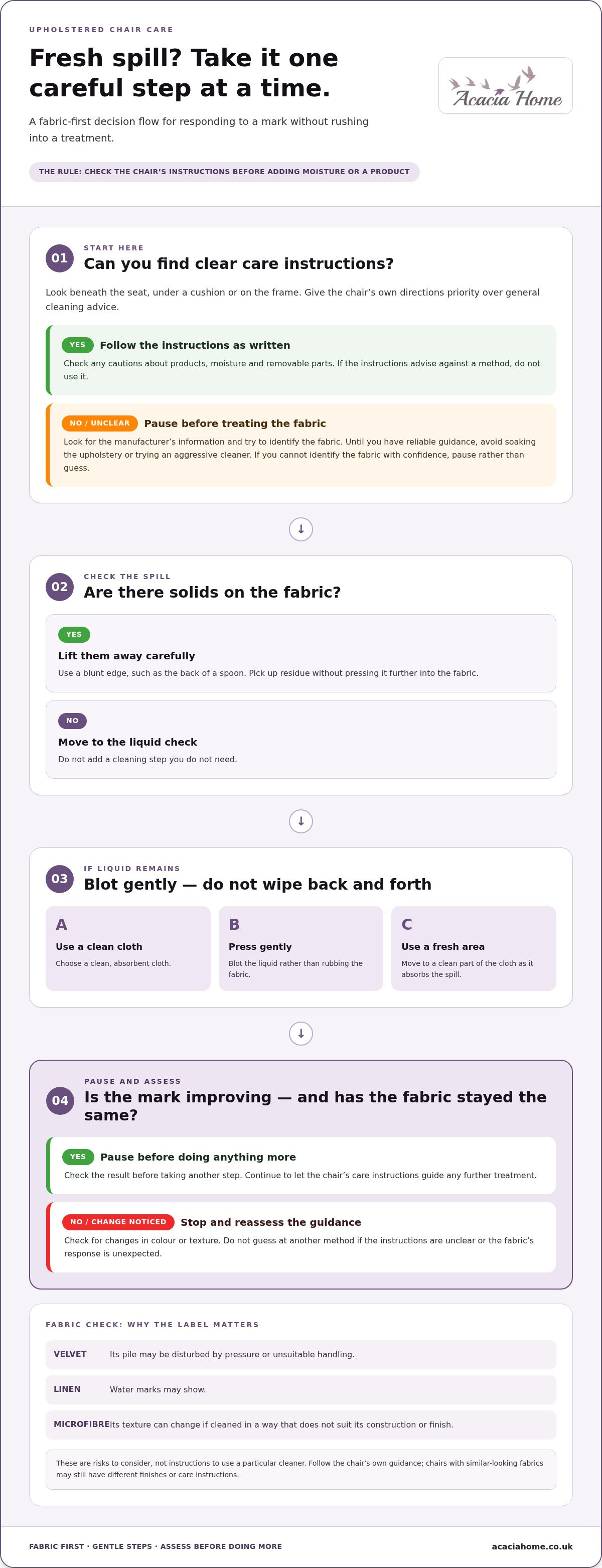
A fresh spill can feel urgent, but a careful response is safer than a rushed scrub. Follow this order: check the chair’s care instructions, lift away any solids, blot liquid gently, then pause to assess the mark. The fabric’s guidance matters before you introduce moisture or a cleaning product, even if the spill seems small.
What is the safest first response to a fresh spill?
Check first. Refer to the chair’s care instructions before applying water or a product. If they advise against a method, don’t use it.
Lift solids carefully. Use a blunt edge, such as the back of a spoon, to pick up residue without pressing it further into the fabric.
Blot liquid. Use a clean, absorbent cloth and press gently. Move to a fresh area of the cloth as it absorbs the spill instead of wiping back and forth.
Assess before doing more. After blotting, check whether the mark is improving and whether the fabric’s colour or texture has changed.
Blotting helps lift liquid from the surface. Rubbing can push it deeper, spread it or disturb the fabric. Scrubbing adds friction, while saturating the area may leave moisture beyond the visible mark. This can create a larger problem, particularly if the chair’s instructions don’t permit wet cleaning.
When should you avoid DIY stain treatments?
There isn’t one stain remedy that suits every upholstery fabric. Don’t treat vinegar, bicarbonate of soda, essential oils, bleach or steam as universal solutions. A product or technique that appears effective on one chair could affect another’s colour, finish or texture. Follow the chair guidance and product directions, and test a suitable product discreetly before applying it to a visible area.
Don’t layer treatments in the hope that one will work. Applying several products in succession makes it difficult to tell what’s affecting the fabric, and may leave residue or worsen the mark. For upholstered chair care, patience and a clear stopping point are as useful as knowing how to blot.
Stop and reassess if colour transfers to the cloth, the fabric’s feel or pile changes, the mark spreads, or gentle treatment makes no difference. Avoid further rubbing or adding another cleaner. Persistent stains, delicate fabric or an unexpected reaction are reasons to stop home treatment rather than risk making the affected area more noticeable. Some marks may not come out completely.
A Simple Upholstered Chair Care Routine for Everyday Use
A straightforward routine can keep dust and crumbs from building up without turning everyday upkeep into a full clean. Treat regular care as gentle maintenance, separate from stain treatment. Vacuum loose debris and check the chair’s condition, but follow its care instructions before using moisture, products or tools that could affect the fabric.
How should you vacuum and refresh an upholstered chair?
Move slowly over accessible areas with a suitable upholstery attachment, taking care around seams, buttons and trim. For delicate fabric, use a softer attachment if available and keep the pressure light. Remove cushions only if they’re designed to come off, then clear loose debris beneath them without pulling at the upholstery or its fastenings.
Brushing, plumping or freshening isn’t essential for every chair. Brush a pile only if the fabric guidance allows it, and plump or reposition cushions only when their construction permits. Check the care instructions before using fragrance or a fabric freshening product, as these can leave marks or change the feel of some materials.
Which small habits help reduce everyday wear?
Build a quick visual check into your usual tidying. Pick up crumbs rather than leaving them to settle into seams, and respond to spills promptly using the cautious method above. Regular light attention is different from repeatedly treating the whole chair, which can put unnecessary strain on the fabric.
Look over the seat, arms and crevices for loose debris.
Vacuum gently with a suitable attachment, paying attention to seams without pressing hard.
Rotate or reposition removable cushions only if the chair design allows it.
Keep a short care note with the fabric details and instructions, so you can refer to it before choosing a cleaning method.
Placement can matter, too. Prolonged direct sunlight may contribute to uneven fading, while repeated friction in a frequently used spot can contribute to local wear. If practical, consider the chair’s position in relation to strong sunlight and everyday activity, while keeping the room’s use and the chair’s design in mind.
This simple upholstered chair care routine is about consistency, not constant cleaning. Gentle upkeep helps you notice changes early and keep a favourite seat welcoming as part of a comfortable home. If you’re considering seating for your space, explore indoor chairs from Acacia Home.
Make Upholstered Chair Care Part of a Thoughtful Home
A well-loved chair fits into the rhythm of a home, offering a comfortable place to pause while adding colour, texture and character to a room. Thoughtful upholstered chair care isn’t about keeping every seat untouched. It’s about noticing what needs attention and responding in a way that respects the fabric. Keep this sequence in mind: identify, check, test, treat gently and maintain.
What is a useful upholstered chair care checklist?
Identify: Is the issue loose dust, a fresh spill, a dried mark or general dullness?
Check: Read the chair’s care instructions before choosing a product or using moisture.
Test: If the guidance allows a product, test it discreetly and follow its directions.
Treat gently: Lift loose solids and blot liquid rather than rubbing. Clean only in a way that suits the fabric.
Maintain: Where cleaning is appropriate, let the fabric dry fully in line with its instructions, then return to gentle routine upkeep.
Save this checklist or keep it with the chair’s fabric details, so you can refer to it before cleaning. If the fabric reacts unexpectedly, the mark spreads or the instructions are unclear, stop rather than trying a stronger method. Persistent stains and delicate upholstery call for particular caution.
How does good care support a comfortable, considered interior?
Regular, cautious upkeep can help you enjoy the details that drew you to a chair, from its inviting texture to the way its colour sits among the room’s furnishings. It can’t prevent every sign of use, but noticing dust, spills or changes early gives you a chance to choose a sensible next step instead of reaching for an unsuitable quick fix.
If you’re considering a new occasional chair, think about how its shape, colour and position will work with your everyday routines. A seat that feels at home in your space is one you’ll be glad to care for. Explore upholstered indoor furniture as you consider seating for your home.
Keep the fabric’s own guidance close and let it lead your decisions: routine care for everyday dust, a cautious response to a fresh spill, and a pause when the material or mark needs more than gentle attention. When you’re ready to browse, take a look at Acacia Home’s indoor furniture selection.
Keep Your Favourite Chair Welcoming
Good upholstered chair care begins with noticing what needs attention, then letting the fabric’s own instructions guide your next step. Gentle routine upkeep can help keep dust and crumbs in check, while a fresh spill calls for a calm response: lift solids, blot liquid and avoid rubbing or adding products without guidance. If the fabric reacts, the mark spreads or you’re unsure how to proceed, stop rather than risk further damage.
These small, considered choices help you enjoy the colour, texture and comfort your chair brings to a room, without expecting every sign of use to disappear. If you’re thinking about a new seat for your home, Acacia Home is a UK-based online retailer with a wide selection of occasional and dining chairs.
Explore the indoor furniture selection and find a chair to make your space feel more inviting.
Frequently Asked Questions
How often should you vacuum an upholstered chair?
Vacuum an upholstered chair as part of your regular household cleaning, adjusting the frequency to how often it’s used and how quickly dust or crumbs gather. A frequently used dining chair may need attention more often than a chair used occasionally. Use a suitable upholstery attachment, move gently over the fabric and take care around seams, trim and delicate areas. Follow the chair’s care instructions if they give specific guidance.
Can you use bicarbonate of soda to clean upholstered chairs?
Only use bicarbonate of soda if the chair’s care instructions support it. It isn’t a universal upholstery cleaner: powder may be difficult to remove from some fabrics or affect their texture, and moisture used to remove it could create another problem. Check the guidance first and don’t sprinkle it onto the chair based on appearance alone. If the instructions are unclear, don’t experiment on a visible area.
How do you remove a fresh stain from an upholstered chair?
Check the chair’s cleaning instructions, lift away solid residue carefully with a blunt edge, then blot liquid with a clean, absorbent cloth. Press gently and use a fresh part of the cloth as needed. Don’t rub, scrub or saturate the fabric. Assess the mark before doing more. If colour transfers, the fabric changes or the stain spreads, stop rather than risk further damage.
What do the cleaning codes on upholstered furniture mean?
Cleaning codes and labels indicate how the maker recommends caring for that particular upholstery, but don’t assume a code has the same meaning across every product or manufacturer. Read any accompanying wording and follow the chair’s own instructions rather than applying a generic interpretation. If the label uses an unfamiliar code, look for the maker’s care information. Avoid applying a cleaner or moisture until you understand what the guidance permits.
Can you steam-clean an upholstered chair?
Steam-clean an upholstered chair only if its care instructions explicitly allow that method. Heat and moisture may affect some fabrics, finishes or the structure beneath the covering, so don’t assume steam is safe because it’s designed for cleaning. Check the chair guidance and the steamer’s instructions before proceeding. If either is unclear, avoid steaming rather than testing it on the chair.
How do you remove an odour from upholstered furniture?
Start by checking the care instructions and removing loose dust or crumbs with a suitable upholstery attachment. Air the room and allow the chair to dry fully if it has become damp, following the maker’s guidance. Avoid masking the smell with fragrance or applying freshening products unless the instructions permit them. If an odour persists or seems to come from within the upholstery, don’t apply additional products without suitable care guidance.
What should you do if an upholstered chair has no care label?
If your chair has no care label, look for the manufacturer’s guidance and identify the fabric if possible before choosing a cleaning method. Don’t assume a removable cover is washable or soak the upholstery based on guesswork. If a product seems suitable, check its directions and test discreetly first. Stop if the colour, texture or finish changes, and avoid further treatment if the fabric is delicate or unidentified.


Comments