
The Louis Accent Chair: 5 Elegant Ways to Style a French Classic in 2026
What if the most traditional piece in your home was actually the secret to making it feel effortlessly modern? Many of us look at the elegant silhouette of a louis accent chair and worry it belongs in a cordoned-off gallery rather than a lived-in lounge. It's natural to feel a little hesitant about mixing such a storied classic with your favourite contemporary furniture, fearing that your space might end up looking more like a museum than a sanctuary.
We understand that desire for a home that feels curated yet deeply personal. You'll discover how to transform your living space with the timeless sophistication of these French icons through expert styling examples and historical insights. We'll help you distinguish between the romantic curves of Louis XV and the linear grace of Louis XVI, whilst offering advice on matching fabrics with your existing decor. This guide provides the clarity you need to find a high-quality, durable piece that brings a sense of polished calm and heritage to your modern retreat.
Table of Contents
What is a Louis Accent Chair? Defining the Fauteuil and Bergère
At its heart, a louis accent chair is a celebration of French artistry, defined by its distinctive exposed wooden frame and elegantly upholstered back. These pieces aren't merely furniture; they're sculptural statements that bring a sense of heritage and quiet confidence to any room. Whilst the term is often used as a broad descriptor, it specifically refers to the refined designs that emerged during the reigns of Louis XIV, XV, and XVI. Each era brought its own flavour of sophistication, yet they all share a commitment to craftsmanship that makes them the ultimate occasional piece for a modern home.
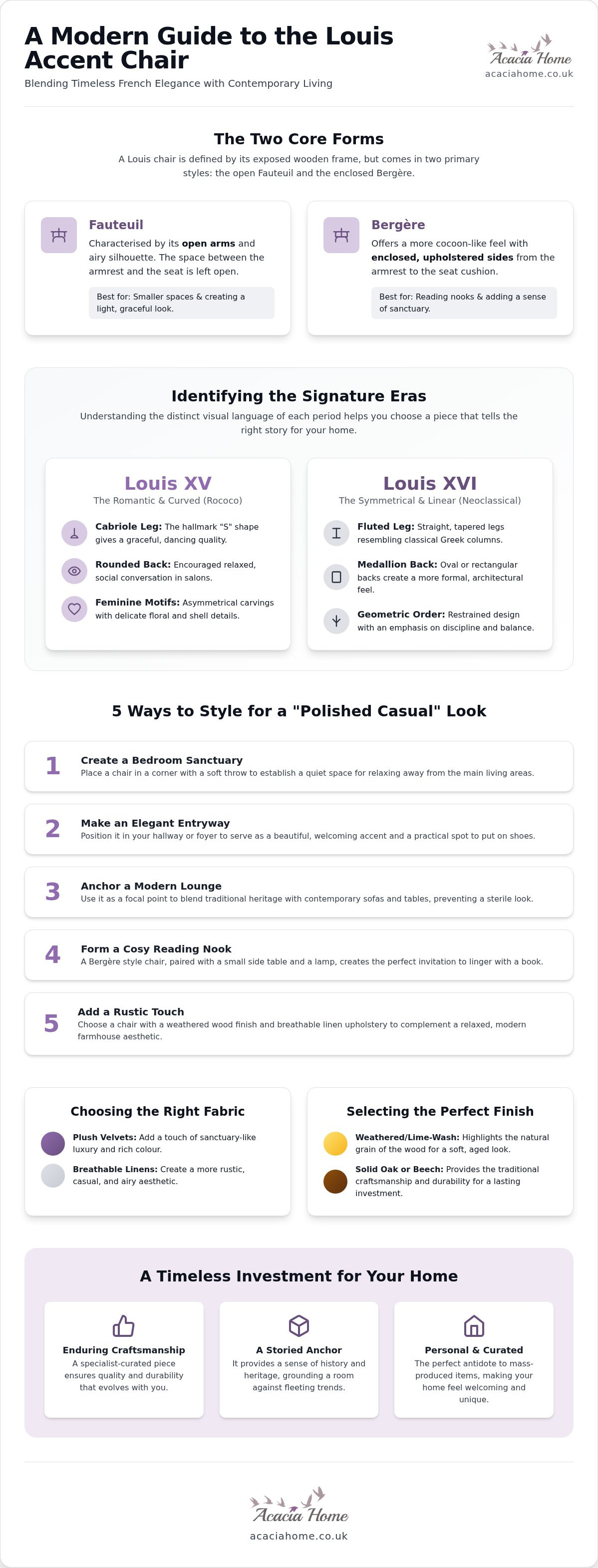
To truly appreciate these chairs, it helps to understand the two primary forms they take: the Fauteuil and the Bergère. The Fauteuil is characterised by its open, airy feel, featuring arms that are not upholstered between the armrest and the seat. This creates a graceful, light silhouette that works beautifully in smaller spaces. In contrast, the Bergère offers a more cocoon-like experience with enclosed, upholstered sides. It's the kind of chair that invites you to linger, making it a favourite for reading nooks or creating a sense of sanctuary in a busy household.
The Evolution of French Elegance
The journey of these designs is a fascinating transition from the heavy, masculine grandiosity of the Sun King, Louis XIV, to the delicate, feminine curves of the Rococo period under Louis XV. By the time we reach the late 18th century, the aesthetic shifted again towards the Louis XVI furniture style. This era embraced Neoclassicism, replacing playful curves with straight, fluted legs that mimicked Greek columns. This rich history is exactly why these chairs remain a staple amongst interior designers; they offer a timeless anchor that can ground a room, regardless of how often your other decor might change.
Why the Louis Style Endures in 2026
As we move through 2026, there's a palpable shift away from the cold, clinical feel of mass-produced furniture. Homeowners are increasingly drawn to "New Traditionalist" and "Grandmillennial" aesthetics, where the goal is to create a space that feels lived-in and storied. Choosing a curated Louis style chair provides that essential handcrafted touch. It offers an emotional connection to the past whilst serving as a functional focal point. In a world of fleeting trends, the enduring appeal of these chairs lies in their ability to make a home feel like a sanctuary, blending the prestige of a global classic with the warmth of personal style.
Identifying Signature Features: Louis XV vs. Louis XVI
Distinguishing between the various eras of French design is often the biggest hurdle for those looking to invest in a louis accent chair. While they share a common lineage of craftsmanship, the visual language of each period is strikingly different, reflecting the changing moods of the French court. Understanding these nuances allows you to choose a piece that doesn't just fill a space, but tells a story. Traditionally, these frames are crafted from solid oak or beech, frequently finished with a soft weathered or lime-wash look that highlights the natural beauty of the wood grain.
The Curves of Louis XV
The Louis XV style is defined by the romantic "Rococo" movement. This era was all about fluid, feminine lines and a spirited rejection of the rigid symmetry that came before it. You'll notice asymmetrical carvings and delicate floral motifs, particularly on the crest rail at the top of the chair. The hallmark of this period is the "S" shaped cabriole leg, which gives the piece a graceful, almost dancing quality. These chairs were built for comfort in 18th-century salons, featuring rounded backs that encouraged socialising and long evenings of relaxed conversation.
The Symmetry of Louis XVI
As tastes moved towards Neoclassicism, the exuberance of Rococo was replaced by the geometric order of the Louis XVI period. Influenced heavily by the discovery of Pompeii and the personal preference of Marie Antoinette, furniture became more restrained and architectural. The curved legs of the past vanished, replaced by straight, fluted legs that resemble classical Greek columns. This shift towards discipline is evident in historical pieces like Marie-Antoinette's chaise de toilette, where every line feels intentional and balanced.
The back of a Louis XVI chair is typically an oval or rectangular "medallion" shape. This move towards symmetry makes the style incredibly easy to pair with modern, angular furniture. Whilst 18th-century originals might have featured heavy damask or intricate tapestry, modern interpretations favour neutral linens or bold, jewel-toned velvets. If you're looking to find a piece that bridges the gap between old and new, exploring a curated collection of Louis style chairs can provide that perfect finishing touch for your own home sanctuary.
5 Inspiring Examples of How to Style a Louis Accent Chair
The true magic of a louis accent chair lies in its remarkable versatility. Whilst it carries the weight of history, it doesn't need to be confined to a formal drawing room. Instead, think of it as a functional piece of art that can be moved and reimagined across your home. Whether you're aiming for a "polished casual" look or a more structured traditional feel, these five styling approaches will help you integrate this French icon into your 2026 interior with confidence.
The Bedroom Sanctuary: Position a pair of chairs at the foot of your bed to create the atmosphere of a high-end boutique hotel. If space is at a premium, tucking a single chair into a quiet window nook provides a beautiful spot to enjoy the morning light.
The Grand Hallway: First impressions are everything. A single Louis chair placed beside a slim console table serves as a sculptural statement, welcoming guests with a sense of heritage and warmth as soon as they step through the door.
The Modern Living Room Mix: Don't be afraid to embrace contrast. Pairing the intricate carvings of a traditional Louis chair with the clean, low lines of a sleek contemporary sofa creates a space that feels curated rather than showroom-bought.
The Dressing Table Companion: Transform your morning beauty routine by using an elegant fauteuil as your vanity seat. The open arms provide plenty of movement whilst the upholstered back ensures you start your day in total comfort.
The Reading Corner: For the ultimate evening retreat, combine your chair with a versatile ottoman. This pairing allows you to stretch out and truly relax, turning a simple corner into a dedicated personal sanctuary.
Creating a Sophisticated Reading Nook
To build a reading space that feels like a true escape, focus on the sensory details. Position your louis accent chair near a natural light source, such as a large bay window, to catch the soft afternoon glow. Layering is essential for that inviting, lived-in feel. We recommend draping a plush cashmere throw over the arm and adding a silk cushion in a soft, tonal colour. Complete the vignette with a small, circular side table. It should have just enough room for a curated stack of books and your favourite cup of tea, ensuring everything you need for a quiet hour is within arm's reach.
The Louis Chair as a Dining Accent
Bringing these chairs into the dining room is a wonderful way to add a sense of occasion to everyday meals. A popular choice amongst our clients is the "Carver" arrangement, which involves placing Louis armchairs at the head and foot of the table whilst using simpler chairs along the sides. A Carver chair is a traditional British term for an armchair placed at the end of a dining table. This styling choice adds a regal touch to family dinner parties, making the ends of the table feel special whilst providing extra support for long, unhurried conversations amongst friends.
Choosing the Right Fabric and Finish for Your Decor
Selecting the perfect louis accent chair involves more than just admiring its historical silhouette. The marriage of fabric and wood finish is what ultimately determines how the piece sits within your home. Whether you're curating a rustic retreat or a sophisticated urban lounge, these textures and tones are the tools you'll use to define the atmosphere. From the tactile honesty of natural linen to the opulent depth of velvet, each choice tells a different story about your personal style.
Neutral Linens: These are the quintessential choice for achieving a "French Country" or "Shabby Chic" aesthetic. Linen offers a breathable, relaxed feel that softens the formal structure of the chair, making it feel approachable and lived-in.
Velvet Textures: If you're aiming for the "upscale tastemaker" look, velvet is unparalleled. It adds an immediate sense of warmth and luxury, catching the light in a way that highlights the intricate carvings of the frame.
Weathered Oak vs. Gilt: The frame's finish dictates the room's formality. A weathered or lime-washed oak frame feels casual and earthy, whilst a gilt or gold-leaf finish leans into traditional grandeur.
Patterned Fabrics: Stripes can provide a crisp, neoclassical edge that feels surprisingly modern. Florals, on the other hand, embrace the heritage of the piece, acting as a bold statement amongst more minimalist decor.
Matching with Your Existing Colour Palette
For a home that feels like a cohesive sanctuary, we often recommend starting with a palette of "Oatmeal" or "Dove Grey". These muted tones allow the sculptural beauty of the chair to shine without overwhelming the senses. However, a louis accent chair is also an incredible vehicle for introducing a "pop" of unexpected colour. A single chair upholstered in a deep forest green or a dusty rose can act as a sophisticated focal point in an otherwise neutral room. Don't overlook the wood grain, either. The visible texture of the oak adds a layer of organic warmth that grounds the furniture, ensuring it feels like a natural extension of your identity.
Durability and Maintenance for Busy Homes
We believe that beautiful furniture should be enjoyed every day, not just looked at. To ensure your solid oak frame lasts for generations, a simple dusting with a soft cloth and an occasional application of natural wax will keep the timber supple. For chairs placed in high-traffic areas like hallways or dining rooms, we suggest applying a fabric protection treatment to guard against life's little accidents. Many high-end designs also feature reversible cushions, which are a practical blessing for maintaining a fresh look over time. If you're ready to find a piece that balances this enduring quality with timeless style, you can explore our curated range of Louis style chairs to find your perfect match.
Why a Curated Louis Chair is the Perfect Home Investment
Investing in a louis accent chair is a decision that goes far beyond simple utility. Unlike the clinical, flat-pack alternatives that often dominate the modern market, a specialist-curated piece carries a weight of history and a standard of craftsmanship that ensures it remains a favourite for decades. It's a timeless anchor. Trends like minimalism or industrial chic might come and go, but the balanced proportions and tactile beauty of a French classic always find their place. Often, a single well-chosen chair acts as the catalyst for a total room transformation, setting a new standard for quality that the rest of your decor naturally follows.
Buying from a specialist ensures that you aren't just getting the look of a classic, but the integrity of the build as well. Expert curation means every frame is checked for the strength of its joinery and every fabric is vetted for its feel and durability. This level of care is what separates a piece of furniture from a true home investment. It's about finding that perfect balance between global beauty and the specific comforts required for a modern British home.
The Acacia Home Philosophy: From Global to Local
As a family-owned business, we see ourselves as a bridge between the world's most skilled manufacturers and your living space. We take immense pride in our selection process, using an expert eye to ensure every item we offer meets our standards for both durability and aesthetic appeal. Our goal isn't just to fill a room; it's to help you create a sanctuary that reflects your unique identity. We invite you to explore our full range of Louis style chairs and occasional seating, each chosen with the same passion we would bring to our own homes.
Final Thoughts on Personal Style
Your home is a living extension of who you are. It's the backdrop to your most cherished family moments and your private retreat from the world. When choosing furniture, we encourage you to trust your eye and follow your passion rather than strictly adhering to design rules. If a piece sparks joy and brings a sense of calm to your space, it's the right choice. Our team is always here to act as a helpful partner in your creative journey. If you need personalised styling advice or have questions about our current lead times for UK delivery, please don't hesitate to contact us for a friendly chat.
Bringing Timeless French Elegance into Your 2026 Home
Choosing a louis accent chair is about more than just filling a corner; it's about inviting a piece of history to become part of your daily life. We've explored how the delicate curves of Louis XV and the structured grace of Louis XVI can ground a modern space, providing a sense of sanctuary that few other pieces can offer. By selecting your favourite fabrics and embracing versatile styling, you can ensure your home feels both sophisticated and deeply personal. Trust your eye. It's about finding that perfect balance between heritage and contemporary comfort.
As a family-owned British business, we take immense pride in our expert curation, ensuring every piece we source meets the highest standards of craftsmanship. Whether you're looking for a single statement piece or a pair of bedroom companions, we're here to help you find an investment that truly sparks joy. We offer national delivery across the UK, bringing global beauty directly to your doorstep with the personal touch you'd expect from a dedicated partner in design.
Explore our hand-picked collection of Louis style chairs and begin your room transformation today. We can't wait to see how you bring these French classics to life in your own beautiful home.
Frequently Asked Questions
What is the difference between a Louis XV and a Louis XVI chair?
The primary difference lies in the legs and the overall symmetry of the frame. Louis XV chairs embrace the romantic Rococo movement with curved "cabriole" legs and asymmetrical floral carvings that feel fluid and feminine. In contrast, Louis XVI pieces favour Neoclassical discipline, featuring straight, fluted legs and symmetrical medallion backs. Choosing between them depends on whether you prefer a playful silhouette or a more structured, geometric feel for your room.
Are Louis style chairs actually comfortable for everyday use?
Yes, a well-crafted louis accent chair is designed for both sculptural beauty and genuine physical support. Whilst they look delicate, the ergonomic curves of the backrest and the generous seat depth provide excellent comfort for reading or socialising. For the ultimate everyday seat, we recommend the Bergère style. Its enclosed, upholstered sides create a cosy, cocoon-like feel that makes it a favourite spot for a morning coffee or a quiet evening retreat.
How do I know if a Louis chair will fit in my small living room?
These chairs are actually ideal for smaller spaces because of their compact yet elegant footprint. A Fauteuil, with its open arms, allows light to pass through the frame, which prevents the room from feeling cluttered or cramped. Most standard designs measure approximately 60cm to 70cm in width. This makes them perfect for tucking into a quiet corner or placing beside a fireplace without overwhelming the limited floor area of a flat or cottage.
What kind of fabric is best for a French style armchair?
The best fabric depends entirely on the atmosphere you wish to create in your sanctuary. Natural linen is the go-to choice for a relaxed, "French Country" aesthetic, offering a breathable texture that feels approachable and lived-in. If you're looking to add a sense of "upscale tastemaker" luxury, plush velvet is unparalleled for its warmth and rich depth of colour. Both options are durable, but we suggest a fabric protection treatment for high-traffic areas.
Can I mix a Louis accent chair with modern furniture?
Mixing traditional and contemporary styles is one of the most effective ways to create a home that feels curated. A traditional louis accent chair provides a beautiful counterpoint to the clean, minimalist lines of a modern sofa or a glass coffee table. This contrast prevents your space from looking like a showroom or a museum. It adds a layer of heritage and personality that makes even a new-build house feel like a storied, personal sanctuary.
How do I clean and maintain the wooden frame of my chair?
Maintaining a solid oak or beech frame is remarkably simple and ensures your investment lasts for generations. We recommend dusting the wood regularly with a clean, soft cloth to prevent grit from scratching the finish. For frames with a weathered or lime-wash look, a light application of natural clear wax once a year will keep the timber nourished and supple. Avoid using harsh chemical sprays, as these can damage the delicate patina over time.
What is a "ghost chair" compared to a traditional Louis chair?
A "ghost chair" is a modern, transparent polycarbonate replica of the classic Louis XVI silhouette. Whilst it pays homage to the historical shape, it lacks the tactile warmth and heritage of a traditional chair made from solid wood and fabric. Traditional chairs offer a sensory appeal through their natural grain and upholstery that a plastic version simply cannot match. For a home that feels welcoming and permanent, the authentic wooden frame is always the superior choice.
Why are these chairs often called "occasional chairs"?
They are known as occasional chairs because they are versatile pieces intended for flexible use rather than as a primary lounge sofa. Their lightweight nature means you can easily move them between rooms whenever extra seating is required. Whether it's a guest seat in the lounge, a "Carver" at the dining table, or a dressing table companion, their purpose is to provide functional beauty exactly when and where it's needed most.


Comments