
Round Buttoned Ottomans: Timeless Style Guide for 2026
The era of rigid, sharp-edged living rooms is quietly fading, replaced by a softer and more inviting approach to home styling. Selecting a button tufted ottoman round is no longer just about adding a footrest; it's about introducing a sculptural anchor that bridges the gap between classical heritage and modern comfort. You likely want a piece that feels luxurious underfoot yet stands up to the rigours of a busy family home without the tufting losing its charm or the frame giving way. It's a delicate dance between finding a fabric that resists wear and a silhouette that fits your specific room layout perfectly.
We understand that finding that perfect balance between a soft aesthetic and long-lasting durability can feel like a challenge. In this guide, you'll discover how to select and style a round button-tufted ottoman to bring sophisticated texture and versatile comfort to your sanctuary. We will walk through the essentials of high-performance fabric selection, correct spatial clearances for UK homes, and the creative ways to transform this single piece into a footstool, seat, or even a coffee table whilst maintaining an air of effortless elegance.
Table of Contents
Why the Round Button Tufted Ottoman is a Design Essential
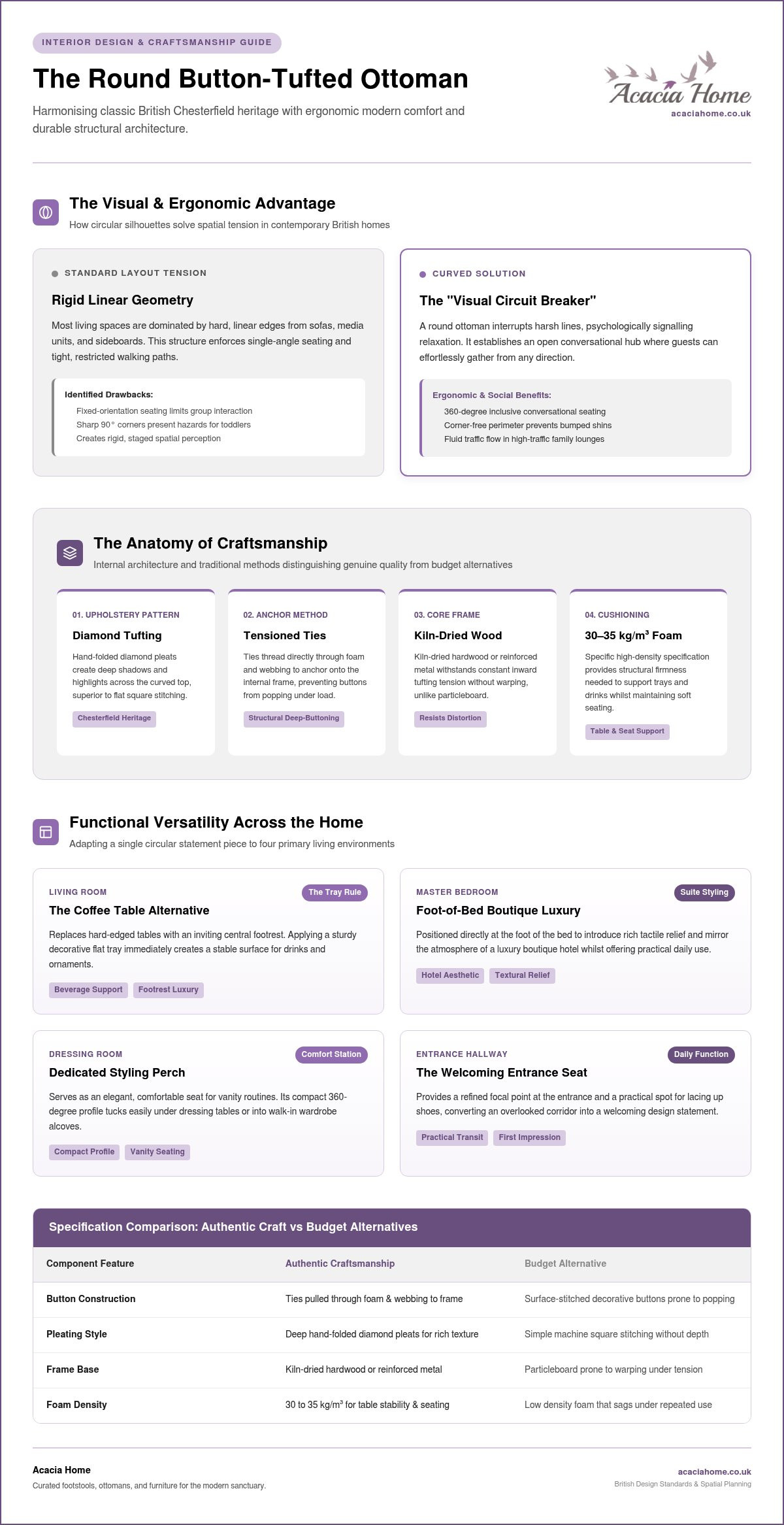
A button tufted ottoman round is far more than a simple footrest; it's a multi-functional anchor that brings immediate textural depth to any room. By definition, these pieces feature deep-buttoned upholstery where fabric is meticulously folded and secured, creating a rhythmic pattern of shadows and highlights. This design choice draws heavily on the Chesterfield heritage, a hallmark of British luxury that has transitioned seamlessly from 18th-century drawing rooms to the heart of the modern home. It offers a sense of permanence and craftsmanship that mass-produced, flat-surfaced furniture often lacks.
Integrating a circular silhouette into a living space is a strategic design move. Most British homes are filled with the harsh, linear edges of sofas, media units, and sideboards. A round ottoman acts as a visual "circuit breaker," softening the room's overall geometry and making the space feel more curated and less rigid. Beyond the look, there's a practical ergonomic benefit. In high-traffic family areas, the lack of sharp corners means fewer bumped shins for adults and a safer environment for toddlers, allowing for a more fluid traffic flow around the furniture.
The Aesthetic Appeal of Geometric Softness
Curves have a profound psychological impact, subconsciously signalling safety and relaxation. Unlike rectangular pieces that dictate a specific orientation, round furniture encourages a more inclusive, conversational seating arrangement. When placed at the centre of a room, it acts as a hub, allowing guests to gather around from any angle. This makes it the favourite choice for open-plan spaces where you want to maintain a sense of flow whilst defining a clear social zone. It's about creating a sanctuary that feels approachable rather than staged.
Versatility Across Different Rooms
The beauty of this piece lies in its ability to adapt to your changing needs. In the lounge, it serves as a sophisticated coffee table alternative when paired with a sturdy decorative tray. Moving into the bedroom, placing a tufted piece at the foot of the bed instantly evokes a high-end boutique hotel atmosphere. It also functions beautifully as a stylish perch in a dressing room or a welcoming seat in a hallway, providing a comfortable spot to lace up shoes whilst adding a touch of elegance to often-overlooked spaces. Whether used as a footstool or extra guest seating, its utility is as vast as its style.
The Anatomy of Quality: Understanding Deep-Buttoning and Frames
The beauty of a high-quality button tufted ottoman round lies in the details you can't see from across the room. Whilst the exterior provides the charm, the internal architecture determines whether that charm lasts for a season or a lifetime. Achieving the iconic diamond pattern requires immense tension; the fabric must be pulled through the foam and tied off securely. This diamond tufting is far superior to simple square stitching, as it creates deep, hand-folded pleats that catch the light and offer a richer textural landscape. It's a labour-intensive process that transforms a flat surface into a three-dimensional masterpiece.
A sturdy foundation is non-negotiable. Because the tufting process exerts constant pressure on the internal structure, a frame made from inferior materials like particleboard will eventually warp or crack. Premium pieces rely on kiln-dried hardwood or reinforced metal to maintain their shape. Without this hidden strength, the geometric precision of the circle would slowly distort under the weight of daily use. It's this commitment to structural integrity that separates a temporary trend from a lasting heirloom.
What Makes a Button Stay Secure?
Many budget alternatives use decorative buttons that are merely stitched to the surface, but these are prone to "popping" the moment someone sits down. In contrast, authentic structural tufting involves threading the button ties through the foam and webbing. Deep-buttoning is the traditional craft of securing upholstery with tensioned ties that pull the fabric through the cushioning to anchor it directly to the frame. This method ensures that the buttons remain deeply recessed, preserving the elegant silhouette of your furniture for years to come. If you're looking for pieces that embody this level of craftsmanship, you might enjoy browsing the curated footstools and ottomans at Acacia Home.
Foam Density and Comfort Levels
The "feel" of an ottoman depends entirely on foam density. For a piece that doubles as a coffee table, a higher density-typically around 30 to 35 kg/m³-is essential. It provides the necessary resistance to keep a tray stable whilst still offering enough "give" for tired feet. To achieve that signature domed, "favourite" look, master upholsterers often use a dacron wrap over the firm foam. This adds a soft, cloud-like layer of padding that rounds off the edges, ensuring your ottoman looks as comfortable as it feels. This balance of support and softness is what makes a piece truly versatile.
Choosing the Right Fabric: Comparing Texture and Durability
The fabric you choose for a button tufted ottoman round dictates more than just the colour; it defines how light dances across the surface of your furniture. When material is folded into deep, hand-crafted tufts, it creates a landscape of shadows and highlights that brings a room to life. This is where texture becomes a powerful visual tool. A flat, thin fabric might look strained under the tension of the ties, whereas a material with a bit of "give" or pile will bloom within the pleats, adding that coveted sense of luxury to your home sanctuary.
Beyond the immediate visual impact, you must consider how the material handles the physical demands of a central furniture piece. This is where the Martindale rub test becomes a vital metric for your selection. For an ottoman that sits in a high-traffic living area, look for a score of at least 20,000 to 25,000 rubs. This ensures the fabric won't thin, bald, or fray at the pressure points where the buttons meet the foam. It's a small technical detail that guarantees your investment remains as beautiful in five years as it is on the day it arrives.
Velvet vs. Linen vs. Faux Leather
Velvet remains the undisputed favourite for tufting because its dense pile catches the light at every angle of the fold, creating a rich, multi-tonal effect. It's the ultimate choice for those seeking a touch of opulence. Linen, by contrast, offers a more relaxed, "shabby chic" aesthetic. Its matte finish and natural slubs suit bright, airy rooms where a softer, more organic feel is desired. If your home is a high-spill zone or follows a modern industrial theme, faux leather is a practical and stylish alternative. It's remarkably easy to wipe clean and offers a sleek, tailored look that stands up to the rigours of family life.
Selecting the Perfect Colour Palette
Choosing a colour is an exercise in balancing longevity with personality. Neutral tones like oatmeal, stone, or soft grey are timeless choices that provide a calm foundation, allowing you to easily update your decor with seasonal accessories. However, don't be afraid of bold jewel tones; an emerald or navy button tufted ottoman round can serve as a stunning focal point. When planning your layout, consider how the shade complements your existing occasional chairs. For those aiming for a cohesive, French-inspired elegance, coordinating your ottoman with Louis style chairs creates a sophisticated and curated atmosphere that feels intentionally designed.
To maintain the vibrancy of your chosen fabric, regular care is essential. Dust tends to settle in the deep crevices of the tufting, which can dull the colour over time. A quick weekly pass with a soft brush vacuum attachment is all it takes to keep the folds looking crisp and clean, ensuring the texture remains the star of the show.
Styling Strategies: How to Organise Your Space Around a Round Ottoman
A button tufted ottoman round acts as a gravitational force in a room, pulling together disparate seating elements into a cohesive social hub. Its curved silhouette naturally invites people to gather, making it the perfect anchor for a furniture grouping. To enhance this sanctuary feel, consider layering textures; placing the ottoman on a plush, oversized rug and draping a soft wool throw over a nearby chair creates a sense of warmth and depth that linear furniture often lacks. It's about creating a space that feels lived-in and loved rather than just decorated.
Maintaining a sense of movement is just as important as the furniture itself. For a living room to feel comfortable rather than cluttered, ensure there's a clear perimeter clearance. Ideally, leave between 14 and 18 inches (35 to 45 cm) between your sofa and the ottoman to provide ample legroom whilst keeping the surface within easy reach. For the wider room, a walkway of 30 to 36 inches around the piece ensures that the traffic flow remains unhurried and natural, allowing the beauty of the tufting to be appreciated from every angle.
The Ottoman as a Coffee Table
Because the deep-tufted surface is inherently uneven, the "Tray Rule" is your best friend. A sturdy, flat-bottomed tray provides the stability needed for drinks, candles, or art books. Whilst a circular tray reinforces the ottoman's geometry, a rectangular one can offer a pleasing visual contrast. To create a professional look, style your tray with varying heights; pair a tall vase with a stack of favourite books and a smaller candle. To protect your upholstery from occasional spills, choose a tray with high sides and consider a fabric with a high Martindale rub count for easier maintenance.
Creating a Reading Nook
Beyond the lounge, these pieces excel in quieter corners of the home. You can create an intimate reading nook by pairing your button tufted ottoman round with a small chaise longue. This combination offers the ultimate in luxury, allowing you to stretch out fully whilst keeping a book or tea within easy reach. Positioning this setup near a window seat or a well-lit bookshelf defines a clear relaxation zone, especially when complemented by a warm floor lamp for evening retreats. If you're ready to transform your home into a more inviting space, explore our curated collection of hand-finished ottomans today.
Selecting Your Ideal Piece from the Acacia Home Curation
At Acacia Home, we believe your living space is a direct extension of your identity. Finding the right button tufted ottoman round isn't just a shopping task; it's an act of curation that transforms a house into a sanctuary. As a family-owned business, we take immense pride in acting as the bridge between expert global manufacturers and the British home. We don't just sell furniture. We select pieces that we would be proud to display in our own living rooms, ensuring that every item reflects our passion for quality and personal service.
The Acacia Home Difference
Our curation process is deeply personal. We've spent years building strong trade links with master craftsmen in Asia and India, allowing us to bring world-class designs directly to your door. This worldly perspective is always balanced by a keen understanding of British taste and the specific needs of UK homes. When you choose a button tufted ottoman round from our collection, you're investing in a piece where every button is anchored with precision and every seam is finished to our exacting standards. We value relationship-building above all else, acting as your knowledgeable partner in the creative journey of interior design.
If you find yourself needing a second opinion on how to coordinate your new footstool with your existing furniture, we're here to help. Whether you're looking for personalised advice on matching your dining chairs or need guidance on fabric textures, our team is just a message away. We believe that expert styling support should be accessible and warm, never elitist.
Ready to Transform Your Home?
Your journey toward a more sophisticated and comfortable home begins with a single, beautiful piece. We invite you to browse our latest range of footstools and ottomans to find the silhouette that speaks to your personal style. Ordering is a seamless experience, and you can expect a professional national delivery service that treats your furniture with the care it deserves. Beyond the purchase, we'd love for you to join our community of home lovers, where we share frequent inspiration and styling tips to help you keep your sanctuary feeling fresh and inviting. Let's create something beautiful together.
Elevate Your Home Sanctuary with Timeless Texture
A button tufted ottoman round is more than just a passing trend; it's a versatile investment in your home's comfort and character. By prioritising a reinforced frame and high-density foam, you ensure that the sophisticated texture and hand-folded pleats remain a focal point through years of daily use. Whether you use it to anchor a social grouping or as a soft coffee table alternative, it brings a unique sense of harmony to your living space.
At Acacia Home, we're proud to be a family-owned British business dedicated to expertly curated furniture that blends global craftsmanship with local taste. We understand the importance of quality. That's why every piece is selected with the same passion we'd bring to our own homes. With national delivery across the UK, bringing this level of elegance to your doorstep is simple and reliable.
Explore our curated collection of luxury round ottomans and find the perfect anchor for your next room transformation. Your journey toward a more beautiful, comfortable sanctuary starts today.
Frequently Asked Questions
Can I use a round button-tufted ottoman as a coffee table?
Yes, you can certainly use a button tufted ottoman round as a coffee table by adding a flat-bottomed tray for stability. This hybrid functionality is a hallmark of modern British living rooms, allowing the piece to serve as both a comfortable footrest and a sturdy surface for drinks. To maintain the fabric, ensure your tray has high sides to catch any potential spills before they reach the upholstery.
How do I clean the dust out of the button tufts?
Cleaning dust from deep tufts is best achieved using a vacuum cleaner with a soft brush attachment. Gently run the nozzle into the folds and around each button to lift trapped particles without straining the fabric. For more stubborn dust, a clean, dry paintbrush can help dislodge debris from the tightest crevices. Regular maintenance prevents the build-up from dulling the vibrant colour of your ottoman over time.
What is the ideal size for a round ottoman in a standard living room?
The ideal size for a round ottoman is typically between one-half and two-thirds of the total length of your sofa. This proportion ensures the piece remains a functional centrepiece without overwhelming the room's layout. For standard UK living spaces, aim for a diameter that allows at least 35 cm of clearance from the sofa edge, providing enough legroom whilst keeping the surface within easy reach for everyone.
Are button-tufted ottomans still in style for 2026?
Button-tufted ottomans remain a definitive style staple for 2026, particularly as interior trends shift towards organic, curvilinear silhouettes. The "Curves That Hug" movement emphasises furniture that softens the rigid lines of modern architecture. A button tufted ottoman round provides that essential textural relief, blending the timeless elegance of Chesterfield heritage with a contemporary focus on creating a relaxing, inclusive home sanctuary.
Will the buttons on my tufted ottoman come off with heavy use?
Buttons on a high-quality ottoman are anchored deeply through the foam into the frame, making them remarkably resistant to heavy use. Unlike budget alternatives where buttons are simply sewn to the surface, authentic structural tufting uses tensioned ties to secure them. This craftsmanship ensures that even with frequent sitting, the buttons remain recessed and the fabric stays perfectly pleated, preserving the silhouette of your curated piece for years.
What fabric is most durable for a tufted footstool?
Performance velvets and heavy-weave chenilles are the most durable choices, especially those with a Martindale rub count of 25,000 or higher. These fabrics are specifically designed to resist the pile crushing and thread breakdown that can occur at the pressure points of tufted buttons. If your home is a high-traffic area, look for materials treated with stain-resistant finishes to ensure your footstool stands up to the rigours of daily life.
How do I style a tray on a round tufted surface?
Styling a tray on a round surface works best when you follow the "Rule of Three" and place it slightly off-centre. This creates a more dynamic visual arrangement than a perfectly centred tray. Pair a sturdy wooden or metal tray with a tall vase, a stack of books, and a smaller decorative object like a candle. This layered approach adds height and interest whilst providing a stable, flat surface for your essentials.
Is a round ottoman better than a square one for small rooms?
A round ottoman is often superior for smaller rooms because its lack of sharp corners improves the flow of traffic in tight spaces. The circular shape allows for easier navigation around the furniture, preventing the room from feeling cramped or boxy. Additionally, the softened silhouette creates an illusion of more floor space, making it a favourite choice for those looking to maximise comfort without sacrificing the room's open, airy feel.


Comments