
French-Style Window Seats: How to Choose the Right One
Updated: 3 days ago
The most convincing French-inspired window seat may be the least ornate one. Choosing a french style window seat is less about adding carving or pattern and more about finding a shape and scale that suit your room. A beautifully curved silhouette can feel out of place if it crowds the window, while a simpler bench can still have a distinctly French character through its finish and upholstery.
Online images can make it difficult to judge a seat’s proportions, texture and relationship to the furniture you already own. This guide explains how to compare French-inspired details, from relaxed Provincial influences to more formal classical shapes. You’ll find practical ways to assess silhouette, dimensions, comfort and upholstery, so you can choose a seat that feels welcoming rather than overly ornate or out of scale. Start with your room and how you plan to use the seat; choose the finishing details afterwards.
Table of Contents
What makes a French-style window seat distinctive?
A French-style window seat is an upholstered seat whose shape or detailing draws on French furniture traditions. The influence might be subtle, such as a graceful curve or softly shaped leg, or more decorative, with carved-looking accents and patterned upholstery. The phrase “french style window seat” describes a broad design direction, not one fixed shape or level of formality.
It helps to distinguish appearance from provenance. French-inspired details don’t establish that a piece is old, made in France or built using a particular period technique. A useful distinction is: “A French-inspired window seat borrows the look of French furniture traditions; an antique French original has a specific age and history.” A general introduction to the window seat (furniture) also gives context for the form before you focus on its decorative style.
French Provincial, Louis XVI and more decorative influences
French Provincial is a softer, less formal reference, often associated with a relaxed, welcoming character rather than elaborate ornament. Louis XVI influence tends towards symmetry and classical lines, giving a seat a more composed presence. Rococo, by contrast, suggests a more ornate decorative mood. These are useful style references, not proof that a seat belongs to a specific historical category.
Details that shape the overall impression
Curved profiles, carved-looking details and upholstery can all contribute to a French-inspired feel, but no single feature is essential. The overall effect depends on how these elements work together. A restrained frame with gentle curves may feel relaxed, while pronounced ornament and plush upholstery can look more formal.
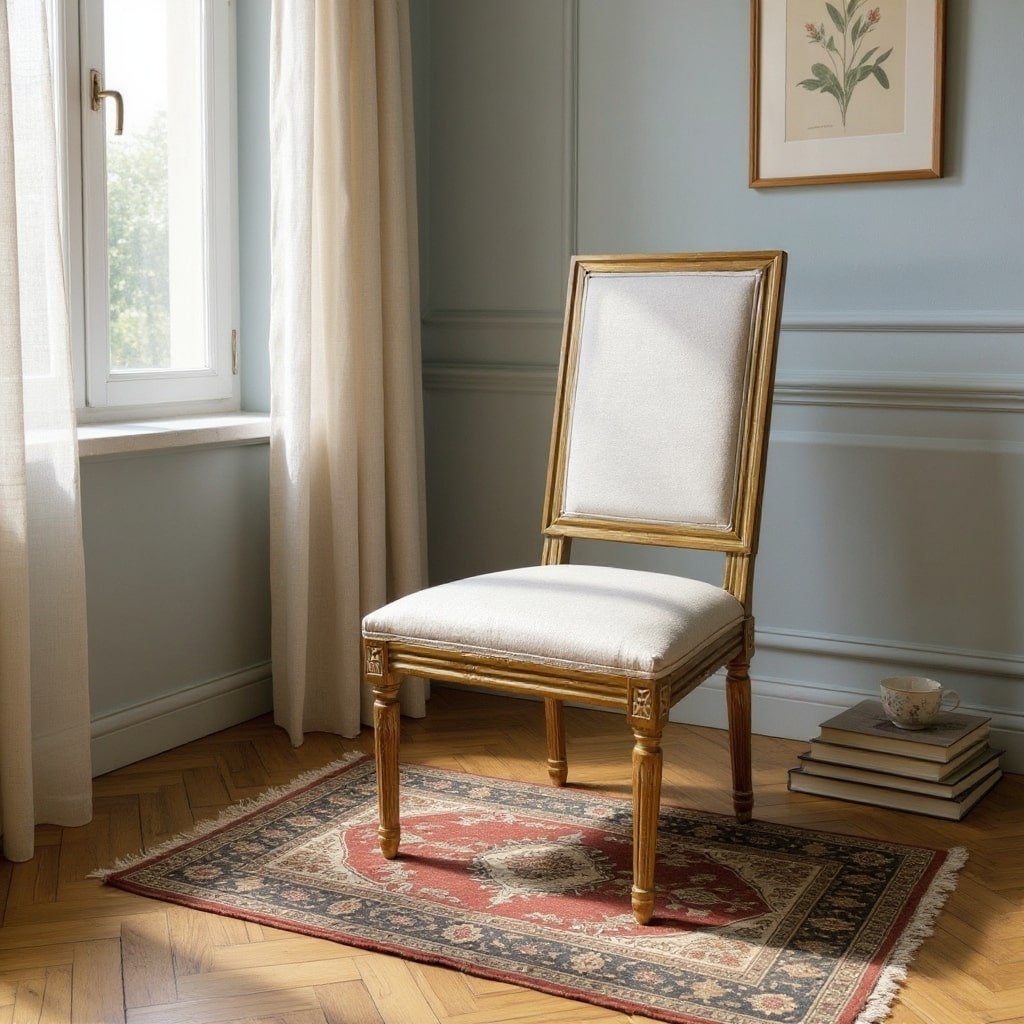
Look at the proportions of the legs and frame. Slender, gently curved legs can make a seat appear lighter and more graceful; a broader frame or stronger legs may feel grounded and substantial. Neither is more authentically French by default. Consider the outline from across the room, then look at how the details support it up close.
Imagine two seats with pale upholstery. One has a symmetrical frame and crisp lines, creating a composed look suited to a formal room. The other has a softer outline and understated detailing, which may feel more at home in a relaxed sitting area. Fabric colour alone won’t tell you which is the better French-inspired choice.
Judge the complete silhouette rather than letting one flourish decide. Ask whether the shape feels graceful or imposing, and whether its details have the same visual weight as the rest of the room. This helps you bring in French character without assuming every piece needs ornate carving, historical credentials or a grand setting.
Which French-style window seat silhouette suits your room?
Start with the room, not the most elaborate seat in a photograph. A compact, clean-lined silhouette usually has less visual weight, making it a natural fit for a contemporary interior, narrow bay or space where other furnishings already stand out. A fuller, more ornate shape can bring presence to a larger room, but may feel crowded if its arms, curves and upholstery compete with a small window or busy surroundings.
Symmetry tends to make a seat look composed and formal; a looser outline can feel more relaxed. Curves soften a strong architectural setting, while straight lines can give a traditional room a fresher edge. Upholstery affects the balance too: a plain fabric lets the frame lead, while a pronounced pattern draws the eye and makes the piece more prominent. Classical references vary across French interior design styles, so no single silhouette defines them all.
Use this quick comparison to picture each option in your own space:
Compact and clean-lined: Visually light and understated; suits contemporary rooms, smaller windows or settings with several existing focal points.
Curved but restrained: Graceful without feeling grand; brings a gentle French note to transitional rooms and interiors that mix old and new.
More ornate and pronounced: Formal and attention-catching; works best where the window and surrounding space give its shape room to register.
A quieter French look for contemporary interiors
In a modern room, restrained curves or a considered detail can add character without making the seat feel out of place. Keep nearby pieces simpler in shape, and use calm finishes or open space around the frame to create balance. You don’t need matching period furniture; contrast can make the seat feel thoughtfully chosen rather than themed.
Louis-style chairs can help you see how formal lines and symmetry work in a room. Compare their composed character with the softer outline of a window seat instead of trying to make every item match.
A more traditional focal point
A stronger profile can anchor a traditional sitting room or draw attention to an architectural window without requiring the rest of the scheme to follow suit. Consider the seat against the window’s width and shape, the visual weight of curtains or wall treatments, and the furniture nearby. Leave breathing space around a decorative frame and balance it with quieter shapes elsewhere.
Think about how you’ll use the spot, too. A window seat suggests a contained place to sit, while a chaise longue has a more extended lounging profile. Compare their proportions against the available space and intended position. The right french style window seat should feel distinctive yet still belong in the room.
How to compare size, comfort and everyday suitability
Measure the space before comparing designs
Start by measuring the area where you want the seat to stand. Check the usable width and depth, allowing for skirting boards, curtains and nearby furniture. If the seat will go in a bay, measure the floor area’s shape and angles as well as the width across the front. Leave room for curtains to hang and for people to move around comfortably.
Then consider how the furniture will reach its final position. A seat might fit beside the window but be awkward to manoeuvre through a doorway, hallway or tight turn. Compare the listed width, depth and height with a measured outline on the floor. Masking tape or paper can help you judge the footprint, although neither can show the seat’s full visual weight.
Before ordering, measure the available width and depth, the seat’s height, the route into the room, and the clearance needed around curtains and nearby furniture.
This is particularly useful when a window recess looks like an obvious place for seating. It may be narrower or shallower than the furniture, and skirting or curtains can affect how close the seat sits to the wall. Allow for the whole piece, not just the cushion or the part that seems to tuck beneath the window.
Match comfort expectations to intended use
Decide how you want to use the seat. Will it be an occasional perch, a reading spot or extra seating when the room is busy? Your answer determines what to prioritise. For a brief pause, a compact seat may be enough; for longer reading, consider whether the depth, height and any back support suit the way you like to sit.
Seat depth affects whether you can sit upright or prefer a more relaxed position. Height influences how easily you can sit down and stand up, especially if the seat will be used often. If a design has a back, consider whether its position and shape suit the support you want. A decorative outline may look inviting in a photograph, but the proportions need to work for your intended use.
Occasional seating: Prioritise a footprint that fits without obstructing the room’s usual movement.
Reading or lingering: Give greater attention to depth, sitting height and the support offered by the overall design.
Flexible extra seating: Consider whether the seat can be approached and used comfortably alongside the room’s other furniture.
Considering measurements and comfort together lets you compare options on equal terms. You’ll be choosing for the room you have and the way you live, not simply for the angle or styling of an online image.
Which upholstery and colour choices bring French style together?
Colour and texture can change a seat’s character as much as its frame. For a french style window seat, start with the room’s existing palette, then decide whether the upholstery should blend in or become a point of interest. French-inspired style doesn’t depend on one prescribed shade. Choose a colour and finish that feel connected to your home.
Choose colour in relation to the room
Look at the wall colour, flooring, curtains and nearby furniture together rather than choosing upholstery in isolation. Soft neutrals create a calm, collected feel and let an elegant silhouette or carved-looking details stand out. They can also help a seat sit quietly among other furnishings. Muted colours add gentle variation, while a stronger shade makes the seat a focal point. Neither is more French by default; consider how much attention you want it to draw.
Notice the light around the window, too. A colour can look different as daylight changes, and direct sunlight may affect how you feel about placing a richly coloured fabric there. When comparing options online, view them alongside your room’s colours where possible and consider the overall effect rather than expecting a screen to show an exact match. A similar tone in a curtain or cushion can help a bolder choice feel considered.
Think of the seat as part of a wider arrangement. The indoor furniture around it can help guide the balance: echo a colour already present for a harmonious look, or use contrast to give the window area its own identity. You don’t need every piece to match. A complementary palette often feels more personal and relaxed.
Consider texture and care realistically
Texture adds another layer of mood. A linen-like surface can suggest easy, informal elegance, while velvet often reads as richer and more ceremonious. These are visual impressions, not rules. Consider how the fabric finish works with the seat’s shape: a smooth texture may keep a decorative frame from feeling too busy, while a tactile surface can add warmth to simpler lines.
Everyday routines matter as much as appearance. Think about who uses the seat, how often, and whether it sits in a bright spot that receives direct sunlight. Pale upholstery might suit a tranquil reading nook, for example, but your household’s habits should shape what feels practical. Read the care guidance for the specific upholstery before choosing. Don’t assume similar-looking fabrics need the same attention or that a particular finish is stain-resistant or easy to clean.
Soft neutrals: Keep the look gentle and let shape or detailing take the lead.
Muted colour: Add warmth or softness without making the seat dominate.
Stronger shades and plush textures: Create a more expressive, formal focal point.
Once you’ve settled on the mood and practical considerations, explore Acacia Home’s window seats to find a piece that brings the palette and silhouette together.
Explore French-style window seats at Acacia Home
Once you know the character you want, turn your preferences into a practical shortlist. Choosing a french style window seat is easier when you work from the room outwards: establish the available space, decide which silhouette feels at home, consider how you’ll use the seat, then choose colour and upholstery. This order stops a decorative detail or appealing fabric from distracting you from the essentials.
Turn your shortlist into a confident choice
Before browsing, note what matters most in your room. A compact footprint might be essential, a curved profile could soften a modern scheme, or a more formal outline might complement traditional furnishings. Choose a couple of priorities instead of expecting one seat to make every detail the main event. The result should feel considered, not over-styled.
Compare the dimensions of each option with your measurements, including the route into the room and the space around curtains or other furniture. Revisit your comfort needs: a seat intended for reading may call for different proportions from one used occasionally. Finally, consider upholstery colour and texture alongside the room’s palette, and read the care information for the piece before purchase.
Picture the whole arrangement, not just the seat on its own. Will its outline have room to breathe? Does its colour connect with the rest of the room, or create the focal point you want? There’s no single correct answer. A quieter design can bring French character through subtle shaping, while a more decorative choice may suit a room ready for a stronger statement.
Continue exploring complementary furniture
A window seat can feel more naturally at home when considered alongside the room’s other furnishings. Compare its scale and visual character with the chairs and occasional furniture around it, and consider whether the whole arrangement feels balanced. Browsing indoor furniture can help you think about how the seating relates to the wider scheme instead of treating the window area as a separate vignette.
Acacia Home offers window seats and chaise longues to explore as complementary seating options. The two formats bring different possibilities to a room, so let your available space and intended use guide which you consider first. Keep your measurements close as you browse, and compare each piece with the silhouette, comfort and finish you’ve prioritised.
Ready to find a seat that feels right for your home? Explore Acacia Home’s window seats and chaise longues.
Make the window a place to pause
A well-chosen french style window seat can turn an overlooked corner into a place you naturally gravitate towards, whether you settle in with a book or pause as the light changes. Let that everyday use guide your final decision. Rather than aiming for a perfectly staged room, choose a piece that feels welcoming and suits the way you live.
Once you know the atmosphere you want, browsing can help you refine the details. Notice which shapes appeal to you and picture how they might sit in your home. A subtle detail may feel more personal than a grand gesture, or a more expressive seat may give the room the character it needs. Choose the option that feels inviting and works with your space.
Ready to explore seating for your home? Explore Acacia Home’s indoor seating and find a piece that makes your window feel all the more special.
Frequently Asked Questions
What is a French-style window seat?
A French-style window seat brings French furniture influences into a window-side nook through its outline, frame or upholstery. The look might feel softly Provincial or draw on more formal classical references. The phrase describes a design influence, not a guarantee of age or origin. A newly made seat with elegant curves, for example, can feel French-inspired without being an antique or having been made in France.
Can a French-style window seat work in a modern home?
Yes. French-inspired seating can add softness and character to a modern home. Picture a gently curved seat against clean-lined walls, with contemporary lighting and simple surrounding furniture. The contrast helps the piece feel intentional rather than part of a period set. If your room already has strong patterns or sculptural furnishings, a quieter frame or upholstery choice can prevent the space from feeling visually crowded.
Does a window seat have to sit beneath a window?
No. A window seat can be used as a freestanding piece of furniture elsewhere in the room. Placing one beside a bookcase or along a quiet wall can create a small reading spot, even without a window directly behind it. Choose a position with comfortable access, a pleasant view across the room and enough space for people to pass without squeezing around the seat.
Can a French-style window seat be used in a bedroom?
Yes. It can bring useful seating and a graceful accent to a bedroom. A seat near a window might offer a place to read or pause, while one at the foot of the bed can help complete the room’s arrangement. Consider how it relates to wardrobes, drawers and the bed so it doesn’t make everyday movement awkward. Its style can provide a subtle counterpoint to simpler bedroom furnishings.
How can I style a French-inspired seat without making a room feel overly formal?
What should I consider if children or pets will use the seat?
Think about daily use before choosing the upholstery and position. Children may use a seat for play as well as sitting, while pets can bring fur or muddy paws into the picture. Read the care guidance for the particular upholstery and consider whether its colour and texture suit your household routines. Keep the surrounding area clear enough for easy access, and avoid placing the seat where it obstructs a busy route.
Is a window seat the same as a chaise longue?
No. The terms generally describe different forms of seating. A window seat is usually a contained perch for sitting, while a chaise longue has an elongated shape associated with stretching out. Both can work near a window, but they create different ways to use the space. If you want a spot for upright reading, a window seat may suit; for a more reclined pause, consider a chaise longue.
Comments