
Footstool for nursing chair: comfort, fit and durability
The best footstool for a nursing chair isn’t necessarily part of a matching set. A comfortable pairing depends on how the stool’s height and position work with the chair, and whether its size, fabric and colour suit your room.
A footstool gives your legs somewhere to rest, and the right proportions can make a chair more inviting for longer stretches. Before choosing, compare the chair and stool dimensions, consider how much floor space they’ll occupy together, and think about which materials and finishes suit your home. This guide covers fit, weight, upholstery, colour and construction to help you choose a comfortable pairing that works in your space.
Table of Contents
Chair and footstool dimensions and weights
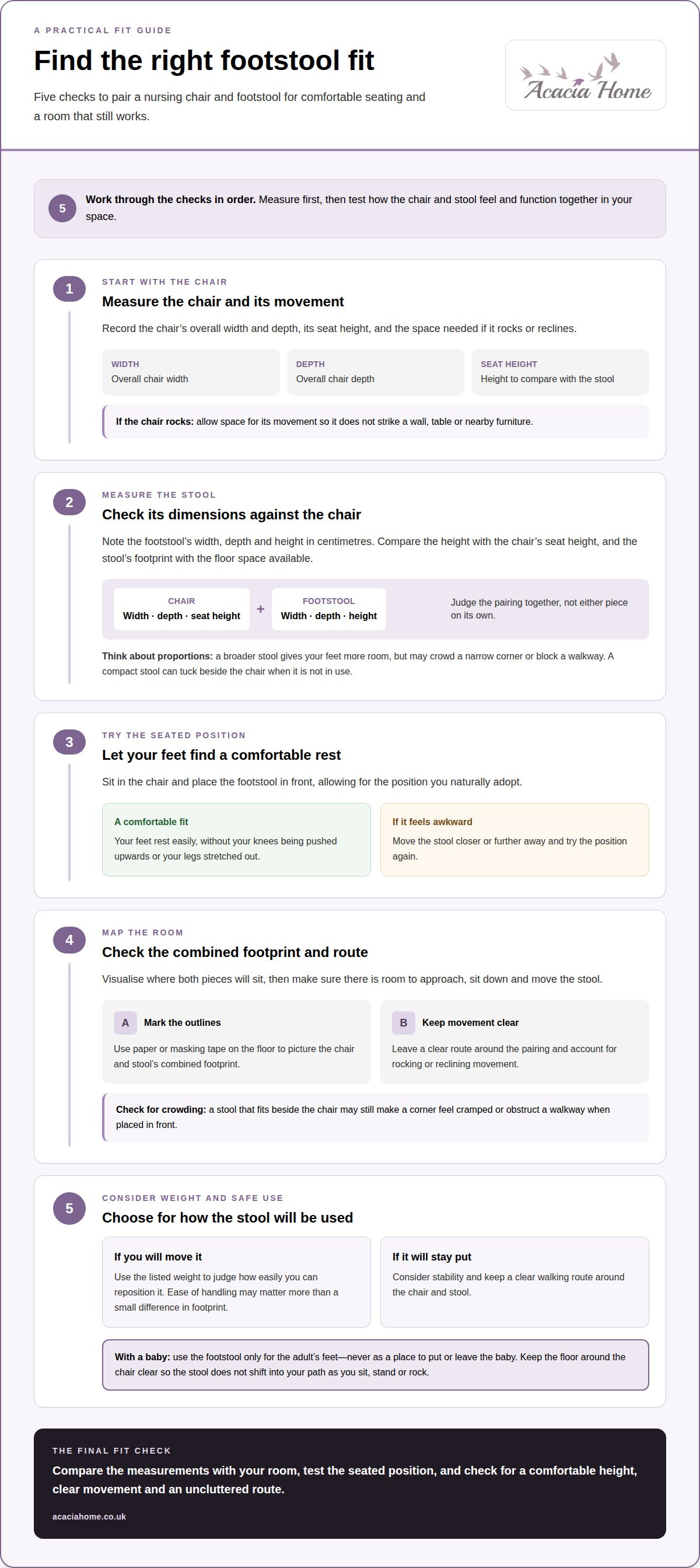
Start with the space the chair and stool will occupy together, rather than measuring either item alone. Measure the chair’s width and depth, then note the footstool’s width, depth and height in centimetres. Allow room for the chair to recline or rock, if applicable. A rocking chair needs space to move without striking a wall, table or nearby furniture.
Compare the stool’s height with the chair’s seat height. Your feet should rest comfortably, without your knees being pushed upwards or your legs stretched out. Sit in the chair and place the footstool in front, allowing for the position you naturally adopt. If your feet don’t rest easily, move the stool closer or further away and try again.
Width and depth matter too. A broad stool gives your feet more room, but may crowd a narrow corner or block a walkway. A compact design can fit neatly beside the chair when not in use, but should still support your preferred seated position. Mark the outlines of both pieces on the floor with paper or masking tape to visualise their combined footprint.
Measure the chair: record its overall width and depth, plus seat height and the space needed for rocking motion.
Measure the stool: note its width, depth and height, then compare the figures with the chair’s seat and your available floor space.
Plan movement: leave a clear route around the pairing, including room to approach, sit down and move the stool.
Consider weight: use the listed weight to judge whether you can reposition the stool easily; a heavier piece may stay put more readily.
Dimensions and weight tell you different things. Dimensions help you assess fit, while weight indicates how easy the stool may be to move. If you expect to move it between the chair and another part of the room, ease of handling may matter more than a small difference in footprint. If it will stay in one place, consider stability and a clear walking route.
With a baby, use the footstool only for the adult’s feet, never as a place to put or leave the baby. Keep the floor around the chair clear, and make sure the stool won’t shift into your path as you sit, stand or rock.
Before settling on a pairing, compare the chair and stool measurements with your room layout, then try the seated position. This helps you spot a poor height match, an awkward rocking arc or a stool that makes the space feel crowded.
Fabric options and colour finishes
Upholstery affects how a nursing chair and footstool feel and look in a room. Compare the chair fabric with the stool’s finish. Matching upholstery creates a coordinated pair, while a contrasting texture adds character. For example, a plain chair beside a subtly patterned stool adds interest without making the corner feel busy.
Consider the room’s existing palette before choosing a colour. A neutral finish can work with different wall colours, while a deeper shade can make the chair a focal point. If the room already has patterned curtains or a colourful rug, a calmer upholstery tone can balance the space. For a softer effect, choose a shade that echoes a colour already in the room rather than adding another strong accent.
Fabric texture matters when you spend time sitting close to the chair. A smooth surface has a clean, tailored look; a textured weave brings warmth and visual depth. Consider how the fabric feels against your clothing and looks in the room’s light. Pale fabric can feel airy near a bright window, while a darker finish creates a more defined silhouette.
Consider pattern scale as well as colour. A small repeat can look subtle on a compact footstool, while a large motif may become its main feature. Check how the pattern sits across the cushion and whether it complements nearby furnishings. If the chair and stool have different fabrics, repeating a shared colour helps connect them without making them identical.
Compare in context: consider upholstery beside your wall colour, rug and curtains.
Choose the mood: use a gentle neutral palette for a restful feel or a richer colour for contrast.
Balance pattern: pair a patterned surface with simpler nearby textiles.
Consider daily use: think about how the fabric feels and looks in the room’s natural and evening light.
Colour can affect how large a chair appears. A light finish may blend into a pale room, while a darker one can define the chair’s outline. These effects depend on the surrounding palette, so consider the chair and stool as part of the whole room. A coordinated finish can make a feeding corner feel considered, even when the furniture isn’t an exact match.
For a final comparison, place fabric samples beside the room’s key colours, such as a cushion or curtain. If you’re shaping a wider interior palette, explore indoor furniture styles as another point of reference. Choose a finish that feels inviting now and works naturally with the rest of your home.
Benefits of pairing a nursing chair with a footstool
A footstool gives your feet somewhere to rest while you sit in a nursing chair. That support can make a feeding position feel more settled, particularly during longer periods in the same seat. It also lets you adjust your position: bring the stool closer to rest, then move it aside when standing or reaching for something nearby.
Pairing a footstool with a rocking chair can create a gentle rhythm for quiet moments. The chair provides the rocking motion, while the stool gives your legs somewhere to rest. Position it so your feet settle comfortably without pushing the stool into the chair’s path. If the stool moves or interrupts the rocking arc, reposition it or use the chair without it.
A footstool can make a nursing corner feel complete as well as practical. A matching pair creates a unified look, while a contrasting stool adds an accent beside the chair. Either approach helps define a place for feeding, reading or sitting quietly. A patterned stool, for example, can bring interest to a plain chair, while coordinated upholstery gives the corner a calmer appearance.
Are adjustable or rocking footstools better for breastfeeding posture? An adjustable stool suits different seated positions because its height can be changed, while a rocking footstool adds movement rather than fixed support. Choose the option that lets your feet rest comfortably and keeps your position relaxed.
Use this simple test when trying a pairing:
Sit back: settle into the chair as you would during a feed.
Place your feet: rest them on the stool without stretching or raising your knees uncomfortably.
Check your position: make sure you can hold the baby securely and reach nearby essentials without leaning awkwardly.
Try the chair’s movement: if it rocks, move gently and ensure the stool doesn’t interfere.
The stool should support your comfort, not dictate how you sit. If you shift from feeding to reading, you may want to move it closer or further away. A lightweight design can be easier to reposition; a steadier one may suit a corner where it stays in place. These choices affect how naturally the chair fits into your routine.
Keep the space around the chair clear, especially where you stand or reach. A footstool works best when it supports a calm, practical seating area without becoming an obstacle. Used thoughtfully, it adds comfort and a finishing touch to a corner for unhurried moments.
Treat the chair’s price as one part of your decision. Consider whether its rocking motion suits your routine and whether a footstool will fit comfortably in the available space. Try the arrangement before settling on it, checking that the stool supports your feet without obstructing movement or making it harder to stand. A practical pairing feels comfortable to use and leaves the feeding corner easy to move around.
Matching footstool
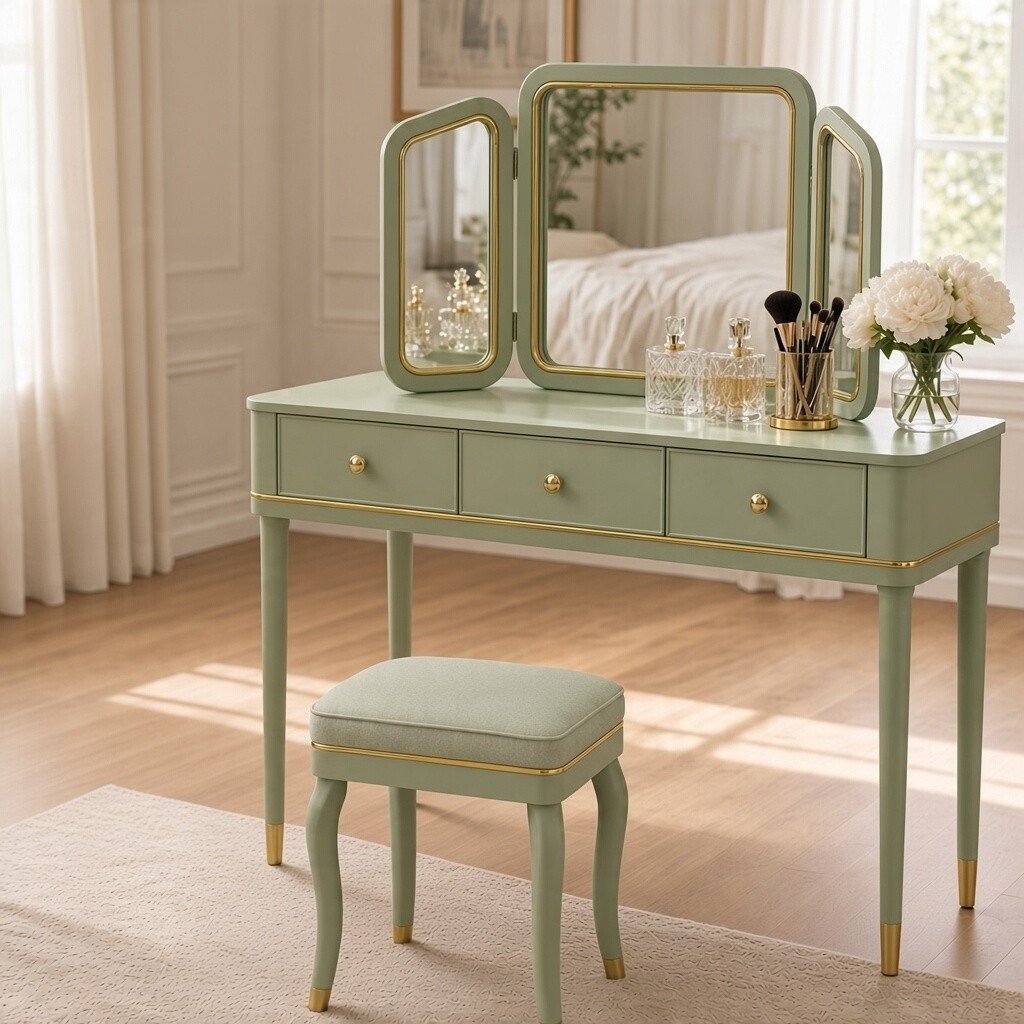
A matching footstool can make a nursing chair feel like part of a considered seating arrangement. Shared fabric, colour or leg finish creates visual continuity, while a close but not identical pairing feels more relaxed. For example, a plain stool can sit comfortably beside a subtly patterned chair if both share a similar tone.
Start by deciding what “matching” means in your room. Exact upholstery is one option, but not the only one. Coordinate through texture, shape or a repeated detail, such as warm wood tones on both pieces. This can help when the chair and stool are bought separately or when you want the corner to blend with existing furniture.
Comfort comes first. A footstool should suit how you sit in the chair, not simply complete its appearance. Try the pairing in your usual seated position and notice whether your feet rest naturally. If parents share the chair, choose a stool that works for both rather than a visually perfect piece that feels awkward for one person.
Before choosing a separate stool, compare its overall character with the chair. A rounded chair can pair well with a softly shaped stool; a tailored chair may look balanced beside a clean-lined design. These aren’t strict rules, but useful starting points for judging whether the pieces feel harmonious or compete for attention.
Repeat one feature: carry a colour, material or texture from the chair into the stool.
Balance the silhouettes: pair a visually substantial chair with a stool that doesn’t overwhelm it.
Consider the room: relate the pairing to nearby furnishings, rather than treating it as a separate set.
Try the seating position: check that the stool feels comfortable during the activity you expect to do in the chair.
A matching set can suit a calm, coordinated nursery corner. A contrasting stool may work better in a room with layered textures or a more collected look. For instance, a neutral chair with a deeper-toned stool adds definition without introducing another patterned feature.
Consider how the arrangement looks when the stool isn’t in use. It might sit in front of the chair or move alongside it to keep the route clear. Everyday placement affects the visual balance as much as upholstery does. A considered pairing should feel comfortable to use and look composed from across the room.
Ultimately, the best match supports your seating routine and personal style. Compare the chair and stool as a pair, then consider how their materials, shapes and finishes relate to the wider room. This gives you a more useful match than choosing by appearance alone.
Materials and durability
Material choices affect how a footstool feels, looks and handles regular use. In a nursery, consider the upholstery, padding, frame and feet together, rather than judging durability by the surface fabric alone. Each part has a different role: the covering is touched most, the frame supports the structure, and the feet meet the floor whenever the stool moves.
Start with the frame. A well-joined structure should feel steady when you rest your feet, without rocking unexpectedly or creaking during ordinary use. Look at how the legs connect to the body and whether the stool sits evenly on the floor. If you’ll move it often between the chair and another spot, a stable design that’s easy to reposition can make everyday use simpler.
Consider the upholstery in relation to your routine. A nursing chair and footstool may be used for feeding, reading or relaxing, so the fabric should feel pleasant against your legs and suit the room. A tightly textured surface looks and feels different from a smooth one. Colour and weave also affect how visible everyday marks may be, particularly in a light-coloured nursery.
Padding affects how it feels to rest your feet. A firmer top can feel supportive, while a softer surface may feel more yielding. Neither is right for everyone; comfort depends on your seated position and how you use the footstool. Press gently across the top and check whether the padding feels even, rather than lumpy or noticeably compressed in one area.
Useful points to consider include:
Frame stability: check that the stool sits level and its joints feel secure.
Upholstery feel: consider texture, colour and how the surface suits regular contact.
Padding: look for an even feel that supports your feet comfortably.
Floor contact: consider whether the feet protect the floor and allow practical movement.
Follow the care instructions supplied for the specific fabric and finish. Don’t assume every upholstery can be cleaned in the same way: a method suitable for one material may mark another. Use the stated care guidance for a fabric surface rather than applying an untested cleaner. Gentle, regular attention can help keep the piece looking its best without risking damage through unsuitable treatment.
Durability is ultimately a combination of construction, materials and how the stool fits into your home. A footstool that remains stable, feels comfortable and suits the room’s routine is more likely to earn a lasting place beside the chair. Explore furniture details as you consider which qualities matter most in your space.
Acacia Home: Footstools
Acacia Home offers footstools to help create a comfortable, considered seating arrangement at home. Explore the collection for a piece to complement a chair or add a practical accent that suits your room’s style.
Alongside footstools, Acacia Home offers occasional chairs, dining chairs, chaise longues and window seats. These seating options can help shape a cohesive living space, whether you’re furnishing a quiet corner or choosing pieces for a shared room. Compare styles and finishes with the comfort and fit considerations in this guide, then choose what works for your home.
If you’d like help with your next step, contact Acacia Home.
Make your seating work for your home
Choosing a footstool for a nursing chair is a chance to shape a seating area around the way you live, not just add another piece of furniture. Consider how you’ll use the chair throughout the day and whether you want the corner to feel quietly coordinated or add contrast to the room. The right choice should feel at home in your space and support the moments you want to spend there.
Let your preferred comfort and the character of your room guide your choice. A thoughtful pairing can become a welcoming part of everyday life, with a look that feels personal rather than staged. Acacia Home offers footstools alongside occasional and dining chairs, giving you seating options to consider as you shape your home.
Ready to take the next step? Contact Acacia Home to discuss your choice, and create a seating corner that feels truly yours.
Frequently Asked Questions
What is the best footstool height for a nursing chair?
The best height lets your feet rest without pushing your knees upwards. Sit in your usual position and place your feet on the stool; your legs should feel relaxed, not stretched or sharply bent. Try the pairing in the footwear you normally wear at home, as slippers can change how the height feels. A footstool for a nursing chair should support your resting position, not force you into one.
Which footstools match popular UK nursing chairs?
Choose a footstool that complements the chair’s proportions and upholstery, rather than relying on popularity or a matching label alone. Some chairs are sold with a coordinated stool; for a separate piece, compare its height and overall scale with the chair. Similar fabric creates a unified look, while a shared colour or wood tone can connect different designs. This approach works with traditional nursing chairs and contemporary rocking styles.
How much does a nursing chair footstool cost in the UK?
The Etta Footstool in Beach Stripe is listed at £69.00.
Can I use a regular ottoman or pouffe as a nursing footstool?
A regular ottoman or pouffe may work if its height lets your feet rest comfortably, supports your seated position and doesn’t obstruct movement around the chair.
Comments