
Footstool as a Coffee Table: How to Style It Beautifully
Updated: 4 days ago
What if the most inviting coffee-table choice in your living room isn’t a table at all? A footstool as a coffee table can soften a seating area and add a relaxed feel. The practical question is whether it will suit your everyday routine and provide a stable surface for the things you use.
A well-sized tray gives cups and smaller essentials a defined place to rest. The footstool’s position matters too: it should feel like part of the seating arrangement, not an obstacle or an extra piece left adrift. This setup can suit relaxed family living, while households that often serve meals or drinks from the coffee table may prefer a firmer surface.
In this guide, you’ll learn how to choose a suitable size and shape, position a footstool in relation to your sofa, and style it with a tray and a few useful details. With the right choices, it can become a practical focal point that keeps your living room comfortable and pulled together.
Table of Contents
Can a footstool work as a coffee table? Start with your room and routine
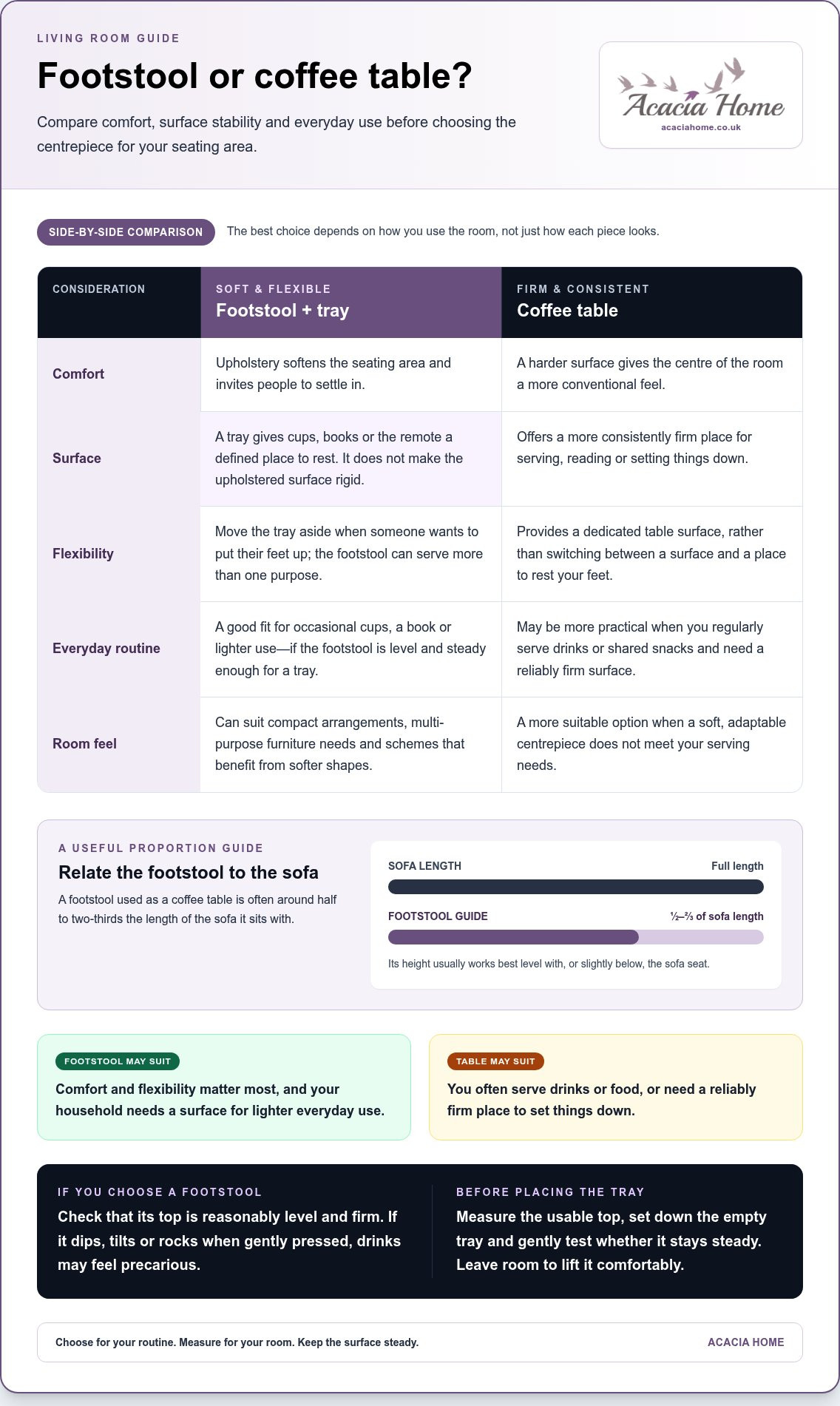
Yes, if the footstool suits the way you use your living room. A tray creates a more practical place for cups, books or the remote, while the upholstered centrepiece brings a softer feel than a conventional table. It can be adapted for different uses, continuing a long tradition of versatile footstools. Explore the History of footstools for more on how this piece has evolved.
There are trade-offs. A tray helps make the top more useful, but it won’t turn every footstool into a rigid table. Consider how level and steady the footstool is, how its shape works with your seating, and whether its size leaves enough room to move around. Your daily routine matters too: a spot for the occasional cup of tea calls for something different from a surface used regularly for shared snacks.
A footstool can function as a coffee table when it’s stable enough for a tray, proportioned for the seating area and suited to what your household places on it.
What makes a footstool suitable for coffee-table use?
Start by checking the top. A reasonably level, firm surface helps a tray sit securely. If the footstool dips, tilts or rocks when gently pressed, drinks may feel precarious. Next, consider its footprint. It should feel connected to the sofa and chairs without blocking a natural route across the room. Measure the intended position, allowing for the space you need to walk past and reach the seats.
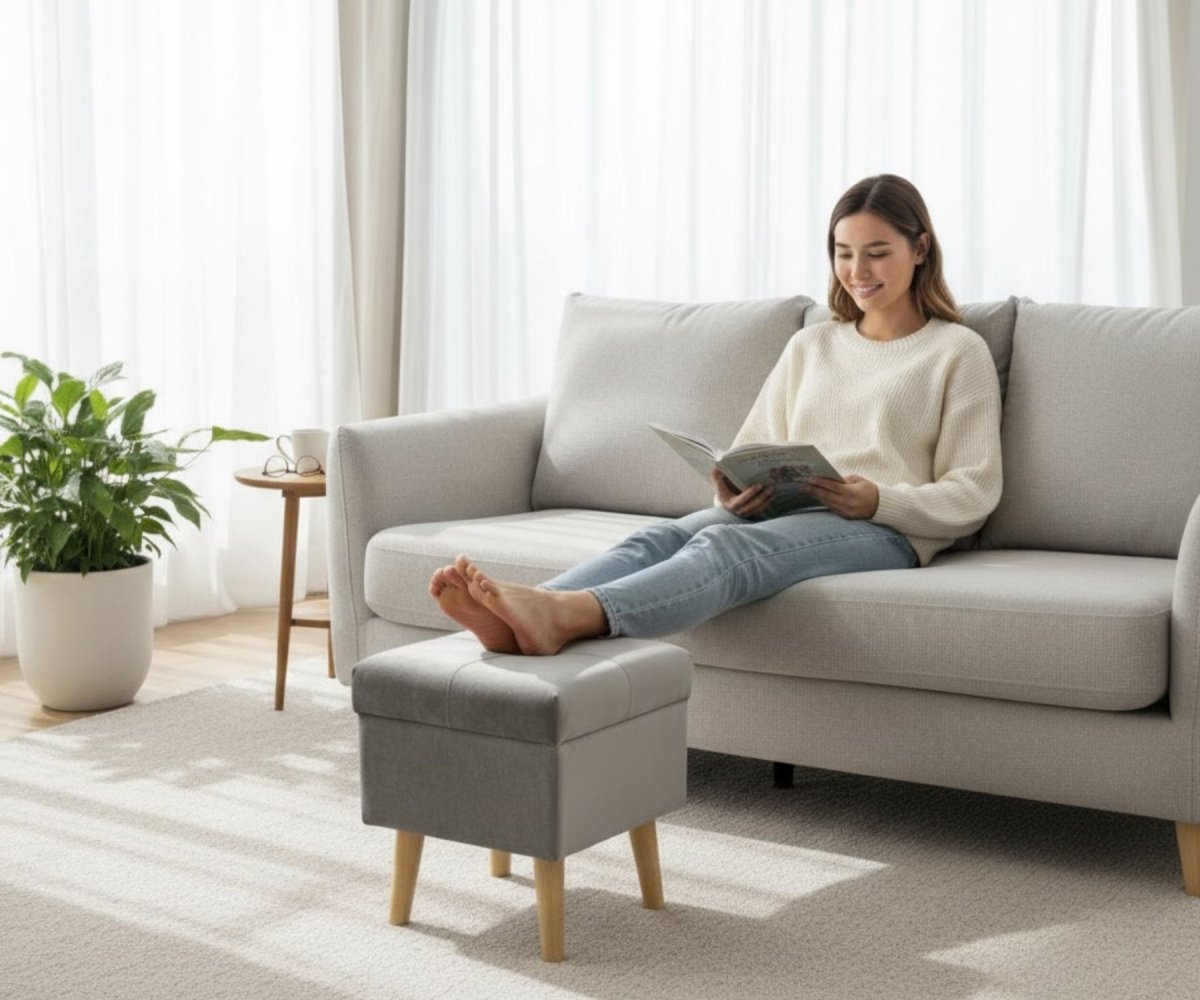
Think about who’ll use it and how. If several people put down mugs or share food, a larger tray and a steady base become more important. For lighter use, such as holding a book and a cup, a smaller surface may be enough. A footstool can also serve as a place to rest your feet, so consider whether the tray will be easy to lift away when you want to relax.
When does a footstool make more sense than a conventional table?
A footstool can work particularly well when comfort is the priority. Its upholstered form softens the centre of the seating group and invites people to settle in. It may also suit a compact arrangement where furniture needs to serve more than one purpose, or a scheme that feels better with gentle shapes than with a hard-edged table.
The tray makes the change between uses straightforward. Leave it in place when you need a surface, then move it aside when someone wants to put their feet up. If your routine involves frequent serving or calls for a reliably firm place to set drinks, a conventional table may be more practical. Explore the indoor furniture range for pieces that can help create a considered living-room scheme, including versatile footstools and occasional furniture.
Choose the right footstool size, shape and tray for coffee-table use
Proportion affects whether a footstool feels useful at the centre of your seating area. Measure the space between the sofa and chairs, then consider how far each person will need to reach for a drink or book. As a general guide, a footstool used as a coffee table is often around half to two-thirds the length of the sofa it sits with. Its height usually works best level with, or slightly below, the sofa seat.
How do you match footstool proportions to your seating?
Look at the whole seating group, not just the sofa. A long rectangular footstool can echo a straight sofa and provide access along its sides. A round shape can soften angular furniture and make it easier to move around the centre. A square design may suit chairs facing one another, but can feel bulky if the seats are close together. Mark out the intended footprint on the floor to see how a size works before you choose.
Check the room from every approach. Leave enough space for people to sit down, stand up and pass through without edging around the footstool. A piece that fits between the sofa and chairs on paper may still interrupt the route to a doorway or another part of the room. The right scale connects the centre to the seating without turning it into an obstacle.
How should you choose a tray for a footstool?
Measure the usable top rather than the footstool’s widest outer dimensions, particularly if its sides curve or slope. The tray should sit securely without overhanging so much that it feels vulnerable to a knock. Leave enough room to lift it comfortably, and keep cups or accessories away from the edge. Before styling, place the empty tray on the footstool and gently test whether it stays steady.
Tray materials and finishes can shape the room’s mood. Wood can bring warmth, metal may add a crisp accent, and a glazed or coloured finish can introduce contrast. Treat these as visual choices rather than guarantees of durability: the key is choosing a tray that fits the top and feels manageable to move. A very large tray may dominate a small footstool, while one that’s too small can leave everyday items crowded together.
Before choosing, check scale, stability, tray fit and circulation. This simple checklist keeps appearance and everyday access in view. If you’re comparing options for your room, browse indoor furniture for living spaces alongside your measurements, so the footstool can sit naturally within the wider scheme.
Footstool or coffee table: compare comfort, stability and everyday use
The best choice depends on how you use the room, not just on how each piece looks. A footstool brings a soft, inviting feel and can shift between different uses. A conventional coffee table offers a more consistently firm place for serving, reading or setting things down. A tray can make a footstool more practical, but it doesn’t change the feel or firmness of the upholstered surface beneath it.
What are the practical trade-offs of using a footstool?
A tray gives cups, a book or the remote a contained place to rest, then lifts away when you want the footstool clear. That flexibility is part of the appeal, but it takes a little more attention than a fixed tabletop. Soft, uneven or sloped upholstery can affect how securely the tray sits, so check for wobble before adding anything.
For drinks or delicate objects, choose a steady spot on the tray, away from its edges, and avoid treating a cushioned top like a hard work surface. In a busy shared room, consider how people reach across it and whether the tray is likely to be moved often. A footstool as a coffee table suits routines where flexibility and comfort matter, provided its surface works for the tasks you expect it to handle.
Who is likely to prefer a traditional coffee table?
A conventional table may be a better fit if you regularly serve meals, work with a laptop, or keep frequently used items within easy reach throughout the day. Its fixed, firm top doesn’t need to be repositioned for each use, which can make the living room feel more organised for households with a steady routine around the sofa.
That doesn’t make a traditional table the automatic choice. Think about how you use the room, who shares it and what you place on the surface. A footstool can be a lovely alternative for a relaxed space, while a firmer table may suit a more structured routine. Suitability depends on the individual piece, its stability and how it’s used.
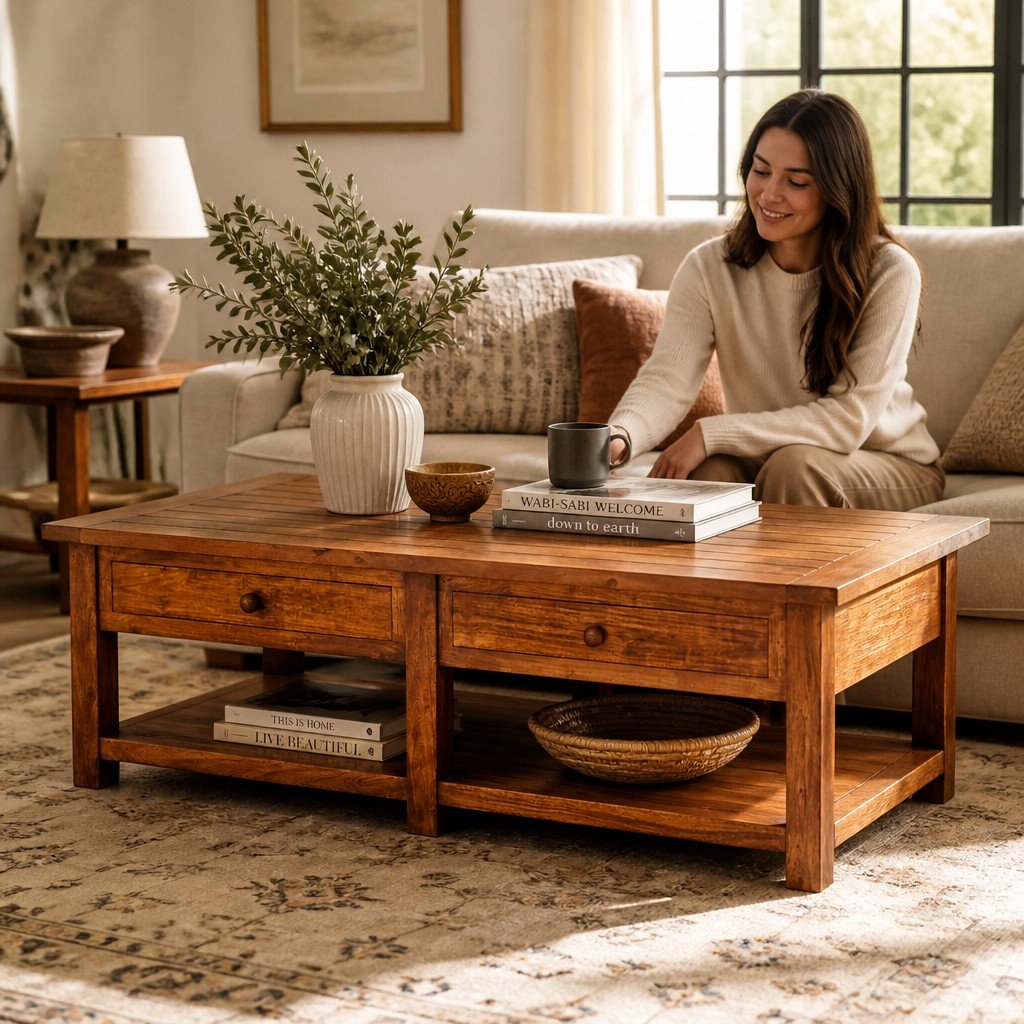
How to style a footstool as a coffee table: a simple setup
A considered arrangement should look inviting and suit the way your household uses the room. Start with the layout, then add a tray and only the details that earn their place. This sequence helps the footstool feel connected to the seating, rather than like an extra piece in the middle.
Position the footstool. Place it within comfortable reach of the sofa and any occasional chairs, keeping the room’s main walking routes clear.
Test access. Sit in each seat and check that you can reach the centre without leaning awkwardly. Walk through the space as you normally would.
Set down the tray. Centre it or place it where it’s easiest to reach, then check that it sits evenly and doesn’t wobble.
Add useful items. Arrange everyday essentials first, then introduce one restrained decorative accent if there’s room.
Where should a footstool sit in a living-room layout?
Let the seating guide its position. The footstool should be close enough to serve the sofa and chairs, but not crowd anyone’s knees or obstruct the route across the room. Once it’s in place, look at the arrangement from the doorway as well as from the seats. Check sightlines too: the footstool and tray shouldn’t hide a feature you want to see or make the centre feel visually heavy.
What should you place on the tray?
To make the grouping feel intentional, pick up a colour or texture already present in the room. A tray can echo a detail in a rug, cushions or nearby furniture, while a contrasting finish can give the soft upholstery definition. Aim for a connection, not a perfect match. Repeating every colour and material can make the room feel overly arranged; one or two thoughtful echoes are often enough.
Nearby furniture matters too. An occasional chair angled towards the footstool helps form a welcoming conversation area, while a lamp or rug can balance the seating group. Consider the scale and visual weight of these pieces together. A substantial footstool may feel grounded beside a generous chair, whereas a smaller one might need a clearly defined place within the arrangement.
For a coordinated seating group, explore the indoor furniture range and consider how chairs and footstools work together in your scheme. Once the pieces feel balanced, keep the tray edited so the arrangement remains practical as well as polished.
Make a footstool coffee table feel at home in your scheme
A footstool feels more at home when its colour and texture relate to details already in the room. That doesn’t mean everything needs to match. Look for a gentle connection: the upholstery might pick up a shade in the rug, complement the sofa’s fabric or bring warmth to a room with smoother surfaces. A considered contrast can work just as well, adding interest without making the footstool feel like an afterthought.
How can a footstool coffee table complement your interior?
Begin with the pieces around it. If the seating is visually light, a substantial footstool may give the arrangement a more grounded centre. If nearby furniture has strong lines or dark finishes, a soft upholstered form can bring contrast. A rug can help define the seating area, while a nearby lamp adds height and balances the footstool’s lower profile. Consider the whole composition from across the room, rather than choosing each piece in isolation.
Texture can create cohesion without exact colour matching. Tactile upholstery might sit comfortably alongside a woven rug or softer cushions, while a smooth tray introduces a different finish. Keep the mix intentional: repeat a colour or material in a small detail, then let the other elements vary. This gives the room a collected, personal feel instead of a showroom-like sameness.
What should you decide before choosing one?
Make the decision around your routine first. If putting your feet up and having a flexible seating arrangement matter most, a footstool may suit you well. If you rely on a consistently firm surface for serving or everyday tasks, consider whether a conventional table would work better. Then check the practical details: is the footstool in proportion with your sofa and chairs, can people move around it comfortably, and does a tray sit securely on its usable top?
Before settling on your arrangement, consider:
Routine: Will the piece mainly support relaxed lounging, or do you need a dependable surface throughout the day?
Scale: Does it sit comfortably within the seating group without crowding the room?
Surface: Can a tray rest securely, with enough space for the things you use?
Styling: Do its colour, texture and shape feel connected to the surrounding furnishings?
Acacia Home’s range includes footstools and indoor furniture, giving you options to consider alongside the wider room. Explore the indoor furniture collection and use your checklist to decide what feels right for your home.
Bring a more personal touch to your living room
Let your room, rather than a styling rule, guide the final choice. A footstool as a coffee table can make a seating area feel softer and more personal, especially when the pieces around it share a thoughtful detail or two. Picture how you’ll use the space on an ordinary day, not just how it might look when everything is neatly arranged.
Acacia Home brings together footstools and ottomans with a wider selection of indoor and occasional furniture. As you browse, consider which shapes, textures and colours feel at ease with your existing scheme and how they could make the room more welcoming.
Explore Acacia Home’s indoor furniture collection and find a footstool to consider for your living-room scheme.
Frequently Asked Questions
Can you use any footstool as a coffee table?
No, some footstools are better suited to the role than others. Before using one, test the tray with the items you’d usually place there, such as a mug, book and remote. Notice whether the surface compresses or shifts as you reach across it. If it feels awkward during an ordinary evening, try another arrangement rather than relying on styling to make it practical.
Do you need a tray to use a footstool as a coffee table?
A tray isn’t essential, but it gives a footstool as a coffee table a more defined place for small essentials. It’s particularly useful if you like to clear the centre of the room when relaxing. Try the arrangement with the tray empty first, then add your usual items. If they crowd the surface or make the tray difficult to lift, a different size or a simpler setup may work better.
How do you stop a tray slipping on a footstool?
Place the tray on the flattest part of the footstool and test it with a gentle nudge before adding anything. Then try reaching for an item from the seat you use most. This can reveal movement that isn’t obvious when you’re standing above it. Avoid balancing the tray across a seam or raised detail. If it continues to slide or tilt, don’t rely on extra accessories to make it secure.
Is a footstool coffee table suitable for a family living room?
It can work in a family room if the setup suits the household’s routines. Think about where children play, where people pass through and whether the footstool is likely to be used as a seat or footrest throughout the day. Keep breakable ornaments off the tray and leave space for everyday use. A simple arrangement is easier to move or clear when the room needs to change from relaxing to playtime.
What size tray should you use on a footstool?
Choose a tray that gives your regular items room without taking over the footstool’s usable top. A simple way to compare sizes is to cut a paper template and place it on the surface. From the sofa, check its proportions, whether there’s room to lift it, and how the outline might need adjusting. The template also makes it easier to spot unwanted overhang.
Can you put hot drinks on a footstool coffee table?
You can place a hot drink on the arrangement only if the tray sits firmly and gives the cup a level resting place. Use a coaster where appropriate, keep the drink within easy reach rather than stretching across the room, and avoid setting it near an edge. Upholstery isn’t a substitute for a tabletop, so wipe up spills promptly and follow the care guidance for the footstool’s fabric.
Is a footstool coffee table better than a conventional coffee table?
Neither is better for every household. If you’re undecided, try the footstool arrangement for a typical day and notice what feels inconvenient: reaching for items, clearing the tray or finding a firm place for drinks. That small trial can clarify whether the flexibility is worth it or whether a fixed tabletop better suits your habits. Choose the option that makes your living room easier and more comfortable to use.
Comments