
Creating a Reading Nook with a Chair: A Cosy Guide for 2026
Updated: 4 days ago
A favourite place to read doesn’t need a spare room. With one well-chosen chair and a little planning, creating a reading nook with a chair can turn an overlooked corner into a welcoming retreat. Comfort matters as much as appearance: a seat that looks beautiful but feels awkward after a few pages is unlikely to become a place you return to.
This guide covers how to choose a chair that suits your posture and room, position a reading light, and add finishing touches with a purpose. It also explains when a footstool or ottoman might help, so you can create a personal place to settle in with a book.
Table of Contents
Creating a reading nook with a chair: start with the right corner
You don’t need a spare room to make space for reading. A chair beside a living-room window, in a bedroom corner or on a quiet landing can create a distinct retreat, provided it fits the way you use your home. The best spot isn’t necessarily the emptiest one. Look for a place where you’ll naturally want to pause, with enough room to sit down, stand up and reach what you need.
Notice how the room changes throughout the day before moving furniture. A sunny corner might suit daytime reading but feel less useful in the evening, while a spot beside a main walkway can be hard to relax in. Natural light, foot traffic and socket positions all affect how practical the nook will be. A dedicated place for books has a long tradition in the home, from a small reading corner to a private library; your version can be modest and personal.
Choose a nook location by checking:
Natural light: Is there daylight at the time you’re most likely to read?
Foot traffic: Can you sit without interrupting the room’s usual flow?
Socket access: Can a reading lamp be plugged in without a cable crossing a walkway?
Everyday convenience: Can you keep your current book and other essentials within easy reach?
How to find a reading spot that suits your routine
Think about the room at different times, not just when it’s quiet. If the living room is busiest in the evening, a bedroom corner might suit a chapter before bed. If you read during the day, choose a place that makes good use of available daylight. The nook doesn’t need to be completely silent; a calmer corner can still offer a welcome pause. Consider where you’ll put your current book and drink, and whether everyday essentials are close by.
How to plan the nook around the room you have
Measure the floor area before choosing furniture. Include space to sit down and stand up, not just the chair’s footprint. Mark the chair’s approximate dimensions on the floor with paper or tape, then check how it fits beside existing furniture. Keep doorways and regular routes clear, and avoid a position where an open door or drawer would crowd the seat.
Adapt the arrangement to the room: in a living room, a chair at the edge of the seating area can create its own zone; on a landing, keep it compact and out of the way; in a bedroom, an unused corner can offer a change of pace from the bed. If the layout depends on a lamp, check socket access before settling on the chair’s position. Creating a reading nook with a chair works best when the corner feels intentional but still belongs naturally to the room.
Choose a reading nook chair for comfort, scale and style
The chair sets the mood for your nook, but its shape should suit both your preferred reading position and the available space. A compact occasional chair can define a corner without dominating it, while a tub chair’s curved sides may feel more enclosing. Neither shape is automatically more comfortable. Consider how you sit, how long you usually read and whether you like to shift position.
A chair can look right in the corner and still feel wrong to sit in. Treat visual fit and sitting comfort as separate tests, and make sure your choice passes both.
Which chair shape works best for reading?
An occasional chair is a versatile way to create a reading spot that can also work elsewhere in the room. A tub chair may suit you if you enjoy a more cocooned feel, while a more reclined seat can appeal if you like to lean back. Start with your natural posture: do you sit upright with a book in your lap, or settle back and hold it higher? Your answer will help narrow down the shape.
Comfort depends on how the seat, back and arms work together. A shallow seat may leave you perched; a deep one can make it harder to sit upright if your feet don’t rest comfortably. Check that the back meets you where you need support and that the armrests give your elbows somewhere to rest. Their height should feel natural, without pushing your shoulders upwards.
How to balance chair comfort with room proportions
Compare the chair’s width and depth with your measurements, allowing room to sit down and move around it. A broad chair can crowd a small corner, especially if its arms or frame look substantial. In a larger room, a more generous silhouette can help the reading area feel grounded rather than lost.
Pay attention to arm height and seat depth as well as the overall footprint, particularly if you plan to read for longer stretches. If possible, sit in the chair and hold a book as you normally would. Check whether your back feels supported and your arms can rest comfortably. A footstool or ottoman can add comfort, but leave enough room to move it aside without obstructing a walkway.
A seat that invites you to pause can make it easier to give reading a place in your everyday routine. The benefits of reading are one reason to make that habit appealing, while your chair should still suit the room’s proportions and style. For ideas on seating that can work in a reading nook, explore this range of indoor furniture.
Layer lighting and comfort around your reading nook chair
Once the chair is in place, thoughtful lighting and a few comfort layers can turn a functional corner into somewhere you’ll look forward to settling. Aim for enough light to read comfortably, with softer illumination to connect the nook to the rest of the room. A cushion, throw or footstool can make the seat more inviting, but each addition should have a clear purpose.
How to make reading light comfortable and useful
Ambient lighting brightens the room as a whole, but may not reach your pages evenly, particularly after dark. A focused lamp gives you more direct light for reading. Position it beside or just behind the chair. If possible, place it on the side opposite your writing hand, so your hand is less likely to cast a shadow across the page. Adjust the angle until your book is lit without the bulb shining into your eyes or reflecting off glossy paper.
A floor lamp can sit beside the chair if there’s room, while a table lamp works well on a nearby surface. Check that the light reaches your book when you’re sitting in your usual position, not just when the chair is empty. If the nook gets good daylight, use a lamp to supplement it in the evening rather than relying on bright overhead lighting alone. Explore lighting options that bring useful illumination and a considered finishing touch to the room.
Which accessories add comfort without clutter?
Choose accessories to suit the way you read. A cushion can add softness or support behind your back, while a throw is easy to pull over your lap on a chilly evening. Keep them within reach, but avoid piling on layers that make it harder to sit down or change position. One well-chosen accent can make the chair feel personal without crowding the nook.
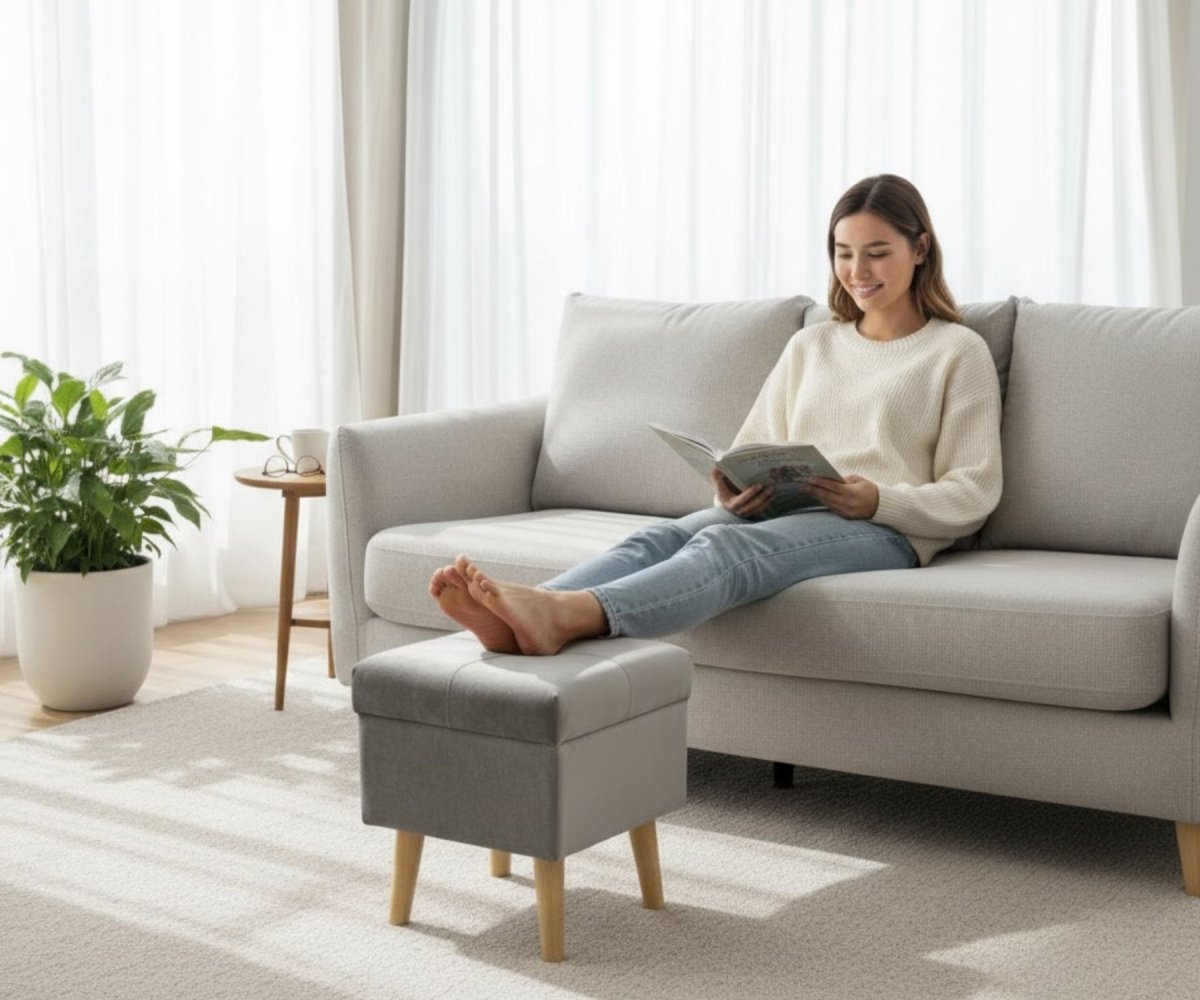
A footstool may help you relax by giving your legs somewhere to rest, especially if you enjoy leaning back with a book. Try it with the chair before settling on the layout: your feet should rest comfortably, and the stool shouldn’t block a walkway when it’s not in use. An ottoman can provide a similar comfort layer, but its size and shape should suit the available floor space. Keep a small surface nearby for a book or drink, positioned so you can reach it without twisting awkwardly.
Creating a reading nook with a chair is as much about how the space feels in use as how it looks. Start with the light you need, then add only the comfort pieces that make reading more inviting. If you’re bringing the arrangement together, explore indoor furniture for your reading nook for seating and complementary pieces.
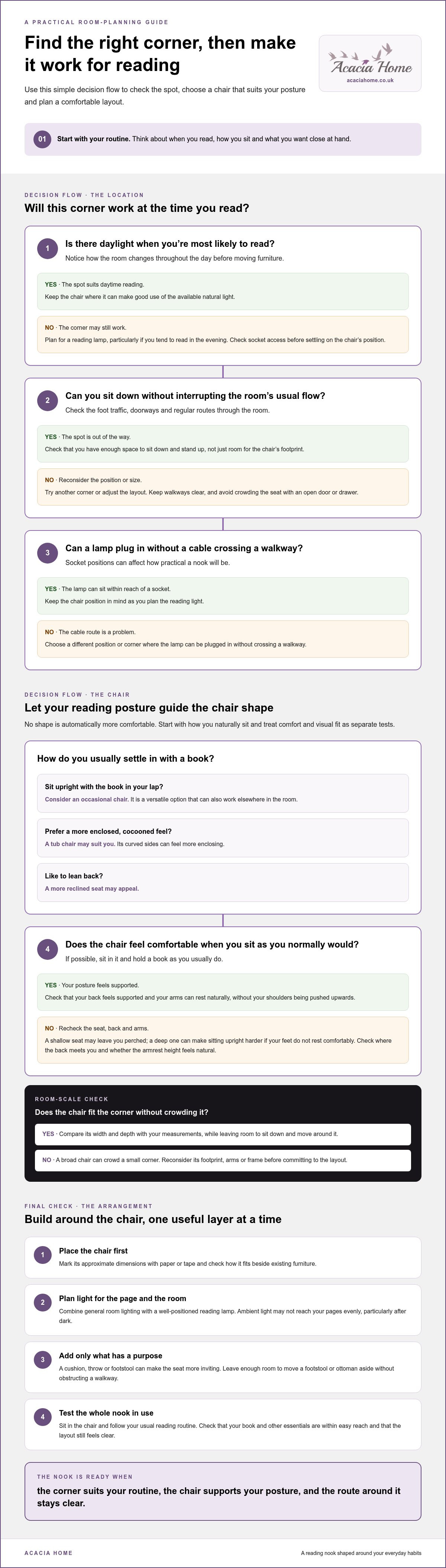
Arrange a reading nook chair for an easy, inviting layout
A thoughtful layout helps your reading nook feel like part of the room rather than an obstacle in it. Start with the chair, then arrange everything around how you’ll use the space: getting in and out, reaching a book, switching on a lamp and settling comfortably. Preserve an easy route through the room before you style the nook. This keeps the arrangement practical from the outset.
Build the layout in this order:
Place the chair: Set it where you can sit comfortably, angling it towards a view or room focal point if the space allows.
Protect circulation: Walk the usual routes through the room and make sure the chair, table and any footstool don’t obstruct them.
Add the light: Position a reading lamp so it illuminates your pages from your usual seated position.
Layer accessories: Add only useful finishing touches, such as a book, cushion or small decorative detail.
How to position the chair, table and lamp
Place a small side table close enough to reach without leaning or twisting, with room for a book or drink. Check that it doesn’t narrow the route past the chair. Set task lighting beside or slightly behind your reading position, then test it while seated. The page should be bright enough to read, without glare from the bulb or a shadow falling across the book.
Before settling on the arrangement, move through the room as you normally would. Open nearby doors and drawers, and check that you can pull out the chair and sit down with ease. If the chair faces a window, fireplace or another focal point, make sure the table and lamp fit naturally beside it rather than crowding the view.
How to make a small reading nook feel considered
Keep the arrangement simple, especially when the nook shares space with other furniture. Choose a cushion, throw or table accessory for a clear purpose, and let one considered detail draw the eye. A colour already used elsewhere in the room can link the chair to its surroundings; varied textures can add warmth without adding more objects.
A rug can help define the nook, linking the chair and table as a small, intentional grouping; exploring designs from Cozy Rugs can offer inspiration on proportions and textures that ground the space. It isn’t essential, particularly if the existing floor covering already gives the area a clear boundary. If you use one, check that it doesn’t catch underfoot or interfere with moving the chair. Creating a reading nook with a chair is about making the space easy to use as well as pleasing to look at.
Once the layout feels clear, explore occasional furniture and lighting to bring together pieces that suit your reading corner.
Finish your reading nook with a chair that feels like home
To finish, ask whether the nook feels comfortable, fits naturally into the room and works for the way you read. Creating a reading nook with a chair isn’t about adding every possible accessory. Choose a seat and a few supporting pieces that make it easy to pause, settle in and enjoy the corner as part of everyday life.
A final checklist before settling into your nook
Sit in the chair and run through your usual reading routine before calling the arrangement finished. Check whether you can reach your book, rest comfortably and read without repeatedly adjusting the lamp. Compare the chair with your measurements, too: it should leave a clear route through the room and enough space to sit down and stand up easily.
Comfort: Does the seat support the position you naturally read in?
Fit: Does the chair suit the nook without narrowing walkways or crowding nearby furniture?
Light: Does the lamp reach your pages comfortably from where you sit?
Practicality: Are your book and everyday essentials easy to reach?
Finishing touches: Does each accessory support your routine or add a personal detail you enjoy?
Be honest about what you use. If a side table makes a favourite drink easy to reach, it has earned its place. If an extra cushion keeps sliding onto the floor, it may not be helping. A footstool or ottoman can add comfort, provided it suits your posture and doesn’t make the nook awkward to move around.
How to make the nook feel personal over time
Your reading nook doesn’t have to feel completely resolved on the first day. Use it for a few days, then notice what you reach for and what gets in the way. You might move a lamp, adjust the chair’s angle, or introduce an uplifting art print from American Luxury Gifts to give the wall beside you a calming, personal touch. Small changes can make the arrangement feel more natural without requiring you to rethink the whole room.
The most welcoming nook is the one you return to. Let it grow from daily use and thoughtful choices, rather than trying to make it perfect all at once. When you’re ready to find a chair or complementary piece, explore Acacia Home’s indoor furniture.
Make space for a slower, more personal ritual
A reading nook doesn’t need to be elaborate to become a favourite part of home. Let it take shape around the books you love and the moments you want to make room for, whether that’s a quiet pause between busy days or a longer evening with a story. Creating a reading nook with a chair can make reading feel less like something to squeeze in and more like a ritual to look forward to.
As you settle into the space, notice what makes you want to return. It might be the view from the chair, a treasured object nearby or simply the pleasure of having a corner that feels distinctly yours. Small, thoughtful choices can make the room more welcoming without asking you to change everything around it.
When you’re ready to find pieces for your nook, explore indoor furniture for a welcoming reading nook and choose what feels right for your home. A lovely reading corner starts with one inviting place to pause, and it can grow naturally from there.
Frequently Asked Questions
How much space do you need for a reading nook with a chair?
There’s no fixed minimum, as the space depends on the chair and how you plan to use it. Measure the chair’s full footprint, including any parts that extend out, then allow room to sit down and get up without shifting other furniture. If you’re adding a footstool, mark its position too. A paper template on the floor can help you judge the arrangement before moving heavy pieces.
What type of chair is most comfortable for reading?
The most comfortable chair is the one that supports your natural reading position; no particular style suits everyone. Sit with a book held at your usual height and notice whether you can relax your shoulders and change position easily. Check that your feet feel supported and that the back doesn’t leave you leaning forward. Testing the chair in the position you’ll actually read can reveal more than appearance alone.
Can you create a reading nook without a spare room?
Yes. Creating a reading nook with a chair can work in a room that already serves another purpose. In a bedroom, for instance, a chair beside a chest of drawers can make an inviting place to read without taking over the room. Give the nook a subtle identity with a distinctive chair or a small personal detail, while keeping the area useful for its everyday role.
Does a reading nook need a footstool?
No, a footstool is optional. It may suit you if you like to put your feet up, but it can be unnecessary if you prefer to sit upright or have limited floor space. Try reading in your chosen chair with your feet resting naturally first. If you find yourself wanting somewhere to put them, consider a footstool or ottoman that can be moved aside when needed.
What kind of lamp is best for a reading nook?
A lamp that directs light towards your book is useful, particularly for evening reading. A shade or adjustable head can help focus the light on the page without placing a bright bulb in your line of sight. Choose a form that fits the nook: a floor lamp can sit beside the chair, while a table lamp may work if there’s already a stable surface nearby.
How do you make a reading nook feel cosy without clutter?
Choose a few details that are pleasant to use instead of filling every available surface. A soft throw and one cushion can add warmth, while a favourite book or meaningful object brings personality. Remove anything that isn’t useful or special, then return items one at a time. This makes it easier to see which touches genuinely make the nook more inviting.
Can a reading nook work in a living room?
Yes, a living room can make a lovely setting for a reading nook, even if it’s also used for conversation or television. Position the chair as a comfortable alternative to the main seating, perhaps angled towards a window or away from the screen. A distinct lamp or personal accent can signal a different activity without separating the nook from the room’s shared life.
Comments