
Compare outdoor furniture materials for weather resistance
The longest-lasting material isn’t automatically the easiest to live with. This materials for outdoor furniture comparison weighs teak’s outdoor durability against aluminium’s rust resistance and low upkeep. The best fit depends on how you use your garden and the look you want.
It’s natural to focus on whether furniture can handle British rain, but comfort, upkeep and style matter just as much in everyday use. Wood brings warmth, metal offers a clean or classic finish, and synthetic rattan creates a relaxed feel without natural wicker’s drawbacks in damp conditions.
Explore this materials for outdoor furniture comparison to see how wood, aluminium, steel, rattan, plastic and other options compare for weather resistance, everyday use and garden style. Learn what each material does well, where it needs more care, and how to choose furniture that suits your space and the UK climate.
Table of Contents
What is the best material for garden furniture?
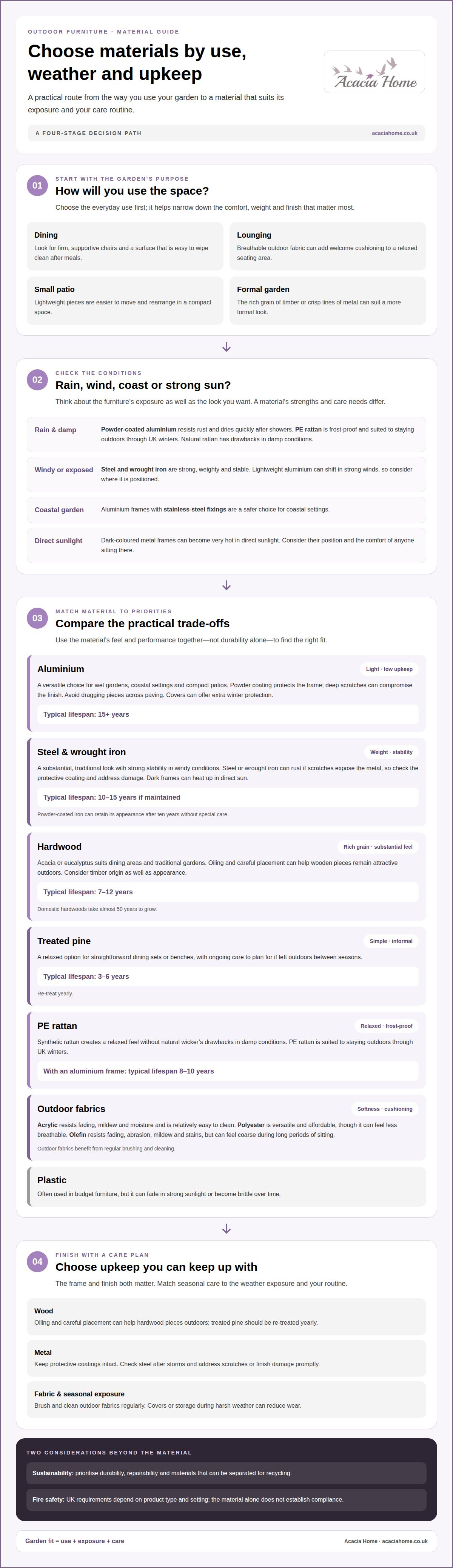
Aluminium is a versatile choice for wet gardens, coastal settings and compact patios, while steel and wrought iron offer more weight and stability. This materials for outdoor furniture comparison weighs each option against rain, wind and upkeep.
Aluminium garden furniture
Powder-coated aluminium suits rainy UK gardens because it resists rust and dries quickly after showers. Its lightweight frame is easy to move around a small patio, and aluminium chairs often weigh under 5 kg each. The trade-off is that pieces can shift in strong winds, so consider their position in exposed gardens.
For coastal gardens, aluminium frames with stainless-steel fixings are a safer choice. Powder coating adds a protective finish, but deep scratches can compromise it, so avoid dragging pieces across paving. Aluminium furniture has a typical lifespan of 15+ years and generally needs little maintenance. Covers can offer extra protection during winter.
Iron and wrought-iron furniture
Iron and wrought iron create a substantial, traditional look, with decorative frames that can bring character to a patio or garden terrace. Their weight helps them stay put in windy conditions, unlike lighter aluminium pieces. Powder-coated iron can retain its appearance after ten years without special care, though the finish still matters.
Steel or wrought-iron garden furniture has a typical lifespan of 10-15 years if maintained. Check the protective coating for scratches, as exposed metal can rust. Dark-coloured frames can also become very hot in direct sunlight, so consider their position and the comfort of anyone sitting there.
Stainless-steel and steel furniture
Steel offers strength and stability, making it a practical option for gardens where lightweight furniture might move in strong winds. Its main drawback is corrosion: a scratch or damaged protective coating can leave the frame vulnerable to rust. Inspect steel pieces after storms and address damage to the finish promptly.
Stainless steel is useful for outdoor fixings, particularly with aluminium frames in coastal areas. It differs from ordinary steel, which needs its protective coating intact to resist rust. For year-round use, consider how much upkeep each frame needs, whether covers suit the space, and whether summer sun will heat dark metal.
Use the materials for outdoor furniture comparison table to weigh your priorities: choose powder-coated aluminium for a light, low-maintenance option, or steel and wrought iron when weight and stability matter most.
Choosing a material based on garden style and furniture use
UK garden furniture commonly uses timber, aluminium, steel, synthetic rattan, plastic and outdoor fabrics. For sustainability, prioritise durability, repairability and materials that can be separated for recycling. UK fire-safety requirements depend on product type and setting, so the material alone doesn’t establish compliance.
Hardwood garden furniture
Hardwood brings a rich grain and substantial feel to dining areas, making it a natural match for traditional gardens. Acacia or eucalyptus furniture has a typical lifespan of 7-12 years. Domestic hardwoods take almost 50 years to grow, so consider the timber’s origin alongside its appearance. Oiling and careful placement can help wooden pieces remain an attractive addition outdoors.
Softwood garden furniture
Softwood, such as treated pine, suits a relaxed, informal garden and often appears in straightforward dining sets or benches. Treated pine furniture has a typical lifespan of 3-6 years, and it should be re-treated yearly. That regular upkeep matters if you want to keep it outdoors between seasons. Choose it for a simple look and plan for ongoing care.
Garden furniture fabrics
Fabric-covered chairs create a softer, more relaxed outdoor space than uncovered metal or timber seats. Acrylic fabric resists fading, mildew and moisture, and is relatively easy to clean. Polyester is versatile and affordable, though it can feel less breathable. Olefin resists fading, abrasion, mildew and stains, but can feel coarse during long periods of sitting.
Start with the garden’s purpose. For dining, choose firm, supportive chairs and a surface that’s easy to wipe clean after meals. For lounging, breathable outdoor fabric can add welcome cushioning. In a small patio, lightweight pieces are easier to rearrange, while a formal garden may suit the rich grain of timber or the crisp lines of metal.
Year-round use depends on both the frame and its care. PE rattan is frost-proof and suited to staying outdoors through UK winters, while outdoor fabrics benefit from regular brushing and cleaning. Covers or storage during harsh weather can reduce wear. Match the material to the garden’s exposure, then consider how much seasonal care fits your routine.
Budget furniture often uses plastic, treated pine or synthetic rattan, each with different trade-offs. Plastic can fade in strong sunlight or become brittle over time. Treated pine needs yearly re-treatment, while PE rattan with an aluminium frame has a typical lifespan of 8-10 years. Compare the material’s upkeep as well as its initial appeal when planning long-term use.
For a practical next step, browse outdoor furniture styles and consider which materials suit your garden’s look, use and seasonal routine.
What’s the most weather-resistant outdoor furniture?
For changeable UK weather, compare how each material handles moisture, sunlight and routine care. PE rattan, HDPE plastic and teak each withstand outdoor conditions differently, so consider their style and maintenance needs too.
Polyrattan and loom furniture
Polyrattan, often called PE rattan, is synthetic weaving made for outdoor furniture. It resists moisture and UV exposure, unlike natural rattan, which can weaken in damp conditions. PE rattan with an aluminium frame has a typical lifespan of 8-10 years. Lloyd Loom offers a woven look with a different heritage: its furniture-making process was developed around 1917.
HDPE plastics and teak
Modern HDPE plastics are recommended for UK outdoor spaces because they resist weather and need little maintenance. Choose UV-resistant plastic to help limit fading and brittleness in strong sunlight. Teak takes a different approach: its natural oils help it withstand sun, moisture, insects and rot. Left untreated, teak gradually turns silver; oiling preserves its honey-gold tone.
Resin wicker furniture
Resin wicker is a synthetic alternative to natural rattan. It doesn’t absorb water easily, reducing the risk of warping or mildew in wet weather. Dirt can collect between the woven strands, however, so brush debris from the weave when cleaning. Lower-quality resin wicker may become brittle over time, especially with constant sun exposure.
For PE rattan, clean the weave regularly to prevent trapped dirt from building up. A soft brush helps reach between strands, while a cover can reduce exposure during harsh weather or long periods without use. Check the frame and fittings after storms: loose joints can affect stability even when the weave remains sound.
Natural rattan is better suited to indoor furniture or sheltered spaces than exposed UK gardens. Rain and damp can weaken its fibres, warp them or lead to mould, while prolonged outdoor exposure can cause cracking. If you like its organic look outdoors, synthetic rattan offers a similar woven appearance with greater moisture resistance.
Teak suits gardens where natural ageing is part of the appeal, while regular oiling helps retain its warm colour. Minor checking can develop as teak ages. By contrast, HDPE plastic offers a more uniform finish and needs little maintenance, though UV resistance matters in sunny, exposed positions.
Choose PE rattan or HDPE for a low-care synthetic finish, teak for naturally weather-resistant timber, and natural rattan for indoor or sheltered spaces.
Weather resistance and protection from UK weather
Rust affects vulnerable metals, while moisture can encourage rot in untreated timber and mould on natural rattan. Sunlight can fade plastic, synthetic weaves and fabrics, so protect each material according to its main weakness.
Rust risks for outdoor furniture
Steel and wrought iron can rust if scratches expose the metal beneath their protective coating. Inspect the finish after storms, especially around joints and edges where water may linger. Repairing damaged coating helps limit exposure before corrosion spreads.
Aluminium resists rust, making it a practical choice for damp gardens. Powder-coated finishes add a protective layer, but deep scratches can compromise it. In coastal settings, salt and moisture make material choice especially important; aluminium frames with stainless-steel fixings are a safer combination.
Rot and mould risks
Untreated wood absorbs moisture, which can lead to swelling or decay. Regular sealing helps protect timber, while drying wooden furniture thoroughly after cleaning reduces lingering damp. Acacia and eucalyptus need oiling twice a year, and treated pine should be re-treated yearly.
Natural rattan absorbs moisture and can weaken, warp or develop mould in damp conditions. PE rattan resists moisture, but dirt trapped in its weave still needs brushing away. For an outdoor lounge set, clear debris from the weave and use a cover during harsh weather or extended periods without use.
Fading in British weather
Strong sunlight can fade plastic and make it brittle over time. Choose UV-resistant plastic to help reduce both effects, particularly on an exposed patio. Synthetic rattan is UV-stable, though lower-quality resin wicker may also become brittle as it ages.
Outdoor fabrics face both sun and moisture. Acrylic resists fading, mildew and moisture, while polyester also resists fading but can feel less breathable. Brush off dirt regularly, clean fabric as needed, and cover or store cushions during harsh weather or long periods without use.
Weather resistance and care needs
Year-round use depends on pairing each material with suitable care. PE rattan is described as frost-proof for UK gardens, while teak’s natural oils help it withstand weathering. Teak can develop minor checking as it ages, and its colour turns silver unless it’s oiled.
Protective covers and winter storage can reduce wear on furniture that stays outdoors. After storms, check for loose fittings, scratches and trapped debris. Stainless-steel furniture benefits from cleaning with cleaner or polish once or twice a year to help prevent rust film. These simple steps address different risks rather than treating every material alike.
For British weather, prioritise the main exposure: moisture calls for rot-resistant materials and sound finishes, while strong sunlight favours UV-resistant surfaces. Choose care routines you can maintain, from yearly treatment for pine to regular cleaning of woven PE rattan.
Comparing furniture materials by style and use
The right material should suit the garden’s character as well as its practical demands. Compare how each option feels as seating, how much weight it adds, and whether cushions or surface care fit your routine.
For a classic dining area, timber brings visible grain and a warm, natural finish. Teak can last 20 to 30 years outdoors, while acacia or eucalyptus furniture has a typical lifespan of 7-12 years. These woods suit a garden where natural variation feels welcome. Their appearance changes with exposure and upkeep, so consider whether you prefer maintained colour or gradual weathering.
Metal creates a distinct mood. Aluminium has a clean, contemporary look and is easy to move when a patio layout needs changing. Steel and wrought iron feel more substantial, with traditional or decorative frames that can anchor a formal seating area. Dark metal may heat up in direct sun, so consider shade and comfort when positioning seating.
Woven synthetic rattan softens a modern outdoor space, bringing a relaxed lounge feel without natural rattan’s sensitivity to damp. PE rattan with an aluminium frame has a typical lifespan of 8-10 years. Plastic furniture can offer simple, lightweight seating, but strong sunlight may fade it or make it brittle over time. Match the material to the spot where it will sit.
Use shapes and textures to make materials work together. A timber dining table can balance metal chairs, while cushions add colour and a softer surface. For a sculptural outdoor table, glass-reinforced concrete is dense and stable under heat. It makes a strong statement, but suits a deliberate focal point better than furniture that needs frequent rearranging.
Measurements matter as much as appearance for dining. Allow around 60 cm of table width per person, plus at least 70 cm of clear space behind each chair. For comfortable movement, a four-seat round set needs a patio roughly 2.5 m by 2.5 m. These clearances help determine whether heavier pieces or flexible seating suit your layout.
For a compact balcony, prioritise light pieces that are easy to reposition; for a windy terrace, heavier steel can feel steadier. A family dining space benefits from wipe-clean surfaces, while a lounge corner may call for cushions and tactile fabrics. Choose by activity first, then narrow the materials by style, weight and care.
Explore outdoor furniture styles to find pieces that suit your garden’s layout and the way you use it.
Acacia Home
Acacia Home is a natural next step when you’re ready to bring your preferred style to your home’s seating. The range includes Occasional Chairs, Dining Chairs, Footstools, Chaise Longues and Window Seats, with options for dining, relaxing and adding a considered finishing touch.
Use the comparisons in this guide to clarify which qualities matter most, such as easy care, lasting materials or a particular look. Then explore seating that complements your wider home style, whether you’re choosing a chair for a quiet corner or planning a dining space.
For help with your next furniture choice, contact Acacia Home.
Make your outdoor space your own
Let the way you use your garden guide your final choice. Use materials for outdoor furniture comparison as a practical framework: weigh the atmosphere you want against the care each option needs. A thoughtful comparison can help narrow the field, but your furniture should also suit your routines and make time outside more inviting.
Acacia Home offers Occasional Chairs, Dining Chairs and Footstools to help shape comfortable, considered spaces throughout your home. For guidance on choosing pieces that complement your style, contact Acacia Home for advice.
Bring your materials for outdoor furniture comparison to a close by choosing pieces that make your outdoor space somewhere you love spending time.
Frequently Asked Questions
The Verdict: Which Should You Choose?
Choose the material that best fits your garden’s exposure, daily use and preferred look. For a coastal dining area, prioritise corrosion-resistant frames and fixings; for a sheltered lounge corner, comfort and fabric may matter more. If furniture needs frequent moving, consider its weight and layout flexibility. Make a short list of must-haves, such as low upkeep or a natural finish, then compare suitable materials against those priorities.
What is Wicker?
Wicker describes a weaving style, not one specific material. The strands may be natural, such as rattan, or synthetic, such as resin or PE. That distinction matters outdoors: natural wicker can absorb damp, while synthetic weaves are designed to resist moisture. Check what the weave is made from before choosing a piece, especially if it will sit in an exposed garden rather than a sheltered or indoor space.
What's the best outdoor furniture to leave outside year-round?
PE rattan, teak and aluminium are practical candidates for year-round outdoor furniture, each with different care needs. PE rattan is described as frost-proof for UK conditions, while teak’s natural oils help it withstand outdoor exposure. Aluminium resists rust. Position furniture to avoid standing water, clear away debris, and use covers or winter storage during harsh weather to reduce wear on finishes, frames and cushions.
How do teak, acacia and eucalyptus compare for outdoor furniture?
Teak has the longest stated outdoor lifespan of these three woods, at 20 to 30 years. Acacia or eucalyptus typically lasts 7-12 years. Teak’s natural oils help it resist weathering, insects and rot, while acacia and eucalyptus benefit from oiling twice a year. Choose teak if longevity and natural weather resistance lead your priorities; consider acacia or eucalyptus for a different grain and appearance.
How do aluminium, steel and wrought iron garden furniture compare?
Aluminium is light and rust-resistant, making it suitable for easy rearrangement and wet settings. Steel is strong and stable, but its protective coating needs attention because damage can expose it to rust. Wrought iron offers a weightier, traditional appearance. For a coastal garden, aluminium frames with stainless-steel fixings are a safer combination than untreated steel components.
How does synthetic rattan compare with natural rattan for outdoor use?
Synthetic rattan, including PE rattan, is better suited to exposed outdoor conditions because it resists moisture and UV exposure. Natural rattan absorbs damp and can weaken, warp or develop mould, so it is better suited to indoor or sheltered use. For a woven garden seat, brush dirt from synthetic strands and protect the furniture during long periods of non-use to keep the weave clear.
Which outdoor furniture materials are most weather-resistant in the UK climate?
Teak, cast aluminium and modern HDPE plastics are strong choices for weather resistance, each with a distinct look and care profile. Teak weathers naturally, while aluminium offers a rust-resistant frame. HDPE provides a synthetic alternative; UV-resistant plastic helps limit fading and brittleness in sunlight. In coastal settings, aluminium frames paired with stainless-steel fixings are a useful combination.
How much does garden furniture cost by material in the UK?
There isn’t a single price for each material, because the total depends on the furniture piece and its construction. A compact chair differs from a dining set, and frame design, weave, finish and cushions also affect the final cost. Compare complete pieces with similar uses and components, rather than judging timber, metal or synthetic furniture by material alone. This gives you a more meaningful like-for-like comparison.