
Best Wood for UK Garden Furniture: 2026 Practical Guide
The timber that looks most at home in your garden may not be the one that best suits your routine. In the UK, summer showers, damp spells and winter frost all affect how outdoor furniture weathers. Choosing the best wood for outdoor furniture uk gardens means weighing appearance, durability, upkeep and value against the conditions where you’ll use it.
It’s reasonable to want furniture that feels welcoming without taking on more maintenance than you can manage. This guide compares teak, acacia, oak and eucalyptus, with practical points to consider for a UK garden. You’ll learn how to assess each wood, what to look for in construction and finish, and how to match your choice to your setting and preferred style. Whether you’re planning a dining spot or an outdoor living area, these pointers can help you choose with confidence. You can also explore Acacia Home’s teak garden furniture and solid acacia wood furniture.
Table of Contents
What makes wood suitable for outdoor furniture in the UK?
Wood is suitable for outdoor furniture when its natural properties, construction, finish and care needs match the conditions it will face and the way you plan to use it. A table used daily on an exposed terrace has different demands from a bench beneath a covered patio. The best wood for outdoor furniture uk isn’t decided by species alone: the whole piece and its setting matter.
Timber brings natural qualities; design, finish and upkeep affect how well those qualities serve outdoors. For example, Teak is known for natural resistance to water, but even suitable timber benefits from construction and care that fit its use.
How UK weather changes the demands on garden furniture
Outdoor timber repeatedly gets wet and dries again. As moisture levels change, wood can expand and contract, putting stress on surfaces, joints and finishes over time. Frost is another consideration: water held in small gaps or exposed joints may freeze, so the way furniture sheds water and dries matters as well as the timber.
Conditions vary around the garden. A sheltered patio may protect furniture from direct rain and wind, while an exposed lawn or terrace leaves it more open to showers, damp air and seasonal changes. Consider where the furniture will sit throughout the year, not just on a sunny afternoon. Shade can slow drying, so sheltered doesn’t always mean consistently dry.
What “durable outdoors” should mean when comparing wood
Assess durability by asking three separate questions: will the furniture feel structurally sound for its intended use; how will the timber respond to outdoor exposure; and how much ongoing care are you willing to give it? These qualities are related, but they aren’t interchangeable. Naturally weather-resistant wood still needs sound joints and a suitable finish, while a more demanding timber may suit a sheltered position and an owner who is happy to maintain it.
Colour change is not automatically a sign of failure. Some wood gradually develops a softer, weathered appearance, which may be part of its appeal. Other owners prefer to preserve a more consistent tone through regular care. Decide which look you prefer before choosing, and consider whether you’ll be content with the timber’s changing character in your garden.
Keep those preferences in mind as you compare materials. The right choice balances exposure, construction and maintenance with the atmosphere you want outdoors.
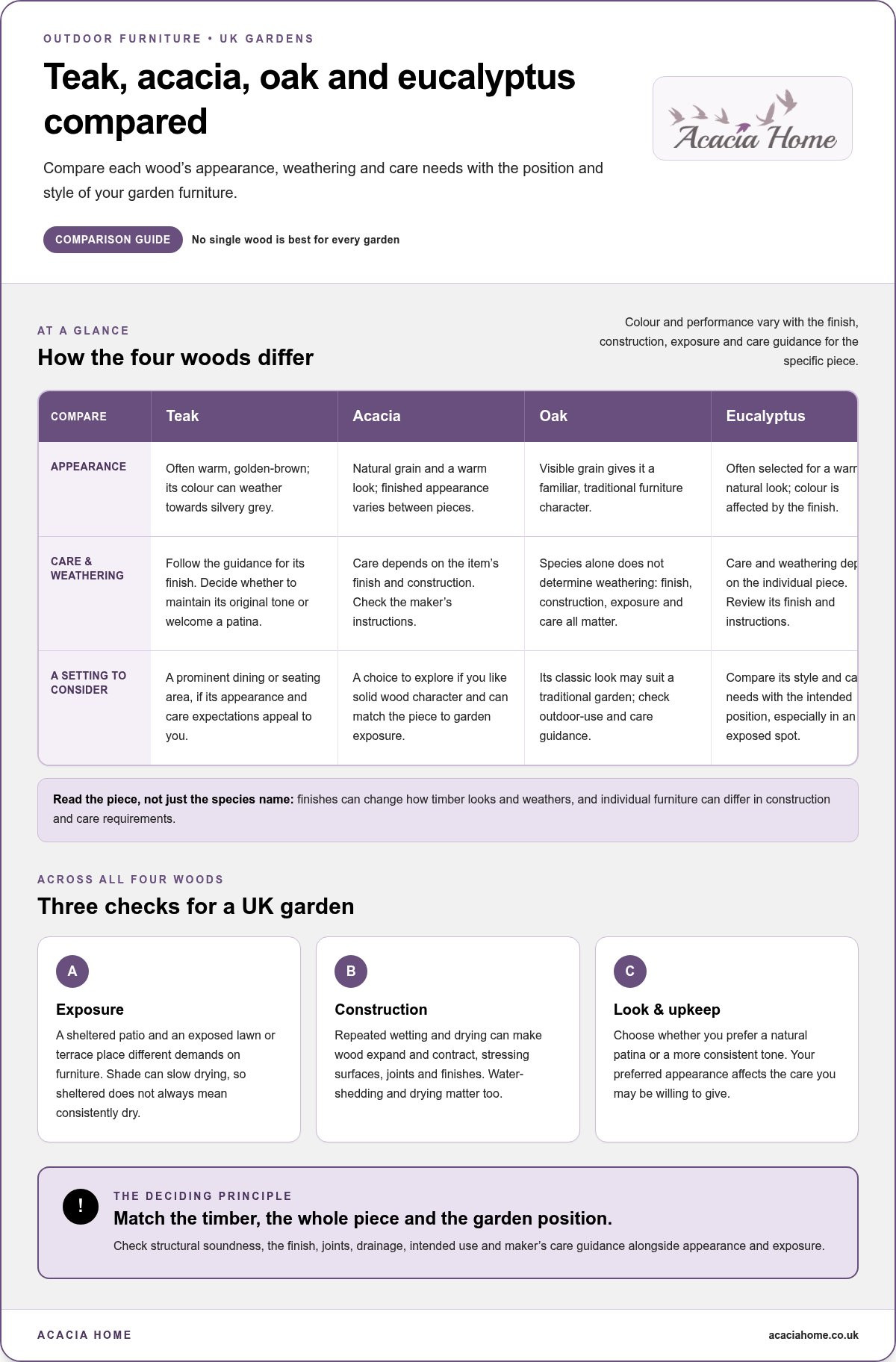
Teak, acacia, oak and eucalyptus: how outdoor furniture woods compare
Each wood has a different character, but its name alone can’t tell you how a particular piece will behave outdoors. Finish, construction, exposure and the maker’s care guidance all affect the comparison. No wood is automatically best for every garden; choose one whose appearance and care needs suit your setting.
Use this table as a starting point, then look at the details for the furniture you’re considering. Colour descriptions are general, and finishes can change how timber looks and weathers.
What to know about teak and acacia garden furniture
Teak is commonly associated with outdoor furniture and a golden-brown tone that can weather to silver-grey. For an overview of teak’s characteristics, see wikipedia.org. Acacia has a distinct natural grain, but neither species guarantees identical performance across every design or finish. Compare the care guidance and intended placement before choosing. If teak suits your priorities, browse the Acacia Home garden furniture range.
Where oak and eucalyptus fit into the comparison
Oak’s pronounced grain can give furniture a traditional presence, while eucalyptus offers another warm, natural look. These are style cues, not durability rankings. For either wood, assess the piece’s construction, finish and care instructions alongside where it will sit. A sheltered patio and an exposed terrace can place very different demands on the same material.
Which outdoor furniture wood suits your garden and priorities?
Start with how you want to use your outdoor space, rather than looking for one universal winner. The best wood for outdoor furniture uk depends on the balance you want between appearance, care and where each piece will sit. Use the prompts below to narrow your shortlist, not as guarantees of performance or promises of maintenance-free furniture.
Choosing wood for an exposed or sheltered garden
A compact patio can be highly exposed if it has little shelter, while a larger garden may offer a covered corner for dining or relaxing. Consider the exact position, not just the size of the space. If the furniture will stay outside, think about how you’ll protect it and whether you have room to move or store it in winter. A cover or sheltered position can influence your choice, but doesn’t remove the need to follow the care instructions.
For general garden-planning inspiration alongside your furniture decisions, explore RHS gardening guidance.
Balancing appearance, upkeep and long-term value
Picture the furniture after a season outdoors. Would a naturally evolving finish add character, or would you rather put in the care needed to keep its appearance more consistent? Your answer helps you weigh the timber and finish together and set realistic expectations for ongoing attention.
Value isn’t only about first impressions. Consider how often you’ll use the piece, whether it suits the space and whether its care routine fits your habits. A beautiful choice that feels like a chore may be less rewarding than one whose changing character and upkeep feel right for you. Once your priorities are clear, browse outdoor furniture options with those preferences in mind.
How to choose and care for wooden outdoor furniture in the UK
Start with your garden and everyday habits, then assess the furniture itself. Use this checklist to compare the wood, construction and care routine together. This is a more practical way to find the best wood for outdoor furniture uk than choosing by appearance alone.
Assess the position. Note how much direct rain and wind the furniture will face, whether it sits under cover and how quickly the spot dries.
Think about its use. A regularly used dining table, occasional extra seating and a lounge area each place different demands on furniture. Consider how often you’ll move or rearrange it, too.
Look closely at construction. Check that joints feel secure and consider whether the design lets water drain rather than collect on flat surfaces or in crevices.
Review the finish. Find out how the timber is finished and whether its appearance is expected to change. Follow the care instructions for that specific piece.
Be realistic about upkeep. Decide whether routine cleaning and seasonal attention feel manageable, and whether you have somewhere suitable to cover or store the furniture during poor weather.
Questions to answer before choosing a timber
Picture the furniture in its actual spot: an exposed terrace, a sheltered patio or a small balcony with limited storage. Will it serve meals, provide everyday seating or create a place to lounge? Match the piece to that use, then consider how often you’re willing to clean it and whether a gradual change in colour will appeal. These answers help narrow your choice without assuming one timber suits every garden.
Simple habits that help wooden furniture stay inviting
Clean furniture in line with the maker’s instructions, and remove debris that could hold moisture against the surface. A suitable cover or sheltered storage can limit exposure in poor weather, but follow the product guidance for covering and storage. Don’t apply oil or another treatment on a fixed schedule by default: the right approach depends on the wood and finish. For teak, follow the specific care advice supplied with the furniture.
Small details count. Sound joints, surfaces that don’t trap standing water and a finish suited to the piece all contribute to how it performs outdoors, alongside the wood species. If you’re considering teak, explore teak garden furniture and compare each piece with your garden’s exposure and your care preferences.
Explore teak garden furniture after finding your best-fit wood
The right outdoor furniture material balances your garden’s exposure, the look you love and the care you’re happy to give. There isn’t one answer to the question of the best wood for outdoor furniture uk gardens: a timber that feels right beneath a sheltered pergola may not suit your preferences for furniture left fully exposed. Your shortlist should reflect how you’ll use the space as well as how you want it to look.
If teak’s natural appearance appeals to you, consider it alongside the other woods in this guide. Acacia Home offers teak garden furniture to explore as you plan a dining area or a relaxed place to sit outdoors. As with any timber, the right choice depends on the particular piece, its finish and its care guidance.
Why teak may appeal to your outdoor space
Teak may suit a garden where you’re drawn to a warm, natural wood aesthetic. Consider whether you’d enjoy the way its appearance can evolve outdoors or prefer to follow a care routine aimed at maintaining a more consistent look. Neither preference is better; what matters is understanding the upkeep involved. For practical pointers, read the teak furniture care guide before making teak part of your outdoor plans.
A considered next step for choosing garden furniture
Before browsing, revisit the questions that shape a good material match: where will the furniture sit, how often will you use it, and what kind of cleaning or seasonal care feels manageable? Keep your preferred colour and attitude to weathering in mind, too. These priorities can help you assess furniture as a whole rather than choosing on timber name alone.
Once you have a sense of what will work in your garden, browse Acacia Home’s garden furniture with your setting, style and care preferences in mind.
Choose wood that feels right for your garden
The best wood for outdoor furniture uk gardens depends on more than the timber species. Consider how exposed your furniture will be, whether you prefer a natural weathered look and how much care fits comfortably into your routine. Teak, acacia, oak and eucalyptus each bring a different appearance, while construction, finish and placement also shape a piece’s suitability for outdoor use.
A considered choice balances style with everyday use and upkeep, so your garden furniture feels inviting season after season. Acacia Home offers teak garden furniture and solid acacia wood furniture for you to explore as you plan your outdoor space.
Ready to find a piece that suits your garden and priorities? Explore Acacia Home’s teak garden furniture and take the next step towards creating an outdoor space you’ll love spending time in.
Frequently Asked Questions
What is the best wood for outdoor furniture in the UK?
There isn’t one best wood for every garden. The best wood for outdoor furniture uk depends on how exposed the furniture will be, the look you prefer and how much care you’re willing to give it. Compare teak, acacia, oak and eucalyptus by appearance and the care guidance for each piece. Construction, joints, finish and drainage matter too, so assess the whole item rather than choosing by species alone.
Is teak the best wood for garden furniture?
Teak can be a good option if its natural appearance and care expectations suit your garden, but it isn’t automatically the best choice for everyone. Consider whether the furniture will be sheltered or exposed, and whether you’re content for its colour to change over time or prefer to maintain its original look. Follow the care instructions for the specific piece. Acacia Home offers teak garden furniture to explore as part of your comparison.
Is acacia wood suitable for outdoor furniture in the UK?
Acacia can be considered for outdoor furniture, but suitability depends on the individual item, including its construction, finish and intended placement. Look for care guidance that explains how to clean and protect the piece, and consider whether your garden is sheltered or exposed to rain and damp. Acacia Home offers solid acacia wood furniture; compare its specific details and care requirements with your preferences before choosing.
Can wooden garden furniture stay outside all year in the UK?
Some wooden furniture may be kept outside, but don’t assume every piece is intended to remain outdoors in all conditions. Rain, damp and seasonal weather expose timber and finishes to repeated changes. Follow the maker’s instructions for placement, covering and storage. If you have limited storage, factor that in before buying. Moving furniture beneath shelter during poor weather may inform your choice, but doesn’t remove the need for care.
How do I protect wooden outdoor furniture from rain and damp?
Follow the care instructions provided for your furniture, as suitable cleaning and protection vary by wood and finish. Keep surfaces clear of debris that can hold moisture, and consider a suitable cover or sheltered storage during poor weather. Position the piece where water can drain rather than collect. Avoid applying oils or other treatments by habit; use only guidance suited to that specific item.
What is the difference between teak and acacia garden furniture?
Teak and acacia are different timber choices with distinct grain and appearance, though the exact look varies between pieces and finishes. Teak is often associated with a warm-toned appearance that can weather over time, while acacia’s visible grain gives it its own natural character. Don’t assume one always needs less care or performs better. Compare the furniture’s construction, finish, placement guidance and care instructions.
Does outdoor wooden furniture need treating every year?
No, annual treatment isn’t a universal rule for outdoor wooden furniture. Whether a piece needs oil or another treatment depends on its timber, finish and maker’s care guidance. Some owners may choose to maintain a particular appearance, while others may be comfortable with natural colour changes. Check the instructions before applying a product, and don’t use a fixed schedule that may not suit the furniture.
Comments