
Best Ottoman Materials: 2026 Comprehensive Buying Guide
Imagine sinking into your favourite occasional chair after a long day, only to hesitate before resting your feet on a centrepiece you're terrified to mark. Finding the best material for ottoman use shouldn't feel like a compromise between high-end style and the realities of a busy British home. We believe a living space is an extension of your identity, where luxury should be lived in, not just admired from afar. You've likely felt that familiar worry that a beautiful linen might crease too quickly, or perhaps you've felt lost amongst technical talk of Martindale rub counts and the 2025 fire safety updates.
It's a common dilemma for those of us who value both craftsmanship and practicality. This guide is here to provide total confidence in your next investment, promising to help you discover the ideal upholstery for your lifestyle. We'll explore everything from the indulgent touch of luxury velvets to the sturdy grace of textured tweeds and performance fabrics, helping you find a perfect balance between durability and sensory appeal. You'll learn how to select a material that feels sophisticated and complements your occasional seating, ensuring your ottoman remains a durable, beautiful heart of the home for years to come.
Table of Contents
Understanding Ottoman Materials: Aesthetics vs. Durability
An ottoman is rarely just one thing. It's a sanctuary for tired feet, a makeshift library for coffee table books, and often an extra seat for friends during a Sunday roast. Because of this multi-tasking nature, selecting the best material for ottoman upholstery is a more nuanced decision than choosing fabric for a simple dining chair. The material you choose defines the "visual weight" of the piece; a dark, heavy velvet anchors the room with a sense of permanence, whilst a light linen makes the space feel airy and unburdened. Historically, the term Ottoman fabric referred to a specific ribbed weave, but today, your choices are almost limitless, ranging from heritage-inspired silks to robust modern blends.
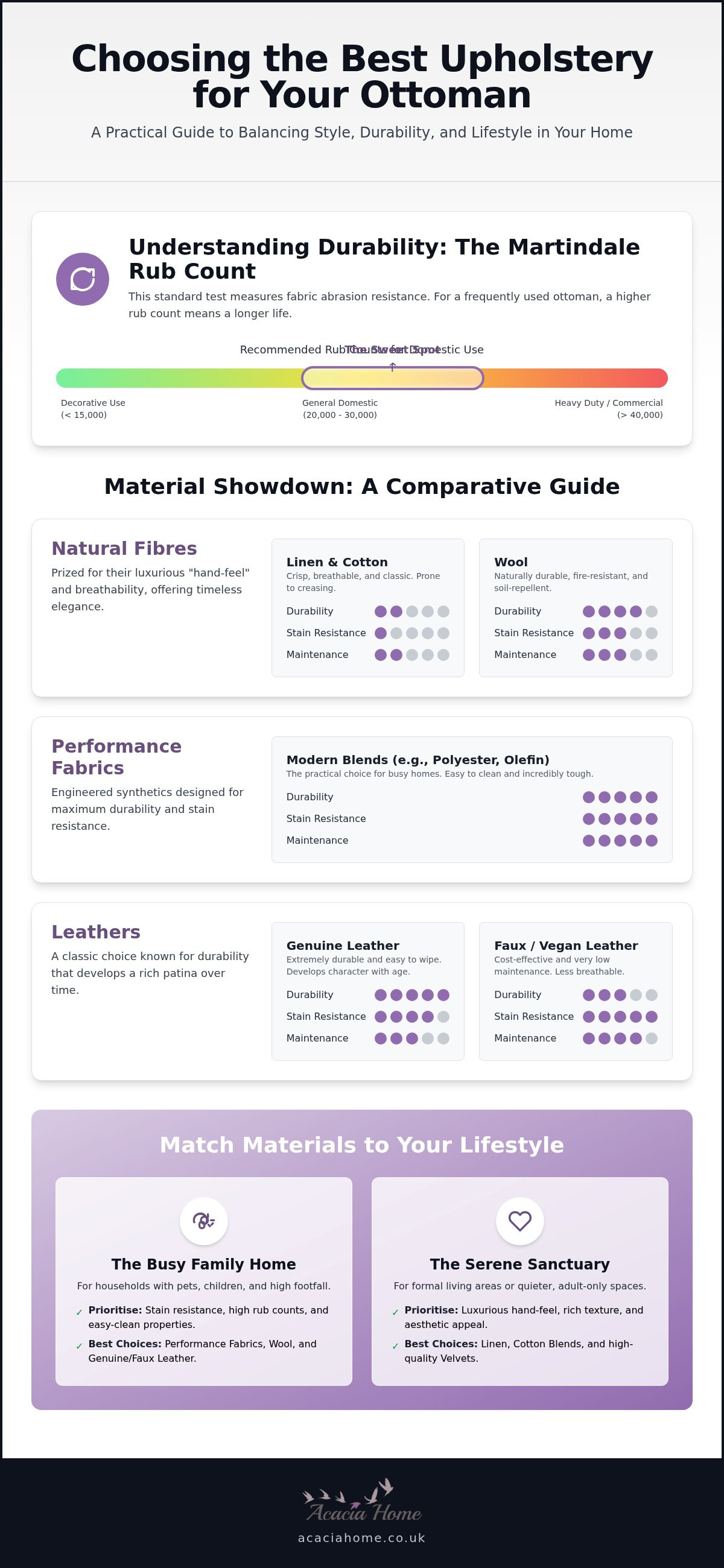
The Martindale Rub Count Explained
The Martindale Rub Count is a standardised test that measures the durability of upholstery by recording how many cycles of abrasion a fabric can withstand before showing significant wear. In the UK, we look for fabrics that can handle the rigours of daily life without losing their lustre. For a domestic setting where the ottoman serves as a frequent footrest, 25,000 rubs is the ideal "sweet spot". It ensures the fibres won't thin or pill after a few months of contact with denim or slippers. Choosing a fabric below this threshold might lead to premature wear, especially on the corners where the tension is highest. High-traffic homes with pets or children might even consider "contract grade" fabrics, which often exceed 40,000 rubs, providing ultimate peace of mind.
Material and Style: From Louis XVI to Modern Minimalist
Texture dictates the atmosphere of your living room. Heavy, opulent velvets or intricate damasks are natural partners for the ornate, hand-carved frames of Louis style chairs, creating a cohesive sense of heritage and luxury. If your room is built around modern minimalism, a flatter weave or a subtle wool blend might be more appropriate. It's vital that the material complements your existing occasional chairs, acting as a bridge between different furniture styles rather than a conflicting element. When you find the best material for ottoman use that matches your chair's undertones, the entire room feels curated and intentional. Whether you prefer the tactile warmth of a brushed cotton or the sleek, cool touch of leather, your choice should reflect how you truly live in your space.
Natural Fibres: The Luxury Choice for Elegance
Natural fibres offer a tactile richness that synthetic alternatives often struggle to replicate. There's a unique sensory appeal in the way organic materials breathe, keeping you cool in the summer whilst providing a gentle warmth during the colder British months. For many, the best material for ottoman upholstery is one that feels authentic to the touch, carrying a sense of heritage and craftsmanship that grounds a room. Whilst synthetics are often chosen for their utility, natural fibres like cotton, linen, and wool are selected for their "hand-feel" and the effortless way they drape over a frame, creating a soft, inviting sanctuary within your home.
Linen and Cotton: The Timeless Duo
Linen and cotton remain firm favourites for high-end interiors because of their crisp, matte finish and exceptional breathability. Linen is particularly celebrated for its distinctive, slightly rumpled charm, making it a staple for coastal or classic country house aesthetics. It's important to remember that 100% linen is prone to creasing; it's a "living" fabric that changes with use. If you prefer a more pristine look, cotton blends are often a better choice. These blends combine the softness of cotton with a small percentage of synthetic fibre to improve elasticity and reduce wrinkling. These materials are best suited for formal sitting rooms or decorative window seats where the visual impact of the fabric is the priority.
Wool: The Durable Natural Alternative
Wool is a natural powerhouse for the modern home. It's inherently fire-resistant, meeting strict UK safety standards without the need for heavy chemical treatments, and its natural oils make it surprisingly soil-repellent. If you're planning to use a large ottoman as a central coffee table, wool is an excellent candidate. Its fibres are incredibly resilient, meaning they'll spring back into shape even after you've rested heavy trays or books on the surface for hours. From the sleek, smooth finish of a worsted wool to the trendy, chunky texture of a bouclé, wool adds a layer of sophisticated warmth that complements any occasional chair.
Whilst natural fibres require a little more care than their synthetic counterparts, their beauty is often worth the extra attention. They age gracefully, developing a character that feels personal to your home. You might find that exploring our range of hand-picked footstools and ottomans provides the perfect inspiration for choosing a fabric that feels as good as it looks. Whether you're drawn to the cool elegance of linen or the cosy embrace of wool, these materials ensure your furniture remains a cherished centrepiece for years.
Performance Fabrics and Synthetics: Built for Modern Life
There's a lingering misconception that synthetic fibres are a compromise, a choice made for budget rather than beauty. In reality, the most sophisticated modern interiors now rely on advanced polyester and acrylic blends to achieve a look that is both opulent and resilient. These materials can now mimic the delicate slub of linen or the tactile warmth of wool with astonishing accuracy. For many households, these are arguably the best material for ottoman upholstery because they offer a level of colour fastness and structural integrity that natural fibres sometimes lack. These performance fabrics aren't just about utility; they're about enjoying your home without the constant shadow of "what if".
For families with young children or spirited pets, the inclusion of "easy-clean" technology is a game-changer. Modern manufacturing treats these fibres at a molecular level, allowing liquid to bead on the surface rather than soaking into the core. This means a spilled cup of tea or a muddy paw print doesn't have to be a disaster. When considering the best material for ottoman use in a sun-drenched conservatory or a busy lounge, these performance blends provide the peace of mind that your investment is protected against both spills and UV fading. You can embrace a lighter colour palette that you might have previously avoided, knowing the fabric is engineered to endure.
Velvet: The Ultimate Statement Material
Whilst silk and cotton velvets are undeniably luxurious, they are notoriously delicate and prone to "bruising" or permanent crushing. Polyester velvet is the hidden gem of the design world. It provides the same deep, light-catching sheen and buttery softness but with significantly higher durability. It's an ideal choice for an ottoman that doubles as extra seating. To keep your velvet looking its best, a gentle brush with a soft-bristled clothes brush once a week will maintain the pile and prevent it from looking flat. This simple habit preserves the fabric's lustre and ensures it remains a soft, inviting centrepiece.
Outdoor Materials: Teak and Weather-Proof Fabrics
Extending your living space into the garden requires materials that can withstand the unpredictable British weather. Teak frames are the gold standard for outdoor furniture, but they require specific fabric pairings to truly shine. High-quality acrylic fabrics are designed to resist mildew and moisture, making them the perfect companion for a teak footstool. These fabrics feel remarkably soft to the touch, bridging the gap between indoor comfort and outdoor endurance. If you're investing in garden seating, understanding how to care for teak garden furniture ensures your outdoor retreat remains as elegant as your interior for years to come.
Leather vs. Faux Leather: The Practical Comparison
Leather is frequently heralded as the gold standard for furniture that sees heavy, daily use. It's often the best material for ottoman designs that serve as the primary resting place for feet, offering a level of resilience that few fabrics can match. Unlike natural fibres that might thin or performance blends that can eventually pill, high-quality leather is famously durable. It's a material that doesn't just last; it matures. However, it's worth considering the tactile experience. Leather can feel quite cool to the touch on a crisp British morning, and it lacks the "grip" of textured fabrics, which can occasionally lead to trays or cushions sliding more easily than they would on wool.
Genuine Leather: Patina and Longevity
If you're looking for a piece that tells a story, genuine leather is unrivalled. Full-grain leather is the highest quality, retaining the natural character of the hide, whilst top-grain and corrected leathers offer a more uniform appearance. The true appeal lies in the patina. Over time, the leather develops a soft lustre and unique character lines that reflect your life at home. Maintenance is straightforward; a simple wipe with a soft, damp cloth handles most daily dust. To keep the hide supple and prevent it from drying out near radiators, a quick treatment with a leather conditioner every six months is all it takes to ensure your investment remains beautiful for decades.
Faux Leather: Style without the Upkeep
Modern polyurethane (PU) fabrics have undergone a remarkable evolution, moving far beyond the "plastic" feel of the past. These vegan-friendly alternatives now offer a soft, pliable touch and a realistic grain that can fool even the most discerning eye. For many, faux leather is the best material for ottoman upholstery because it provides total colour consistency. This makes it much easier to coordinate with your existing occasional chairs or Louis style seating. It's an exceptionally practical choice for contemporary storage footstools, where you want a sleek, modern finish that resists staining and requires almost zero specialised care.
Choosing between the two often comes down to your personal philosophy on aging versus perfection. Genuine leather embraces the beautiful imperfections of a natural product, whilst faux leather maintains its "day one" appearance for longer. If you're ready to find a piece that balances this timeless appeal with modern practicality, explore our curated selection of luxury ottomans and footstools to find the perfect match for your sanctuary.
Matching Materials to Your Lifestyle and Home
Choosing the right upholstery is about more than just a swatch; it's about how that piece will weather the beautiful chaos of your daily life. To find the best material for ottoman longevity, you must look beyond the showroom floor and imagine the piece in your own sanctuary. Consider the light that pours through your windows; natural fibres like silk or 100% cotton can be sensitive to UV rays, whilst performance blends are specifically engineered to resist fading. If your ottoman will sit in a sun-drenched bay window, this distinction becomes the difference between a piece that ages with grace and one that loses its vibrancy within a single season. Finding a balance between your aesthetic dreams and the practical needs of your household ensures your furniture remains a source of pride rather than a source of worry.
The Best Material for Pet Owners
For those of us with four-legged companions, the weave of the fabric is just as important as the fibre itself. Tight weaves, such as high-quality microfibre or the robust polyester velvets we explored previously, are often the best material for ottoman use in pet-friendly homes. Loose weaves like linen or certain open-knit tweeds act as magnets for claws, leading to unsightly snags and pulled threads. Selecting a material with a subtle pattern or a multi-tonal yarn can also help organise a space where pet hair is less visible between cleans. If your lifestyle is particularly active, look for designs that offer a level of stain resistance that allows for quick spot-cleaning, keeping your centrepiece looking fresh despite the occasional muddy paw.
Formal vs. Multi-Functional Spaces
The atmosphere of the room should dictate the weight and texture of your fabric. In a formal drawing room, perhaps paired with elegant Louis style chairs, a refined velvet or a smooth wool blend creates a sense of heritage and occasion. These spaces allow for more delicate textures that emphasise craftsmanship over sheer utility. Conversely, a family "snug" requires a robust fabric that can handle being a footrest, a game table, and a seat all at once. You can use texture to create a centre of interest in a neutral room by choosing a chunky bouclé or a deeply grained leather, providing a tactile contrast that makes the space feel layered and intentional.
Final Checklist Before You Order
Durability: Does the Martindale rub count meet your household's traffic levels?
Cohesion: Will the colour and texture complement your existing occasional chairs or window seats?
Resilience: Have you considered the "Pet & Child" test for snagging and spill resistance?
Environment: Is the material suited to the amount of direct sunlight the room receives?
Bringing Elegance and Comfort into Your Home
Choosing the best material for ottoman use is a journey of balancing your personal aesthetic with the practical rhythms of your household. Whether you've been drawn to the tactile warmth of a wool blend or the timeless, maturing patina of genuine leather, your choice transforms a simple piece of furniture into a cherished sanctuary. By considering factors like the Martindale rub count and the specific needs of your pets or sun-drenched rooms, you've taken the first step toward an investment that remains beautiful for years.
At Acacia Home, our family-run team takes immense pride in offering pieces that marry British elegance with daily durability. We've expertly curated our range to ensure every fabric and frame meets our high standards for craftsmanship and style. If you're ready to find a piece that perfectly complements our signature Louis style range or your existing occasional chairs, we invite you to explore our curated collection of luxurious ottomans and footstools. We're excited to help you find the ideal centrepiece that reflects your unique identity and brings lasting joy to your living space.
Frequently Asked Questions
What is the most durable material for an ottoman used as a coffee table?
Leather is widely considered the most durable choice for ottomans serving as coffee tables because it naturally resists spills and handles the weight of heavy trays without stretching. High-performance wool blends are also excellent as they naturally repel soil and maintain their shape over time. If you're looking for the best material for ottoman use in a high-traffic lounge, these options provide the resilience needed for daily multi-functional use whilst maintaining a sophisticated appearance.
Is velvet a good choice for an ottoman if I have pets?
Synthetic polyester velvet is a surprisingly good choice for pet owners because its tight weave is resistant to snagging from claws. Unlike looped fabrics or loose linens, pet hair is easily brushed off the surface of a velvet pile. It's a durable yet luxurious option that withstands the occasional muddy paw better than delicate natural silks or cotton velvets, which are prone to permanent marking and bruising from moisture or pressure.
How do I clean a linen ottoman without damaging the fabric?
You should always blot spills immediately with a clean, dry white cloth rather than rubbing, as friction can cause linen fibres to pill or distort. For deeper cleaning, use a mild, water-free solvent or a specialised linen foam cleaner, but always test a small, inconspicuous area first. Because linen is a natural fibre prone to shrinking, professional upholstery cleaning is recommended for significant stains to ensure the fabric retains its crisp, elegant structure and fit.
Can I use an indoor ottoman on my patio if it has a teak frame?
You shouldn't use a standard indoor ottoman outside, even if it features a durable teak frame, because indoor upholstery isn't designed to resist UV fading or mildew. Teak is naturally weather-resistant, but indoor fabrics will quickly deteriorate when exposed to damp conditions or direct sunlight. For your garden, ensure the piece is upholstered in a dedicated outdoor acrylic fabric that is specifically engineered to repel moisture and resist the unpredictable British weather throughout the seasons.
What Martindale rub count should I look for in a family home?
In a busy family home, you should look for a Martindale rub count of at least 25,000 for general domestic use. If your ottoman will be used daily as an extra seat or a primary footrest, choosing a fabric with a count of 30,000 to 40,000 provides even greater longevity. This rating ensures the material can withstand thousands of cycles of abrasion from denim, toys, and pets before the fibres show significant signs of thinning.
Are natural fabrics like cotton better than synthetic polyester?
Neither is objectively better, as the choice depends on whether you prioritise sensory "hand-feel" or daily durability. Natural cotton offers exceptional breathability and a soft, authentic touch that suits formal spaces beautifully. However, modern synthetic polyester is often the best material for ottoman longevity in active households because it's more resistant to staining, fading, and pilling. Many high-end designs now use blends to capture the beauty of natural fibres with the resilience of synthetics.
How do I prevent my ottoman fabric from fading in a sunny window?
To prevent fading, you should choose performance fabrics or synthetic blends that are specifically treated for high UV resistance. Natural fibres like silk and thin linens are particularly susceptible to sun damage and will lose their colour vibrancy quickly if placed in a south-facing window. You can also protect your investment by using UV-filter window films or occasionally rotating the piece to ensure any light exposure is evenly distributed across the upholstery surface.
Which material is best for a storage ottoman used daily?
Faux leather and microfibre are excellent choices for storage ottomans because they are resilient enough to handle frequent opening and closing. These materials don't show "stress marks" or creasing as easily as genuine leather or linen might when the lid is handled daily. They offer a sleek, consistent finish that is easy to wipe clean, making them a practical yet stylish solution for storing blankets or toys in a contemporary living space.
Comments