
Bedside Lamps to Suit Your Bedroom and Night-time Needs
Updated: 5 days ago
The right bedside lamp height is measured from your pillow, not just the tabletop: position the bottom of the shade at eye level when you’re sitting or lying in bed. This simple guide can reduce glare and make evening reading more comfortable.
A beautiful lamp sets the mood, but it also needs to suit your routine. If you read before sleep, share a room or prefer softer light at night, the right height, shade and controls can make your bedside more comfortable and considered.
In this guide, you’ll learn how to choose bedside lamps by height, style and bedroom size, and how to match the light to reading and other night-time needs. We’ll also explore touch and dimmable controls, so you can find an option that’s as effortless to use as it is lovely to look at.
Table of Contents
What height should a bedside table lamp be?
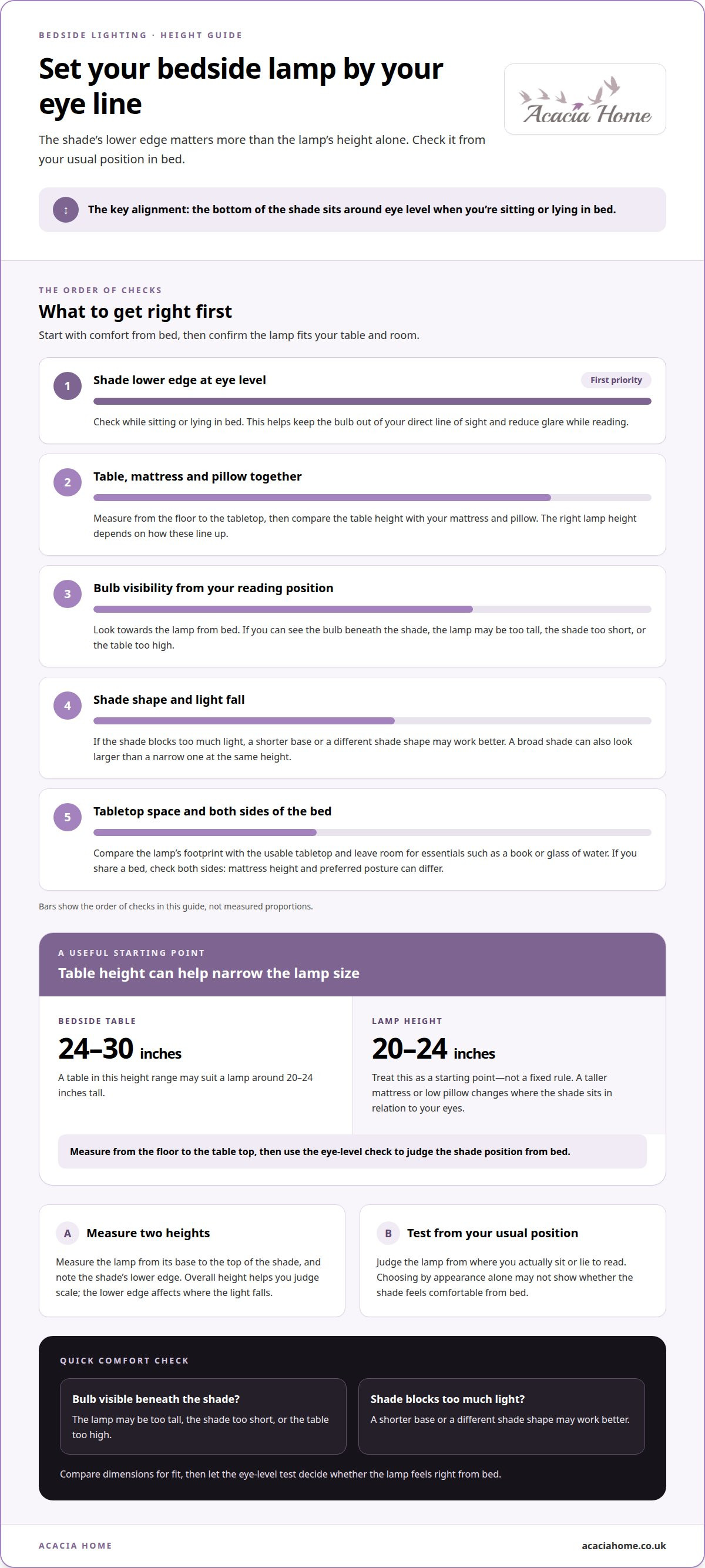
Position the bottom of the lampshade at eye level when you’re sitting or lying in bed. This helps keep the bulb out of your direct line of sight and reduce glare while reading. The right overall height depends on both the mattress and table, so judge the shade from your usual position rather than choosing by appearance alone.
Start with the table beside your bed. Measure from the floor to its top, then compare that height with your mattress and pillow. A bedside table measuring 24-30 inches high may suit a lamp around 20-24 inches tall. Treat this as a starting point: a taller mattress or a low pillow changes where the shade sits in relation to your eyes.
Sit or lie in your usual reading position and look towards the lamp. If you can see the bulb beneath the shade, the lamp may be too tall, the shade too short, or the table too high. If the shade blocks too much light, a shorter base or a different shade shape may work better. Check both sides of the bed if you share it, since mattress height and preferred posture can differ.
Measure the lamp from its base to the top of its shade, then note the shade’s lower edge. These measurements tell you different things: overall height helps you judge scale, while the lower edge affects where the light falls. A broad shade can also look larger than a narrow one at the same height. Compare the lamp’s footprint with the usable tabletop, leaving room for essentials such as a book or glass of water.
Table lamp prices vary by material, finish, size and lighting controls. Across the UK market, table lamps typically range from £25 to £83, with a median of about £50. This is a general market range, not the price of a particular lamp. Consider the dimensions alongside the price: a compact base may suit a narrow table, while a larger shade needs more visual and physical space.
Bedside lamps come in ceramic, glass and concrete designs, as well as touch-operated and rechargeable styles. Each can bring a different balance of texture, presence and convenience. Before choosing, compare the lamp’s stated height, base width and shade dimensions with your table. Dimensions help you assess fit; the eye-level test helps you decide whether the lamp will feel comfortable from bed.
Buying online also makes the cancellation period useful to understand. According to UK legislation (legislation.gov.uk), customers have 14 days from receiving their goods to notify the retailer that they want to cancel. After notifying the retailer, customers have a further 14 days to return their goods. Keep the delivery date and cancellation notice date clear, as both periods matter when arranging a return.
Bedside table lamp designs and styles
A lamp can echo your bedroom’s existing finishes or introduce a considered contrast. Compare its shape, colour and material with the furniture and textiles already in the room.
Lamp styles and bedroom décor
Start with one feature you want the lamp to complement, such as a headboard, bedside table or patterned duvet. A rounded ceramic base can soften angular furniture, while a clean-lined glass design can suit a pared-back scheme. For a more layered room, choose one detail, such as a brass finish or coloured shade, that appears elsewhere in the décor.
Think about visual weight as well as colour. A sculptural base or an intricate stained-glass shade can become a focal point beside a simple bed, whereas a quieter shape lets patterned wallpaper or artwork lead. For those seeking distinctive, handcrafted statement lighting, UK specialists such as Tiffany Light House provide designs that introduce rich colour and character to the bedroom. For a coordinated pair, matching lamps create symmetry; different designs can still feel connected when they share a material, finish or colour.
Lamp materials and designs
Ceramic, glass and concrete each bring a distinct surface and character. Glazed ceramic adds colour or sheen, glass can feel visually light, and concrete gives a more grounded, tactile impression. Consider how each material relates to nearby finishes, such as glass beside a reflective mirror or concrete against soft linen bedding.
Look at the base, shade and details together. A smooth base with a textured shade creates contrast, while similar finishes make the lamp feel more unified. Choose a shade shape that suits the base rather than competing with it: a broad shade can balance a substantial base, while a simple profile keeps an intricate base in focus.
Use the room’s existing palette as a starting point. Pick out a colour from cushions, curtains or artwork, then decide whether the lamp should repeat it or provide contrast. A neutral shade can settle a colourful arrangement, while a rich accent colour can enliven pale bedding without a larger décor change.
The finish also affects how a design sits with other objects. Pair warm-toned metal details with similar accents on picture frames or handles, or let a clear glass base stand out against darker furniture. Repeating a finish elsewhere helps the lamp feel intentional without making every bedside detail identical.
For a balanced arrangement, consider the lamp alongside the objects it will share the table with. A decorative base may call for fewer accessories, while a restrained design can sit comfortably beside a small vase or book. Keep the combination coherent with repeated colours, textures or finishes.
Explore lighting designs in ceramic, glass and concrete to see how different materials could complement your bedroom’s palette and furniture.
Choosing a lamp for bedroom size and space
Measure the bedside surface and nearby clearance before choosing a lamp. The base, shade and position all affect how comfortably it fits.
Lamps for small bedside tables
On a narrow table, measure the clear area beside essentials such as a book, alarm clock or glass of water. Choose a base that leaves room for those items rather than judging the lamp by height alone. A compact, upright design can take up less surface area than a broad, sculptural base.
Check where the cable will run, too. A trailing lead can take up usable space or cross the area where you place belongings, so consider the socket position before choosing a design. If you share the table, leave room for both people’s night-time essentials.
Lamp size and height
Compare the lamp’s full height with the bedside table and mattress, then view the proportions from the bed. A table measuring 24-30 inches high may suit a lamp around 20-24 inches tall, but the shade’s position matters more than the figure alone. A tall mattress or low table can change the visual balance.
Measure the base width as well as the overall height. For example, a tall, narrow base may feel more balanced on a slim table than a short, wide one. Leave space around the lamp so it doesn’t crowd a wall, headboard or nearby furniture.
Choose a lampshade by considering its footprint and the light you want around the bed. A wide shade can spread light over a larger area but may overwhelm a small table. A narrower shade keeps the arrangement visually contained. Check that the shade suits the base’s proportions and that its lower edge won’t obstruct the light when you’re seated.
In a small bedroom, consider the whole bedside arrangement rather than the lamp alone. A large shade beside a deep headboard can make the corner feel crowded, while a visually light glass base may preserve a more open impression. In a spacious room, a larger lamp can help the bedside table feel in proportion with the bed.
What safety standards should UK bedside lamps meet? Choose a lamp intended for UK household use, with clear electrical safety information and manufacturer instructions. Follow those instructions, keep the lamp stable on its surface, and stop using it if its cable or plug becomes damaged.
Before buying, follow this practical sequence: measure the tabletop’s usable area, note the distance to the wall and headboard, then compare the lamp’s base and shade dimensions. Finally, picture the lamp beside the objects you keep there, such as a clock or book. This helps you choose a design that fits without sacrificing useful bedside space.
For a bedroom with limited surface area, compare the lamp’s materials and visual weight with the other objects nearby. A concrete base can feel substantial, so pair it with a table that has enough clear space. Explore ceramic, glass and concrete lighting for ideas on finishes and forms.
Lighting for reading and other tasks
Reading, checking a phone and finding a book each call for light in a different place. Choose a lamp based on what you do beside the bed, where the light needs to fall and whether you share the room.
For a paperback or e-reader, direct the light towards the page rather than across your partner’s pillow. A shade that directs light downwards can help focus illumination on your reading area. Check from your usual position: the page should be lit without the bulb sitting directly in your line of sight.
Colour temperature describes whether light appears warmer or cooler. Warm or soft white bulbs between 2700K and 3000K are recommended for bedside lamps. This range can create a softer atmosphere for winding down, while still providing useful light for evening reading. Check the bulb packaging for its colour temperature before buying.
Brightness is measured in lumens, but a single figure doesn’t describe how light will feel across every bedroom. One bedside lamp listing describes its brightness as 300 lumens. Treat this as a product example, not a universal reading target: the shade, distance from the page and surrounding room light all affect the result.
Use a simple test to arrange your reading light. Place your book where you normally hold it and switch on the lamp. Notice whether the page has enough light and whether the shade creates distracting shadows. Adjust the book’s position or lamp angle if needed. A different reading posture may change where the light falls.
Other night-time tasks call for a different balance. For finding a glass of water or locating a phone, a softer pool of light can be more comfortable than lighting the whole room. If you read before settling to sleep, choose a bulb and shade that suit both activities, or consider a lamp with adjustable brightness.
In a shared bedroom, consider whether your reading light reaches the other side of the bed. Position the lamp towards your book and direct its shade away from your partner. If you both read, separate lamps make it easier to tailor the light on each side to individual habits.
Shade material and shape also affect the reading experience. An opaque shade directs light through its opening, while a lighter or more translucent shade lets more light through its surface. Consider your usual task: focused reading needs light on the page, while a softly lit bedroom may suit a more diffused glow.
Finally, consider how you’ll operate the lamp at night. A switch that’s easy to reach from bed can be useful after reading, especially if you don’t want to get up to turn off the main light. Match the bulb’s colour temperature and brightness to your routine, then assess the light on the page, pillow and bedside table.
Dimmable and touch bedside lamps
Dimmable controls let you adjust a lamp’s brightness for different moments, from reading a paperback to settling down for sleep. Touch controls offer another way to operate the light, using a touch-sensitive point instead of a conventional switch. The right choice depends on how you reach and use the lamp beside your bed.
A dimmer is useful when one lamp serves more than one purpose. Set a brighter level to read, then lower it when you put the book away. This creates a gradual transition without relying on the main bedroom light. Consider whether you want to adjust the brightness on the lamp itself or with a separate control.
Touch operation can feel straightforward at night. A touch-sensitive base or body responds where you make contact, so you don’t need to find a small switch in the dark. Before choosing this style, consider where your hand naturally rests. A lamp behind a clock or book could make its control less convenient.
Look at the control sequence, not just the words “touch” or “dimmable”. Some lamps use repeated touches to cycle through brightness levels, while others have a separate dimmer control. Choose an operation that suits your routine: switching on and off is different from cycling through settings to find the level you want.
For reading, choose a setting that keeps the page clear without making the whole room feel bright. Then try a lower setting to wind down. The bulb, shade and distance from your book all affect the light on the page, so brightness control complements those choices rather than replacing them.
A shared bedroom brings another consideration. A dimmer can help keep light focused on your side while your partner rests, especially if the shade directs light towards your book. If you both read, independent controls let each person adjust their own lamp without changing the other person’s light.
Before choosing a control style, picture three moments: turning the light on after getting into bed, adjusting it while reading, and switching it off before sleep. An easy-to-reach touch point suits a simple routine; a dimmer suits activities that need different brightness levels. If you tend to hold a book, consider whether you can operate the control with one hand.
Choose the control that makes your usual evening routine simpler, then pair it with a lamp shape and finish that belong in your bedroom. Explore ceramic, glass and concrete lighting to consider how different materials can complement your bedside setting.
Acacia Home
Acacia Home offers considered furniture to help create a bedroom that feels cohesive beyond its lighting. Once you’ve chosen a lamp, an occasional chair or footstool can make a quiet corner more inviting, while a chaise longue or window seat can add a graceful place to pause.
If your bedroom has space for a reading nook, consider how a chair or footstool will sit alongside your existing furnishings and the atmosphere created by your lamp. A Louis Style chair can bring a traditional note, while an occasional chair offers another way to shape the room around your routine.
If you’re bringing new furniture into your bedroom, contact Acacia Home to discuss the pieces that interest you.
Make your bedside feel like your own
The right lighting can shape the feeling of a bedroom, from a calm end-of-day retreat to a welcoming place to read. Let your routine guide your choice: picture where you’ll sit, what you’ll reach for and how you want the room to feel when the light is low. Then choose bedside lamps that sit naturally with your furniture and reflect your personal style.
Acacia Home offers occasional chairs, dining chairs and footstools to bring comfort and character into your home. A considered seating choice can complement your bedroom’s atmosphere, whether you’re creating a reading corner or refining the wider look.
For a friendly next step, contact Acacia Home about your bedroom furniture. With a clear sense of your space and the mood you want to create, you can make choices that feel thoughtful, personal and inviting.
Frequently Asked Questions
Do bedside lamps need to match each other?
No, matching lamps are a choice, not a requirement. For a coordinated but less formal look, choose different bases in a shared colour, material or finish. For example, a ceramic lamp on one side and a glass lamp on the other can feel connected if both echo a detail elsewhere in the room. If the bedside tables differ, matching lamps can help create visual balance.
How do I choose the right shade for a bedside lamp?
Choose a shade that suits the lamp base and the effect you want. A tapered shade can complement a rounded base, while a straight-sided shade often works with a simpler silhouette. Consider the shade’s colour, too: a pale finish can keep the arrangement light, while a darker one adds contrast. Check that the shade sits securely and doesn’t obscure the lamp’s controls.
Can I use a bedside lamp with a smart home system?
Possibly, if the lamp can be operated through a compatible smart bulb or smart plug. Compatibility depends on the lamp’s bulb fitting, control method and the system you use. A lamp with built-in touch controls may behave differently from one with a simple switch. Check the instructions for both the lamp and smart device before connecting them, and use the controls as directed. If you are looking to integrate practical tech into your bedroom setup, online stores such as HappyNest Co offer smart gadgets and home finds designed to streamline everyday routines.
What type of light bulb should I use for a bedside lamp?
Choose a bulb that matches the lamp’s fitting and its manufacturer’s instructions. For a warm evening feel, a warm or soft white bulb between 2700K and 3000K is a suitable choice. If you use a dimmer, select a bulb labelled as dimmable; otherwise, the control may not adjust the light as intended. Check the bulb packaging before purchase.
What is the average price of a bedside lamp in the UK?
Across the UK market, table lamps typically cost between £25 and £83, with a median of about £50. These figures describe a broad market range, not a fixed price for every style or retailer. Materials, finish, size and controls can all affect the price of an individual lamp. Compare the dimensions and features that matter for your room alongside its cost.
Which bedside lights are best for reading in bed?
Choose a lamp that directs light onto your book and has a shade that keeps the bulb out of your direct view. A focused beam can illuminate a paperback without lighting the whole room. If you read at different times or share your bedroom, consider how the lighting arrangement can suit each person’s needs.
How bright should a bedside lamp be, and what bulb should it use?
Choose brightness according to what you do beside the bed. One bedside lamp listing describes its brightness as 300 lumens, but that is an example, not a universal target. Shade shape and distance from your book affect how bright the light feels. For a warm tone, choose a warm or soft white bulb between 2700K and 3000K.
What size bedside lamp suits a small bedside table?
Choose a base that leaves usable space for essentials such as a phone, book or glass of water. Measure the clear tabletop area, then compare it with the lamp’s base width and shade diameter. A narrow, upright design can take up less surface space than a broad base. Also consider where the cable will run, especially if the socket is behind the table.
Comments