
Are Tub Chairs Good for Posture? A Guide to Comfort and Fit
What if a chair that looks wonderfully supportive doesn’t suit the way you sit? If you’re wondering, “are tub chairs good for posture?”, the answer depends less on their enveloping curves and more on their fit and purpose. The back and arms can feel cosy for reading or conversation, but appearance alone can’t tell you whether a chair will feel comfortable when you sit in it.
It’s a fair question, especially if you’re considering a compact chair and don’t want to feel hemmed in. This guide explains the difference between relaxed comfort and the adjustability often useful for desk work, and shows you how to assess a tub chair’s proportions. Check how your feet, knees and back feel when seated, consider what you’ll use the chair for, and balance fit with the character of your room. These steps can help you choose occasional seating that suits the moments you have in mind.
Table of Contents
Are tub chairs good for posture? Start with a balanced answer
A tub chair may feel comfortable, but whether it suits your posture depends on its fit and how you use it. Its curved back and enclosing sides can create a cosy place to sit, yet they don’t automatically support every body comfortably. If you’re asking, “are tub chairs good for posture?”, consider the whole sitting experience rather than judging by the silhouette or first impression.
Posture depends on your body position, how the chair fits and how often you change position. A suitable seat should let you settle without needing to perch, twist or stretch to feel comfortable. Your spine also moves naturally rather than staying in one rigid position. This basic introduction to spinal posture can help explain the idea of neutral alignment, but no single chair shape maintains that position for everyone.
Use matters just as much. A tub chair can suit reading, conversation or a short pause, when relaxed comfort is the aim. Sitting at a desk for a long spell is different: you may need more adjustability and freedom to shift position than a typical occasional chair provides. Even a seat that feels comfortable at first may feel less suitable over time, so consider the activity and duration as well as your first impression.
What makes a chair a tub chair?
A tub chair has a rounded back and sides that curve forwards towards the seat, creating an enclosed outline. This can feel sheltered and cosy, while the compact shape makes it an attractive piece of domestic seating. However, the curved design won’t suit every body or sitting preference. It is also different from specialist care seating or workplace seating, which is intended for other requirements and uses.
Comfortable sitting is not the same as ergonomic support
Soft upholstery or a welcoming shape may feel pleasant straight away, but that first impression doesn’t show how well a chair will suit longer periods of sitting. Comfort varies with body proportions, preferred posture and activity. Someone settling in for a brief chat has different needs from someone working at a desk, and a seat that feels snug to one person may feel restrictive to another.
A tub chair is often best considered relaxed occasional seating, whilst task seating is designed around the demands of working at a desk. This isn’t a universal ranking of chairs. It’s a practical way to match your choice to your routine. For extended desk work, consider whether the seat lets you sit comfortably and change position rather than assuming its curved back provides the support you need. If you have particular health concerns, general furniture guidance may not address your individual needs.
How a tub chair’s seat, back and arms affect posture
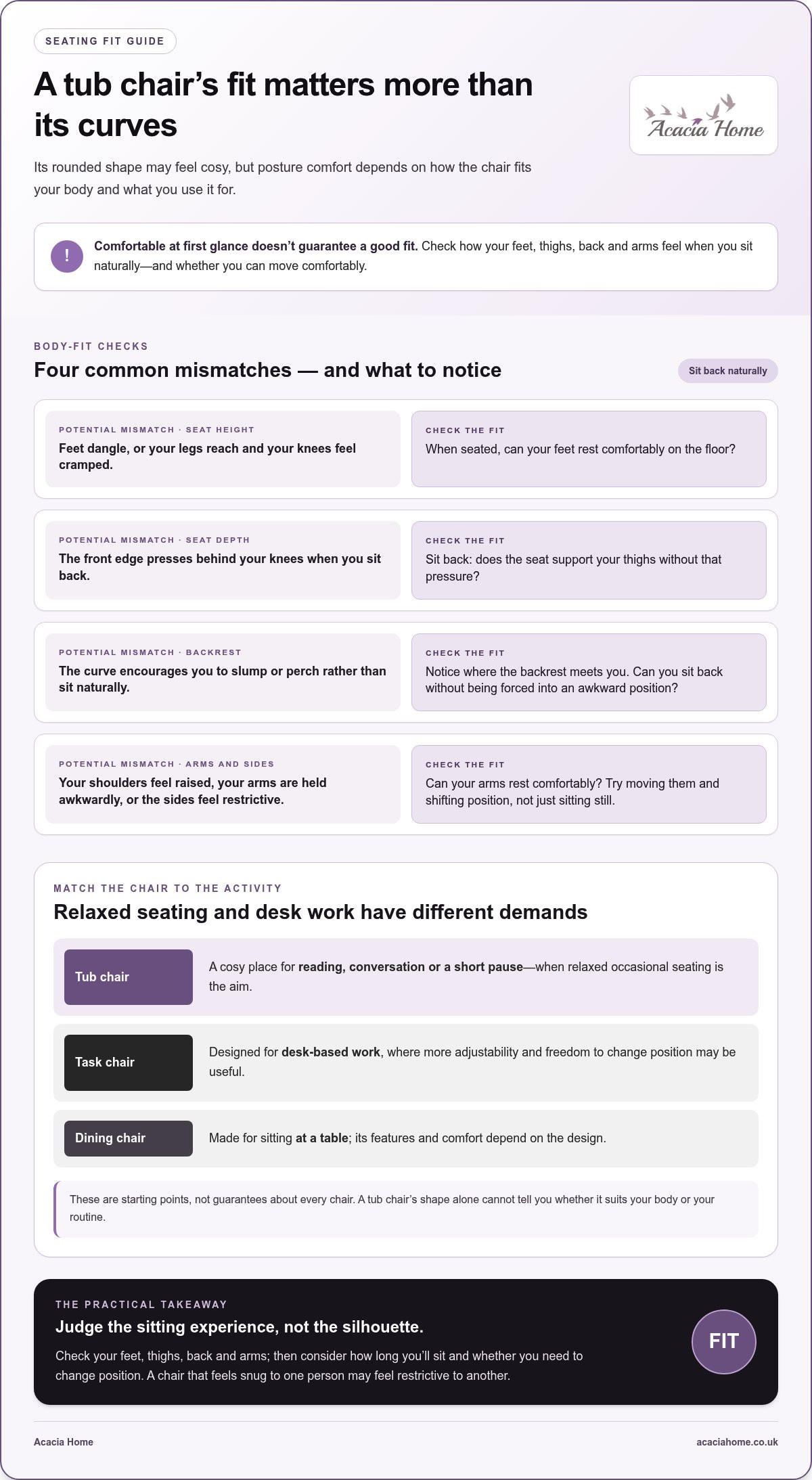
A chair’s proportions influence how you settle into it. Seat height affects whether your feet can rest comfortably on the floor; seat depth affects how much of your thighs is supported and whether you can sit back without pressure behind your knees. The back and arms matter too, but their shape and position need to suit your body rather than simply look supportive.
There isn’t one ideal seat measurement for every sitter. Leg length, torso proportions and your preferred sitting position all affect fit, so use dimensions as a guide and your seated position as the test. For a comparison of seat pans, backrests and armrests, see these ergonomic chair guidelines from OSHA. They’re written for computer workstations, but the components they discuss can help you assess any chair.
Seat height and depth: does the chair fit your proportions?
When seated, check whether your feet rest comfortably on the floor without your legs reaching or your knees feeling cramped. If your feet dangle or you feel pushed up onto your toes, the seat may be too high for you. Next, sit back. The seat should support your thighs without its front edge pressing into the backs of your knees. A chair that feels fine when you perch forwards may feel quite different when you use the backrest.
Backrest and arms: support without feeling constrained
A curved back can feel reassuring when it meets your back comfortably, but its shape may not match everyone’s contours. Notice where it touches your body: can you sit naturally, or does it encourage you to slump or perch? Check that your shoulders stay relaxed and your arms can rest without being pushed upwards or held awkwardly out to the sides.
A tub chair’s silhouette can suggest support, but only the way it fits your body can show whether it feels comfortable. The rounded sides and arms may make it harder to get in, sit down or change position, particularly if you prefer more room around your elbows. Try moving your arms and shifting position, rather than judging the chair only while sitting still.
Feet: Can they rest comfortably on the floor?
Thighs: Does the seat support them without pressure behind your knees?
Back: Can you sit back without feeling forced into an awkward position?
Arms and movement: Do your shoulders relax, and can you reposition comfortably?
These checks can help you decide whether a particular chair suits your proportions and intended use. If you’re weighing comfort alongside the look of your room, explore indoor seating and furniture with these fit points in mind.
Tub chair or task chair: which suits the way you sit?
The most useful comparison is not which chair is best overall, but which suits the activity you have in mind. A tub chair creates a cosy place to sit in a living space; a task chair is designed for desk-based work; and a dining chair is made for sitting at a table. Features and comfort vary between designs, so use the descriptions below as a starting point rather than a promise about every chair.
This is a guide to intended use, not a ranking. Assess a domestic tub chair as occasional seating rather than assuming it will work like a task chair. If your routine involves extended desk work, consider whether the chair’s fixed shape and the way you sit in it suit that activity. Whatever type you choose, change position from time to time rather than staying still for too long.
When a tub chair may suit your routine
For a chapter of a book, a conversation or a quiet moment in the sitting room, a tub chair can fit naturally into the rhythm of your home. Consider its footprint and position too: will it leave room to move around and work where you plan to sit? If you can try the chair, use it in a similar position and for the kind of relaxed activity you expect it to accommodate.
When another chair type may be more practical
Desk work and other long, focused tasks make different demands on a seat. A task chair is designed around working at a desk, whilst a tub chair is generally occasional seating, so don’t choose one for a full working day simply because it looks comfortable. If your main use is eating or working at a table, a dining chair is designed for that setting. The answer to “are tub chairs good for posture?” depends on matching the chair to its role, your comfort and the way you sit.
For a living space, compare styles in the context of your layout and daily routine. If you’re choosing occasional seating, the Acacia Home indoor furniture selection brings together chairs and other furniture for the home.
How to check whether a tub chair feels right for your posture
A chair can look inviting in a room yet feel quite different once you sit in it. If you can try one, take a few moments to check the fit instead of relying on appearance or a quick glance at its dimensions. If you’re comparing chairs online, use the listed seat height and depth to narrow down your options, then assess the sitting position when you can. These checks can help you decide whether a chair feels comfortable for the activity you have in mind.
A quick sit test for seat and back fit
Sit back naturally, without forcing yourself into a particular pose. Notice where the seat and backrest meet your body, then check the details that can make a chair easy to use or awkward to settle into.
Settle your feet. Place them on the floor and notice whether they rest comfortably, without your legs dangling or your toes having to reach.
Check the seat edge. Sit back and see whether the seat supports your thighs without pressing sharply behind your knees.
Notice the backrest. Does it meet your body comfortably, or do you find yourself slumping, arching or perching to get comfortable?
Relax your shoulders and arms. Let your arms rest naturally, then notice whether the chair’s sides or arms make you lift your shoulders or feel boxed in.
Stand up and sit down again. Consider whether getting in and out feels manageable, particularly if you expect to use the chair often.
Give yourself time to notice how the chair feels after you’ve settled, not just in the first few seconds. A snug sensation might be pleasant at first but restrictive if the sides limit how you like to move. A chair that lets you sit comfortably and shift position may suit you, even if it doesn’t hold you in one fixed position.
Think about duration, movement and individual needs
Match the test to the chair’s intended role. Imagine reading, chatting or relaxing for the length of time you’d normally spend on that activity. If you’re considering the chair for desk work or another long, focused task, think carefully about whether its shape and limited adjustability suit that use. A short sit test can’t predict how every chair will feel over time.
Whichever chair you choose, change position regularly rather than trying to hold one posture indefinitely. Stand, stretch or walk about when it feels natural to do so. The question “are tub chairs good for posture?” can’t be answered by shape alone; your comfort, the chair’s fit and the time you spend sitting all matter. If you have persistent pain or concerns about your health, seek advice from an appropriate healthcare professional rather than relying on a furniture choice to address it.
Once you know what to look for, explore Acacia Home’s indoor seating to compare occasional chairs with the character and needs of your room.
Choosing a tub chair for a comfortable home
Choosing well means bringing three things together: how the chair fits you, what you’ll use it for and how it feels in your home. A particular style may catch your eye, but looks can’t tell you whether a chair suits your routine. If you’ve been wondering “are tub chairs good for posture?”, there’s no answer based on style alone. Consider posture alongside everyday comfort and the atmosphere you want to create.
Balance posture considerations with the room
Picture the chair in its intended spot. Will it be a quiet reading corner, an occasional seat near the window or somewhere guests can gather? Its shape, upholstery and colour can help it sit beautifully within the room, but these are style choices, not proof of ergonomic performance. Let visual appeal and comfort work together: the chair should feel inviting in the space and suit the way you expect to sit.
Your fit checklist can keep the choice grounded. Consider whether the chair feels comfortable for its intended activity, whether you can settle in without feeling restricted, and whether it works with the flow of the room. A sculptural chair may make a striking accent, whilst a more understated option might blend with existing furnishings. Neither look is inherently better; what matters is how the chair serves your home and its daily rhythms.
A confident next step for occasional seating
As you compare styles, use the fit points in this guide alongside the chair’s purpose and place in your home. There’s no need to choose on appearance alone or to expect one chair to suit every activity. Consider seat height, depth, back support and room to move before deciding which design fits your routine.
For a broader view of seating and furnishings, browse Acacia Home’s indoor furniture. Explore tub chairs and other occasional seating with comfort, intended use and the character of your room in mind.
Make space for a chair that feels like yours
Before choosing, picture the moment you want to create at home: a quiet corner for a favourite book, an extra seat for company or a welcoming finishing touch beside a window. That everyday purpose can guide your decision more clearly than appearance alone. Asking “are tub chairs good for posture” is a useful starting point, but the right choice is one that feels comfortable for you and belongs naturally in the space you have in mind.
Use your fit checklist as you browse, and give equal thought to how a chair feels and how it will complement your home. Acacia Home offers occasional and indoor seating for customers across the United Kingdom, with styles for different rooms and routines.
Explore Acacia Home’s indoor furniture and find a chair that brings comfort and character to your home.
Frequently Asked Questions
Are tub chairs bad for your back?
Not inherently, but a tub chair that doesn’t suit your body or how long you sit may feel uncomfortable. The question “are tub chairs good for posture” has no universal yes-or-no answer: people have different proportions and preferences. A chair shouldn’t be treated as a way to prevent or relieve back pain. If you have persistent pain or health concerns, seek advice from an appropriate healthcare professional.
Can you sit in a tub chair for long periods?
You can, but a typical tub chair may not be the most practical choice for prolonged sitting, particularly for desk work. It may offer less scope to adjust your position than a chair designed for working at a desk. If you’re settled in for a long read or film, take natural opportunities to stand, stretch or move about rather than remaining in one position throughout.
Are tub chairs comfortable for reading?
They can be, especially if the seat feels comfortable and gives you room to settle with a book. Think about how you hold your reading material: if you’re continually leaning forwards or craning your neck to see the page, adjust the book’s position or take a pause. A side table for a drink or book can also make a reading corner more considered and convenient.
What should I look for when trying a tub chair?
Try it in the clothes and footwear you’d usually wear at home, then spend enough time seated to notice whether you keep shifting to get comfortable. Check that you can reach a nearby table or reading light without twisting awkwardly, and try getting in and out more than once. If others will use the chair too, consider whether its fit and ease of use work for them as well.
Is a tub chair better than an armchair for posture?
Not necessarily. “Armchair” describes a broad category, and both shape and support can vary considerably between designs. Compare the actual seat and back rather than relying on the label: a tub chair’s sides may feel enclosing, whilst another armchair may offer more room to move. The better choice is the one that suits your body, preferred sitting position and intended use.
Can the shape of a tub chair affect how easily you sit down?
Yes. The curved sides and arms can make the opening feel narrower than that of a more open chair, which may affect how easily you lower yourself into the seat or rise again. If getting up and down comfortably matters to you, pay attention to the chair’s height, arm position and the space around it. A clear route beside the chair can also make access easier.
What type of chair is best for sitting at a desk all day?
A task chair designed for desk work is generally a more suitable starting point than an occasional tub chair. Look for adjustability that lets you set the seat to your body and arrange the back support comfortably, then make sure your desk setup allows you to work without reaching or hunching. No chair removes the need to change position, so build movement into your working routine too.
Comments