
Garden lanterns for outdoor spaces
Updated: 2 days ago
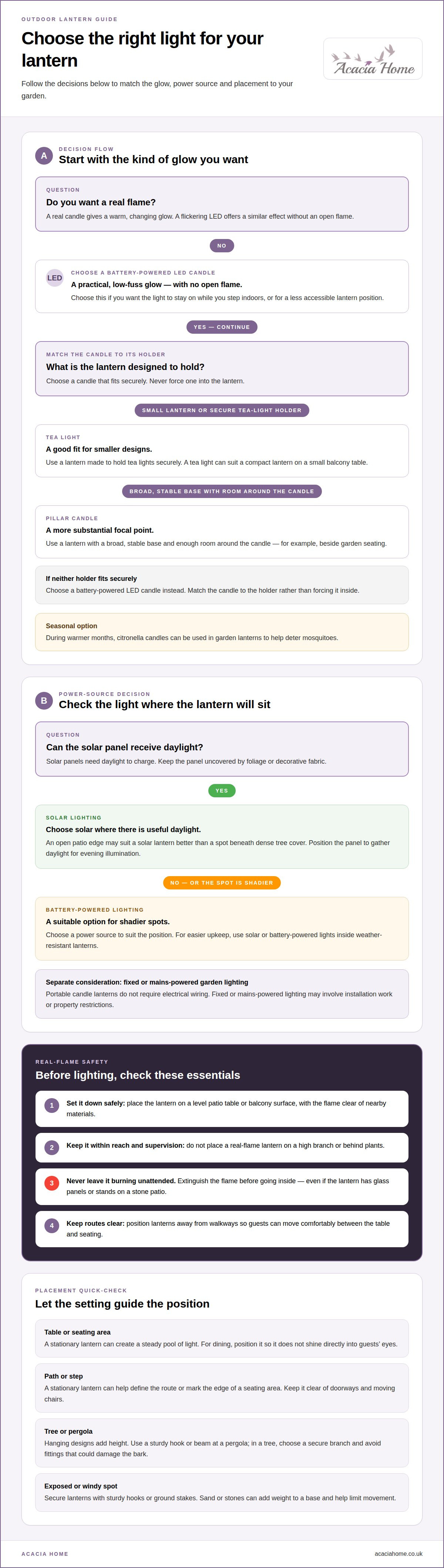
Battery-powered LED candles are a practical choice for garden lanterns. Pillar candles and tea lights also work, but never leave a real candle burning unattended, even inside a lantern.
This guide covers candle and LED options, hanging lanterns around trees, pergolas and decking, and how solar lighting works. You’ll also find ideas for using lanterns at gatherings and guidance on weather-resistant designs, so you can choose a style and position that suit your space.
Table of Contents
What's best to put in outdoor lanterns?
For a patio, balcony or garden, choose a pillar candle, tea light or battery-powered LED candle. The right option depends on whether you prefer a real flame, convenience or a low-maintenance glow.
Portable candle lanterns don’t require electrical wiring. Fixed or mains-powered garden lighting is a separate consideration, particularly if installation work or property restrictions apply.
Candle and LED Candle Options
A real candle gives a warm, changing glow, while a flickering LED candle offers a similar effect without an open flame. If you want a light that can stay on while you step indoors, choose an LED candle. Check the lantern’s shape and opening, too: a wide opening makes it easier to place and switch candles.
Lanterns for Pillar Candles and Tea Lights
Pillar candles suit lanterns with a broad, stable base and enough room around the candle. Tea lights work well in smaller designs or lanterns made to hold them securely. Before lighting either, place the lantern on a level patio table or balcony surface and check that the flame is clear of nearby materials. Match the candle to the holder rather than forcing it inside.
Candle Safety and Citronella
Never leave an outdoor candle lantern burning unattended. Extinguish the flame before going inside, even if the lantern has glass panels or stands on a stone patio. Battery-powered LED candles are a practical choice when you want a glow to remain on while you’re away from the seating area. During warmer months, citronella candles can be used in garden lanterns to help deter mosquitoes.
Consider the setting before choosing a candle. A tea light can suit a compact lantern on a small balcony table, while a pillar candle creates a more substantial focal point beside garden seating. For a gathering, several LED candles create a consistent glow without the need to tend separate flames. Keep lanterns clear of walkways so guests can move comfortably between the table and seating.
Make candle choice part of your placement plan. Put a real-flame lantern somewhere easy to reach and supervise, not on a high branch or behind plants. Choose a battery-powered LED candle for less accessible spots. This simple distinction helps you enjoy candlelight on a patio, balcony or garden path with a setup suited to how you’ll use it.
Hanging lanterns for trees, pergolas and decking
Hanging lights draw the eye upwards, while stationary lanterns define tables, steps and seating areas. Choose their positions with evening use in mind.
Stationary and Hanging Lanterns
A stationary lantern suits a decking table or the edge of a step, where it creates a steady pool of light. Hanging designs add height to a pergola or tree and draw the eye across the space. Before positioning either, map out seating and walking routes. Keep lanterns clear of doorways, head-height paths and areas where chairs move.
Hanging Solar Lanterns
Solar lanterns combine a hanging form with a panel that gathers daylight to power evening illumination. For example, a cream tassel solar lantern is listed at 20 cm tall. Consider the lantern’s scale against its surroundings, then choose a hanging point that receives daylight. A shaded branch may not suit a solar design as well as an open pergola edge.
Start with the structure. At a pergola, choose a sturdy hook or beam that can support the lantern, and position it so it won’t obstruct anyone sitting beneath it. In a tree, use a secure branch and avoid fittings that could damage the bark. On decking, a hanging lantern can soften the view from a table, while a stationary one marks the edge of a seating area.
Spacing changes the effect. One lantern above a small bistro table creates a focal point; a row along a pergola can lead guests towards the garden. A set of four hanging spiral solar lights, each 19 cm, offers a repeated shape to arrange along a beam. Keep the pattern balanced rather than crowding one corner, and leave clear space around doors and walkways.
Check how each lantern hangs before choosing its position. A built-in handle makes a candle lantern easier to carry, while a dedicated hook creates a more fixed display. In exposed spots, secure lanterns with sturdy hooks or ground stakes. Sand or stones can add weight to a base. These choices help limit movement when wind catches a hanging design.
For an evening arrangement, combine heights rather than lining every light at the same level. Hang one solar lantern over the table, then place a stationary lantern on nearby decking. This creates distinct zones without blocking the view across the garden. If you’re coordinating lighting with outdoor furnishings, browse lighting styles for the garden for ideas that complement your setting.
Solar lanterns and energy-efficient lighting
Solar lighting can bring a gentle glow to outdoor spaces without a mains connection at each lantern. Match each light’s position, tone and power source to the patio, path or seating area it serves.
Lighting Patios, Paths and Seating Areas
Start by deciding what each light needs to do. A lantern beside a patio chair creates a welcoming pool of light, while lights along a path help define the route through the garden. For a dining area, position the light so it doesn’t shine directly into guests’ eyes. Arrange lights in zones to give each space a clear purpose.
Solar panels need daylight to charge, so place solar lanterns where their panels can receive it. A spot beneath dense tree cover may get less light than an open patio edge. Check the direction of the panel and avoid covering it with foliage or decorative fabric. This helps the lantern make use of available daylight.
Choosing Outdoor Lantern Lights
Solar-powered candles recharge using daylight, while outdoor candles designed for the weather provide another option. For easier upkeep, use solar or battery-powered lights inside weather-resistant lanterns. Choose a power source to suit the position: solar works best where there is daylight, while battery lights can suit shadier spots. Keep the light source easy to reach when you need to switch it on or replace its batteries.
In a compact seating corner, a solar lantern with a flickering LED candle creates a candle-like effect without a real flame. A solar lantern with USB charging offers another way to recharge alongside its solar panel. Compare how each light is powered, where its panel sits and whether it fits your lantern. These details matter as much as appearance.
Energy-conscious lighting starts with using light purposefully. Highlight a table or path rather than illuminating the whole garden equally. A single focal point can make a small patio feel considered, while a clear route helps people move between seating and the door. Switch off battery-powered lights when the area is no longer in use.
Warm-White and Cool-White Tones
Warm-white light creates a softer, more intimate mood around a dining table or lounge chair. Cool-white light looks crisper and can suit a path where edges and changes in direction need to stand out. Compare the light inside the lantern, since its shade and panels affect how the glow appears outdoors.
For a balanced scheme, use warm-white lighting around seating and reserve cooler tones for practical areas, such as a route to the gate. Keep the colour consistent within each zone: contrasting tones beside one patio table can feel unsettled. Walk through the garden after dusk to check whether the lighting feels comfortable and useful.
Using lanterns for parties and outdoor gatherings
For a garden party, lanterns can shape the atmosphere as well as light the space. Put fairy lights inside an outdoor lantern for a playful, sparkling effect, then position it where guests can enjoy the glow without blocking a route. A table, sheltered corner or pergola edge can provide a natural focal point.
Choose a style to suit the gathering. A slatted metal lantern brings a graphic look, while a rounded or Moroccan-inspired shape adds pattern and softness. For a relaxed supper, repeat one design along the dining table. For a celebration, mix shapes but share a colour or material to make the display feel intentional.
Colour can tie lanterns to the rest of the setting. Black designs stand out against pale paving or greenery, while white lanterns show up in a leafy corner. Grey creates a quieter contrast beside stone or timber. For example, pair black lanterns with a dark table, or place white ones beside light-coloured outdoor seating.
Battery-powered lights suit areas where a cable might cross the party space. Place them inside weather-resistant lanterns to reduce upkeep, and make sure the switch is easy to reach before guests arrive. A flickering LED candle creates a candle-like effect on a buffet table, while fairy lights add a brighter, more decorative sparkle.
Use a simple plan to arrange the display:
Mark the dining table, seating and main walking route.
Place one focal lantern near the table, clear of serving dishes.
Add smaller lights at the edge of a seating area or beside a path.
Check that hanging lanterns won’t obstruct guests moving beneath them.
Scale matters on a crowded table. A slatted solar table lantern measuring 14 cm can provide a compact accent, leaving room for plates and drinks. On a larger patio, repeat a similar design at separate points rather than clustering every light together. This creates a visual rhythm from the entrance to the seating area.
Before the gathering, switch on each battery light and check its position after dusk. A lantern that looks balanced in daylight may cast glare across a table once lit. Move it slightly to soften the effect, then make sure entrances and steps remain visible. For a cohesive display, carry one shape or colour from the table to the garden’s edges.
Leaving weather-resistant lanterns outside
Weather-resistant lanterns can stay outside permanently. Choose an IP rating suited to the lantern’s exposure, since a sheltered corner and an open garden position face different conditions.
Weather Resistance
A weather-resistant design is made for outdoor conditions, but its position still matters. A lantern beneath a covered seating area faces less direct exposure than one beside an open path. Consider where rain can reach it, whether water can collect around its base and how wind might move it.
To secure a freestanding lantern, add sand or stones to its base. Attach a hanging design to a sturdy hook, or use a ground stake to anchor suitable styles in soil. These options help keep lanterns in place when the wind picks up.
Before leaving a lantern outdoors, place it on a stable surface and check that its door or opening closes properly. Keep it away from areas where water pools, such as a low patio corner. A quick visual check after rough weather can help you spot movement, damage or trapped moisture.
Outdoor Lantern IP Ratings
An IP rating indicates how well an electrical product is protected against dust and water. There isn’t one rating for every garden position: the right level depends on whether the lantern sits under shelter or receives direct exposure. Match the rating to the conditions where you plan to place it.
A lantern beneath a porch roof, for example, faces different conditions from one beside an uncovered path. Read the product’s stated IP rating alongside its intended use rather than assuming every outdoor-labelled light suits every position. A rating alone doesn’t mean a lantern is suitable for immersion or standing water.
Consider the whole setup, too. Solar, battery-powered and mains-connected lanterns have different components and installation needs. For a fixed electrical fitting, the location and connection are important when choosing appropriate equipment. Keep the fitting’s instructions available, especially if you move it to a more exposed position.
Use these practical checks before settling on a permanent spot:
Choose a sheltered or exposed position based on the lantern’s stated use and IP rating.
Set freestanding bases on level ground, then add sand or stones if extra weight is needed.
Secure hanging styles to sturdy hooks, or use ground stakes where the design allows.
After strong winds or heavy rain, look for movement, pooling water or visible damage.
These checks help you decide whether a lantern can remain outdoors and where it belongs. A weather-resistant style may suit permanent outdoor placement, while an exposed position calls for careful attention to its rating and fixing.
Acacia Home: Occasional Chairs
Acacia Home offers seating to help make an illuminated corner feel complete. Once you’ve chosen lanterns for a patio or garden, consider how seating will support the way you use the space. Occasional Chairs can create a relaxed spot for reading or conversation, while Dining Chairs suit a table setting. Footstools add a useful finishing touch, and Chaise Longues and Window Seats offer another way to create a comfortable place to unwind indoors.
Explore these options when you’re bringing the same thoughtful approach to lighting and seating into your home. Visit Acacia Home online to browse its seating selection.
Make your outdoor setting your own
Think of garden lanterns as part of the atmosphere you want to create, not an isolated finishing touch. A favourite corner can feel more inviting when its lighting, seating and small details work together, creating a considered setting that feels distinctly yours. Let garden lanterns complement the space rather than compete with it.
Acacia Home offers Occasional Chairs, Dining Chairs and Footstools to complement the way you enjoy your home. Whether you’re planning a quiet place to unwind or a welcoming spot for company, let your own style guide your choices. Pair garden lanterns with seating that suits your plans to create a thoughtfully arranged space.
Explore Acacia Home and discuss your outdoor lighting plans. Take the next step towards an outdoor space that feels warm, personal and ready to enjoy.
Frequently Asked Questions
Can I leave lanterns outside permanently?
Weather-resistant lanterns may be suitable for outdoor use, but whether they can remain outside depends on their design and care guidance. Their position still matters: a spot beneath a roof exposes a lantern differently from an open lawn or garden path. Choose a place where water won’t collect around the base, and secure lightweight designs against wind. After severe weather, look for signs of movement or damage before using the lantern again.
Can I use these lanterns for a special event, like a party or wedding?
Yes, lanterns can help create a distinctive setting for a party or wedding. For a ceremony, use them to frame an entrance or mark the edge of a seating area, keeping the centre clear for guests. At a reception, group a few designs near the table rather than crowding place settings. Try the arrangement before guests arrive, then adjust it after dusk.
Can these lanterns stay outside all year, or should I bring them indoors in winter?
Weather-resistant lanterns can stay outside through the year, while delicate or non-weather-resistant designs are better brought indoors during winter. Before colder, wetter months, remove loose decorative details and store them in a dry place. Check the lantern’s care guidance and intended use, as materials and construction differ. A sheltered position can also reduce exposure to rain and wind.
Do I need wiring or an electrical outlet for garden lanterns?
No, solar and battery-powered lanterns don’t need a mains outlet beside each light. Solar designs use daylight to power illumination, while battery-operated styles use replaceable or rechargeable batteries. Mains-powered outdoor lighting needs an electrical connection, making it a different option from a portable lantern. Consider where the lantern will sit and whether sunlight or battery access is practical there.
Do the lanterns come with installation hardware, such as hooks, chains or stands?
Hardware varies by design, so don’t assume every lantern includes a hook, chain or stand. Some candle lanterns have a built-in handle, making them easier to carry or hang. Others stand on a flat surface or use a separate stake. Decide where you want to place the lantern, then choose a suitable hanging point or stable surface for its design.
How do I decide between solar and battery-powered lanterns?
Choose solar if the lantern can receive daylight where you plan to place it. For a shaded spot beneath dense foliage or a covered seating area, battery-powered lights may be more practical. Consider access, too: batteries need replacing or recharging, while solar panels need daylight. A solar-and-USB model offers two charging methods, which can help if the lantern’s position changes.
How do I secure lanterns in wind?
Secure a freestanding lantern by adding sand or stones to its base, then place it on level ground. Use a sturdy hook for hanging designs, or a ground stake if the lantern is designed for one. Avoid exposed branches or unstable surfaces that can sway. After strong gusts, check that the fixing remains secure and the lantern hasn’t shifted into a walkway.
How long will solar lanterns stay lit once the sun goes down?
Runtime varies by model and depends on how much daylight the panel gathers before dusk. Shade, cloud and the lantern’s battery condition can affect the available charge. One solar-and-USB garden lantern is described as having a 48-hour battery life, but that figure isn’t a standard for all solar lights. For evening plans, position the panel in daylight and allow it to charge.