
End of bed ottoman ideas to help you choose the right fit
Updated: 12h
The best end of bed ottoman ideas make one piece work hard: an ottoman can offer useful storage and a seat, while giving the bed a more considered finish. As a starting point, choose a bench around 80–100 cm wide for a single bed, 100–120 cm for a double, 120–140 cm for a king and 140–160 cm for a super king. Aim for a bench 15–30 cm shorter than the bed, then leave 45–60 cm between it and nearby furniture for comfortable movement.
It’s easy to focus on how an end-of-bed ottoman looks, but its everyday role matters just as much. A storage ottoman keeps spare bedding, pillows or throws close to hand, while its top offers a convenient place to sit or set down belongings. The right choice can bring order and a welcoming finishing touch to your bedroom without making it feel crowded.
In this guide, you’ll find ways to balance storage and seating, choose a fabric and colour that suit your room, and check dimensions before settling on a style. We’ll also look at different ottoman arrangements so you can find one that feels practical and at home in your space.
Table of Contents
1. Why Choose an End of Bed Ottoman Bench?
An ottoman bench can make the space at the foot of your bed useful, not merely decorative. Use it as a footrest while reading or as a handy seat when dressing. It also gives guests somewhere to place a bag or folded clothes instead of using the bed or floor. With a lift-up compartment, spare pillows and blankets stay close without cluttering the room. Its appeal lies in combining comfort, storage and a polished finishing touch.
For a comfortable fit, start by measuring the bed’s width and comparing it with these UK guide ranges: 80–100 cm for a single, 100–120 cm for a double, 120–140 cm for a king and 140–160 cm for a super king. A bench around 15–30 cm shorter than the bed can create a balanced look. These ranges are starting points, not a substitute for considering the room’s layout and the bench’s shape.
Scale matters particularly beside a king-size bed. A very short bench may look disconnected, while an oversized one can dominate the room or obstruct movement. Compare the bench’s width with the mattress, then consider its depth and visual weight. A substantial upholstered bed, for example, may suit a fuller bench, while a simple frame may work better with a lighter-looking design. Aim for proportion, not a perfect match in every dimension.
For safety and durability, inspect the frame, upholstery seams and lid mechanism before buying. Check the product information for its intended use, care guidance and any stated weight limit. If the lid lifts, look for a mechanism that holds it open securely, rather than letting it fall unexpectedly. A stable base and neatly finished joins are useful signs to assess, although they don’t replace following the maker’s instructions. Avoid assuming every storage bench is designed for the same loads or handling.
Test the planned position with the bed’s proportions in mind. Mark the proposed width on the floor with removable tape, then picture the bench as a footrest, a seat and a place for spare bedding. If it looks too imposing beside a king-size bed, reconsider its depth or silhouette before changing its function. A well-chosen bench earns its space through practical use as well as visual balance.
2. Ottoman storage and seating
Think about what needs a home before choosing an ottoman’s storage layout. Folded bed linen suits a deeper compartment, while books or accessories may need less room. A divided interior can help separate smaller items from bulky throws, if the design includes one. Keep frequently used belongings near the top so you can reach them without unpacking everything. For instance, store spare pillowcases together and keep seasonal bedding beneath them.
Access matters as much as capacity. A lift-up lid gives access across the compartment, while a hinged lid may need clearance to open fully. Check how the lid moves and whether it stays open during use. If the ottoman sits close to a wall or bedside furniture, its opening direction can affect convenience. A compact arrangement of books, accessories and folded linen can help you judge whether one open space or separate sections suit your routine.
Storage ottomans combine a seat with a concealed compartment, making them useful when bedroom belongings need a discreet home. An upholstered bench may focus more on providing a comfortable surface and may not include internal storage. Consider the difference: choose concealed space for spare bedding or toys, or prioritise a simple seat if you already have storage elsewhere. Some designs offer both, so compare the interior and seating surface rather than relying on the label alone.
In a child’s bedroom, an ottoman can hold stuffed animals and other collected items, making the play area easier to reset. In a guest room, a compartment can store spare towels or reading material. Group similar objects together, then leave a little space for things you add later. This simple sorting step helps prevent the ottoman becoming a catch-all for unrelated belongings.
Seating can be flexible, too. Ottomans at the end of a bed can be moved apart for separate seats or pushed together to create one longer place to sit. This arrangement can suit a shared bedroom or a room where seating needs change between relaxing and getting dressed. Smaller pieces are easier to reposition, while one continuous bench creates a single, uninterrupted surface.
Before deciding, picture a typical morning: opening the lid, taking out a garment, then sitting to get dressed. If that sequence feels awkward, the storage access or seat arrangement may not suit the room. Compare the ottoman’s compartment, lid movement and seating layout with the items you intend to store. To coordinate the surrounding room, browse indoor furniture styles that complement your chosen arrangement.
3. Fabric and colour choices
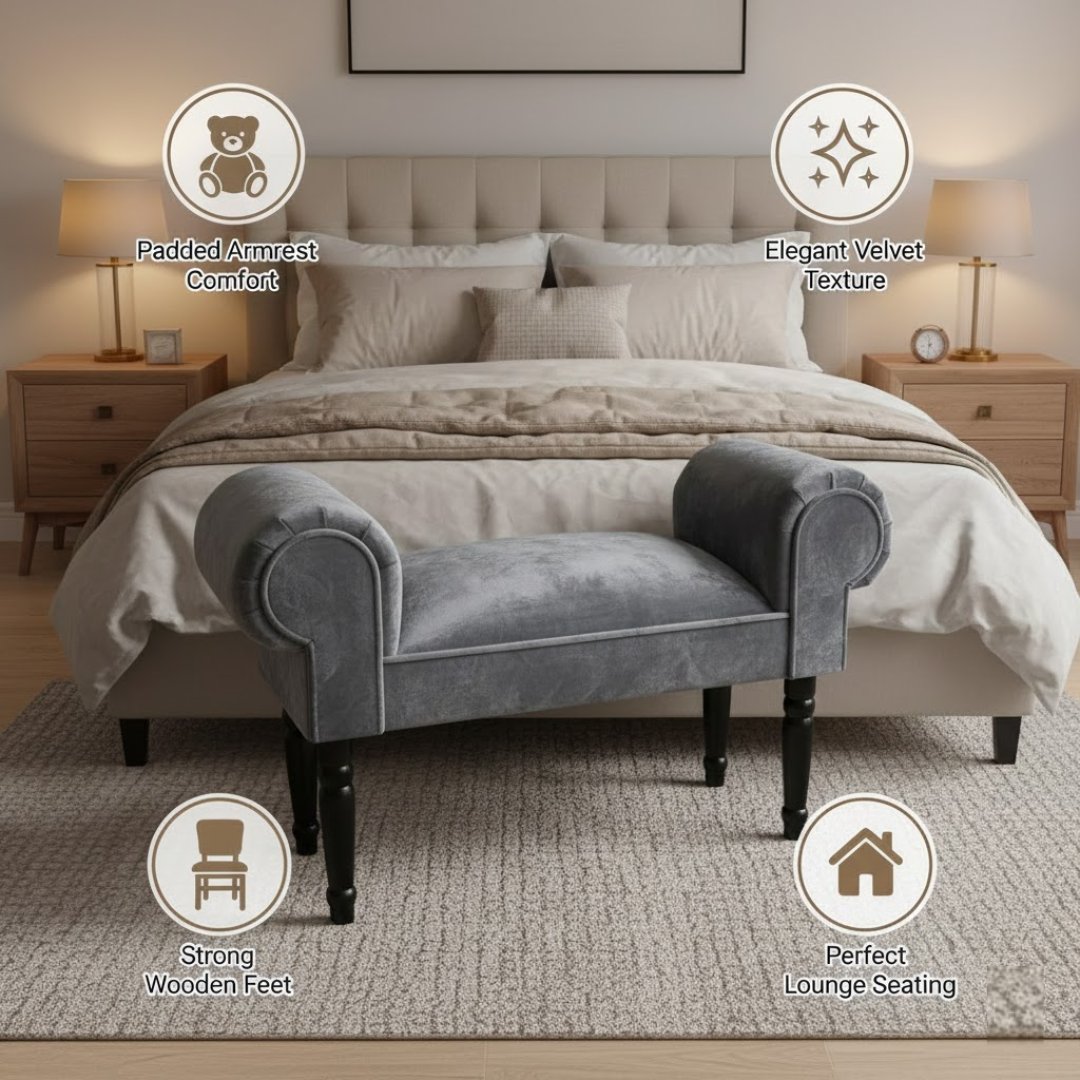
The ottoman’s fabric changes how it feels beside the bed and other furnishings. Velvet brings a soft, light-catching surface, while woven fabric can add a more relaxed texture. For contrast, pair a smooth upholstered headboard with a nubby bench, or repeat a fabric texture found in the curtains. Consider how the fabric feels as well as how it looks, especially if the ottoman will be used as a seat.
Start with the colours already in the room. A cream ottoman can sit quietly with pale bedding, while deep green or navy creates a richer accent against neutral walls. If your duvet has a pattern, pick one of its colours for the bench. This small link can make the room feel considered without requiring every surface to match.
To style an ottoman at the end of a bed, echo an existing colour in its upholstery, then add a folded throw for contrast. A cushion can soften the seat, but leave the lid clear if you open the storage regularly.
Choose a colour with the room’s light and visual weight in mind. A dark bench can anchor pale bedding, while a light shade may feel less dominant against a darker bed frame. If the bedroom already has several strong colours, muted taupe or soft grey can give the eye a resting point. In a restrained scheme, a rust or teal ottoman can provide a deliberate accent.
Fabric texture can also balance the room’s finishes. A velvet bench, for example, adds softness beside a timber bed, while plain woven upholstery can temper patterned wallpaper. Compare the fabric with nearby curtains, rugs and bedding rather than choosing it in isolation. Look at those items together in daylight and again under your bedroom lighting.
Plan care around the fabric you choose. Vacuum an upholstered ottoman weekly, using low suction where appropriate, or wipe suitable surfaces with a damp cloth. Avoid direct sunlight to reduce the risk of sun damage, and don’t use bleach or abrasive chemicals. For a stubborn stain, professional cleaning is advised. Follow the maker’s care instructions, as cleaning methods differ between materials.
Before settling on a colour, consider how the ottoman will look with changing bedding and through the seasons. A neutral bench can work with a winter tartan throw and lighter summer linen, while a bold colour may become the room’s defining accent. Connect your choice to at least one existing detail, such as a cushion, curtain or bedside accessory, for a cohesive finish. Residential designers like Alfred Tan Studio frequently champion this nuanced approach, ensuring every decorative accent thoughtfully harmonises with the broader interior palette.
4. Spacing and room measurements
Measure the floor area before choosing an ottoman, not just the bed. Note the distance from the footboard to the nearest furniture, such as a chest of drawers or dressing table. Leave at least 45–60 cm between the bench and nearby furniture for comfortable movement. This clearance matters when opening drawers, walking past the bed or pulling out a chair. A bench that fits its position on paper may still interrupt those everyday routes.
Make a simple floor plan using the bed, door, wardrobe and bedside tables as reference points. Measure the clear space at the foot of the bed, then compare it with the ottoman’s full depth. Include any overhang, feet or lid movement shown in the product dimensions. A bench may fit between the bed and a chest, for example, yet block the chest drawers when they’re open. Consider how the room works in use, not only how the furniture looks from the doorway.
In a small bedroom, prioritise a clear walking route around the bed. A narrow bench may be better than a deep design if it leaves enough space to pass freely. Use removable tape to outline the proposed footprint, then walk from the doorway to the wardrobe and bedside table. Try the route while carrying a laundry basket, too. If the taped outline makes these familiar movements awkward, reduce the bench’s depth or reconsider its position.
A room with more floor space can accommodate a deeper bench, particularly where it fills a gap between the bed and other furniture. Still, check that it doesn’t make the route to a wardrobe or window feel cramped. For example, place a deeper ottoman where it completes the bed’s visual line without obstructing a chest of drawers. In a long bedroom, the open floor at the foot of the bed may suit a larger footprint better than a narrow passage.
Account for doors and drawers in your measurements. Open the bedroom door fully and mark its swing on your plan, then repeat with wardrobe doors and drawers. A bench placed within those arcs can make storage harder to reach. Also consider whether you need to lift an ottoman lid. Leave room for that movement, and test the position with the lid open before settling on the layout.
Finish by checking the arrangement from several viewpoints. Stand at the doorway, beside the bed and near the wardrobe to see whether the bench feels balanced and practical. Compare its width with the bed, then consider whether the remaining floor space is easy to cross. In a compact room, a smaller footprint may protect a clear route; in a spacious room, a deeper bench can fill the open area more comfortably.
5. What types of ottomans work best at the end of a bed?
The best type depends on what you need the piece to do each day. A storage ottoman suits bedrooms where spare bedding, clothes or other belongings need a discreet home. A simple upholstered bench may be a better fit if you want a place to sit but already have enough storage. Compare the interior and seat rather than choosing by the word “ottoman” alone. A guest room, for example, may benefit from both a seat and space for spare linen.
A classic rectangular bench creates one continuous line across the foot of the bed. It can suit a larger bedroom with enough floor space for its full length. In a smaller room, a narrow profile may leave a clearer path past the bed. Consider the shape of the bed frame, too: a simple frame often pairs well with a clean-lined bench, while a more ornate bed can carry a detailed upholstered design.
Two small benches can be paired to create one long bench at the end of a bed. This is a flexible alternative to one solid piece: separate them for individual seats, then push them together for a unified look. A shared bedroom, for example, might have one bench on each side of the centre line. Keep their finish or upholstery similar so the pair looks intentional rather than mismatched.
A lift-top storage ottoman works well when easy access to the interior matters. Think about what you’ll store, such as pillows and blankets, and whether you’ll need to open the lid often. A fixed-top upholstered bench has no lid, leaving its surface ready for sitting or laying out clothes. If drawers or a wardrobe are nearby, consider how opening a lid affects access.
Shape changes the impression as much as function. A curved bench can soften a room filled with straight lines, while a rectangular style can echo a square headboard or bedside tables. A pair of compact ottomans may feel lighter than one broad bench, though both need to suit the available floor space. Picture the outline beside the bed before deciding, including the legs and any visible base. For homeowners curating a high-end interior with bespoke pieces, luxury furniture acquisition specialists such as thulare.com can assist in sourcing and professionally installing statement furnishings that suit the room’s proportions.
Acacia Home
Acacia Home’s seating range can help you create a coordinated, comfortable bedroom around your chosen ottoman. It includes occasional chairs, footstools, chaise longues and window seats. If your end-of-bed piece provides storage but you’d like another place to sit, a complementary footstool or occasional chair can help complete the arrangement. Consider the room’s palette, available floor space and how you’ll use each piece as you explore the collection.
For a wider bedroom seating scheme, explore the styles that best suit your home and everyday routines. Contact Acacia Home to discuss your furniture choices.
Make your bedroom feel distinctly yours
The right finishing touch reflects how you want your bedroom to feel as well as how you use it. Let these end of bed ottoman ideas prompt a fresh look at the room: perhaps a favourite colour deserves a new accent, or a quiet corner could become a more inviting place to pause. Choose pieces that feel connected, rather than matching every detail exactly.
Acacia Home offers occasional chairs, dining chairs and footstools, giving you more ways to bring considered seating into your home. A carefully chosen piece can complement your bedroom’s character and make the space feel more personal.
Ready to explore furniture that suits your home? Contact Acacia Home to discuss your bedroom, and take the next step towards a room that feels welcoming, comfortable and wholly your own.
Frequently Asked Questions
Why Choose an End of Bed Ottoman Bench?
An end-of-bed ottoman bench is useful when you want one piece to serve more than one purpose. In a guest bedroom, it can provide a place to sit while changing and a surface for folded clothes. A storage design can also keep spare bedding close at hand. Choose a style that suits your daily routine, rather than treating the bench as purely decorative.
How wide should an ottoman be compared with the bed?
A balanced starting point is a bench around 15–30 cm shorter than the bed. For a single, consider 80–100 cm; for a double, 100–120 cm; for a king, 120–140 cm; and for a super king, 140–160 cm. Compare the bench’s width with the bed frame, not only the mattress, as a wide frame can change how the proportions look.
How much space should you leave between an ottoman and the bed?
Leave enough room to move between the bed and ottoman without squeezing past the footboard. The right gap depends on the room layout and how you use the bench: sitting down, accessing storage and walking around it all need comfortable clearance. Also consider nearby drawers or doors. A piece may fit the floor plan yet still make them harder to open.
What is the ideal height for a bedroom ottoman?
Choose a height that feels comfortable beside your bed and suits the tasks you’ll use it for. If you plan to sit while dressing, compare the ottoman’s seat height with the bed edge and consider whether your feet rest comfortably on the floor. A footrest may call for a different height. Check the stated dimensions and picture how you’ll use the piece before deciding.
What are the best end-of-bed ottoman ideas for small bedrooms?
In a compact bedroom, look for a narrow design or two smaller ottomans that can be separated when needed. Keep the route to wardrobes and drawers clear, and avoid a shape that extends into a doorway’s swing. A simple top can double as a place to lay out clothes, while a storage design can reduce the need for another bulky container.
Which fabrics and materials are practical for a bedroom ottoman?
Choose upholstery to suit the room’s use and the care you’re prepared to give it. A smooth surface may be easier to wipe, while textured fabric can add warmth beside plain bedding. Check the maker’s cleaning instructions before buying, as suitable care varies by material. For regular upkeep, use an appropriate low-suction vacuum or damp cloth, and avoid bleach or abrasive cleaners.

Comments